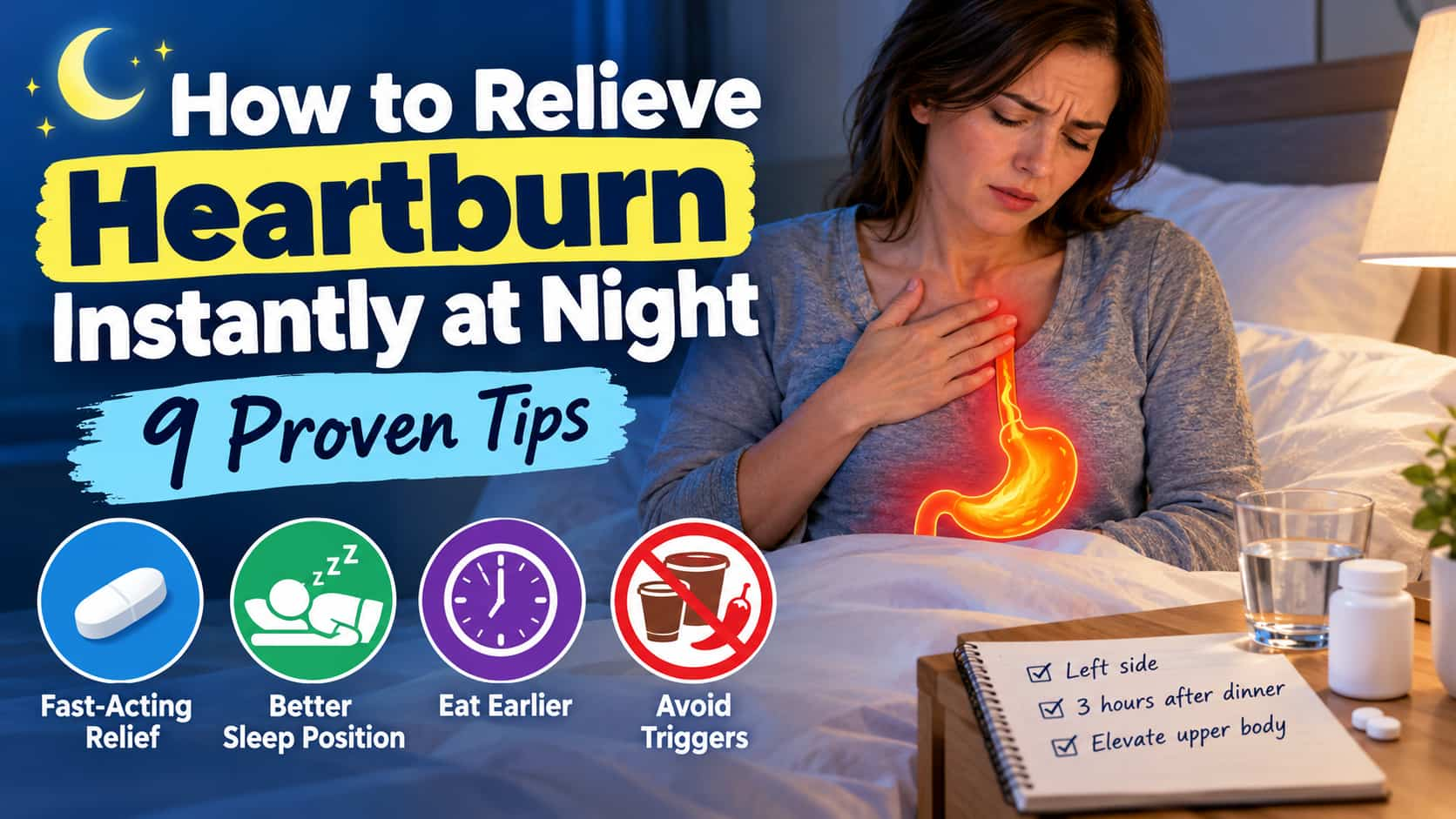
That burning feeling hits hardest when you finally lie down, and suddenly sleep feels impossible.
If you’re searching for how to relieve heartburn instantly at night, you need something you can do right now—not a long lecture about changing your diet next month.
The good news is that several simple steps can reduce nighttime heartburn quickly. Sitting upright, avoiding a flat position, using an appropriate fast-acting OTC medicine, and sleeping on your left side can all help.
But there is one important catch: not every “instant heartburn cure” online is safe or effective.
This guide explains what to do tonight, what to avoid, which OTC options work fastest, and when chest burning needs emergency medical attention.
Medical note: This article provides general health information for U.S. readers. It does not replace an individual evaluation by a doctor or pharmacist.
 .
What Causes Heartburn to Get Worse at Night?
Heartburn happens when stomach contents flow backward into the esophagus, the tube connecting your mouth and stomach.
Your lower esophageal sphincter, often called the LES, normally helps keep stomach contents where they belong. When reflux occurs, stomach acid can move upward and irritate the esophagus.
Nighttime can make this especially uncomfortable.
When you stand or sit, gravity helps keep stomach contents down. When you lie flat, you lose that advantage. That can make reflux more likely or allow acid to remain in the esophagus longer.
Late meals can make the problem worse.
Eating close to bedtime means your stomach may still contain a significant amount of food when you lie down. NIDDK recommends waiting at least 3 hours after eating before lying down or going to bed if nighttime reflux is a problem.
How to Relieve Heartburn Instantly at Night
There isn’t a guaranteed instant cure for every episode. The goal is to reduce exposure to reflux and calm the burning as quickly and safely as possible.
Try these steps in order.
1. Sit Upright Immediately
If you’re lying in bed when heartburn starts, don’t stay flat.
Sit upright or stand for a while.
This gives gravity a chance to work in your favor. It can also reduce the upward movement of stomach contents into the esophagus.
Avoid bending forward at the waist.
That can increase pressure around the stomach and potentially make reflux worse.
If your clothing is tight around your abdomen, loosen it.
A tight waistband, belt, or shapewear can add pressure around the stomach.
Your first 5-minute response
- Sit upright.
- Loosen tight clothing.
- Avoid bending over.
- Don’t eat another snack.
- Don’t lie completely flat.
- Give your stomach time to settle.
This simple sequence is often a better first step than reaching for a questionable kitchen remedy.
2. Use a Fast-Acting Antacid If It’s Appropriate for You
If you need medication for occasional heartburn, antacids are generally the fastest OTC option because they neutralize stomach acid.
Common U.S. antacids include products containing ingredients such as calcium carbonate or magnesium hydroxide. The FDA lists antacids as one of the three major OTC categories used for heartburn.
Liquid antacids may work faster than tablets, according to MedlinePlus.
Follow the exact package directions.
Don’t take extra doses simply because you want faster relief.
Important medication safety point
Some people should speak with a healthcare professional before using antacids regularly, including people with:
- Kidney disease
- Heart disease
- High blood pressure
- A low-sodium diet
- Kidney stones
- Multiple daily medications
Antacids can also interact with other medicines.
Also check the label for aspirin-containing antacid products. The FDA warns that these can increase the risk of gastrointestinal bleeding in some people.
3. Consider an Alginate-Based Product
Some heartburn products contain alginate.
Alginate works differently from a traditional antacid. It can form a physical barrier or “raft” that helps limit contact between stomach contents and the esophagus.
Cleveland Clinic includes alginates among OTC options for acid reflux, while research and clinical discussions have highlighted their usefulness for on-demand symptoms.
If you already use an alginate-containing heartburn product, follow its U.S. label instructions.
A pharmacist can also help you choose an appropriate product if you take other medications.
4. Don’t Confuse PPIs With Instant Relief
This is one of the biggest mistakes people make when searching for how to relieve heartburn instantly at night.
Proton pump inhibitors, or PPIs, include OTC medicines such as:
- Omeprazole
- Esomeprazole
- Lansoprazole
They are useful for frequent heartburn, but they are not designed to provide immediate relief from a single episode.
The FDA says OTC PPIs can take 1 to 4 days for full effect and are intended for frequent heartburn rather than immediate relief.
So if you’re awake at midnight with burning in your chest, taking an OTC PPI expecting it to work within minutes is not the right strategy.
For frequent symptoms, however, a healthcare professional may recommend an acid-suppression treatment plan.
5. What About Famotidine?
Famotidine is an H2 blocker.
It reduces the amount of acid produced by the stomach. The FDA says OTC H2 blockers generally begin working within 1 to 3 hours, so they’re slower than antacids but can provide longer acid suppression.
Famotidine is also available OTC in the United States.
If you are considering it, follow the package directions and check with a pharmacist or doctor if you take other medications or have medical conditions.
Don’t combine several heartburn medicines randomly.
More medicine does not automatically mean faster relief.
6. Sleep on Your Left Side
Once the immediate burning starts to settle, your sleeping position matters.
For nighttime reflux, try turning onto your left side.
Research and clinical guidance suggest that left-side sleeping can reduce nighttime acid exposure compared with other positions.
Why might it help?
The position of your stomach and esophagus means that lying on the left side can make it harder for stomach contents to move upward toward the esophagus.
What about the right side?
If you notice that right-side sleeping makes your symptoms worse, switch to your left.
You don’t have to force yourself to stay in one position all night. The goal is to find a position that reduces reflux and allows you to sleep comfortably.
7. Elevate Your Upper Body—Not Just Your Head
If nighttime heartburn happens regularly, changing the angle of your upper body can make a major difference.
NIDDK recommends raising the head during sleep by about 6 to 8 inches.
Mayo Clinic also recommends elevating the head of the bed or using a wedge that raises the body from the waist upward.
Don’t simply pile up ordinary pillows
A stack of pillows under your head may bend your neck and upper body rather than creating a useful incline.
Better options include:
- A properly designed wedge
- An adjustable bed
- Bed risers under the head of the bed
The important idea is to elevate the upper body rather than simply bending your neck.

8. Stop Eating Before Bed
If you frequently get heartburn at night, look at when you eat—not just what you eat.
NIDDK recommends eating meals at least 3 hours before lying down or going to bed when nighttime GERD symptoms are a problem.
For example:
| Bedtime | Aim to Finish Dinner By |
|---|---|
| 9:00 PM | 6:00 PM |
| 10:00 PM | 7:00 PM |
| 11:00 PM | 8:00 PM |
| 12:00 AM | 9:00 PM |
This doesn’t mean you have to follow the exact same schedule every day.
The key is creating enough time between your meal and lying down.
Large meals can also worsen reflux, so smaller evening meals may be easier for people who are prone to nighttime symptoms.
9. Identify Your Personal Nighttime Triggers
Not everyone reacts to the same foods.
Still, several foods and drinks are commonly associated with worsening GERD symptoms.
NIDDK lists:
- Chocolate
- Coffee and other caffeine sources
- Alcohol
- High-fat foods
- Mint
- Spicy foods
- Citrus
- Tomatoes
as common triggers for some people.
You don’t necessarily need to eliminate every item on this list.
Instead, notice patterns.
If spicy wings consistently cause burning at midnight, they’re worth reconsidering.
If tomato sauce causes symptoms but oranges don’t, your own response matters more than a generic food list.
What Should You Drink for Heartburn at Night?
This is where online advice gets confusing.
Water is generally a reasonable choice for hydration, but it isn’t a guaranteed instant cure for heartburn.
Small sips may be more comfortable than drinking a large volume at once.
What about milk?
Milk may feel soothing for some people temporarily.
But it isn’t a reliable heartburn treatment. Higher-fat dairy products can also worsen reflux in some people.
So don’t depend on a large glass of whole milk as your nighttime treatment.
What about ginger tea?
Ginger is commonly used for digestive discomfort and nausea. But evidence specifically proving that ginger instantly stops acid reflux is limited.
If ginger bothers your stomach or seems to trigger symptoms, skip it.
What about peppermint tea?
Be careful.
Mint is a commonly reported GERD trigger, so peppermint tea may actually make reflux worse for some people.
What NOT to Do for Instant Heartburn Relief
The internet is full of quick fixes.
Some aren’t well supported.
Don’t Reach for Apple Cider Vinegar
You may see claims that vinegar “restores stomach acid” or fixes low stomach acid.
There isn’t good evidence that drinking apple cider vinegar is a reliable treatment for heartburn.
Since vinegar is acidic, it may irritate an already sensitive esophagus.
There is no reason to use an acidic drink as your first response to an acid-reflux episode.
Don’t Make Baking Soda Your Regular Remedy
Baking soda contains sodium bicarbonate and can neutralize acid.
But that doesn’t make kitchen baking soda a good routine treatment.
The sodium load can be a concern for some people, particularly those with certain heart, kidney, or blood-pressure issues.
A properly labeled OTC antacid is a safer way to use an antacid ingredient because the product comes with standardized directions and warnings.
Don’t Lie Completely Flat
This is one of the easiest mistakes to avoid.
If burning starts after you’ve gone to bed, sitting upright or elevating your upper body is generally more sensible than remaining flat.
A Simple 10-Minute Nighttime Heartburn Plan
If you want a straightforward answer to how to relieve heartburn instantly at night, use this checklist.
Minute 0–2
Sit upright.
Don’t lie flat.
Loosen tight clothing around your stomach.
Minute 2–5
If appropriate for you, use a fast-acting OTC antacid according to the package directions.
Don’t exceed the labeled dose.
Minute 5–10
Stay upright.
Take small sips of water if comfortable.
Avoid food, alcohol, coffee, chocolate, mint, and other personal triggers.
When you return to bed
Sleep on your left side.
If nighttime reflux happens often, use a properly positioned wedge or another method that elevates your upper body.
This approach targets the main nighttime problem: keeping stomach contents from moving upward while you are lying down.
Heartburn vs. Heart Attack: Know the Difference
This section is extremely important.
Chest burning should not automatically be labeled “heartburn.”
Heartburn can cause burning behind the breastbone, especially after eating or when lying down. It may also cause a sour or acidic taste in your mouth.
But heart attacks can also cause chest discomfort.
The American Heart Association recommends calling 911 for concerning symptoms such as chest pressure, squeezing, fullness, or pain that lasts more than a few minutes or comes and goes, especially when accompanied by symptoms such as:
- Shortness of breath
- Pain or discomfort in an arm
- Back, neck, jaw, or stomach discomfort
- Cold sweating
- Nausea
- Lightheadedness
Don’t try to prove that chest pain is “just heartburn.”
When in doubt, seek emergency medical help.
When Should You See a Doctor for Nighttime Heartburn?
Occasional heartburn is common.
Frequent nighttime symptoms deserve more attention.
Talk with a healthcare professional if:
- Heartburn happens more than twice a week.
- OTC treatment isn’t controlling your symptoms.
- Symptoms keep returning.
- Food feels stuck when swallowing.
- Swallowing is painful.
- You have persistent vomiting.
- You lose weight without trying.
- You have black or tarry stools.
- You vomit blood or material that looks like coffee grounds.
- You develop persistent cough or wheezing.
These symptoms can indicate GERD or another medical problem that needs evaluation.
How to Prevent Heartburn From Coming Back at Night
Fast relief is useful.
Preventing the next episode is even better.
Try these habits consistently:
Eat dinner earlier
Give yourself at least three hours between eating and lying down when nighttime reflux is an issue.
Keep evening meals reasonable
Very large meals can increase pressure inside the stomach.
Find your personal triggers
Track foods that repeatedly cause symptoms.
Limit alcohol
Alcohol can worsen reflux in some people and can reduce the function of the lower esophageal sphincter.
Avoid smoking
Smoking can weaken the lower esophageal sphincter’s protective function.
Maintain a healthy weight
For people who are overweight or have obesity, weight loss may reduce GERD symptoms.
Improve your sleep setup
If nighttime reflux is frequent, consider a wedge, adjustable bed, or properly elevated bedhead.
Quick Comparison: Which Option Works Fastest?
| Option | Main Purpose | How Fast? | Best Use |
|---|---|---|---|
| Antacid | Neutralizes existing acid | Usually fastest | Occasional immediate symptoms |
| Alginate | Creates a physical barrier | Fast/on-demand | Reflux around bedtime |
| H2 blocker | Reduces acid production | About 1–3 hours | Longer-lasting acid reduction |
| PPI | Strong acid suppression | Full effect may take 1–4 days | Frequent heartburn |
| Sitting upright | Uses gravity | Can help quickly | First response at night |
| Left-side sleeping | Reduces nighttime reflux exposure | Helpful during sleep | Recurrent nighttime symptoms |
| Upper-body elevation | Uses gravity during sleep | Helpful overnight | Frequent nighttime reflux |
| Late-night snack | Adds stomach contents | Can worsen symptoms | Best avoided if triggering reflux |
OTC medication timing varies, so always follow the product label and ask a pharmacist when you’re unsure. FDA guidance specifically distinguishes fast-acting antacids from slower H2 blockers and PPIs.
Frequently Asked Questions
What gets rid of heartburn the fastest at night?
For occasional heartburn, a fast-acting OTC antacid can provide quick relief. Sitting upright and avoiding a flat position can also help reduce nighttime reflux. Follow the medication label and don’t exceed the recommended dose.
Does drinking water help heartburn?
Small sips of water may feel helpful for some people, but water isn’t a guaranteed instant cure for heartburn. The more important nighttime strategies are staying upright, avoiding late meals, and using appropriate treatment when needed.
Which side should I sleep on with heartburn?
The left side is generally preferred for nighttime reflux. Studies and clinical guidance suggest it can reduce nighttime acid exposure compared with other positions.
Is milk good for heartburn?
Milk may temporarily feel soothing for some people, but it isn’t a reliable treatment. Higher-fat milk may actually worsen reflux in some people. Your individual response matters.
Does omeprazole work immediately for heartburn?
No. OTC proton pump inhibitors such as omeprazole are designed for frequent heartburn rather than immediate relief. The FDA says OTC PPIs may take one to four days for full effect.
Read More: 7 Proven Groin Strain Remedies for Fast Pain Relief
Final Takeaway
If you’re awake tonight wondering how to relieve heartburn instantly at night, don’t overcomplicate it.
Start by sitting upright.
Avoid lying flat.
If an OTC antacid is appropriate for you, use it exactly as directed.
When you return to bed, try your left side and elevate your upper body if nighttime reflux is a recurring problem.
Then look at the bigger picture. Late meals, large portions, alcohol, smoking, personal food triggers, and excess abdominal pressure can all contribute to recurring symptoms.
And remember: severe or unusual chest pain should never be assumed to be heartburn. If it comes with pressure, shortness of breath, sweating, pain spreading to the arm, jaw, back, or other concerning symptoms, call 911.
The best nighttime heartburn strategy isn’t a miracle kitchen cure. It’s a combination of gravity, timing, appropriate OTC treatment, smart sleep positioning, and knowing when your symptoms need medical attention.
1 thought on “How to Relieve Heartburn Instantly at Night: 9 Tips That Actually Help”