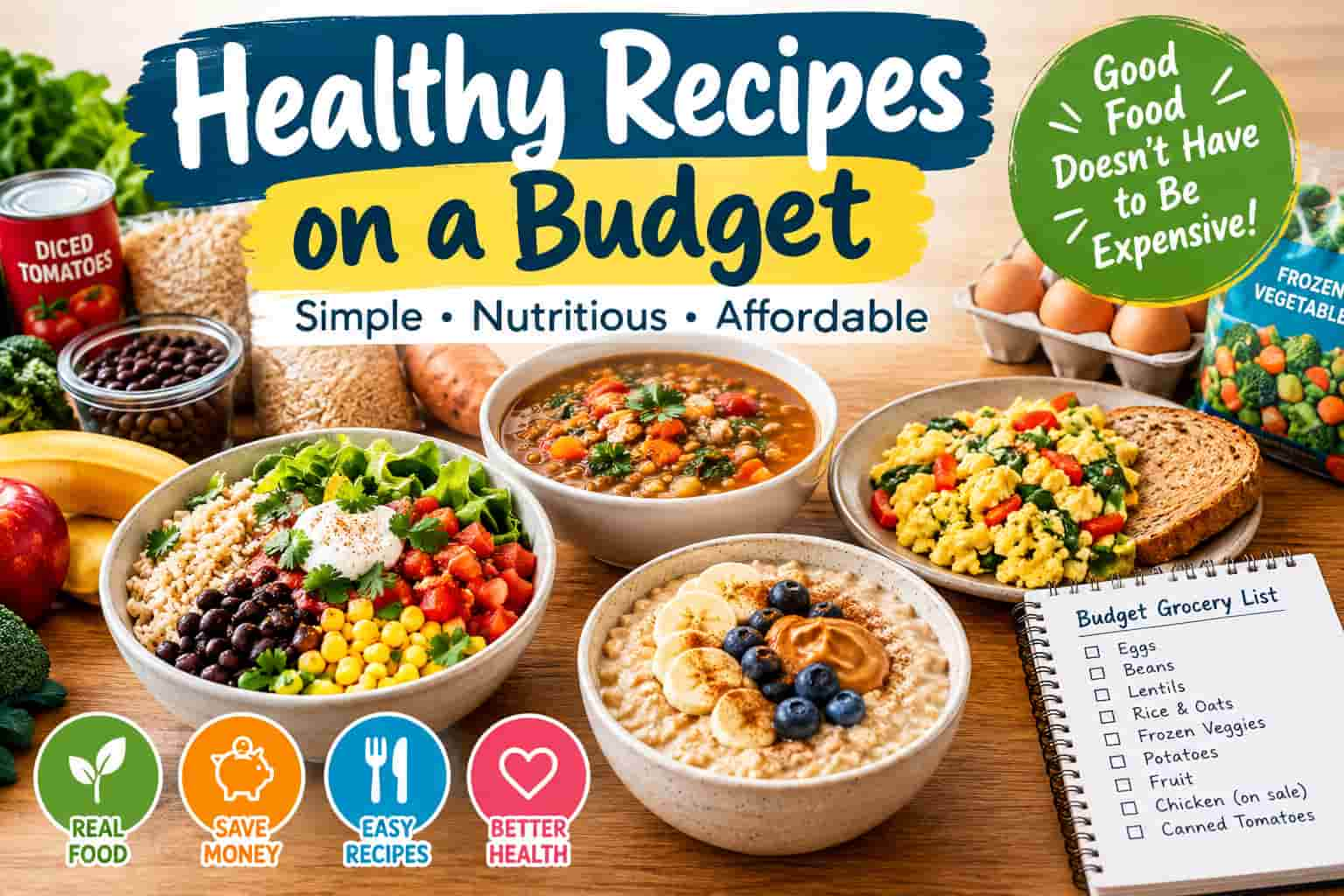
Eating healthy does not have to mean buying expensive organic foods, specialty protein powders, or a cart full of “health” products. Some of the best budget-friendly healthy recipes use inexpensive staples such as beans, lentils, eggs, oats, potatoes, brown rice, frozen vegetables, canned tomatoes, and seasonal produce. With a little planning, you can turn these ingredients into filling breakfasts, lunches, dinners, and snacks without spending a fortune.
When I plan budget meals, I use one simple rule: start with inexpensive staples, add a reliable protein, then build flavor with vegetables, herbs, spices, and sauces. That approach is much easier to stick with than trying to make every meal perfect.
Key Takeaways
💡 Budget-Friendly Healthy Eating
- Beans, lentils, eggs, oats, potatoes, rice, and frozen vegetables can form the base of many inexpensive meals.
- Frozen and canned fruits and vegetables can be practical, nutritious alternatives to fresh produce.
- Cooking once and turning leftovers into another meal can reduce both food waste and grocery spending.
- A healthy budget meal should ideally include protein + fiber-rich carbohydrate + vegetables or fruit + a modest amount of healthy fat.
- You do not need expensive “superfoods” to eat a nutritious diet.
- Comparing unit prices is often more useful than simply choosing the cheapest package.
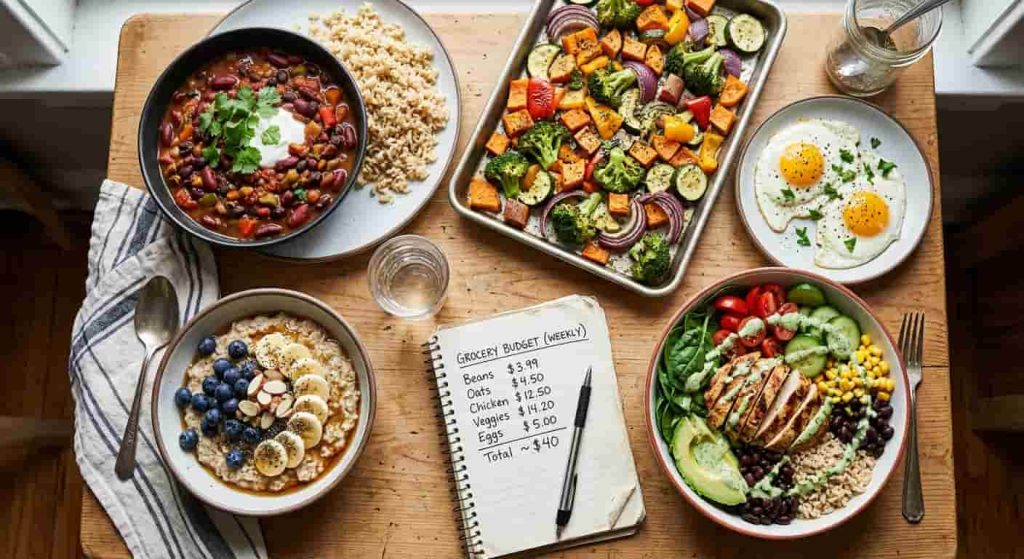
Quick Summary: 20 Healthy Recipes You Can Make on a Budget
TL;DR: The easiest way to eat well on a budget is to rotate a small collection of inexpensive, flexible recipes rather than buying different ingredients for every meal.
| Recipe | Main Budget Ingredients | Protein Source | Best For |
|---|---|---|---|
| 1. Bean & Rice Bowls | Rice, beans, corn | Beans | Lunch/dinner |
| 2. Lentil Vegetable Soup | Lentils, carrots, tomatoes | Lentils | Meal prep |
| 3. Egg & Vegetable Scramble | Eggs, frozen vegetables | Eggs | Breakfast |
| 4. Overnight Oats | Oats, banana, yogurt | Yogurt | Breakfast |
| 5. Chickpea Pasta Salad | Pasta, chickpeas, vegetables | Chickpeas | Lunch |
| 6. Turkey & Bean Chili | Ground turkey, beans, tomatoes | Turkey + beans | Dinner |
| 7. Tuna Potato Bowls | Potatoes, canned tuna | Tuna | Lunch |
| 8. Chicken Vegetable Rice | Chicken, rice, frozen vegetables | Chicken | Dinner |
| 9. Black Bean Tacos | Black beans, tortillas, cabbage | Beans | Family dinner |
| 10. Peanut Butter Banana Oatmeal | Oats, banana, peanut butter | Peanut butter | Breakfast |
| 11. Vegetable Egg Fried Rice | Rice, eggs, frozen vegetables | Eggs | Leftovers |
| 12. Sweet Potato & Black Bean Bowl | Sweet potato, beans | Beans | Vegetarian meal |
| 13. Tomato Lentil Pasta | Lentils, pasta, tomatoes | Lentils | Dinner |
| 14. Greek Yogurt Fruit Bowl | Yogurt, bananas, seasonal fruit | Yogurt | Breakfast/snack |
| 15. Chicken & Bean Soup | Chicken, beans, vegetables | Chicken + beans | Meal prep |
| 16. Tuna & White Bean Salad | Tuna, white beans, vegetables | Tuna + beans | Lunch |
| 17. Potato & Egg Hash | Potatoes, eggs, onions | Eggs | Breakfast/dinner |
| 18. Vegetable Barley Soup | Barley, vegetables, beans | Beans | Dinner |
| 19. Homemade Bean Burritos | Beans, rice, tortillas | Beans | Freezer meal |
| 20. Oatmeal Apple Breakfast | Oats, apples, cinnamon | Oats + milk | Breakfast |
The exact cost will vary depending on your location, store, brand, package size, season, and food prices. USDA MyPlate recommends comparing unit prices, planning meals around your budget, buying foods that store well, and using beans plus canned or frozen vegetables to stretch meals.
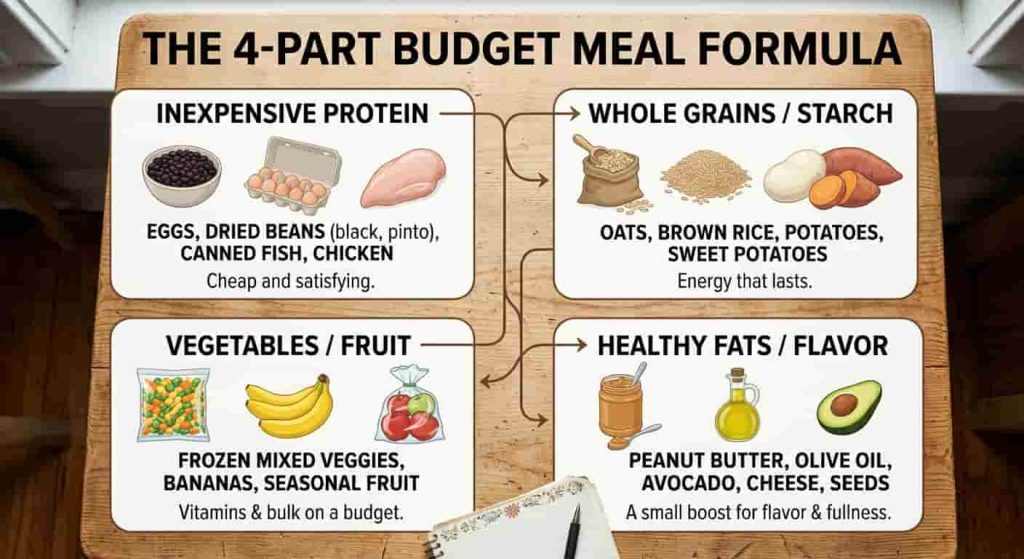
1. Start With a Simple Budget Meal Formula
TL;DR: Instead of searching for a completely different recipe every night, build meals from four inexpensive components.
A budget meal becomes much easier when you stop thinking about individual recipes and start thinking about meal building blocks.
Try this formula:
1. Choose a protein
Good affordable choices include:
- Eggs
- Dry or canned beans
- Lentils
- Chickpeas
- Peanut butter
- Canned tuna
- Chicken thighs or other economical chicken cuts
- Ground turkey when on sale
- Plain yogurt
- Tofu
2. Add a filling carbohydrate
Examples:
- Oats
- Brown or white rice
- Potatoes
- Sweet potatoes
- Whole-wheat pasta
- Barley
- Corn tortillas
- Whole-grain bread
3. Add vegetables or fruit
This does not have to mean a bag of expensive fresh produce.
Try:
- Frozen broccoli
- Frozen mixed vegetables
- Frozen spinach
- Cabbage
- Carrots
- Onions
- Potatoes
- Canned tomatoes
- Bananas
- Apples
- Oranges
- Seasonal produce
The USDA specifically notes that frozen and canned fruits and vegetables can be healthy, affordable options; for packaged foods, checking labels for lower sodium, added sugars, and saturated fat can help.
4. Add flavor
This is where boring budget food becomes good food.
Keep a small flavor kit:
- Garlic powder
- Black pepper
- Paprika
- Chili powder
- Italian seasoning
- Cinnamon
- Soy sauce
- Salsa
- Vinegar
- Lemon or lime juice
- Hot sauce
You don’t need 30 spices.
Five or six versatile seasonings can take you surprisingly far.
2. 20 Healthy Budget Recipes Worth Trying
TL;DR: These recipes focus on inexpensive pantry staples while still giving you protein, fiber, vegetables, and plenty of flavor.
1. Easy Bean and Rice Bowls
This may be the ultimate budget meal.
Ingredients
- 1 cup cooked rice
- ½–1 cup black or pinto beans
- Frozen corn
- Salsa
- Cabbage or lettuce
- A little plain Greek yogurt
- Chili powder or taco seasoning
How to make it
Warm the rice, beans, and corn together. Add shredded cabbage, salsa, and a spoonful of yogurt.
That’s it.
For extra flavor, add lime juice, cilantro, hot sauce, or a little shredded cheese.
Budget trick: Cook a large batch of rice and beans once. Use them for bowls, tacos, burritos, and fried rice later in the week.
Beans are especially useful because they provide both protein and fiber while working across many different meals. The American Heart Association lists beans and lentils among inexpensive nutrient-rich foods.
2. Hearty Lentil Vegetable Soup
If you want a cheap meal that can feed you for several days, make soup.
Ingredients
- Dry lentils
- Carrots
- Onion
- Canned diced tomatoes
- Frozen spinach or mixed vegetables
- Garlic
- Vegetable or chicken broth
- Black pepper
- Italian seasoning
Method
Sauté onion and carrots. Add lentils, tomatoes, broth, and seasonings. Simmer until the lentils are tender. Stir in spinach or frozen vegetables near the end.
One pot.
Several servings.
Very little fuss.
Lentils are particularly useful in budget cooking because they provide protein and fiber without requiring meat. The American Heart Association lists cooked lentils among foods that can cost less than $1 per serving, although actual prices vary by store and location.
3. Egg and Vegetable Scramble
Eggs are one of the easiest ways to add protein to a cheap meal.
Ingredients
- 2 eggs
- Frozen mixed vegetables
- Onion
- Black pepper
- Whole-grain toast
Cook the vegetables and onion in a skillet, add beaten eggs, and scramble until cooked through.
Serve with toast.
For dinner, add leftover potatoes or rice.
Information gain: Don’t limit eggs to breakfast. A vegetable egg scramble can become a quick lunch or dinner when the refrigerator looks almost empty.
4. Overnight Oats With Banana and Peanut Butter
Ingredients
- Rolled oats
- Milk or fortified soy milk
- Banana
- Peanut butter
- Cinnamon
- Plain yogurt, optional
Combine everything in a container and refrigerate overnight.
In the morning, you have breakfast ready.
Oats, bananas, peanut butter, and milk are all useful budget staples. The American Heart Association includes regular oatmeal, bananas, peanut butter, and milk among affordable nutritious foods.
Money-saving tip: Frozen bananas work beautifully in oatmeal and smoothies.
5. Chickpea Pasta Salad
Ingredients
- Whole-wheat or regular pasta
- Canned chickpeas
- Cucumber
- Tomato
- Carrot
- A small amount of feta, optional
- Olive oil
- Vinegar or lemon juice
Cook the pasta, cool it, then mix everything together.
This is excellent for packed lunches because it can be made ahead.
Budget swap: Don’t buy vegetables specifically for this recipe. Use whatever is already sitting in your refrigerator.
6. Turkey and Bean Chili
Ingredients
- Ground turkey
- Kidney beans
- Black beans
- Canned tomatoes
- Onion
- Chili powder
- Paprika
- Garlic
Brown the turkey and onion. Add everything else and simmer.
Want to make it cheaper?
Use half the meat and double the beans.
You still get a hearty meal, but the beans stretch the more expensive ingredient.
7. Tuna and Potato Bowls
Ingredients
- Potatoes
- Canned tuna
- Frozen peas
- Plain yogurt
- Mustard
- Black pepper
Boil or microwave the potatoes. Mix tuna with yogurt and mustard. Add peas.
Pile everything into a bowl.
This is especially useful when you need a fast lunch and don’t have fresh meat available.
8. Chicken, Rice and Frozen Vegetable Skillet
Ingredients
- Chicken
- Cooked rice
- Frozen mixed vegetables
- Onion
- Garlic
- Low-sodium soy sauce
- Black pepper
Cook the chicken, add vegetables and cooked rice, then season.
This recipe is also perfect for leftover chicken.
The USDA recommends planning to reuse leftovers and specifically suggests preparing larger batches of grains, vegetables, and proteins that can be repurposed during the week.
9. Black Bean Tacos
Ingredients
- Corn or whole-wheat tortillas
- Black beans
- Shredded cabbage
- Salsa
- Corn
- Plain yogurt
- Lime
Heat the beans and tortillas.
Fill.
Top.
Eat.
Cabbage is particularly helpful for budget meals because a single head can stretch across tacos, soups, salads, and stir-fries.
10. Peanut Butter Banana Oatmeal
Cook oats with milk or water.
Add:
- Sliced banana
- 1 spoonful peanut butter
- Cinnamon
If you need more protein, stir in plain Greek yogurt after the oatmeal cools slightly.
It tastes like comfort food but uses very basic ingredients.
3. More Budget-Friendly Healthy Recipes
TL;DR: Once you have a few basic ingredients, you can create many different meals without buying a separate grocery list for every recipe.
11. Vegetable Egg Fried Rice
Use leftover rice.
Add:
- Eggs
- Frozen peas
- Frozen carrots
- Onion
- Soy sauce
- Garlic
This is one of my favorite examples of why leftovers should not be treated as failures.
Yesterday’s rice becomes today’s lunch.
12. Sweet Potato and Black Bean Bowls
Bake or microwave a sweet potato.
Top with:
- Black beans
- Corn
- Salsa
- Plain Greek yogurt
- Green onion
Sweet potatoes are inexpensive, filling, and provide fiber and vitamin A. The American Heart Association lists sweet potatoes among affordable nutrient-rich foods.
13. Tomato Lentil Pasta
Cook pasta.
Meanwhile, simmer:
- Lentils
- Canned tomatoes
- Onion
- Garlic
- Italian seasoning
Combine the sauce with pasta.
You can add frozen spinach or whatever vegetables need to be used.
14. Greek Yogurt and Fruit Bowl
For a fast breakfast or snack:
- Plain Greek yogurt
- Banana or apple
- Oats
- Cinnamon
- Peanut butter
Use frozen fruit when it is cheaper than fresh.
15. Chicken and Bean Soup
Combine leftover chicken with:
- Beans
- Carrots
- Onion
- Canned tomatoes
- Broth
- Frozen vegetables
This is an excellent “clean out the refrigerator” meal.
16. Tuna and White Bean Salad
Mix:
- Canned tuna
- White beans
- Chopped onion
- Carrots
- Cucumber
- Lemon juice
- Black pepper
Serve over greens or with whole-grain toast.
17. Potato and Egg Hash
Dice potatoes and cook them with onion.
Add vegetables.
Then crack in two eggs.
Top with hot sauce.
That’s breakfast.
Or dinner.
Nobody said potatoes have to stay in the breakfast category.
18. Vegetable Barley Soup
Barley is inexpensive, filling, and works beautifully in soup.
Add:
- Barley
- Carrots
- Celery
- Onion
- Beans
- Canned tomatoes
- Broth
Cook until tender.
Make a large pot and freeze individual portions.
19. Homemade Bean Burritos
Fill tortillas with:
- Beans
- Rice
- Corn
- Salsa
- Cabbage
- A little cheese
Roll them tightly and freeze extras.
This gives you a homemade alternative to buying frozen convenience meals.
20. Apple Cinnamon Oatmeal
Cook oats with milk or water.
Add:
- Chopped apple
- Cinnamon
- Peanut butter
- A few raisins if desired
This is a cheap breakfast that can be changed easily depending on what’s on sale.
4. The Budget Grocery List I Would Start With
TL;DR: You don’t need a huge grocery haul; a small set of flexible ingredients can create dozens of combinations.
If I were trying to feed one or two people on a tight grocery budget, I’d start with a list like this:
Protein
- Eggs
- Dry or canned beans
- Lentils
- Chickpeas
- Canned tuna
- Peanut butter
- Plain Greek yogurt
- Chicken when on sale
Grains and starches
- Oats
- Rice
- Pasta
- Potatoes
- Sweet potatoes
- Whole-grain bread or tortillas
- Barley
Vegetables
- Carrots
- Cabbage
- Onions
- Frozen mixed vegetables
- Frozen spinach
- Canned tomatoes
- Whatever fresh produce is on sale
Fruit
- Bananas
- Apples
- Oranges
- Frozen berries when affordable
Flavor
- Garlic powder
- Chili powder
- Paprika
- Black pepper
- Cinnamon
- Soy sauce
- Salsa
- Vinegar
You can mix these ingredients into breakfast bowls, soups, salads, tacos, rice dishes, pasta dishes, and snacks.
5. How to Eat Healthy When Your Grocery Budget Is Really Tight
TL;DR: The biggest savings usually come from planning what you will use, comparing unit prices, reducing waste, and choosing flexible ingredients.
This is where many “budget recipe” articles stop too soon.
They give you a cheap recipe.
But the bigger question is:
How do you keep the entire grocery bill under control?
Shop by unit price
A larger package isn’t automatically cheaper.
Check the unit price on the shelf label rather than comparing only the package price. USDA MyPlate specifically recommends this approach.
Buy foods that can appear in multiple meals
This is one of the biggest money-saving tricks.
For example:
Black beans
→ Rice bowls
→ Tacos
→ Burritos
→ Chili
→ Soup
→ Salad
One ingredient.
Five or six meals.
That’s much better than buying an unusual ingredient for one recipe and forgetting about it.
Use frozen vegetables strategically
Fresh vegetables are great.
But they are not your only option.
Frozen broccoli, peas, spinach, and mixed vegetables can sit in the freezer until you need them.
USDA guidance notes that frozen and canned produce can be nutritious and useful for extending the life of a grocery supply.
Don’t automatically reject canned foods
Canned beans, tomatoes, tuna, and vegetables can be incredibly useful.
When possible, choose lower-sodium or no-salt-added products and drain/rinse canned beans when appropriate.
Buy seasonal produce
If strawberries cost a lot in your area but apples are on sale, buy apples.
Healthy eating does not require eating the same “superfood” every week.
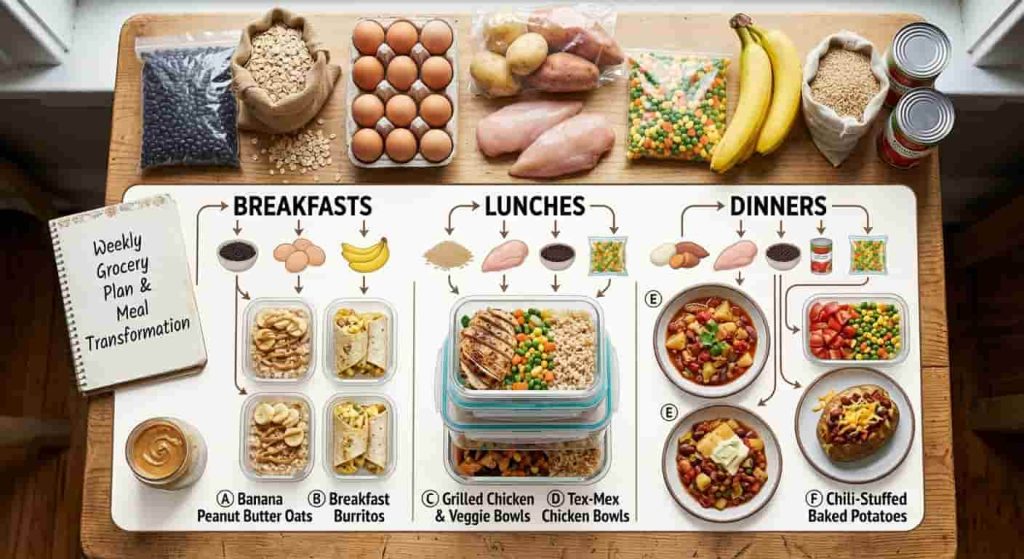
6. The Leftover Strategy That Can Save You Money
TL;DR: Cook ingredients once and deliberately transform them into different meals instead of eating the exact same leftovers every day.
This is one of the most overlooked parts of budget cooking.
Imagine you cook:
- 4 cups of rice
- A pot of beans
- Roasted vegetables
- Several chicken portions
You can turn them into:
Monday: Chicken rice bowl
Tuesday: Bean and vegetable tacos
Wednesday: Chicken fried rice
Thursday: Burrito bowls
Friday: Vegetable and bean soup
The USDA’s leftover-planning guidance encourages exactly this kind of mix-and-match approach, using core foods such as rice, pasta, vegetables, beans, eggs, and canned fish in different meals.
The trick is not cooking five dinners.
It’s cooking components that can become five dinners.
7. How to Make Cheap Food Actually Taste Good
TL;DR: Flavor comes from seasoning, texture, acidity, browning, and sauces—not from expensive ingredients.
Let’s be honest.
A bowl of plain rice and beans can get boring.
But rice and beans with:
- Lime
- Salsa
- Chili powder
- Cabbage
- Yogurt
- Hot sauce
feel completely different.
Use acid
Lemon juice, lime juice, vinegar, and pickled vegetables can wake up inexpensive meals.
Toast your spices
Briefly heating spices in oil can make them smell and taste more intense.
Brown your food
Roasting potatoes or vegetables creates more flavor than simply boiling everything.
Add texture
Crunchy cabbage, toasted oats, roasted chickpeas, or chopped nuts can make a simple meal more interesting.
Use sauces strategically
A small amount of salsa, mustard, yogurt sauce, or hot sauce can transform leftovers.
8. Common Budget-Eating Mistakes
TL;DR: Eating cheaply becomes harder when you buy too many ingredients, ignore food waste, or assume “healthy” automatically means expensive.
Mistake #1: Buying ingredients for every recipe
If five recipes require five different types of greens, three specialty sauces, and several vegetables you rarely eat, your grocery bill climbs quickly.
Choose recipes that overlap.
Mistake #2: Buying only fresh produce
Fresh produce is excellent, but some foods spoil before you use them.
Frozen vegetables can reduce that problem.
Mistake #3: Thinking expensive foods are healthier
You don’t need:
- Imported berries
- Expensive protein bars
- Specialty powders
- Fancy grain mixes
- Organic-only ingredients
to build nutritious meals.
Mistake #4: Forgetting protein
A cheap meal isn’t automatically satisfying.
If dinner is just pasta with a little sauce, you may be hungry again soon.
Add beans, lentils, eggs, tuna, tofu, chicken, or another protein source.
Mistake #5: Making huge portions without a plan
Bulk cooking saves money only when you actually eat the food.
Freeze extras when appropriate.
9. Healthy Budget Foods That Deserve More Attention
TL;DR: Some of the most useful budget foods are ordinary foods that don’t get much attention online.
Cabbage
Cheap, durable, and versatile.
Use it in:
- Slaws
- Tacos
- Stir-fries
- Soups
- Rice bowls
Lentils
Fast-cooking compared with many dried beans and useful in soups, curries, pasta sauces, and bowls.
Eggs
Useful for breakfast, lunch, dinner, sandwiches, fried rice, and salads.
Potatoes
They are remarkably versatile.
Bake them.
Roast them.
Dice them.
Turn them into breakfast hash.
Add them to soup.
Frozen spinach
You can add it to eggs, pasta, soups, rice, smoothies, and sauces.
Canned tomatoes
One can can become the base for chili, soup, pasta sauce, shakshuka-style eggs, or bean stew.
Oats
Breakfast is the obvious use.
But oats can also be used in homemade energy bites, baked oatmeal, savory oat bowls, and inexpensive snacks.
10. Myths vs. Facts About Healthy Eating on a Budget
TL;DR: Many beliefs about healthy food and cost are based on convenience or marketing rather than what a balanced grocery basket actually requires.
| Myth | Fact |
|---|---|
| Healthy food is always expensive. | Many nutrient-rich staples such as beans, lentils, oats, eggs, bananas, and potatoes can be inexpensive. |
| Fresh vegetables are always healthier than frozen. | Frozen vegetables can be nutritious and are often convenient and longer-lasting. |
| You need expensive protein foods. | Beans, lentils, eggs, yogurt, tuna, tofu, and other foods can provide protein. |
| Eating healthy means buying organic. | Organic food is not a requirement for a generally nutritious eating pattern. |
| Cheap food has to be boring. | Herbs, spices, sauces, acid, and cooking techniques can add lots of flavor. |
| You should never eat canned food. | Canned beans, tomatoes, fish, and vegetables can fit into a healthy diet. |
USDA guidance supports using frozen and canned produce, shelf-stable foods, beans, grains, and leftovers as part of a practical budget-conscious eating pattern.
11. What About Healthy Recipes Under $5?
TL;DR: A $5 recipe can be very affordable, but the real number to watch is often the cost per serving.
Recipe prices change with location and food prices, so treat online cost estimates as examples rather than guarantees.
For example, current budget-recipe databases feature numerous recipes priced below $5 for an entire recipe, including bean-based dishes, tuna patties, chicken meals, pasta, soups, and vegetable sides.
Some recipes can be even less expensive per serving.
But there’s an important catch.
A $5 recipe serving two people costs $2.50 per serving.
A $6 recipe serving six people costs $1 per serving.
Always divide total recipe cost by the number of servings.
That’s a much more useful way to compare meals.
12. How to Build a 7-Day Budget Meal Plan
TL;DR: Repeating ingredients across meals is one of the simplest ways to lower grocery costs without eating the same meal every day.
Here’s a practical example:
| Day | Breakfast | Lunch | Dinner |
|---|---|---|---|
| Monday | Banana oatmeal | Bean rice bowl | Chicken vegetable rice |
| Tuesday | Egg scramble | Chicken leftovers | Lentil soup |
| Wednesday | Peanut butter oatmeal | Lentil soup | Black bean tacos |
| Thursday | Yogurt + banana | Tuna potato bowl | Vegetable egg fried rice |
| Friday | Apple cinnamon oats | Bean burrito | Turkey bean chili |
| Saturday | Eggs + toast | Chili leftovers | Sweet potato bean bowl |
| Sunday | Banana oatmeal | Tuna bean salad | Chicken bean soup |
Notice something?
The ingredients repeat.
That’s intentional.
You don’t need 21 completely different grocery lists for 21 meals.
13. Frequently Asked Questions
What are the cheapest healthy meals to make at home?
TL;DR: Bean and rice bowls, lentil soup, egg-and-vegetable dishes, oatmeal, potato-and-egg hash, chili, and bean burritos are among the easiest inexpensive options.
Look for meals built around inexpensive staples rather than specialty ingredients.
Beans, lentils, oats, eggs, potatoes, rice, frozen vegetables, canned tomatoes, bananas, and peanut butter can form the foundation of many affordable meals.
How can I eat healthy on $50 a week?
TL;DR: Focus on inexpensive staples, plan meals before shopping, buy foods that can be reused across recipes, and limit food waste.
A $50 weekly budget can mean very different things depending on where you live, how many people you feed, what you already have at home, and whether the budget includes snacks and beverages.
Start with inexpensive staples such as:
- Oats
- Rice
- Beans
- Lentils
- Eggs
- Potatoes
- Frozen vegetables
- Bananas
- Canned tomatoes
- Peanut butter
Then use sales and unit pricing to fill in the gaps.
USDA MyPlate recommends planning meals around your food budget, comparing unit prices, buying foods that store well, and using leftovers strategically.
Is it cheaper to cook at home than eat out?
TL;DR: Cooking at home can reduce the cost per serving, especially when you choose inexpensive ingredients and use leftovers efficiently.
However, the savings depend on what you cook, where you shop, how much food you waste, and what restaurant or takeout option you’re comparing it with.
A homemade meal made from rice, beans, vegetables, and eggs will usually have a very different cost structure from a meal built around expensive specialty ingredients.
What are the best cheap foods for protein?
TL;DR: Beans, lentils, eggs, peanut butter, yogurt, canned tuna, tofu, and chicken can all help provide protein while fitting different budgets.
Don’t focus on one “perfect” protein.
Instead, rotate several options.
That gives you more flexibility when prices change.
Medical Disclaimer
This article is for general educational purposes and is not medical advice. Individual nutrition needs vary based on age, activity level, allergies, medical conditions, medications, pregnancy status, and other factors.
If you have diabetes, kidney disease, heart disease, food allergies, an eating disorder, or another medical condition requiring a specific diet, speak with a qualified healthcare professional or registered dietitian before making major dietary changes.
Food prices and recipe costs also vary by location, store, season, brand, and household size. The examples in this article are intended as practical ideas, not guaranteed prices.
Bottom Line
Healthy eating on a budget is less about finding the cheapest possible food and more about getting maximum nutrition and flexibility from every grocery dollar.
Build meals around inexpensive staples.
Use beans and lentils.
Keep eggs around.
Buy frozen vegetables.
Choose seasonal produce.
Cook larger batches when it makes sense.
And give leftovers a second life.
You don’t need a gourmet kitchen or a refrigerator packed with expensive ingredients to eat well.
Sometimes the best budget meal is the simplest one: a bowl of rice, beans, vegetables, and a good sauce.
1 thought on “What Are Some Healthy Recipes That I Can Make on a Budget?”