When you’re hungry at 6:30 p.m., the last thing you want is a complicated “healthy” dinner that takes an hour. The good news: easy 15-minute anti-inflammatory dinner recipes can be built around salmon, beans, leafy greens, vegetables, whole grains, olive oil, nuts, seeds, and herbs—without sacrificing flavor. The key is choosing quick-cooking ingredients and combining several protective foods in one meal.
I’ve found that the biggest mistake people make with anti-inflammatory eating is making it far too complicated. You don’t need a refrigerator full of specialty powders or an expensive meal plan. A bag of spinach, canned beans, frozen vegetables, canned salmon, olive oil, whole-grain tortillas, and a few flavorful spices can take you surprisingly far.
Research increasingly supports an overall eating pattern rich in vegetables, fruits, whole grains, legumes, nuts, seeds, fish, and unsaturated fats. Mediterranean-style eating has particularly strong evidence for beneficial effects on inflammatory markers such as C-reactive protein and interleukin-6.
Note: These recipes are designed to support an overall healthy eating pattern. No single dinner can “switch off” inflammation overnight.
Key Takeaways
- 15 minutes is realistic when you use canned beans, frozen vegetables, pre-washed greens, quick-cooking grains, eggs, canned fish, or thin-cut proteins.
- Build dinner around protein + plants + high-fiber carbohydrates + healthy fat.
- Good anti-inflammatory ingredients include salmon, sardines, beans, lentils, spinach, broccoli, berries, walnuts, chia, flax, extra-virgin olive oil, herbs, and spices.
- You don’t have to eliminate every food traditionally labeled “inflammatory.” The overall dietary pattern matters more than one ingredient.
- Frozen vegetables can absolutely count. They are one of my favorite shortcuts for busy weeknights.
- If you have a medical condition, food allergy, digestive disorder, or take medications affected by diet, personalize these recipes with your healthcare professional.
What Makes a Dinner Anti-Inflammatory?
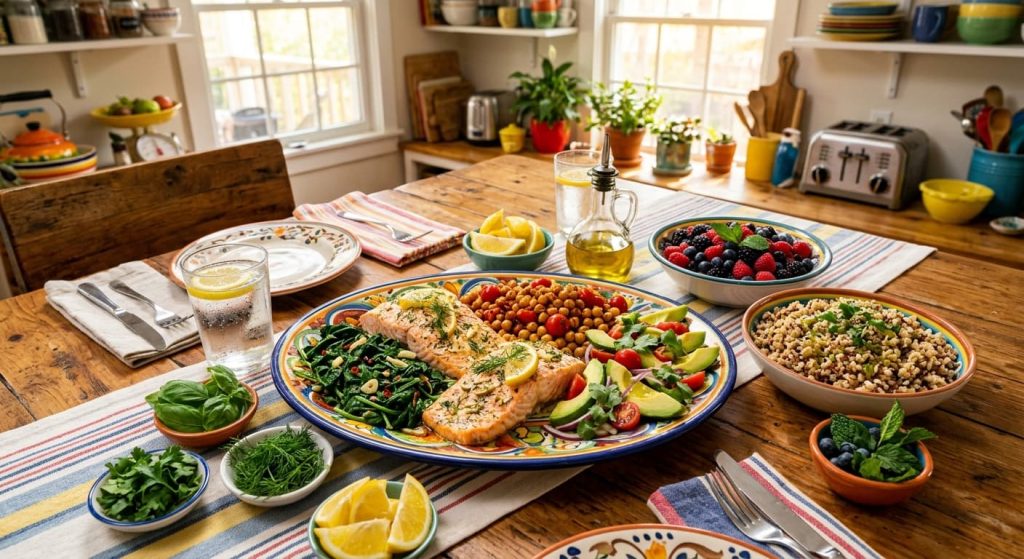
TL;DR: Think less about a magical “anti-inflammatory food” and more about creating a balanced meal rich in plants, fiber, omega-3 fats, and minimally processed ingredients.
There isn’t one official medical diet called the anti-inflammatory diet. Instead, the term generally describes eating patterns that emphasize nutrient-dense, minimally processed foods while reducing foods that are often associated with poorer metabolic and cardiovascular health.
Harvard Health describes a pattern centered on vegetables, fruits, whole grains, legumes, nuts, seeds, fish, and unsaturated oils. The Mediterranean diet is one of the strongest examples of this approach.
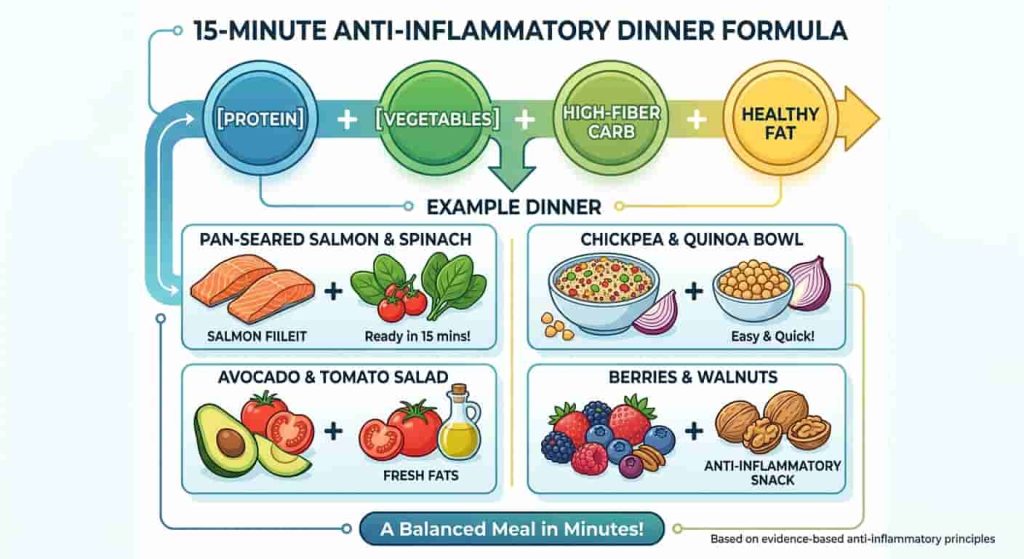
The 4-part dinner formula
When I’m putting together a quick dinner, I use this simple formula:
1. Protein
Choose:
- Salmon
- Sardines
- Tuna
- Eggs
- Chicken
- Tofu
- Lentils
- Chickpeas
- Black beans
2. Plants
Aim for at least one generous serving of vegetables.
Examples:
- Spinach
- Kale
- Broccoli
- Bell peppers
- Tomatoes
- Mushrooms
- Frozen mixed vegetables
- Arugula
3. High-fiber carbohydrate
Try:
- Quinoa
- Brown rice
- Farro
- Oats
- Whole-grain tortillas
- Beans
- Lentils
- Sweet potato
4. Healthy fat and flavor
Add:
- Extra-virgin olive oil
- Avocado
- Walnuts
- Pumpkin seeds
- Chia seeds
- Ground flaxseed
- Tahini
This combination makes dinner more filling and gives you a broader mix of fiber, vitamins, minerals, polyphenols, and unsaturated fats.
A 2025 umbrella review covering 30 systematic reviews and 225 primary studies found that Mediterranean-style dietary patterns were associated with improvements in inflammatory markers, although the certainty of evidence varied by outcome.
12 Easy 15-Minute Anti-Inflammatory Dinner Recipes
1. 15-Minute Lemon Garlic Salmon & Spinach
TL;DR: Pan-seared salmon, wilted spinach, lemon, garlic, and olive oil create a protein-rich dinner in about 15 minutes.
Ingredients
- 2 salmon fillets
- 4 cups baby spinach
- 2 garlic cloves, minced
- 1 tablespoon extra-virgin olive oil
- ½ lemon
- ½ teaspoon smoked paprika
- Black pepper
- Pinch of salt
- Optional: cooked quinoa
Instructions
- Pat the salmon dry and season with paprika, pepper, and a small amount of salt.
- Heat olive oil in a skillet over medium-high heat.
- Cook salmon for approximately 4–5 minutes per side, depending on thickness and desired doneness.
- Remove the salmon.
- Add garlic and spinach to the same skillet.
- Stir for 1–2 minutes until the spinach wilts.
- Squeeze fresh lemon over everything.
- Serve with a small portion of cooked quinoa if desired.
Why it works
Salmon supplies omega-3 fatty acids, while spinach contributes fiber and plant compounds. Olive oil adds predominantly unsaturated fat.
Harvard Health lists fatty fish, leafy greens, olive oil, nuts, seeds, and other plant foods among foods commonly emphasized in anti-inflammatory eating patterns.
Shortcut: Buy frozen salmon portions and keep frozen spinach available for nights when the refrigerator looks empty.
2. Mediterranean Chickpea Spinach Bowl
TL;DR: Canned chickpeas turn into a filling plant-forward dinner when combined with spinach, tomatoes, avocado, olive oil, and whole grains.
Ingredients
- 1 can chickpeas, drained and rinsed
- 2 cups baby spinach
- ½ cup cherry tomatoes
- ½ avocado
- ½ cup cooked quinoa or brown rice
- 1 tablespoon olive oil
- Juice of ½ lemon
- ½ teaspoon oregano
- Black pepper
Instructions
Warm the chickpeas and cooked grain in a skillet or microwave-safe bowl.
Add spinach and stir until slightly wilted.
Top with tomatoes and avocado.
Drizzle with olive oil and lemon juice.
Finish with oregano and black pepper.
That’s it.
Information-Gain Tip: The “Can + Bag + Grain” Formula
This is one of the most useful shortcuts for busy households:
1 can + 1 bag + 1 cooked grain = dinner.
For example:
- Chickpeas + spinach + microwave quinoa
- Black beans + frozen peppers + brown rice
- Lentils + kale + farro
You can rotate sauces and spices so the same basic ingredients don’t taste repetitive.
3. 15-Minute Sardine Avocado Toast Plate
TL;DR: Canned sardines make one of the fastest omega-3-rich dinners when paired with whole-grain toast, avocado, greens, and tomatoes.
Ingredients
- 1 can sardines
- 2 slices whole-grain bread
- ½ avocado
- Handful of arugula or spinach
- Sliced tomatoes
- Lemon juice
- Black pepper
- Optional red pepper flakes
Toast the bread.
Mash avocado onto the toast.
Add sardines, greens, and tomato.
Finish with lemon and pepper.
If sardines aren’t your thing, canned salmon or tuna can be substituted.
U.S. grocery tip: Don’t overlook canned seafood. It is shelf-stable, fast, and often much cheaper per serving than fresh fish.
4. Turmeric Chickpea & Vegetable Skillet
TL;DR: A colorful skillet of chickpeas and frozen vegetables delivers fiber and plant compounds with almost no chopping.
Ingredients
- 1 can chickpeas
- 2 cups frozen mixed vegetables
- 1 tablespoon olive oil
- ½ teaspoon turmeric
- ½ teaspoon cumin
- ½ teaspoon garlic powder
- Black pepper
- Lemon juice
Heat olive oil in a skillet.
Add frozen vegetables and cook for 5–6 minutes.
Add chickpeas and spices.
Cook another 3–4 minutes.
Finish with lemon juice.
Serve alone or over microwaveable brown rice.
Don’t make this mistake
Turmeric isn’t a magic anti-inflammatory cure.
It can be a useful flavorful spice within an overall healthy diet, but you don’t need to take concentrated turmeric supplements to make a healthy dinner.
The bigger win is the whole meal pattern.
5. 15-Minute Mediterranean Tuna & White Bean Salad
TL;DR: Canned tuna and white beans create a protein-and-fiber combination that requires no stove at all.
Ingredients
- 1 can tuna, preferably packed in water or olive oil
- 1 cup canned white beans
- 1 cup chopped tomatoes
- 1–2 cups arugula
- ¼ red onion, thinly sliced
- 1 tablespoon extra-virgin olive oil
- Lemon juice
- Parsley
- Black pepper
Drain and rinse the beans.
Combine everything in a bowl.
Toss.
Eat.
That’s a legitimate dinner.
If you’re still hungry, add whole-grain toast or a small serving of cooked quinoa.
6. Garlic Shrimp, Broccoli & Brown Rice
TL;DR: Frozen shrimp and frozen broccoli can become a balanced skillet dinner faster than many takeout orders arrive.
Ingredients
- 8–10 oz peeled shrimp
- 2 cups frozen broccoli
- 1 tablespoon olive oil
- 2 garlic cloves
- ½ cup cooked brown rice
- Lemon juice
- Black pepper
- Optional red pepper flakes
Heat olive oil.
Add shrimp and cook until opaque and cooked through.
Add broccoli and garlic.
Stir for several minutes.
Serve over reheated brown rice.
Finish with lemon.
Food-safety note
Shrimp should be cooked thoroughly and handled according to standard food-safety practices. Don’t judge doneness solely by cooking time because shrimp size varies.
7. Black Bean Sweet Potato Taco Bowl
TL;DR: Use a microwave-steamed sweet potato to create a fast taco bowl loaded with beans, vegetables, avocado, and salsa.
Ingredients
- 1 medium sweet potato
- ¾ cup black beans
- ½ avocado
- ¼ cup salsa
- Handful of spinach
- 1 tablespoon pumpkin seeds
- Lime juice
- Optional plain Greek yogurt
Pierce the sweet potato several times.
Microwave until tender, turning halfway through.
Split it open.
Add warm black beans, spinach, avocado, salsa, pumpkin seeds, and lime.
For extra protein, add plain Greek yogurt.
Why I like this one
It feels like comfort food.
That’s important.
A healthy dinner doesn’t have to taste like punishment.
8. Quick Mediterranean Egg & Greens Skillet
TL;DR: Eggs aren’t just breakfast—they can become a surprisingly satisfying 15-minute dinner with greens, tomatoes, and whole-grain toast.
Ingredients
- 2–3 eggs
- 2 cups spinach
- ½ cup cherry tomatoes
- 1 tablespoon olive oil
- Garlic
- Black pepper
- Whole-grain toast
- Optional feta
Sauté tomatoes and garlic in olive oil.
Add spinach.
Crack eggs into the skillet.
Cover and cook until the eggs reach your preferred doneness.
Serve with whole-grain toast.
This is especially useful for meatless Monday—or for the evening when you simply don’t feel like cooking meat.
9. 15-Minute Salmon & Avocado Whole-Grain Wrap
TL;DR: A whole-grain wrap becomes a fast anti-inflammatory-style dinner when filled with salmon, greens, avocado, and colorful vegetables.
Ingredients
- 1 whole-grain tortilla
- 3–4 oz cooked salmon
- Handful of spinach
- ½ avocado
- Sliced bell pepper
- Tomato
- Lemon juice
- Black pepper
Layer everything onto the tortilla.
Roll tightly.
Slice in half.
Use leftover cooked salmon from another dinner to make this almost effortless.
10. Lentil & Tomato Spinach Bowl
TL;DR: Pre-cooked lentils are one of the best shortcuts for a fiber-rich plant-based dinner.
Ingredients
- 1½ cups cooked lentils
- 2 cups spinach
- ½ cup cherry tomatoes
- 1 tablespoon olive oil
- Lemon juice
- Garlic
- Cumin
- Black pepper
Warm lentils in a skillet.
Add spinach and tomatoes.
Season with cumin, garlic, pepper, and lemon.
Drizzle with olive oil.
Add a spoonful of plain Greek yogurt if you enjoy a creamy contrast.
11. Peanut-Ginger Tofu Vegetable Bowl
TL;DR: Tofu, frozen vegetables, ginger, and a simple peanut sauce create a fast plant-based dinner with plenty of flavor.
Quick sauce
Mix:
- 1 tablespoon natural peanut butter
- 1 teaspoon low-sodium soy sauce
- 1 teaspoon grated ginger
- Lime juice
- Splash of water
Cook cubed tofu in a skillet.
Add frozen vegetables.
Pour over the sauce.
Serve with brown rice.
Ingredient swap
If soy isn’t suitable for you, use chicken, shrimp, or chickpeas instead.
12. Berry-Walnut Chicken Salad Dinner
TL;DR: A dinner salad can be substantial when you combine lean protein, leafy greens, berries, walnuts, and a whole-grain component.
Ingredients
- 3–4 oz cooked chicken
- 2–3 cups mixed greens
- ½ cup blueberries or strawberries
- ¼ cup walnuts
- ½ avocado
- ½ cup cooked quinoa
- Olive oil
- Balsamic vinegar
- Black pepper
Toss everything together.
That’s dinner.
And yes, fruit at dinner is perfectly fine.
How to Build a 15-Minute Anti-Inflammatory Dinner From Scratch
TL;DR: You don’t need a recipe every night—use a simple four-part formula and mix whatever ingredients you already have.
Here’s where the real time-saving happens.
Instead of asking:
“What recipe can I make tonight?”
Ask:
“What four building blocks do I already have?”
Step 1: Pick a protein
Choose one:
- Canned salmon
- Tuna
- Sardines
- Shrimp
- Eggs
- Rotisserie chicken
- Tofu
- Canned beans
- Pre-cooked lentils
Step 2: Grab two vegetables
Fresh is great.
Frozen is fine too.
Don’t let Instagram convince you that healthy cooking requires 14 perfectly chopped vegetables.
Try:
Spinach + tomatoes
Broccoli + bell pepper
Kale + mushrooms
Frozen mixed vegetables + onions
Step 3: Add a fiber-rich carbohydrate
Try:
- Microwave brown rice
- Quinoa
- Whole-grain tortilla
- Sweet potato
- Beans
- Lentils
- Whole-grain toast
Step 4: Add flavor-rich healthy fat
Use:
- Olive oil
- Avocado
- Walnuts
- Pumpkin seeds
- Tahini
- Natural peanut butter
Then finish with lemon, lime, vinegar, herbs, garlic, ginger, or spices.
This approach reflects a broader evidence-based principle: anti-inflammatory eating works best as an overall dietary pattern rather than as a hunt for one “superfood.”
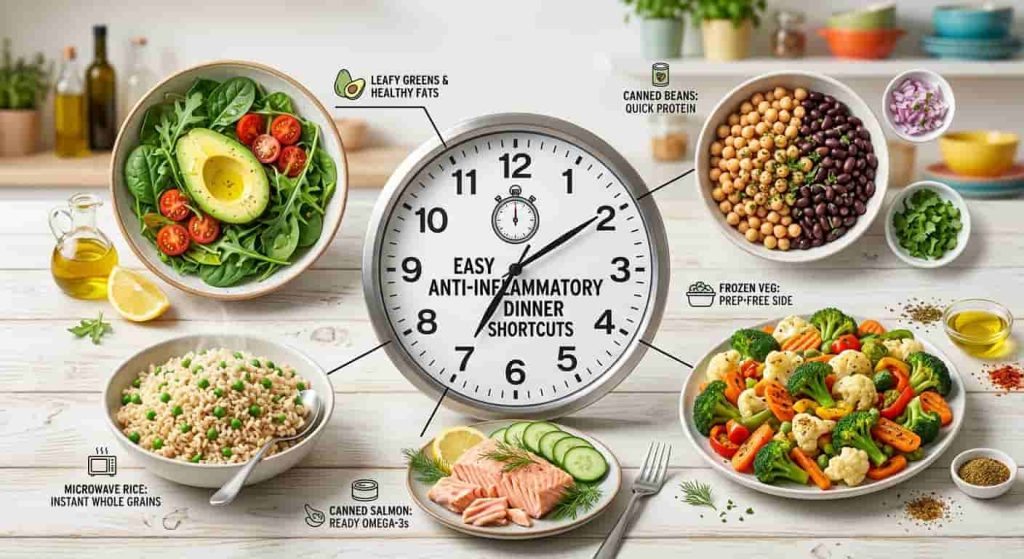
The Best Grocery Shortcuts for 15-Minute Dinners
TL;DR: The fastest healthy dinners usually come from keeping smart convenience foods on hand rather than cooking everything from scratch.
Here is the weeknight emergency list I’d keep in an American kitchen:
Refrigerator
- Baby spinach
- Pre-cut vegetables
- Eggs
- Greek yogurt
- Avocado
- Cooked chicken
- Fresh lemons or limes
Freezer
- Frozen broccoli
- Frozen spinach
- Frozen mixed vegetables
- Frozen berries
- Frozen salmon
- Frozen shrimp
Pantry
- Canned chickpeas
- Black beans
- Lentils
- Tuna
- Sardines
- Salmon
- Whole-grain tortillas
- Brown rice
- Quinoa
- Olive oil
- Walnuts
- Pumpkin seeds
- Spices
The overlooked shortcut: frozen vegetables
Frozen vegetables are particularly useful because they eliminate washing, peeling, and chopping.
And there’s no nutritional shame in using them.
If frozen broccoli gets dinner on the table instead of you ordering fried food because you’re exhausted, that’s a practical nutrition win.
5 Anti-Inflammatory Dinner Mistakes to Avoid
TL;DR: Most problems come from overcomplicating the diet, underestimating portions, or focusing on individual “superfoods” instead of the whole meal.
Mistake 1: Thinking one ingredient cancels out the rest
Adding turmeric to an otherwise heavily processed meal doesn’t magically transform it into an anti-inflammatory dinner.
Look at the entire plate.
Mistake 2: Eating only vegetables
A giant salad may look healthy but leave you hungry an hour later.
Add protein and fiber-rich carbohydrates.
Mistake 3: Being afraid of carbohydrates
Whole grains, beans, lentils, oats, and other high-fiber carbohydrate sources can fit comfortably into an anti-inflammatory eating pattern.
The quality and overall dietary pattern matter.
Mistake 4: Making dinner too small
A 300-calorie salad isn’t automatically better than a satisfying meal.
If you’re consistently hungry after dinner, increase protein, fiber, or healthy fats.
Mistake 5: Buying expensive “wellness” foods
You don’t need exotic powders, expensive supplements, or specialty products.
Beans, oats, frozen vegetables, canned fish, leafy greens, whole grains, nuts, seeds, and olive oil can do a lot of the work.
What Foods Should You Limit?
TL;DR: Focus on adding nutritious foods rather than creating a giant forbidden-food list, but limit heavily processed foods, sugary drinks, refined carbohydrates, and excess alcohol.
Harvard Health notes that foods commonly limited in anti-inflammatory eating patterns include sugary beverages and foods, refined carbohydrates, processed meats, and heavily processed foods.
That doesn’t mean you can never eat pizza.
It means pizza doesn’t have to be dinner every night.
A practical approach is:
Add before you subtract.
Before obsessing over what to remove, add:
- A vegetable
- A fruit
- Beans
- Whole grains
- Nuts or seeds
- Fish
- Olive oil
Over time, those additions can naturally crowd out less nutritious choices.
Myths vs. Facts About Anti-Inflammatory Dinners
TL;DR: Anti-inflammatory eating is much less restrictive—and much more realistic—than social media often makes it appear.
| Myth | Fact |
|---|---|
| You need special anti-inflammatory foods | Common foods such as beans, vegetables, whole grains, fish, nuts, and olive oil can fit the pattern. |
| Turmeric alone reduces inflammation | A healthy dietary pattern matters more than one spice. |
| You must avoid all sugar | The focus is generally on reducing excessive added sugar and highly processed foods, not achieving perfection. |
| You can’t eat meat | Lean poultry can fit; the emphasis is usually on more plant foods and fish and less processed/red meat. |
| Frozen vegetables aren’t healthy | Frozen vegetables can be a practical part of a healthy diet. |
| Results happen overnight | Dietary changes are habits, not an instant treatment for chronic inflammation. |
| Every anti-inflammatory claim online is proven | Evidence varies considerably by food, dietary pattern, condition, and outcome. |
A 2025 VA evidence review specifically noted that high-certainty evidence is still lacking for some anti-inflammatory dietary patterns and chronic conditions.
That’s an important distinction.
Healthy eating can support health.
It isn’t a replacement for medical treatment.
How Quickly Can an Anti-Inflammatory Diet Make a Difference?
TL;DR: Don’t expect one dinner to change inflammation markers overnight; meaningful benefits are better viewed as the result of consistent dietary and lifestyle patterns.
This is one area where online nutrition advice often gets exaggerated.
There isn’t a universal “7-day inflammation reset.”
Your response depends on your health, baseline diet, activity, sleep, body composition, medications, genetics, and the condition being studied.
Clinical research suggests anti-inflammatory dietary patterns can influence certain health outcomes and inflammatory markers, but studies vary considerably in design and certainty.
A better timeline is:
Tonight
Eat a balanced dinner.
This week
Repeat the pattern several times.
Over the next few months
Make it part of your normal eating routine.
That’s much more realistic than expecting a single food to “detox” inflammation.
Budget-Friendly Ways to Make These Dinners
TL;DR: Beans, frozen vegetables, canned fish, eggs, lentils, oats, and whole grains can make anti-inflammatory-style dinners affordable.
If grocery prices are stressing your budget, prioritize foods that offer several nutritional benefits at once.
High-value staples
Beans: protein + fiber
Lentils: protein + fiber + minerals
Frozen vegetables: vegetables without the waste
Eggs: versatile protein
Canned salmon/sardines: convenient seafood
Oats: inexpensive whole grain
Brown rice: easy base
Peanut butter: healthy fat + some protein
Seasonal produce: often cheaper than out-of-season produce
You don’t need every recipe to contain salmon, avocado, quinoa, blueberries, and extra-virgin olive oil.
That gets expensive fast.
Beans + frozen broccoli + brown rice + olive oil can still make a very sensible dinner.
How to Adapt These Recipes for Common Dietary Preferences
TL;DR: The same 15-minute formula works for vegetarian, dairy-free, gluten-free, and lower-cost eating with simple substitutions.
Vegetarian
Replace chicken or fish with:
- Chickpeas
- Lentils
- Tofu
- Tempeh
- Beans
- Eggs
Dairy-free
Use:
- Tahini
- Avocado
- Hummus
- Unsweetened dairy-free yogurt
instead of cheese or dairy-based sauces.
Gluten-free
Choose:
- Rice
- Quinoa
- Certified gluten-free oats
- Corn tortillas
- Potatoes
- Beans
Check packaged ingredients carefully if you have celiac disease.
Lower-cost
Use:
- Beans
- Lentils
- Eggs
- Frozen vegetables
- Canned fish
- Brown rice
- Seasonal produce
A Simple 5-Day 15-Minute Dinner Plan
TL;DR: Planning just five dinners removes much of the decision-making that makes healthy eating feel difficult.
| Day | Dinner | Main Protein | Time |
|---|---|---|---|
| Monday | Lemon Garlic Salmon & Spinach | Salmon | 15 min |
| Tuesday | Mediterranean Chickpea Bowl | Chickpeas | 10–15 min |
| Wednesday | Shrimp, Broccoli & Brown Rice | Shrimp | 15 min |
| Thursday | Black Bean Sweet Potato Taco Bowl | Black beans | 15 min |
| Friday | Tuna & White Bean Salad | Tuna + beans | 10 min |
Weekend prep that saves weekday time
If you have 30–45 minutes on Sunday, consider:
- Cooking a batch of brown rice or quinoa
- Washing greens
- Chopping a few vegetables
- Making one simple dressing
- Portioning nuts and seeds
- Keeping canned proteins visible in the pantry
Then your weekday “15-minute dinner” becomes more like assembly.
Read: What Are Some Healthy Recipes That I Can Make on a Budget?
Frequently Asked Questions
What is the fastest anti-inflammatory dinner?
A chickpea and spinach bowl, tuna and white bean salad, sardine avocado toast, or egg-and-greens skillet can be prepared in roughly 10–15 minutes. The fastest choice depends on whether ingredients are already cooked and ready to use.
What is the best dinner to reduce inflammation?
There isn’t one universally “best” anti-inflammatory dinner. A meal containing vegetables, legumes or whole grains, quality protein, and unsaturated fats—such as salmon with spinach and quinoa—is a strong example of a Mediterranean-style pattern.
Research supports the overall dietary pattern more strongly than claims about individual miracle foods.
Are eggs anti-inflammatory?
Eggs can fit into an overall healthy dietary pattern and provide protein and several nutrients. Rather than labeling individual foods as simply “inflammatory” or “anti-inflammatory,” consider what the entire meal contains and how frequently you eat different foods.
Can I eat chicken on an anti-inflammatory diet?
Yes. Chicken can fit into an anti-inflammatory-style eating pattern, particularly when paired with vegetables, beans, whole grains, nuts, seeds, or olive oil. The broader goal is to emphasize minimally processed plant foods and healthy fats while limiting heavily processed foods.
Final Takeaway
The best easy 15-minute anti-inflammatory dinner recipes aren’t complicated.
They’re repeatable.
That’s the part I think gets lost in a lot of healthy-eating advice.
A dinner of salmon, spinach, and quinoa doesn’t need to look like a restaurant plate. Chickpeas, frozen broccoli, brown rice, olive oil, and lemon are enough. So are eggs, greens, whole-grain toast, and tomatoes.
Start with a protein.
Add plenty of plants.
Choose a high-fiber carbohydrate.
Finish with a healthy fat and a lot of flavor.
Do that consistently, and you’re building the kind of overall eating pattern associated with better health—not chasing a miracle ingredient.
And when the clock says 7 p.m.?
Fifteen minutes is plenty.
Medical Disclaimer
This article is for general educational purposes and is not medical advice. “Anti-inflammatory” eating is not a substitute for diagnosis or treatment of an inflammatory disease, autoimmune condition, diabetes, heart disease, or another medical condition. Dietary responses vary between individuals. If you have a chronic health condition, food allergy, kidney disease, gastrointestinal disorder, are pregnant, or take medications affected by diet, speak with a qualified healthcare professional or registered dietitian before making major dietary changes.
Scientific evidence regarding anti-inflammatory diets is evolving, and not every claim about individual foods or supplements is supported by high-quality clinical evidence. Current research supports looking at overall dietary patterns rather than relying on a single food or ingredient.
Sources used for evidence review
- Harvard T.H. Chan School of Public Health — anti-inflammatory dietary pattern and food guidance.
- Harvard Health Publishing — quick-start anti-inflammatory diet guidance.
- 2025/2026 umbrella review of systematic reviews and meta-analyses on dietary patterns and inflammatory markers.
- U.S. Department of Veterans Affairs Evidence Synthesis Program — evidence map on anti-inflammatory dietary interventions.
- BMJ Nutrition, Prevention & Health — systematic review/meta-analysis of anti-inflammatory diets and quality of life.
1 thought on “Easy 15-Minute Anti-Inflammatory Dinner Recipes: 12 Fast, Flavorful Ideas”