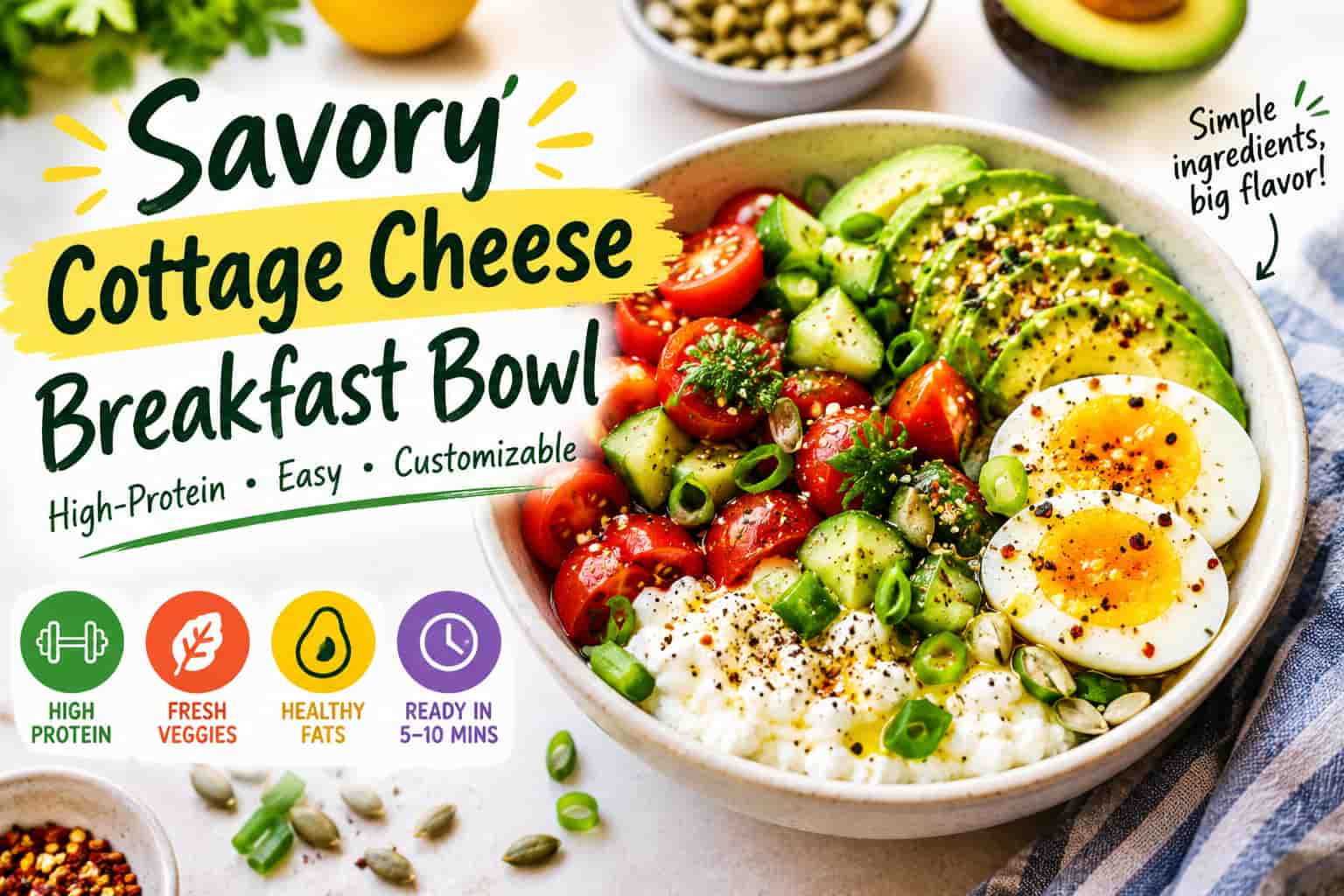
If you want a savory cottage cheese breakfast bowl, start with cottage cheese, crunchy vegetables, a flavorful seasoning, and one satisfying topping such as eggs, avocado, or whole-grain toast. The result is a quick, protein-rich breakfast that can be ready in about 5–10 minutes and easily adjusted for your calorie, protein, or carb needs.
I kept seeing the same basic formula while researching this topic: cottage cheese, cucumber, tomatoes, and a few herbs. It works. But there is a lot more you can do with this humble bowl. The right combination of protein, fiber, healthy fats, acidity, and crunch can turn cottage cheese from a bland refrigerator staple into a breakfast you genuinely look forward to.
And yes—you can make it without cooking.
Key Takeaways
🥣 Why this savory cottage cheese breakfast bowl works
- Cottage cheese provides a convenient source of protein.
- Fresh vegetables add volume, color, fiber, and crunch.
- Eggs, avocado, seeds, or whole-grain toast can make the bowl more satisfying.
- Lemon juice, herbs, hot sauce, or everything bagel seasoning can dramatically improve the flavor.
- Cottage cheese varies widely in sodium, so checking the Nutrition Facts label matters.
- You can build different versions for weight management, low-carb eating, vegetarian diets, or post-workout meals.
- For meal prep, keep wet vegetables and crunchy toppings separate until you’re ready to eat.
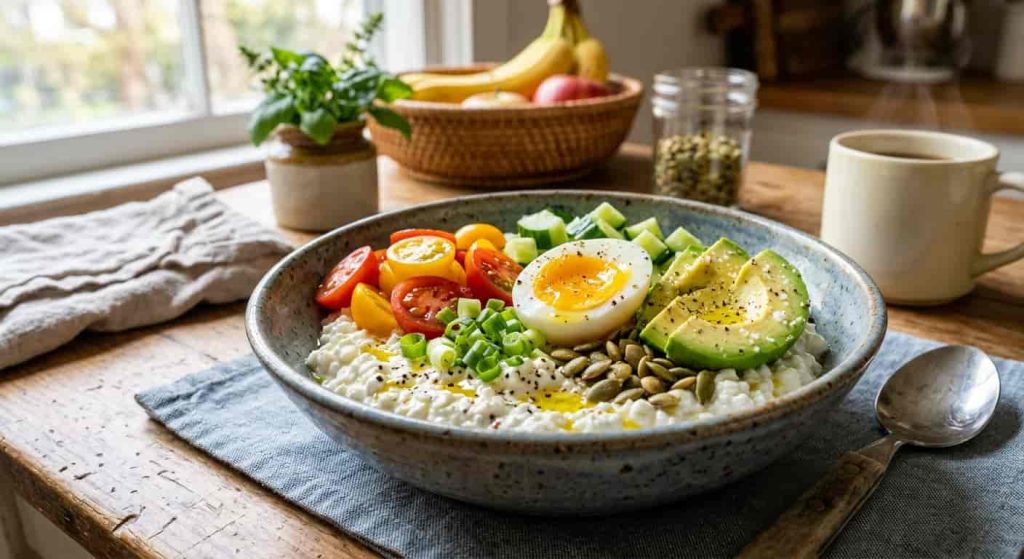
What Is a Savory Cottage Cheese Breakfast Bowl?
TL;DR: It is a customizable breakfast bowl built around cottage cheese instead of sweet yogurt, then finished with savory vegetables, seasonings, healthy fats, and optional extra protein.
Think of it as a breakfast bowl with no strict recipe.
That’s part of its charm.
The base is cottage cheese. From there, you can go Mediterranean with tomatoes, cucumber, olives, herbs, and olive oil. Or go full American breakfast with eggs, turkey bacon, avocado, and everything bagel seasoning.
Want something spicy?
Add jalapeño and hot sauce.
Want crunch?
Use pumpkin seeds, pistachios, or toasted whole-grain bread.
Want something more substantial?
Add a soft-boiled egg or a small serving of roasted sweet potato.
Current recipes commonly pair cottage cheese with vegetables such as cucumbers, tomatoes, bell peppers, herbs, and nuts or seeds. Some versions also add eggs, avocado, or whole-grain components to make the meal more substantial.
The important point is this: you don’t need to follow one fixed recipe.
You need a good formula.
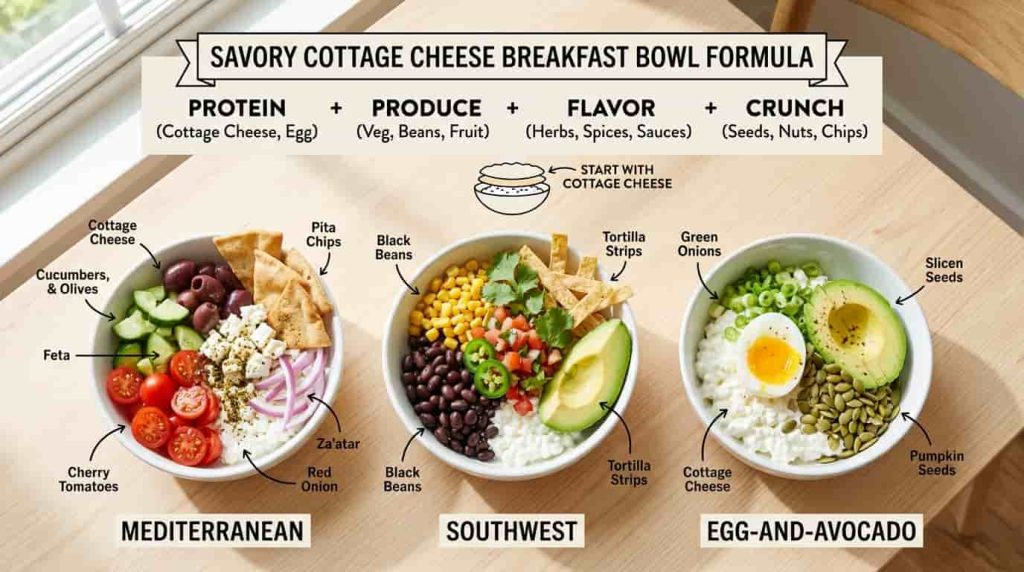
The Best Savory Cottage Cheese Breakfast Bowl Formula
TL;DR: Build your bowl with a protein base, produce, flavor boosters, texture, and an optional carbohydrate or healthy-fat component.
Here is the formula I recommend:
| Bowl Component | Good Choices | Why Add It? |
|---|---|---|
| Protein base | Cottage cheese | Creaminess + protein |
| Vegetables | Tomato, cucumber, spinach, peppers, radish | Volume + fiber + micronutrients |
| Extra protein | Egg, smoked salmon, chicken, beans | Makes the meal more substantial |
| Healthy fats | Avocado, olive oil, seeds, nuts | Flavor + richness |
| Flavor | Lemon, herbs, hot sauce, paprika | Prevents blandness |
| Crunch | Seeds, pistachios, whole-grain toast | Texture |
| Carb option | Sweet potato, oats, whole-grain toast | More energy and staying power |
This structure also solves one of the biggest problems with high-protein breakfasts: protein alone can become boring.
Cottage cheese gives you the creamy part. Vegetables provide freshness. Something crunchy makes the bowl interesting. Acid wakes everything up.
That’s how you get a breakfast that tastes like food—not a nutritional assignment.
My Go-To Savory Cottage Cheese Breakfast Bowl
TL;DR: This version combines cottage cheese, vegetables, avocado, egg, seeds, herbs, and an acidic dressing for a balanced, satisfying breakfast.
Ingredients
For 1 generous serving, use:
- ¾ to 1 cup cottage cheese
- ½ cup cherry tomatoes, halved
- ½ cup cucumber, chopped
- ¼ avocado, sliced
- 1 soft-boiled or hard-boiled egg
- 1 tablespoon pumpkin seeds or pistachios
- 1 tablespoon chopped scallions or chives
- 1 teaspoon extra-virgin olive oil
- 1–2 teaspoons fresh lemon juice
- Freshly ground black pepper
- Smoked paprika or chili flakes, optional
- Everything bagel seasoning, optional
How to Make It
1. Start with the cottage cheese.
Spoon it into a wide bowl rather than a deep one. A wider bowl makes it easier to distribute the toppings and gives you a little bit of everything in every bite.
2. Add the vegetables.
Place cucumber, tomatoes, and avocado around the cottage cheese.
3. Add the egg.
Slice the egg in half and place it on top.
4. Add crunch.
Sprinkle pumpkin seeds or pistachios over the bowl.
5. Finish with flavor.
Add lemon juice, olive oil, black pepper, scallions, and your favorite seasoning.
Taste before adding extra salt.
That’s important.
Many cottage cheese products are already fairly salty, and toppings such as olives, smoked salmon, deli meat, feta, and everything bagel seasoning can add even more sodium.
6. Eat immediately.
The best texture comes from eating the bowl while the vegetables are still crisp.
Why Cottage Cheese Works So Well for Breakfast
TL;DR: Cottage cheese is mild, creamy, protein-rich, and versatile enough to work with vegetables, eggs, herbs, and both crunchy and creamy toppings.
Cottage cheese has an advantage that Greek yogurt doesn’t always have: it doesn’t automatically push you toward sweet flavors.
You can add berries and cinnamon, of course.
But you can also add black pepper and tomatoes.
That makes it unusually flexible.
A half-cup of 2% cottage cheese is commonly reported to provide around 12 grams of protein, although nutrition varies by product and serving size.
Some commercially available cottage cheeses provide even more protein per serving, so the label on your specific container is the best source for exact nutrition.
Cottage cheese also supplies nutrients such as calcium, phosphorus, vitamin B12, and riboflavin.
Full-Fat or Low-Fat Cottage Cheese?
Either can work.
Low-fat cottage cheese can be useful if you’re trying to keep calories lower while still getting protein.
Full-fat cottage cheese can provide a richer texture and may make the bowl feel more satisfying.
There isn’t one universally “best” choice.
Look at the entire meal rather than obsessing over one ingredient.
If you choose low-fat cottage cheese but then add a large amount of oil, avocado, cheese, and nuts, the overall calorie difference may be much smaller than you expected.
The 5-Minute Assembly Method
TL;DR: Prep a few ingredients once and assemble your breakfast bowl in layers whenever you need a fast meal.
For busy U.S. mornings, the trick isn’t finding a magical recipe.
It’s removing friction.
Keep these foods ready:
- Cottage cheese
- Washed cherry tomatoes
- English cucumber
- Baby spinach
- Hard-boiled eggs
- Avocado
- Pumpkin seeds
- Lemon
- Scallions
- A favorite spice blend
Then breakfast becomes almost automatic.
A Simple 5-Minute Routine
Minute 1: Scoop cottage cheese into a bowl.
Minute 2: Add cucumber, tomatoes, and spinach.
Minute 3: Add your egg or another protein.
Minute 4: Add seeds, avocado, or toast.
Minute 5: Season and eat.
No blender.
No complicated recipe.
No stack of dirty pans.
That is exactly why this type of breakfast can work well for people who normally skip breakfast.

7 Flavor Combinations That Don’t Get Boring
TL;DR: Changing the flavor profile is the easiest way to keep cottage cheese bowls interesting without changing the basic preparation.
1. Mediterranean Cottage Cheese Bowl
Try:
- Cucumber
- Cherry tomatoes
- Kalamata olives
- Parsley
- Avocado
- Olive oil
- Lemon
- Black pepper
For more protein, add a boiled egg.
The result is fresh, salty, creamy, and bright.
2. Everything Bagel Bowl
Try:
- Cottage cheese
- Cucumber
- Tomato
- Avocado
- Hard-boiled egg
- Everything bagel seasoning
- Scallions
Add a slice of toasted whole-grain bread on the side.
It feels like an everything bagel breakfast without making the bagel the entire meal.
3. Spicy Southwest Bowl
Try:
- Cottage cheese
- Black beans
- Corn
- Tomato
- Jalapeño
- Avocado
- Cilantro
- Lime juice
- Chili powder
For a heartier bowl, add a small portion of roasted sweet potato.
4. Smoked Salmon Bowl
Try:
- Cottage cheese
- Smoked salmon
- Cucumber
- Red onion
- Dill
- Capers
- Lemon
- Black pepper
This one feels more like brunch.
It also brings a very different texture and flavor profile.
Because smoked salmon and capers can be salty, taste before adding additional salt.
5. Green Breakfast Bowl
Try:
- Cottage cheese
- Baby spinach
- Cucumber
- Avocado
- Green onion
- Pumpkin seeds
- Lemon
- Black pepper
This is especially good when you want something light and fresh.
6. Egg-and-Veggie Bowl
Try:
- Cottage cheese
- Two eggs
- Spinach
- Tomato
- Bell pepper
- Scallions
- Paprika
This is a strong option after a morning workout or for someone who prefers a more traditional breakfast.
7. Crispy Sweet Potato Bowl
Try:
- Cottage cheese
- Roasted sweet potato cubes
- Spinach
- Egg
- Pumpkin seeds
- Smoked paprika
- Hot sauce
The warm sweet potato against cold, creamy cottage cheese is surprisingly good.
And that temperature contrast is something many basic cottage cheese recipes miss.
How to Make Cottage Cheese Taste Better
TL;DR: Cottage cheese tastes dramatically better when you balance salt, acid, herbs, spice, and texture instead of simply piling vegetables on top.
Let’s be honest.
Some cottage cheese is fantastic.
Some tastes like wet pebbles.
If you’ve tried it before and hated it, don’t assume the ingredient is the problem.
Try These Fixes
Too bland?
Add lemon juice, black pepper, herbs, hot sauce, or smoked paprika.
Too salty?
Don’t add more salty toppings. Use cucumber, tomato, avocado, herbs, and lemon instead.
Too watery?
Drain excess liquid and choose a thicker variety.
Too grainy?
Try blending the cottage cheese briefly for a smoother texture.
Too boring?
Add crunch.
Seriously.
Pumpkin seeds, pistachios, toasted whole-grain bread, radishes, or roasted chickpeas can completely change the eating experience.
The Acid Trick
This is one of the simplest upgrades.
A small amount of lemon juice or vinegar can make creamy foods taste brighter.
You don’t need much.
Start with about a teaspoon, mix, taste, and adjust.
Is a Savory Cottage Cheese Breakfast Bowl Good for Weight Loss?
TL;DR: It can fit a weight-loss diet because cottage cheese provides protein and vegetables add volume, but the bowl’s total calories still depend on portions and toppings.
There is no magic “weight-loss bowl.”
That’s worth saying clearly.
Cottage cheese itself doesn’t cause fat loss.
But a bowl built around protein, vegetables, and sensible portions can be a useful breakfast when you’re trying to manage calorie intake.
The biggest calorie surprises usually come from toppings.
For example:
- 1 tablespoon of seeds is different from ½ cup.
- A few avocado slices are different from a whole avocado.
- A drizzle of olive oil is different from several tablespoons.
- One egg is different from three eggs plus cheese.
You don’t have to eliminate these foods.
Just recognize that healthy doesn’t mean calorie-free.
If weight loss is your goal, build the bowl around cottage cheese and vegetables first, then add calorie-dense toppings intentionally.
Can It Help You Eat More Protein?
TL;DR: Cottage cheese can make it easier to add protein at breakfast, especially when combined with eggs, fish, beans, or other protein-rich foods.
Protein needs vary by age, body size, activity level, health status, and overall diet.
So I wouldn’t recommend chasing a random protein number just because social media says you should.
Instead, make breakfast protein-containing.
For a more substantial bowl, combine cottage cheese with:
- Eggs
- Smoked salmon
- Beans
- Chicken
- Tofu
- Greek yogurt-based sauces
- Seeds
This approach is sometimes called “protein stacking”—using more than one protein source in a meal rather than relying on a single ingredient.
That can be particularly useful for people who find it difficult to get enough protein from breakfast.
Should You Add Carbs?
TL;DR: You don’t need to avoid carbohydrates; adding a high-fiber carbohydrate can make the bowl more substantial for active people.
This is where breakfast advice often gets unnecessarily complicated.
Carbohydrates aren’t automatically bad.
If you’re sitting at a desk all morning, a vegetable-heavy cottage cheese bowl may be enough.
If you’re training for a race, lifting weights, hiking, or simply have a long morning ahead, you may appreciate additional carbohydrate.
Good options include:
- Whole-grain toast
- Roasted sweet potato
- Beans
- Corn
- Oats
- Whole-grain crackers
- Fruit on the side
The right amount depends on your overall eating pattern and energy needs.
Cottage Cheese Bowl for a Low-Carb Breakfast
TL;DR: A cottage cheese bowl can be made lower in carbohydrates by emphasizing non-starchy vegetables, eggs, avocado, seeds, and savory seasonings.
Try:
- Cottage cheese
- Cucumber
- Spinach
- Radish
- Avocado
- Egg
- Pumpkin seeds
- Lemon
- Black pepper
Skip or reduce:
- Toast
- Sweet sauces
- Large portions of corn
- Large servings of sweet potato
Remember that “low-carb” doesn’t automatically mean healthier.
It is simply one dietary approach.
Cottage Cheese Bowl for a Post-Workout Breakfast
TL;DR: After exercise, a cottage cheese bowl can provide protein while vegetables and optional carbohydrates help create a more complete meal.
A post-workout bowl might look like:
- 1 cup cottage cheese
- 1 egg
- Cherry tomatoes
- Spinach
- Avocado
- Roasted sweet potato
- Pumpkin seeds
- Lemon
- Black pepper
If your workout was particularly long or intense, you may want more carbohydrate.
If it was a short walk, you probably don’t need to turn breakfast into a giant recovery meal.
Match the food to the activity.
Sodium: The Overlooked Issue With Cottage Cheese Bowls
TL;DR: Cottage cheese and savory toppings can add substantial sodium, so people watching sodium intake should compare labels and choose lower-sodium ingredients when appropriate.
This is one area where many cottage cheese bowl recipes don’t give enough attention.
Cottage cheese can contain a meaningful amount of sodium, and then people add:
- Everything bagel seasoning
- Feta
- Olives
- Capers
- Smoked salmon
- Turkey bacon
- Hot sauce
- Salt
Suddenly, a supposedly “healthy” bowl can become very salty.
The FDA’s Daily Value for sodium is less than 2,300 mg per day for people age 14 and older.
If you’re trying to reduce sodium, compare Nutrition Facts labels and use flavor builders that aren’t primarily salt:
- Lemon
- Garlic
- Fresh herbs
- Black pepper
- Smoked paprika
- Chili flakes
- Vinegar
You can still make the bowl exciting.
It just takes a little more creativity.
Can You Meal Prep a Savory Cottage Cheese Breakfast Bowl?
TL;DR: Yes, but storing ingredients separately gives you much better texture than assembling a wet bowl several days in advance.
This is one of the most practical improvements over many basic recipes.
Don’t throw everything into one container on Sunday and expect Friday’s breakfast to taste fresh.
Instead, prepare components.
Prep on Sunday
Chop:
- Cucumber
- Bell pepper
- Radish
- Cherry tomatoes
- Scallions
Prepare:
- Hard-boiled eggs
- Roasted sweet potato
- Toasted seeds
Then keep the cottage cheese separate.
In the morning:
- Add cottage cheese.
- Add vegetables.
- Add egg.
- Add avocado.
- Add seeds.
- Add lemon and seasoning.
Done.
For food safety, perishable foods should be refrigerated promptly rather than sitting at room temperature. USDA guidance recommends refrigerating leftovers within two hours, or within one hour when temperatures are above 90°F, and using refrigerated leftovers within about 3–4 days.
For a cold cottage cheese bowl, the practical takeaway is simple: keep it refrigerated and follow the storage instructions on the individual food packages.
The Best Way to Pack It for Work
TL;DR: Use separate compartments for cottage cheese, vegetables, crunchy toppings, and dressing so your breakfast doesn’t become watery.
If you’re taking breakfast to the office, gym, or campus, try a divided container.
Compartment 1: Cottage cheese
Compartment 2: Chopped vegetables
Compartment 3: Egg or other protein
Small container: Seeds and seasoning
Tiny container: Lemon juice or dressing
If you commute for a while, use an insulated lunch bag with an appropriate cold source so the dairy stays cold.
This is especially useful during hot U.S. summers or when you’re driving several hours.
Savory Cottage Cheese Bowl Without Eggs
TL;DR: You can make a completely satisfying egg-free bowl by combining cottage cheese with beans, seeds, vegetables, avocado, or fish.
Try this:
- Cottage cheese
- Chickpeas
- Cucumber
- Tomato
- Avocado
- Pumpkin seeds
- Parsley
- Lemon
- Black pepper
Or try smoked salmon if seafood fits your diet.
You don’t need eggs for a high-protein breakfast.
Is Cottage Cheese Good for Everyone?
TL;DR: Cottage cheese is nutritious for many people, but dairy intolerance, milk allergy, sodium concerns, and individual dietary needs can change whether it’s a good choice.
Cottage cheese is a dairy food.
That matters.
People with a milk allergy should avoid it unless their healthcare professional has advised otherwise.
People with lactose intolerance may tolerate some dairy products better than others, but tolerance varies from person to person.
Some people may also need to watch sodium intake because of their individual health needs.
If you have kidney disease, heart disease, diabetes, a medically prescribed diet, or another condition requiring specific nutrition targets, your ideal breakfast may need to be individualized.
Myths vs. Facts
TL;DR: Most cottage cheese breakfast myths come from treating one ingredient as either universally healthy or universally unhealthy.
Myth 1: “Cottage cheese is only for sweet breakfasts.”
Fact: Its mild flavor works extremely well with vegetables, herbs, eggs, fish, beans, and spices.
Myth 2: “More cottage cheese automatically means a better breakfast.”
Fact: A balanced bowl needs more than protein. Vegetables, fiber, healthy fats, and—when appropriate—high-quality carbohydrates can make the meal more complete.
Myth 3: “Low-fat is always better.”
Fact: Both low-fat and full-fat versions can fit into a healthy eating pattern. Your overall meal and personal nutrition goals matter.
Myth 4: “Healthy toppings don’t need portion control.”
Fact: Avocado, olive oil, nuts, seeds, and cheese can all be nutritious while still contributing substantial calories.
Myth 5: “Savory means low-carb.”
Fact: A savory bowl can contain whole grains, beans, sweet potatoes, or other carbohydrate-rich foods.
Information Gain: 6 Small Details Most Recipes Skip
TL;DR: The difference between an ordinary cottage cheese bowl and a great one comes down to texture, sodium, temperature, acidity, storage, and portion design.
1. Use a Wide Bowl
A wide bowl gives you more surface area, so toppings are distributed instead of buried.
It also makes the meal look more generous.
2. Add Acid at the End
Lemon juice tastes brighter when added immediately before eating.
Don’t drown the bowl.
A teaspoon can be enough.
3. Keep Crunch Separate
Seeds and toasted bread become soft when they sit in cottage cheese.
Add them at the last moment.
4. Don’t Automatically Add Salt
Taste first.
Cottage cheese may already provide plenty.
5. Mix Warm and Cold Ingredients
Try cold cottage cheese with warm roasted sweet potato.
Or warm sautéed spinach with chilled cottage cheese.
The temperature contrast makes a simple bowl much more interesting.
6. Choose One “Hero” Topping
You don’t need 14 ingredients.
Pick one thing that makes the bowl memorable:
- Jammy egg
- Avocado
- Smoked salmon
- Roasted sweet potato
- Crispy chickpeas
- Pistachios
- Spicy jalapeños
Then keep the rest simple.
That’s usually better than throwing the entire refrigerator into a bowl.
Read More: 7 Easy Healthy Apple Recipes: Best Picks for 2026!
Frequently Asked Questions
Is cottage cheese good for breakfast?
Yes. Cottage cheese can be a convenient protein-rich breakfast ingredient, and its mild flavor works with both sweet and savory foods. Pairing it with vegetables, healthy fats, and other protein or whole-food carbohydrates can create a more balanced meal.
What can I put in a savory cottage cheese bowl?
Popular options include cucumber, tomatoes, bell peppers, spinach, radishes, avocado, eggs, smoked salmon, beans, herbs, pumpkin seeds, pistachios, lemon juice, olive oil, hot sauce, and everything bagel seasoning.
Can I eat cottage cheese every day?
For many people, cottage cheese can fit into a varied diet regularly. However, the best choice depends on your overall eating pattern, dairy tolerance, sodium needs, and individual health considerations. Variety still matters, so don’t let one food crowd out other nutritious protein sources.
Is a cottage cheese bowl good for weight loss?
It can be a useful breakfast for someone trying to manage calorie intake because cottage cheese provides protein and vegetables can add volume with relatively few calories. But weight loss depends on your overall energy intake and lifestyle—not one particular food.
Final Takeaway
A savory cottage cheese breakfast bowl doesn’t need to be complicated.
Start with cottage cheese.
Add colorful vegetables.
Choose one extra protein if you want more staying power.
Add a healthy fat.
Then finish with something acidic, herby, spicy, or crunchy.
That’s it.
The beauty of this breakfast is its flexibility. On Monday, it can be cucumber, tomato, egg, and everything seasoning. Tuesday might be avocado, black beans, jalapeño, and lime. Wednesday could be smoked salmon, dill, cucumber, and lemon.
Same base.
Completely different breakfast.
And if you’re someone who has tried cottage cheese before and thought, Absolutely not, I’d give the savory version one honest shot. The combination of lemon, pepper, fresh vegetables, herbs, and crunch can make a surprisingly big difference.
Medical Disclaimer
This article is for general educational and informational purposes only and is not medical advice. Nutrition needs vary from person to person. If you have a food allergy, lactose intolerance, kidney disease, heart disease, diabetes, high blood pressure, or another medical condition requiring dietary restrictions, speak with a qualified healthcare professional or registered dietitian before making significant changes to your diet.
Sources: USDA Food Safety and Inspection Service guidance on refrigeration and leftovers; FDA sodium guidance; and current recipe/nutrition literature reviewed during preparation.
1 thought on “Savory Cottage Cheese Breakfast Bowl: The High-Protein Breakfast You’ll Actually Want to Eat”