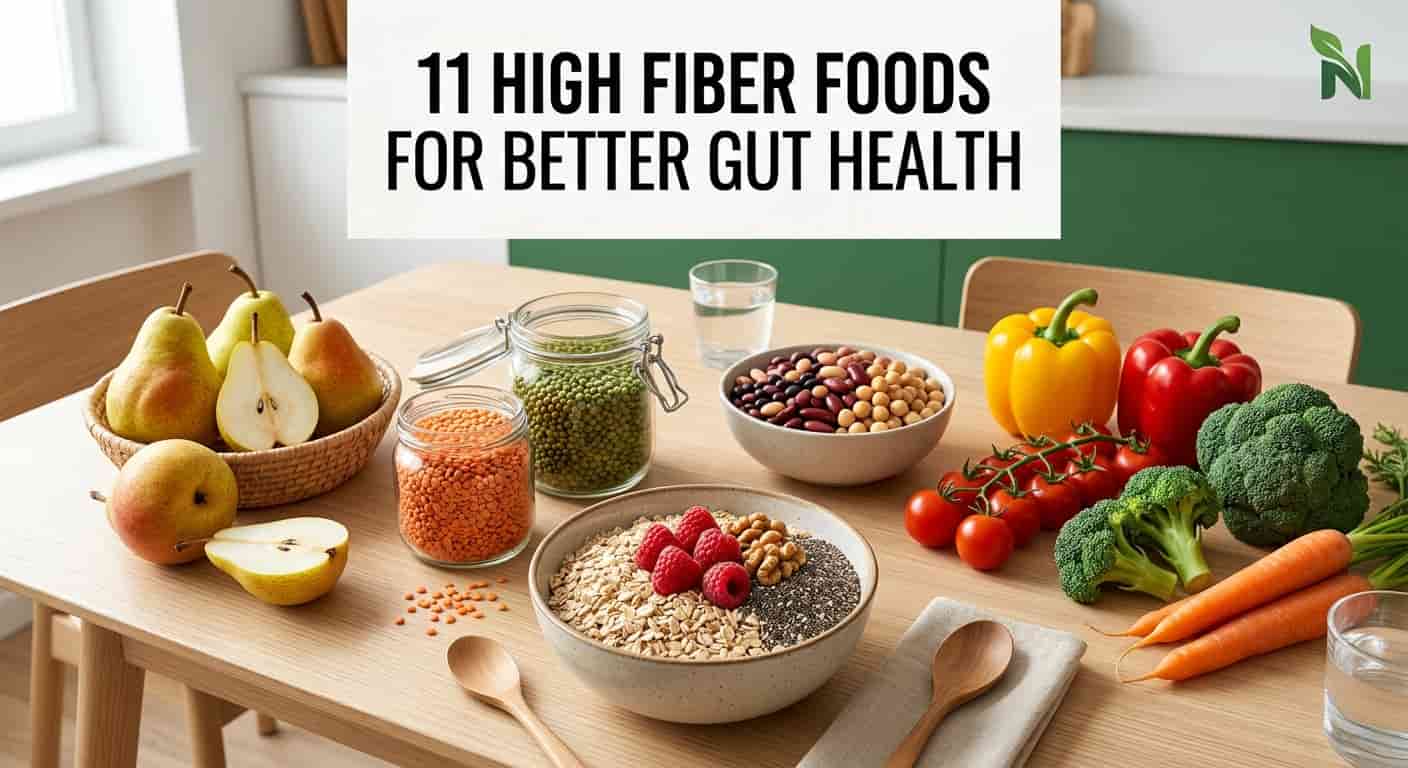
Ever noticed how nutrition trends change faster than weather forecasts? One month everyone talks about protein. The next month it’s collagen. Then suddenly it’s greens powder season.
But fiber? Fiber quietly sits in the corner like the reliable friend who never asks for attention.
And honestly, that’s strange.
Because while flashy health trends come and go, high fiber foods keep showing up in research papers year after year. They aren’t exciting in the way a “miracle superfood” sounds exciting. They don’t come with neon labels or celebrity endorsements.
They just work.
Here’s the deal: health experts recommend around 25–35 grams of fiber each day. Yet many people barely reach 10–15 grams. That’s a huge gap. Some researchers now call it the “10-gram fiber gap,” and it’s becoming one of the biggest nutritional concerns in preventive health.
Think about that for a second.
Many people are walking around every day eating enough calories but not enough of the stuff that helps their body actually use those calories well.
And this isn’t just about constipation. That’s the old story.
Fiber has entered an entirely different conversation now.
Scientists studying the gut microbiome discovered something fascinating. When your gut bacteria feed on certain foods that have high fiber, they create tiny compounds called Short-Chain Fatty Acids (SCFAs). Sounds technical. Stay with me.
These compounds act like little biological messengers.
One of them, called butyrate, becomes fuel for the cells lining your colon. Others help regulate inflammation, support metabolic health, and may even influence hunger hormones.
Pretty wild for something your grandmother probably got from oatmeal.
I learned this lesson the hard way.
Years ago, I made one of those classic health mistakes. I decided I was suddenly becoming “extremely healthy” on a Monday morning.
I loaded my plate with giant bowls of beans, oatmeal, vegetables, chia seeds, fruit… basically every high fiber item I could find.
By Tuesday afternoon?
Let’s just say my stomach had opinions.
Lots of opinions.
Turns out your gut bacteria need time to adapt. You can’t go from surviving on processed snacks to eating mountains of fiber overnight and expect your digestive system to throw a celebration.
We’ll get into that later.
For now, one thing matters:
Fiber isn’t boring anymore.
It’s becoming one of the most interesting subjects in nutrition science.
And you’re about to see why.
Why High Fiber Foods Matter More Than People Think
Most people think fiber has one job.
Bathroom stuff.
That’s it.
Eat fiber → poop better.
Simple.
Except it isn’t.
Actually, fiber acts more like a multitasking health assistant working behind the scenes every single day.
Your Gut Bacteria Are Running a Tiny City
Inside your digestive system live trillions of microorganisms.
Yes. Trillions.
Sounds slightly creepy. But you want them there.
When you eat foods that have high fiber, many of those bacteria throw a feast. They ferment the fiber and create beneficial compounds called SCFAs.
The big players are:
- Butyrate
- Acetate
- Propionate
These little compounds can influence:
- Gut barrier strength
- Appetite signals
- Blood sugar regulation
- Immune responses
- Inflammation levels
Imagine feeding a garden.
Water the flowers and they grow.
Ignore them and weeds take over.
Your gut works similarly.
The Natural Fullness Signal Nobody Talks About
Recently, scientists noticed something else.
The SCFAs created from fiber fermentation appear to stimulate hormones involved in fullness and appetite regulation, including GLP-1 and peptide YY.
You may have heard GLP-1 mentioned lately because of conversations around metabolic health and weight management medications.
Interesting twist:
Your body naturally uses versions of this signaling system.
No, eating lentils won’t magically imitate medication.
But your digestive system already has biological pathways connected to fullness and blood sugar regulation.
Food matters more than people realize.
Fiber Slows Things Down In A Good Way
Life moves fast enough already.
Your blood sugar doesn’t need to join the race.
Soluble fiber forms a gel-like substance in your digestive tract.
That thick mixture slows digestion.
Instead of:
Huge spike → sudden crash
You get:
Gentler rise → steadier energy
Ever eaten sugary cereal and felt hungry again forty-five minutes later?
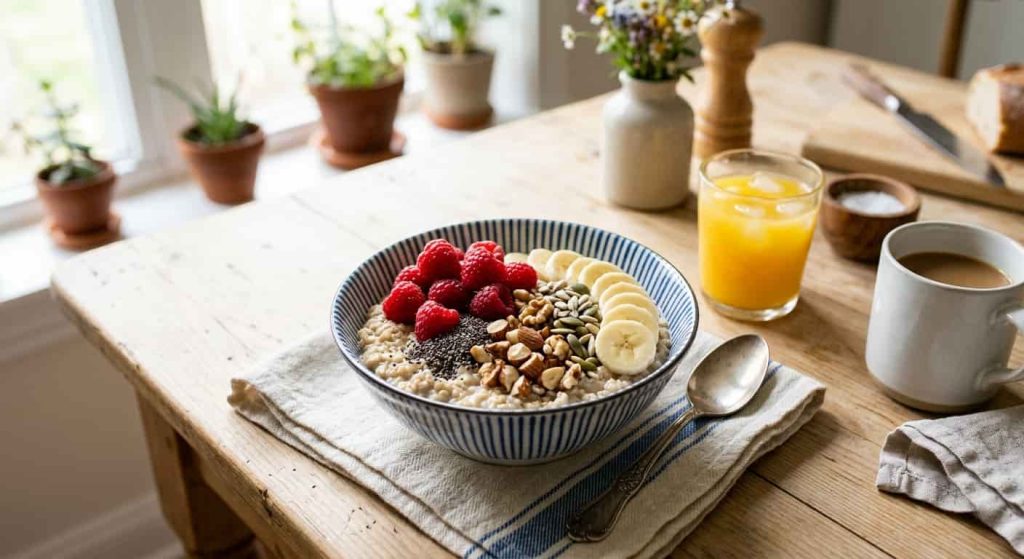
Then compare that with eating oatmeal topped with berries and nuts.
Big difference.
Your body notices it.
The Secret Difference Between Types of Fiber
People often say “eat more fiber.”
Fair enough.
But not all fiber behaves the same way.
Some acts like a sponge.
Some acts like a broom.
Some becomes food for bacteria.
Understanding this changes everything.
Soluble Fiber: The Sponge Effect
Soluble fiber dissolves in water.
It creates a thick gel during digestion.
You can find it in:
- Oats
- Lentils
- Beans
- Apples
- Chia seeds
- Psyllium
One of its biggest superpowers involves cholesterol.
Think of soluble fiber as a tiny molecular sponge.
It binds with cholesterol-rich bile acids inside your digestive system and carries them out of the body.
Then your liver has to replace them.
To do that, it pulls LDL cholesterol from your bloodstream.
Pretty clever.
Insoluble Fiber: The Cleanup Crew
Insoluble fiber behaves differently.
Instead of dissolving, it adds bulk.
You’ll find it in:
- Whole grains
- Vegetable skins
- Nuts
- Seeds
- Leafy vegetables
It helps keep things moving.
Simple.
Effective.
No drama.
Resistant Starch: The Sneaky Fiber Trick
This one surprised me.
You can actually change certain foods chemically at home.
Not with weird science experiments.
Just with your refrigerator.
Here’s how:
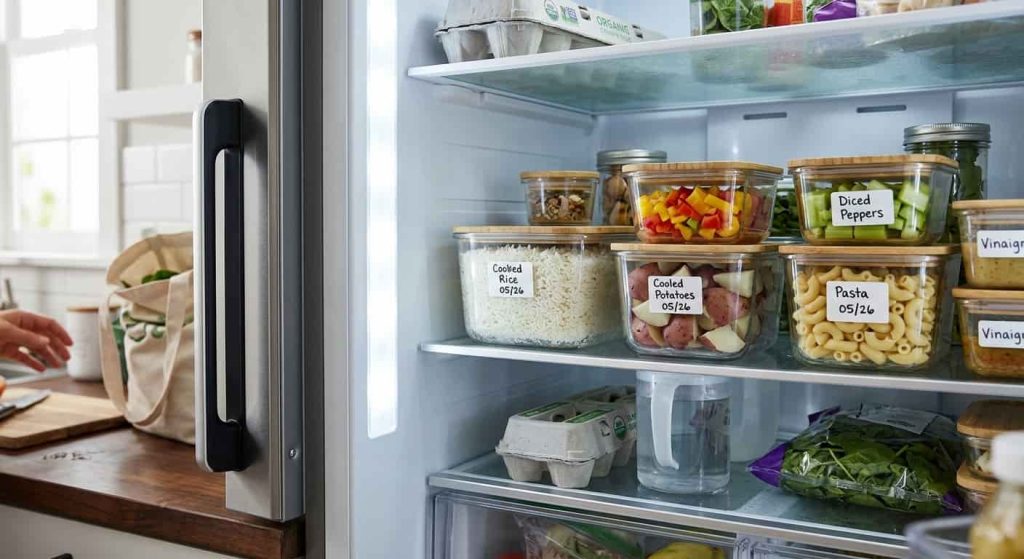
- Cook potatoes, rice, or pasta.
- Let them cool completely.
- Refrigerate them.
During cooling, something called retrogradation happens.
Part of the digestible starch transforms into resistant starch.
Resistant starch behaves more like fiber because it bypasses digestion in the small intestine.
Instead, it travels deeper into the gut where bacteria can feed on it.
Even reheating doesn’t completely remove the benefit.
Suddenly yesterday’s rice isn’t just leftovers.
It’s doing extra work.
Quick Signs You May Need More Fiber
Your body sometimes leaves clues.
Some common ones include:
- Feeling hungry constantly
- Irregular digestion
- Energy crashes
- Blood sugar fluctuations
- Low fruit and vegetable intake
- Relying heavily on processed foods
None automatically mean you have a fiber deficiency.
But they’re worth paying attention to.

Before moving on, here’s something important:
Don’t sprint into a high-fiber lifestyle.
Walk into it.
Adding 2–3 grams each day works much better than suddenly eating giant bowls of beans and seeds.
And drink water.
Lots of people miss that part.
Fiber without enough fluid behaves a bit like pouring dry cement into plumbing.
Not ideal.
The Best High Fiber Foods Worth Putting on Your Plate
Now for the fun part.
Because hearing “eat more fiber” is nice advice, but it also raises an obvious question:
Eat what, exactly?
Some people immediately think of bran cereal and sad-looking salads.
I blame decades of diet culture for that image.
High fiber foods can actually be filling, satisfying, and surprisingly easy to add to normal meals.
The biggest secret?
You don’t need a single magical food.
You need variety.
Different fibers feed different gut bacteria. Think of your microbiome like a neighborhood full of picky eaters. One group loves oats. Another group gets excited about beans. Others prefer fruits or resistant starches.
Feed only one type and part of the neighborhood misses dinner.
Let’s break down the heavy hitters.
Lentils: Tiny Nutrition Powerhouses
If fiber had an overachiever award, lentils would probably win.
One cup can provide around 15 grams of fiber.
That’s huge.
They’re also packed with plant protein, minerals, and slow-digesting carbohydrates.
I always laugh when people spend money on trendy “superfood powders” while ignoring lentils sitting quietly on the grocery shelf.
Lentils work in:
- Soups
- Curry dishes
- Salads
- Rice bowls
- Pasta sauces
And they tend to be budget friendly too.
Not a bad deal.
Chia Seeds: Small Seeds, Big Personality
Two tablespoons of chia seeds contain roughly 10 grams of fiber.
Ten.
From two tiny spoonfuls.
Once mixed with liquid, chia forms a gel-like texture called mucilage.
Sounds strange.
Looks strange too, honestly.
But that gel slows digestion and helps you feel fuller longer.
Easy ways I use them:
- Mixed into yogurt
- Added to oatmeal
- Stirred into smoothies
- Overnight chia pudding
Just remember something.
Dry chia seeds absorb liquid aggressively.
Drink enough water alongside them.
Steel-Cut Oats: The Breakfast Hero
Not all oats are identical.
Steel-cut oats tend to retain more texture and digest more slowly than highly processed instant varieties.
They’re especially rich in beta-glucan.
Beta-glucan has received serious scientific attention because of its relationship with heart health and cholesterol reduction.
Breakfast suddenly becomes more interesting when you think of it that way.
Not just calories.
Biology.
Raspberries: Tiny Fruits Doing Big Work
Raspberries don’t get enough attention.
One cup delivers roughly 8 grams of fiber while staying relatively moderate in sugar compared with many fruits.
They’re sweet.
They’re tart.
And they don’t create the sugar roller coaster some snacks create.
Add them to:
- Greek yogurt
- Oatmeal
- Smoothies
- Cottage cheese
- Fruit bowls
Beans: The Underrated Champions
Beans deserve better marketing.
Seriously.
Black beans.
Kidney beans.
Navy beans.
Chickpeas.
They’re among the best foods that have high fiber while also delivering protein.
Plus they’re ridiculously versatile.
You can turn beans into:
- Soups
- Tacos
- Dips
- Salads
- Pasta dishes
- Burgers
Pretty impressive for a food some people ignore entirely.
High Fiber Foods for Constipation That Actually Help
Let’s talk about the question people often whisper instead of asking directly.
Constipation.
Nobody gets excited discussing it.
But plenty of people deal with it.
And here’s where an important myth needs correcting.
Fiber isn’t simply a laxative.
It’s a regulator.
Some types help move slow digestion forward.
Others absorb excess water and help normalize stool consistency.
That means fiber rich foods for constipation aren’t about eating random amounts of bran and hoping for the best.
Foods That Often Help Keep Things Moving
Some good fiber foods for constipation include:
- Pears
- Prunes
- Kiwi
- Lentils
- Oats
- Beans
- Chia seeds
- Flaxseed
- Leafy greens
- Sweet potatoes
The key word here is consistency.
Eating one giant fiber-loaded meal after six days of low-fiber eating isn’t likely to create miracles.
Water Matters More Than People Realize
Picture fiber as a sponge.
Now imagine putting a dry sponge into a narrow pipe without water.
You already know how that story ends.
Fiber absorbs water.
Without enough fluid intake, digestive movement can slow instead of improve.
A lot of people increase fiber and accidentally skip the hydration part.
Then they wonder why things feel worse.
The pairing matters:
More fiber → more fluids
Simple High Fiber Meals for Constipation
You don’t need complicated recipes.
Some practical ideas:
Breakfast:
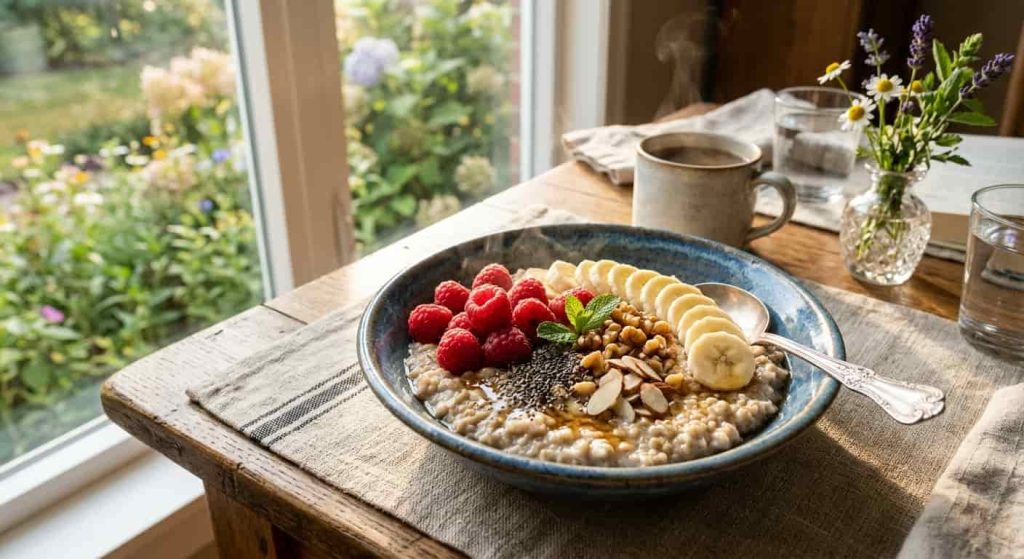
- Steel-cut oats with berries and chia
Lunch:
- Lentil soup with vegetables
Snack:
- Pear slices with nuts
Dinner:
- Rice and black bean bowl with roasted vegetables
Evening snack:
- Yogurt with flaxseed and raspberries
Simple beats perfect.
Almost every time.
Three Myths About Fiber That Refuse To Disappear
Nutrition myths survive forever.
It’s almost impressive.
Let’s clear out a few.
Myth: Fiber Only Helps Constipation
Reality?
Fiber affects far more than digestion.
Research now connects higher fiber intake with:
- Better metabolic health
- Improved blood sugar regulation
- Healthier cholesterol levels
- Reduced inflammation
- Better gut microbiome diversity
Myth: Supplements Replace Food
Fiber powders can help in certain situations.
But whole foods bring extra passengers:
- Vitamins
- Minerals
- Antioxidants
- Plant compounds
Nature rarely packages nutrients one at a time.
Myth: White Foods Have No Fiber
Actually, some naturally lighter-colored foods contain meaningful fiber.
Examples include:
- Cauliflower
- Garlic
- Navy beans
- Pears
- Jicama
Color alone doesn’t tell the whole story.

What Happened In Real Human Studies?
This part fascinated me.
Researchers once switched dietary patterns between rural African populations eating high-fiber diets and African Americans consuming lower-fiber Western diets.
Only two weeks passed.
Fourteen days.
The changes were dramatic.
Participants moving toward higher fiber eating patterns showed:
- Lower markers of colon inflammation
- Increased protective gut compounds
- Improved gut activity
The opposite happened when healthier patterns shifted away from fiber-rich eating.
Two weeks.
Your gut responds quickly.
Much faster than most people think.
Another clinical trial involving people with Type 2 diabetes found something equally interesting.
Researchers designed diets containing diverse fiber sources aimed specifically at gut bacteria.
The high-fiber group showed:
- Better blood sugar control
- Improved metabolic outcomes
- Growth of beneficial bacterial strains
Tiny organisms inside your body were responding to dinner choices.
Kind of incredible when you think about it.
Closing Thoughts: Closing Your Own Fiber Gap
Long story short, high fiber foods aren’t some health trend waiting to disappear next month.
They’re basic human nutrition doing what it’s been doing quietly all along.
Maybe your goal is better digestion.
Maybe you want steadier energy.
Maybe you’re searching for food with fiber for constipation.
Maybe you’re simply tired of feeling hungry all the time.
Start small.
Really small.
Add berries to breakfast.
Replace white bread occasionally.
Try beans once or twice a week.
Mix chia into yogurt.
Then repeat.
Remember my giant-fiber-disaster story from earlier?
Your gut likes gradual change.
Not surprise attacks.
And if you consistently close that 10-gram gap, your body may notice the difference before you do.
Sometimes better health doesn’t arrive with fireworks.
Sometimes it arrives with oatmeal and lentils.
Quietly.
And then one day you realize you feel better.
Read More Article: Stop the Crash: 7 Science-Backed Ways to Lower Glucose Spikes After Breakfast
Disclaimer: This article is for educational purposes only and is not a substitute for medical advice, diagnosis, or treatment.
Please wait to go to the next post: 30 seconds
Go to Next Post
1 thought on “11 Powerful High Fiber Foods That Can Transform Your Gut, Energy, and Everyday Health”