
The first time I looked seriously at Dutch home cooking, I had one question: Is it all mashed potatoes and smoked sausage? There is plenty of mash—and I mean that as a compliment—but these easy Dutch recipes at home also bring crisp pub snacks, slow-cooked stews, buttery cakes, and tiny pancakes.
This guide is built for a normal US kitchen. No suitcase full of groceries from Amsterdam. You’ll get practical substitutions, shortcuts, and recipes that still taste recognizably Dutch.
Dutch cuisine is often described as straightforward, seasonal, and rooted in familiar foods such as potatoes, vegetables, meat, dairy, and bread. Stamppot, bitterballen, poffertjes, and other classics remain some of the country’s best-known dishes.
Essential Ingredients and Smart Substitutions for Dutch Home Cooking
The Dutch pantry basics
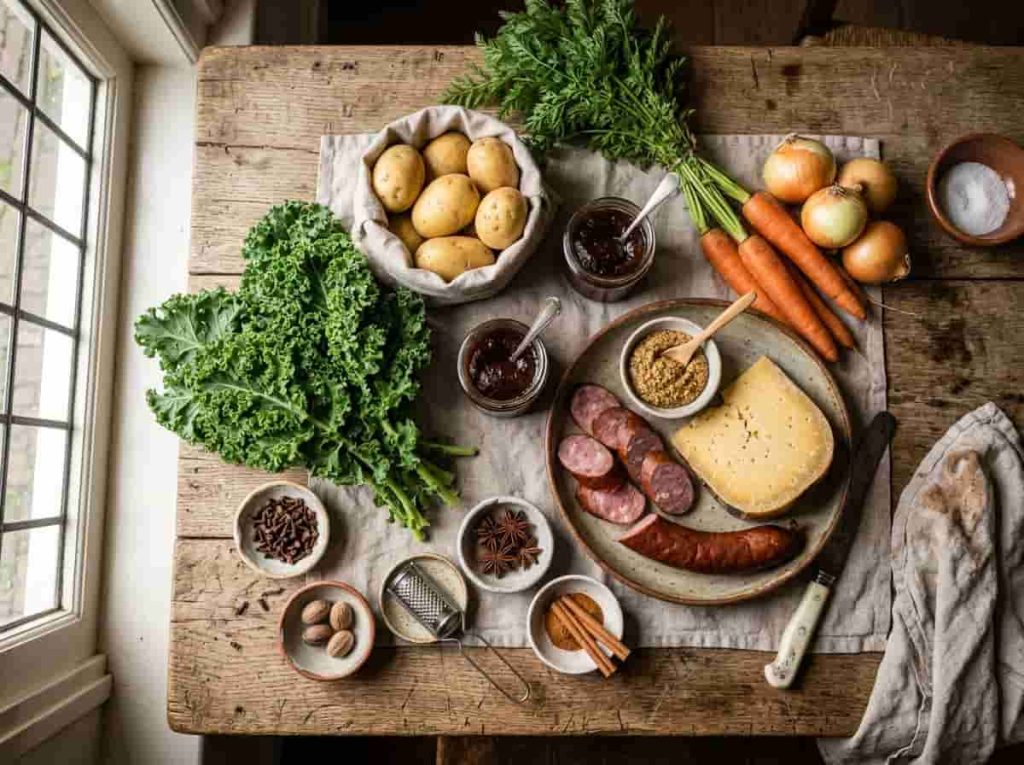
You don’t need a specialty store. Start with these sturdy, inexpensive ingredients:
- Yukon Gold or russet potatoes: Golds mash creamy; russets turn fluffier.
- Kale, carrots, onions, and endive: These form the backbone of several stamppot variations.
- Smoked sausage: Rookworst is classic, but accessible substitutes work well.
- Gouda: Young Gouda melts smoothly; aged Gouda adds a salty, nutty punch.
- Mustard: Choose coarse-grain or Dijon when Dutch mustard isn’t available.
- Warm baking spices: Cinnamon, cloves, nutmeg, ginger, and cardamom create speculaas-style flavor.
- Apple butter or dark syrup: Useful in sweet-savory gravies and old-fashioned stews.
Dutch cooking rewards sensible improvisation. Traditional dishes are regularly adapted with seasonal produce and plant-forward ideas.
Global substitution guide
| Dutch ingredient | Easy US substitute | Best use |
|---|---|---|
| Rookworst | Kielbasa, smoked Polish sausage, or smoked turkey sausage | Stamppot, pea soup |
| Speculaaskruiden | 2 teaspoons cinnamon, ½ teaspoon nutmeg, ¼ teaspoon cloves, ¼ teaspoon ginger, pinch of cardamom | Cookies, cakes, pie |
| Appelstroop | Apple butter mixed with a little molasses | Hachee, toast, marinades |
| Dutch endive | Curly endive, escarole, or finely sliced romaine | Raw endive stamppot |
| Dutch mustard | Coarse-grain mustard or Dijon | Soups, bitterballen, sausage |
| Ketjap manis | Sweet soy sauce, or soy sauce plus brown sugar | Dutch-Indonesian recipes |
Rookworst is a seasoned Dutch smoked sausage commonly served warm with stamppot. Kielbasa is usually the most convincing American swap.
Savory Weeknight Staples: Classic Dutch Mains
1. Traditional Boerenkool Stamppot
Boerenkool stamppot is the kale-and-potato mash many people picture as Dutch comfort food. Stamppot is a family of potato-and-vegetable mashes; hutspot and raw endive stamppot are close cousins.
Ingredients
- 2 pounds Yukon Gold potatoes, peeled and cut into chunks
- 8 ounces chopped kale
- ½ cup warm milk
- 3 tablespoons butter
- 1 teaspoon Dijon or coarse-grain mustard
- Salt, black pepper, and a pinch of nutmeg
- 12 to 14 ounces smoked sausage
- Brown gravy, optional but highly recommended
Method
- Put the potatoes in a large pot and cover them with cold, salted water. Place the kale on top.
- Cover, bring to a boil, and simmer for 18 to 22 minutes, until the potatoes are tender.
- Warm the sausage according to its package directions.
- Drain the potatoes and kale well. Let them sit in the hot pot for one minute so excess moisture can escape.
- Mash with the butter, warm milk, mustard, pepper, and nutmeg. Taste before adding extra salt.
- Spoon into bowls, make a small gravy “pond” in the middle, and top with sliced sausage.
My creamy-mash rule
Don’t use a blender. That’s how dinner becomes wallpaper paste. Mash by hand, add warm milk, and stop while some texture remains.
For a vegetarian version, use plant-based sausage and mushroom gravy. Olive oil and oat milk cover dairy-free needs.

2. Hutspot with Brown Gravy
Hutspot combines potatoes, carrots, and onions in a sunny orange mash. Carrots add sweetness, onions melt into the potatoes, and gravy keeps the plate from feeling flat. Its core combination is traditionally potato, carrot, and onion.
Ingredients and method
Simmer 1½ pounds of potatoes, 1 pound of sliced carrots, and 2 chopped onions in salted water for about 22 minutes. Drain thoroughly, then mash with 3 tablespoons of butter, ⅓ cup of warm milk, black pepper, and a small pinch of nutmeg.
Serve with smoked sausage, bacon, meatballs, or slow-cooked beef. For a meatless dinner, add buttery mushrooms and onion gravy. A spoonful of mustard wakes everything up.
3. Rauwe Andijviestamppot with Crispy Bacon
This version folds raw endive into hot mashed potatoes at the very end. The residual heat softens the greens slightly while preserving their fresh bite—a recognized preparation style for leafy-green stamppot.
How to prevent sogginess
Make a basic mash using 2 pounds of potatoes, ½ cup of warm milk, and 3 tablespoons of butter. Fold in 5 to 6 cups of very thinly sliced endive or escarole, plus 6 strips of cooked, crumbled bacon.
Dry the greens extremely well; wet leaves make watery potatoes. Fold, don’t beat, and serve immediately.
4. Hachee: Dutch Beef and Onion Stew
Hachee is where your Dutch oven earns its cabinet space. Beef, plenty of onions, bay leaves, cloves, stock, and a little vinegar cook down into a rich, gently tangy stew. Traditional versions may also use apple butter or apple syrup for subtle sweetness.
Dutch oven method
Brown 2 pounds of cubed chuck roast in oil, working in batches. Add 3 large sliced onions and cook until soft. Stir in 2 tablespoons of flour, then add 2½ cups of beef stock, 2 bay leaves, 3 whole cloves, 2 tablespoons of apple cider vinegar, and 1 tablespoon of apple butter.
Cover and cook at 325°F for 2½ to 3 hours, until the beef is fork-tender. Remove the cloves and bay leaves. Taste, then adjust with salt, pepper, or another tiny splash of vinegar.
Slow cooker shortcut
Brown the beef and onions first, then cook everything on low for 7 to 8 hours. Serve over hutspot, mashed potatoes, or red cabbage.
That gives you four sturdy, beginner-friendly Dutch dinners. Next come thick erwtensoep, mustard soup, bitterballen, kibbeling, kaastengels, and the sweets that make restraint feel wildly overrated.
Hearty Soups and Comforting Bowls
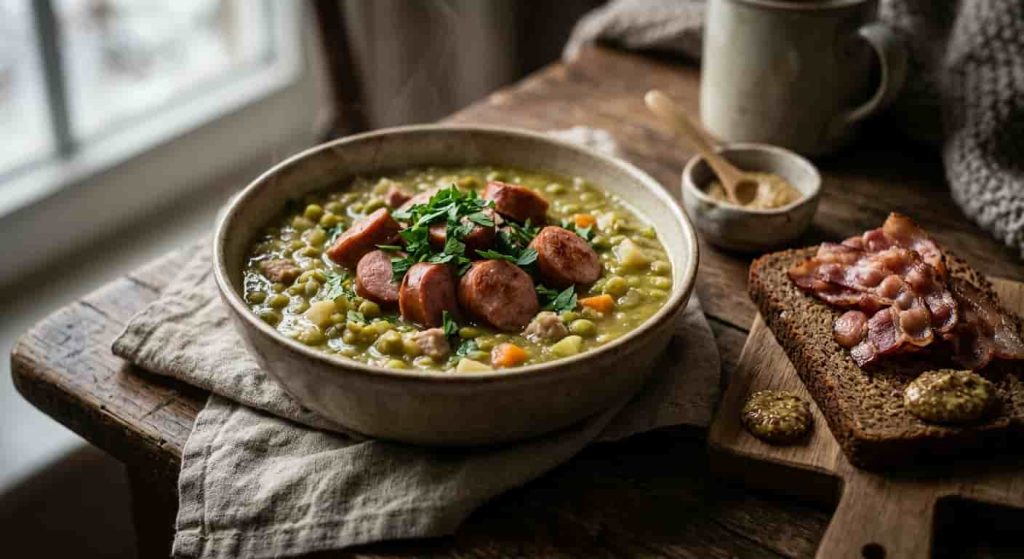
5. Authentic Dutch Erwtensoep (Snert)
If regular split pea soup and a winter blanket had a baby, it would be erwtensoep. Or snert, as many Dutch cooks call it. This isn’t a thin, brothy soup. It’s thick. Really thick. Some people joke your spoon should almost stand up on its own.
What makes Dutch snert different from regular split pea soup?
Here’s the deal:
- It’s usually thicker than American split pea soup.
- It often includes celeriac, leek, and smoked sausage.
- It’s meant to be hearty enough to count as dinner.
- It tastes even better the next day. Honestly, that’s part of its charm.
Ingredients
- 1 pound dried split peas, rinsed
- 8 cups chicken stock or water
- 1 smoked sausage, sliced
- 1 pork chop, ham hock, or extra sausage if you want a meatier pot
- 1 onion, chopped
- 2 leeks, sliced
- 2 carrots, diced
- 2 celery stalks, diced
- 1 small celeriac or 2 potatoes, diced
- 2 bay leaves
- Salt and black pepper
- Parsley, optional
Step-by-step method
- Add the split peas, stock, bay leaves, onion, carrots, celery, and celeriac to a large pot.
- Bring to a boil, then reduce to a gentle simmer.
- Add the pork chop or ham hock if using.
- Simmer for 60 to 90 minutes, stirring now and then, until the peas break down.
- Remove any bone or large meat pieces, shred the meat, and return it to the pot.
- Stir in the leeks and sliced smoked sausage for the last 15 minutes.
- Season generously with black pepper.
Overnight flavor trick
Let it cool, refrigerate it, and reheat it the next day. Long story short, the texture gets deeper, the smoky flavor settles in, and the whole thing tastes more “Dutch grandma approved.”
6. Dutch Mustard Soup (Groninger Mosterdsoep)
This soup is one of my favorite surprises in Dutch cooking. It sounds plain. It isn’t. A good mustard soup is creamy, tangy, and just sharp enough to keep you coming back for another spoonful.
Ingredients
- 2 tablespoons butter
- 1 leek, thinly sliced
- 2 tablespoons flour
- 3 cups chicken or vegetable stock
- 1 cup milk or half-and-half
- 2 to 3 tablespoons coarse-grain mustard
- 1 tablespoon Dijon
- Salt and black pepper
- Crispy bacon or chopped chives for serving
Method
Cook the leek in butter for 5 minutes until soft. Stir in the flour and cook for 1 minute. Whisk in the stock slowly, then add the milk. Simmer for 8 to 10 minutes, then stir in both mustards.
Taste before salting. Mustard brings its own attitude. Top with bacon, chives, or little croutons.
Dutch Pub Snacks and Party Bites
7. Homemade Beef Bitterballen
If you’ve ever had Dutch bar snacks, you already know bitterballen are the stars of the show. Crisp outside. Creamy beef ragout inside. Hot enough to burn your mouth if you get impatient. Which, to be honest, everyone does at least once.
The filling
You’ll need:
- 4 tablespoons butter
- ½ cup flour
- 2 cups rich beef stock
- 1 cup finely chopped cooked beef
- 2 tablespoons minced parsley
- ¼ teaspoon nutmeg
- Salt and pepper
Melt the butter, stir in the flour, and cook for 2 minutes. Slowly whisk in the stock until you get a very thick ragout. Stir in the beef, parsley, nutmeg, salt, and pepper. Chill for at least 4 hours, or overnight.
Shape and cook
Form the cold mixture into small balls. Coat each one in:
- flour
- beaten egg
- breadcrumbs
Then either:
- Deep-fry at 350°F for 3 to 4 minutes, or
- Air-fry at 375°F for 8 to 10 minutes after a light oil spray
Serve with spicy mustard. No exceptions.
My best tip
The ragout must be cold and firm before shaping. If it’s warm, you’ll be wrestling sticky beef paste instead of making a bitterballen recipe at home you’ll actually want to repeat.
8. Homemade Dutch Kibbeling with Ravigote Sauce
Kibbeling is one of those easy Dutch dinner ideas that feels way fancier than it really is. Think bite-size chunks of white fish in a crisp batter, served with a punchy sauce.
Ingredients
- 1 pound cod or haddock, cut in chunks
- ¾ cup flour
- ½ cup cornstarch
- 1 teaspoon paprika
- Salt and pepper
- ¾ cup cold sparkling water or beer
Mix the dry ingredients, whisk in the liquid, and dip the fish pieces into the batter. Fry until golden and crisp.
Quick ravigote sauce
Stir together:
- ½ cup mayo
- 1 tablespoon chopped pickles
- 1 tablespoon chopped parsley
- 1 teaspoon mustard
- 1 teaspoon lemon juice
That’s it. Crunchy, salty, and wildly snackable.
9. Kaastengels (Crispy Gouda Cheese Sticks)
Kaastengels are basically the Dutch answer to “How do we make cheese even more lovable?” Puff pastry helps, obviously.
Cut puff pastry into strips, fill with a mix of shredded Gouda and a little Dijon, seal, brush with egg, and bake at 400°F until deeply golden. Add sesame seeds if you want a little crunch.
These are great for parties, lunchboxes, or standing in the kitchen pretending you’ll “just have one.”

Iconic Dutch Sweets and Bakery Classics
10. Classic Dutch Pannenkoeken
Dutch pannenkoeken are larger and thinner than American pancakes, but not as delicate as French crêpes. They sit right in the middle. A happy middle.
For a basic batter, whisk:
- 1 cup flour
- 2 eggs
- 1¼ cups milk
- pinch of salt
Let it rest 15 minutes. Cook thin pancakes in a buttered skillet, then top with bacon and cheese, apple slices and cinnamon, or just syrup. Sweet or savory both work.
11. Fluffy Poffertjes
Tiny, fluffy, slightly yeasty, and impossible to stop eating. Dutch poffertjes mini pancakes are the snack that makes grown adults hover over the pan like hopeful seagulls.
How to make them without a poffertjes pan
No special pan? No panic.
You can use:
- a cake pop pan
- an ebelskiver pan
- a nonstick skillet, making small rounds with a squeeze bottle
Use a batter made from flour, yeast, milk, egg, and a little sugar. Let it rise for about 45 minutes, then cook in tiny portions until puffed and golden. Serve with butter and a storm of powdered sugar.
12. Rich Dutch Butter Cake (Boterkoek)
If you love shortbread, you’ll love authentic Dutch baking like boterkoek. It’s dense, buttery, and intentionally rich. No one eats a giant slice and says, “I feel light as air.” That’s not the point.
Simple boterkoek formula
Mix:
- 1 cup unsalted butter, softened
- 1 cup sugar
- 2 cups flour
- pinch of salt
- 1 egg yolk
Press into a greased 8-inch round pan, brush the top with beaten egg, score a pattern with a fork, and bake at 350°F for 25 to 30 minutes.
Let it cool before slicing. Warm boterkoek falls apart. Deliciously, but still.
13. Dutch Apple Pie (Appeltaart)
Dutch apple pie is taller, sturdier, and more generously spiced than the average American version. Use tart apples, cinnamon, raisins if you like them, and a proper lattice top.
A few easy wins:
- Use Granny Smith plus Honeycrisp for balance
- Don’t skip the cinnamon
- Add a spoonful of breadcrumbs to the base to absorb juices
14. Gevulde Speculaas
This is a spiced cookie-cake filled with almond paste, and it tastes like the holidays showed up early. If you can’t find speculaas spice, use the homemade blend from the pantry section. That’s exactly why I included it.
Roll out half the dough, spread with almond paste, cover with the remaining dough, brush with egg, and bake until golden brown.
15. Dutch Hangop with Warm Berry Compote
Need one of those quick Dutch desserts and pastries options that doesn’t require much baking? Hangop is your friend. It’s strained yogurt, somewhere between Greek yogurt and cheesecake filling.
Strain plain full-fat yogurt in cheesecloth overnight. Spoon it into bowls and top with warm berries simmered with a little sugar and lemon juice. Clean, simple, and very good.

Frequently Asked Questions
What is the most famous traditional Dutch food to make at home?
For many home cooks, it’s stamppot, especially boerenkool stamppot. It’s practical, affordable, filling, and deeply tied to traditional Dutch comfort food.
What can I substitute for rookworst in Dutch recipes?
The easiest Dutch rookworst sausage substitutes are:
- kielbasa
- smoked Polish sausage
- smoked turkey sausage
- lightly smoked bratwurst
You want something smoky, juicy, and sturdy enough to slice over mash or soup.
How do you make authentic Dutch stamppot from scratch?
Start with boiled potatoes. Add a cooked or raw vegetable such as kale, carrots, onions, or endive. Drain well, then mash with butter and milk. Finish with sausage, bacon, or gravy. That’s the soul of a Dutch stamppot recipe.
Are Dutch recipes easy to cook for beginners?
Yes. Very. Many of the best easy Dutch recipes at home rely on simple techniques:
- boiling
- mashing
- simmering
- baking
- pan-frying
They’re beginner-friendly because they’re based on solid, everyday ingredients rather than fussy presentation.
What is the difference between Dutch erwtensoep and regular split pea soup?
Dutch erwtensoep is usually thicker, heartier, and smokier. It often includes sausage and root vegetables, and it’s commonly left overnight for better flavor.
Meal Planning Tips and Final Thoughts
What I love most about Dutch cooking is that it doesn’t try too hard. It just works. The food is filling, practical, and built for real life. A pot of soup becomes tomorrow’s lunch. Extra mash turns into crispy potato cakes. Stew tastes better on day two than day one. That’s not laziness. That’s wisdom.
If you want to make these easy Dutch recipes at home part of your regular routine, here’s how I’d do it:
- Make hachee or erwtensoep on Sunday and freeze portions
- Pair stamppot with a simple green salad for balance
- Use leftover boterkoek or appeltaart for coffee breaks all week
- Turn a Friday night into a borrel moment with bitterballen, kaastengels, and mustard
Moving on from the usual pasta-and-tacos cycle doesn’t have to mean difficult cooking. Sometimes it just means trying a bowl of snert, a pan of poffertjes, or a buttery square of boterkoek and thinking, Well, that was a very good idea.
More Recipes:15 Easy Finnish Recipes at Home (30-Min Comfort Food)
Please wait to go to the next post: 30 seconds
Go to Next Post