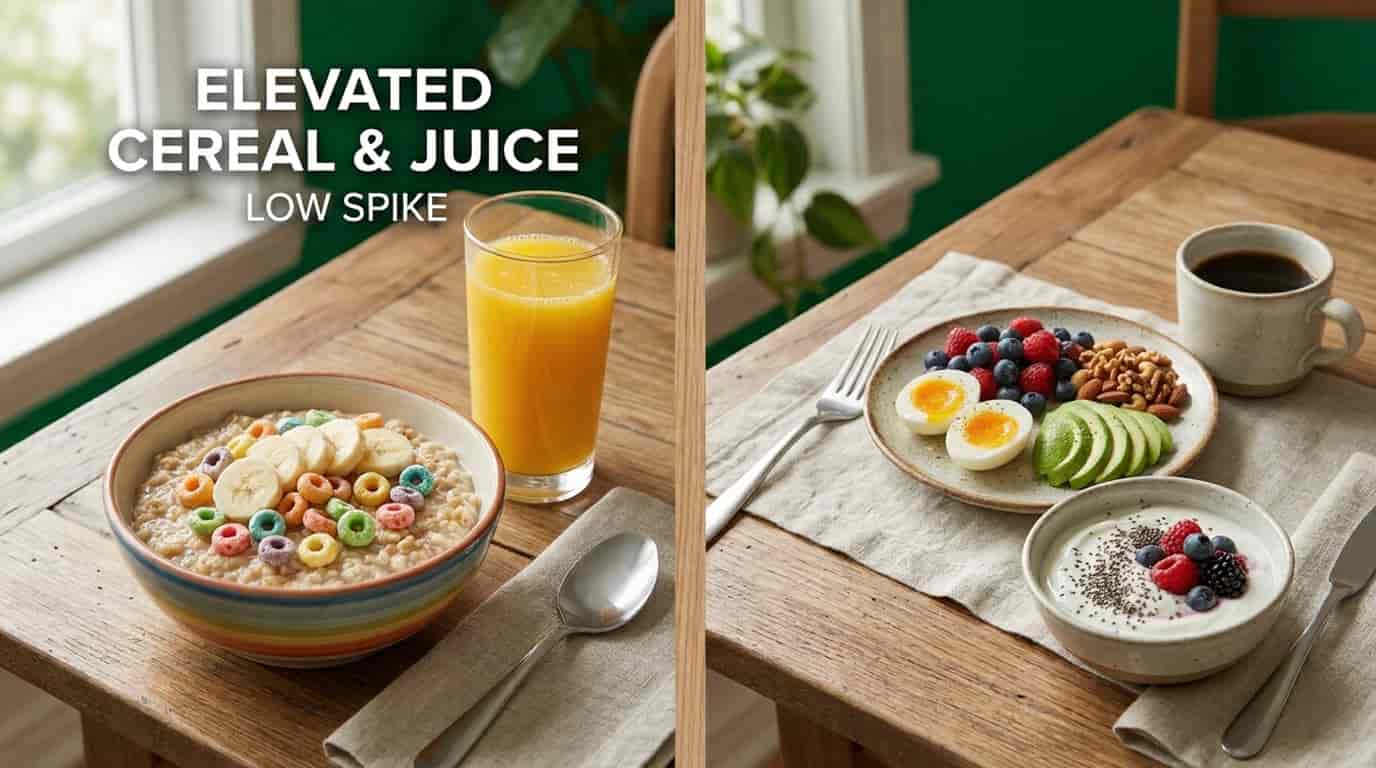
You eat breakfast.
Maybe it’s cereal. Maybe toast with jam. Maybe a “healthy” smoothie that tastes like melted ice cream pretending to be wellness.
An hour later?
You’re hungry again. Foggy. Irritated. Scanning the kitchen for snacks even though you literally just ate.
Sound familiar?
That, my friend, is often the rollercoaster effect of a glucose spike.
A glucose spike happens when your blood sugar rises quickly after eating, especially after meals rich in refined carbohydrates or sugar. Your body responds by releasing insulin to move that sugar out of the bloodstream and into cells. The problem is that when the rise is too steep, the crash afterward can feel brutal.
I learned this the hard way.
A few years ago, I thought my breakfast routine was solid. Granola. Banana. Orange juice. Coffee. It looked healthy enough for a nutrition ad. But by 10:30 AM, I was starving and weirdly exhausted. I blamed stress. Sleep. My inbox. Everything except breakfast.
Turns out, my “healthy” morning was creating a blood sugar carnival ride.
Here’s the deal: the first meal of the day sets the metabolic tone for everything that follows. Your energy, cravings, focus, and even hunger hormones can shift dramatically depending on how you eat in the morning.
And no, this isn’t about cutting out carbs forever or fearing fruit like it’s a criminal mastermind.
It’s about learning how to lower glucose spikes after breakfast in a realistic, sustainable way.
The good news? Small changes work surprisingly well.
Actually, some of the most effective tricks are almost laughably simple. Walking for ten minutes. Eating protein first. Adding fiber before carbs. Even using apple cider vinegar before meals for blood sugar support has real science behind it.
People online often call these “glucose hacks.” You may have heard of the Glucose Goddess method for beginners. While social media sometimes oversimplifies nutrition, the core biological concepts are legitimate and backed by research.
This article breaks down exactly why breakfast spikes matter, what symptoms to watch for, and the easiest ways to flatten your glucose curve without turning your life upside down.
And honestly? Once you feel the difference, you probably won’t want to go back.
Disclaimer: This article is for educational purposes only and is not medical advice. Always speak with a qualified healthcare professional about personal health concerns.
Why Breakfast Spikes Matter More Than You Think
Most people think blood sugar issues only matter if you have diabetes.
Not true.
Even healthy people experience glucose fluctuations every single day. The question is how dramatic those swings are.
A sharp morning spike followed by a crash can quietly affect appetite, energy, mood, focus, fat storage, and long-term metabolic health.
And breakfast tends to be the biggest offender.
Why? Because many common breakfast foods are basically dessert wearing business casual clothing.
Sugary cereal. Muffins. Sweet yogurt. Pancakes. Flavored coffee drinks. White toast. Fruit juice.
Fast digestion. Fast glucose rise. Fast crash.
Your body works hard to compensate, but repeated spikes over time can create problems that extend far beyond mid-morning cravings.
The Impact on Insulin and Fat Storage
When glucose enters your bloodstream quickly, your pancreas releases insulin to help shuttle that sugar into your cells.
Insulin isn’t bad. You need it to survive.
But repeated large spikes force your body into constant high-alert mode.
Over time, cells can become less responsive to insulin. That’s called insulin resistance. Your body then produces even more insulin to compensate. It becomes a loop.
And elevated insulin levels don’t just affect blood sugar.
They also influence fat storage.
This is one reason people struggling with stubborn weight gain often benefit from improving glucose control, even without drastically cutting calories.
One fascinating detail? Research suggests that eating fiber and protein before carbohydrates can reduce post-meal glucose spikes by up to 75%.
That’s massive.
Not because the carbs disappear, but because digestion slows down. Fiber creates a kind of “traffic control” system in the gut, while protein and fat help steady absorption.
Think of it like pouring water slowly into a sink instead of dumping a bucket all at once.
Your body handles gradual much better than sudden.
The Sneaky Symptoms of Morning Blood Sugar Spikes
The symptoms of morning blood sugar spikes aren’t always obvious.
Sometimes they show up in ways people never connect to breakfast.
Like:
- Feeling shaky by late morning
- Brain fog during meetings
- Intense cravings for sugar or caffeine
- Sudden fatigue after eating
- Mood swings
- Headaches
- Difficulty concentrating
- Constant snacking
I used to think my afternoon coffee addiction was about productivity.
Turns out, it was often damage control from breakfast.
And here’s something interesting: many people don’t realize how calm and steady energy feels until they stop spiking and crashing every morning.
It’s subtle at first.
Then one day you notice you made it to lunch without raiding the snack drawer.
That’s when it clicks.
Nutrihacks Pro-Tip
Before changing what you eat, change how fast you eat.
Rapid eating often increases glucose response because your body receives carbohydrates faster than it can comfortably process them. Slowing down even slightly can improve digestion, fullness, and blood sugar stability.
Also, chew your food properly. Your stomach will thank you for not sending down half-assembled breakfast bricks.
7 Proven Hacks to Flatten Your Glucose Curve
You don’t need perfection.
You don’t need a glucose monitor glued to your arm.
And you definitely don’t need to fear every carb that enters your kitchen.
Most people see noticeable improvements from a few strategic habits.
Let’s start with one of the most effective.
Eat Your Food in the Right Order
This sounds almost too simple to matter.
But the order of your meal can significantly affect your glucose response.
Researchers have found that eating vegetables and protein before carbohydrates can dramatically reduce blood sugar spikes after meals.
So instead of eating toast first, you might:
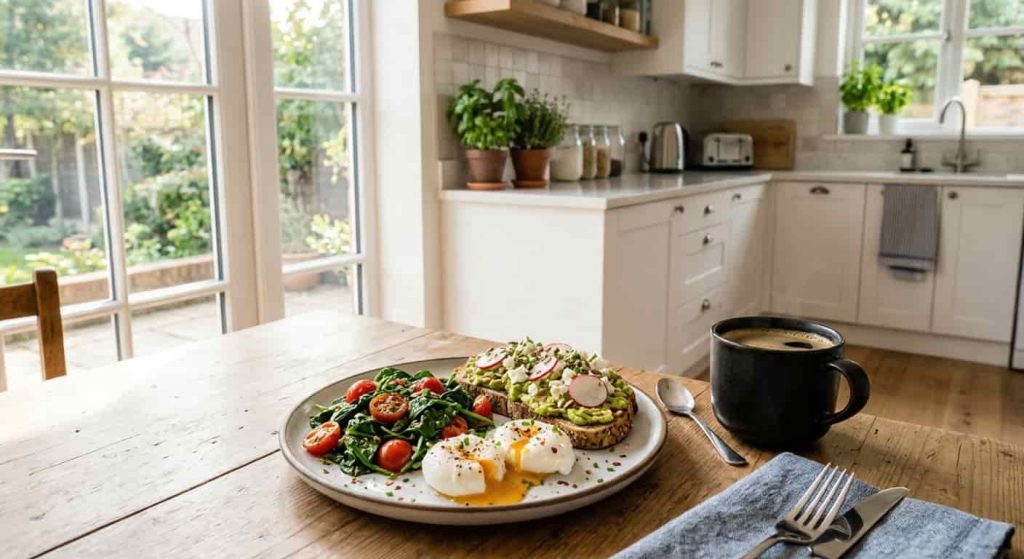
- Start with eggs and spinach
- Eat yogurt and nuts before fruit
- Have salad before rice
- Eat chicken before potatoes
Why does this work?
Fiber slows gastric emptying. Protein stimulates satiety hormones and tempers glucose absorption. Fat also helps slow digestion.
Together, they create a gentler rise in blood sugar instead of a sharp vertical climb.
This is one reason savory breakfasts tend to outperform sugary breakfasts for stable energy.
And honestly, once I started trying this, I noticed fewer cravings almost immediately.
Not zero cravings. I’m still human. A cinnamon roll can still emotionally manipulate me.
But the constant hunger faded.
Start with a Savory Breakfast
If your breakfast tastes like dessert, there’s a decent chance your blood sugar knows it too.
One of the best low glycemic breakfast foods strategies is shifting toward savory meals built around protein, healthy fats, and fiber.
Think:
- Eggs with avocado
- Cottage cheese and cucumbers
- Savory oats with spinach and seeds
- Tofu scramble
- Greek yogurt with nuts instead of sugary granola
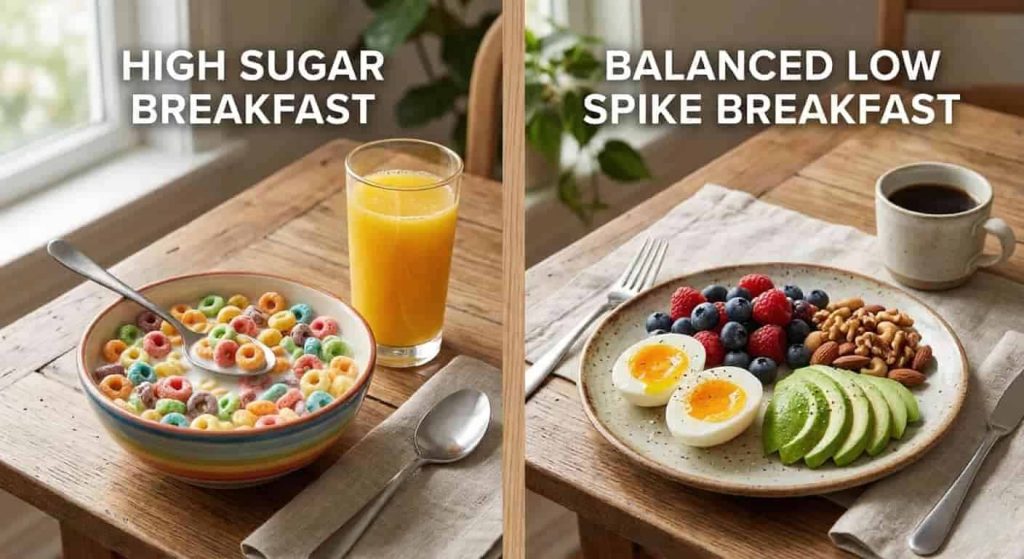
Compare that with a typical sugary cereal breakfast.
Cereal digests fast. Especially low-fiber varieties. Many are essentially refined starch explosions with a vitamin label slapped on top.
A savory breakfast, on the other hand, usually digests slower and keeps you full longer.
This connects directly to the protein-first breakfast benefits researchers talk about so often.
Protein affects hunger hormones like leptin and ghrelin. Studies show that aiming for around 30 grams of protein at breakfast may improve satiety throughout the day.
That doesn’t mean you need to chug protein shakes at sunrise.
You can build 30 grams pretty naturally:
- 3 eggs
- Greek yogurt
- Cottage cheese
- Smoked salmon
- Turkey sausage
- Tofu
- Protein-rich oats
Mix and match.
Your breakfast doesn’t have to look like fitness influencer meal prep from a dystopian refrigerator commercial.
It just needs balance.
Why Protein Changes the Entire Morning
Protein slows digestion.
That’s part of it.
But there’s another reason it matters: protein reduces the speed at which glucose enters the bloodstream.
This helps flatten the curve.
Instead of a dramatic spike-and-crash pattern, you get steadier energy release.
That steadiness affects more than hunger.
People often report:
- Better focus
- Fewer cravings
- More stable mood
- Less afternoon fatigue
- Reduced urge to snack constantly
And honestly, the mental clarity difference surprised me the most.
A high-sugar breakfast made me feel temporarily energized. Then sleepy.
A protein-rich breakfast made me feel… normal.
Which is actually better.
Nutrihacks Pro-Tip
Try a “protein preload” tomorrow morning.
Before touching bread, cereal, fruit, or coffee drinks, eat:
- Two boiled eggs
- A few spoonfuls of Greek yogurt
- Cottage cheese
- Or a protein smoothie with fiber
Wait ten minutes.
Then eat the rest of breakfast.
It sounds tiny. But tiny changes often create the biggest metabolic wins over time.
The Truth About “Healthy” Breakfast Foods
Marketing has done a number on breakfast.
Some foods labeled “heart healthy” or “whole grain” can still spike blood sugar surprisingly fast.
A few common culprits:
- Sweetened oatmeal packets
- Granola clusters
- Fruit smoothies with juice
- Low-fat flavored yogurt
- Breakfast bars
- White toast with honey
- Pancakes with syrup
The issue isn’t that these foods are evil.
It’s that they’re often missing the things that slow glucose absorption: protein, fiber, and fat.
That’s why fiber-rich breakfast ideas for weight loss tend to work so well. Fiber acts almost like a braking system for digestion.
And when you combine fiber with protein?
Even better.
Long story short, breakfast doesn’t need to be carb-free.
It just needs structure.
The Vinegar Trick That Sounds Weird But Actually Works
I’ll admit it.
The first time someone suggested drinking apple cider vinegar before meals for blood sugar control, I thought it sounded like internet folklore invented by someone who enjoys suffering.
Vinegar before breakfast? Seriously?
But the science here is surprisingly solid.
Acetic acid, the active compound in vinegar, appears to slow the breakdown of starches and improve the body’s insulin response after meals. Studies suggest that consuming about one tablespoon of apple cider vinegar diluted in water before a starchy meal may reduce the glucose response by up to 30%.
That’s not magic. It’s chemistry.
Here’s the biological “why” in simple terms:
Acetic acid slows gastric emptying. In plain English, food leaves your stomach more slowly. That means glucose enters your bloodstream at a gentler pace instead of arriving all at once like an overeager marching band.
Some research also suggests vinegar may improve insulin sensitivity temporarily after meals.
Now, a quick reality check.
This isn’t a free pass to inhale six pancakes and expect your blood sugar to salute politely.
The vinegar trick works best as part of an overall balanced meal strategy.
How to Use Apple Cider Vinegar Safely
If you want to try it, keep it simple:
- 1 tablespoon apple cider vinegar
- Mixed into a large glass of water
- Drink before breakfast or higher-carb meals
Important: never drink vinegar straight.
Your teeth and throat deserve better.
You can also make it more tolerable by adding:
- Cinnamon
- Lemon
- Ice
- Sparkling water
Honestly, the cinnamon version tastes weirdly fancy.
Who Should Be Careful?
Apple cider vinegar isn’t ideal for everyone.
People with:
- Acid reflux
- Stomach ulcers
- Certain digestive disorders
- Kidney disease
- Medication interactions
…should check with a healthcare provider first.
Also, if vinegar makes you miserable, skip it. There are plenty of other ways to lower glucose spikes after breakfast.
Health habits only work when they’re sustainable.
Nutrihacks Pro-Tip
If vinegar feels too intense first thing in the morning, try adding acidity to meals instead.
Lemon juice on eggs. Pickled vegetables with breakfast. A small salad with vinaigrette before carbs.
Even modest amounts of acidity may help soften glucose responses.
And yes, your breakfast can absolutely include pickles. I support this emotionally and nutritionally.
The 10-Minute Walk That Changes Everything
This might be the most underrated glucose control habit on Earth.
Walking after eating for glucose control works astonishingly well because your muscles act like glucose sponges.
The moment muscles contract, they begin pulling glucose out of the bloodstream for energy. This process involves GLUT4 transporters moving to the cell surface, allowing glucose uptake with less reliance on insulin.
Translation?
Your body starts using sugar immediately instead of letting it pile up in the bloodstream.
Research shows that even a brief 10–15 minute walk after meals can reduce glucose peaks by roughly 10–15%.
Not an intense workout.
Not sprint intervals.
Just walking.
This matters because people often think blood sugar management requires extreme routines. It usually doesn’t.
Tiny consistent habits beat heroic unsustainable ones.
Why Post-Meal Movement Works Better Than Random Exercise
Exercise at any time is beneficial.
But movement right after eating has a special effect because it directly intercepts rising glucose levels while digestion is happening.
Think of it as catching water before the bathtub overflows.
You don’t need a treadmill either.
You can:
- Walk around the block
- Pace while taking phone calls
- Do light housework
- Climb stairs
- Walk the dog
- Dance awkwardly in your kitchen
Honestly, kitchen dancing deserves more scientific funding.
My Favorite “Lazy” Glucose Walk
I started doing short walks after breakfast during busy workdays.
At first I expected nothing.
Then I noticed:
- Less sleepiness
- Better concentration
- Fewer snack cravings
- More stable mood
The biggest surprise? The effect felt almost immediate.
Sometimes wellness advice promises dramatic transformations that never arrive.
This one actually delivered.
Nutrihacks Pro-Tip
Can’t go outside after breakfast?
Try a “movement snack.”
Set a timer for 5–10 minutes and:
- March in place
- Stretch
- Walk indoors
- Do bodyweight squats
- Clean your kitchen
Your muscles don’t care whether movement looks glamorous.
They just want the glucose.
Never Eat “Naked” Carbs
This phrase makes people laugh every time.
But it’s memorable for a reason.
“Naked carbs” are carbohydrates eaten alone without protein, fat, or fiber.
Examples:
- Plain toast
- Crackers
- Juice
- Pretzels
- Sugary cereal
- Rice cakes
- Muffins
These foods digest rapidly because there’s nothing slowing them down.
The result?
A faster glucose spike.
Adding what some nutrition experts call “clothing” to your carbs changes the metabolic response dramatically.
How to Dress Your Carbs Properly
You don’t need to eliminate carbs.
You need to pair them intelligently.
Examples:
- Toast + eggs + avocado
- Apple + peanut butter
- Oatmeal + chia seeds + Greek yogurt
- Rice + salmon + vegetables
- Banana + almonds
This combination slows digestion and improves satiety.
Actually, one of the easiest ways to improve breakfast is simply adding more texture and balance.
Crunch from nuts. Creaminess from yogurt. Fiber from seeds. Protein from eggs.
Your blood sugar likes teamwork.
Best Low Glycemic Breakfast Foods to Build Around
If you’re looking for easy staples, start here:
Protein Sources
- Eggs
- Greek yogurt
- Cottage cheese
- Tofu
- Smoked salmon
- Protein smoothies
Fiber-Rich Foods
- Chia seeds
- Flaxseeds
- Berries
- Spinach
- Oats
- Beans
Healthy Fats
- Avocado
- Nuts
- Nut butter
- Olive oil
- Seeds
Smart Carbs
- Steel-cut oats
- Whole grain toast
- Quinoa
- Sweet potatoes
- Berries
- Apples
The goal isn’t perfection.
It’s reducing dramatic spikes while keeping meals enjoyable.
Because if your breakfast feels like punishment, you probably won’t stick with it.
Nutrihacks Pro-Tip
Before eating breakfast tomorrow, ask yourself one simple question:
“Where’s the protein? Where’s the fiber?”
If your meal has both, you’re already moving in the right direction.
Cinnamon, Minerals, and Tiny Helpers That Matter
Let’s clear something up first.
Cinnamon alone will not magically cure blood sugar issues while you continue eating like a raccoon loose in a bakery.
But certain foods and micronutrients may gently support glucose regulation when combined with healthy habits.
Ceylon cinnamon is one of the most talked-about examples.
Some studies suggest compounds in cinnamon may improve insulin sensitivity and reduce post-meal blood sugar responses modestly.
Again, modestly.
Not dramatically.
Still, every little bit helps.
Why Micronutrients Matter for Glucose Balance
Blood sugar regulation depends on countless biochemical reactions inside the body.
Minerals like:
- Magnesium
- Chromium
- Zinc
…play supporting roles in insulin signaling and glucose metabolism.
This is one reason highly processed diets often create metabolic problems over time. The calories remain, but many supportive nutrients disappear.
Whole foods bring more nutritional “co-factors” to the table.
Your body likes that.
Easy Ways to Add Cinnamon and Nutrient Support
Try:
- Cinnamon in Greek yogurt
- Cinnamon in oats
- Chia pudding with nuts
- Pumpkin seeds on breakfast bowls
- Leafy greens in omelets
- Berries instead of sugary toppings
Simple additions. Real impact.
And honestly, cinnamon makes healthy breakfasts taste less “healthy,” which is helpful.
Sample Low-Spike Breakfast Ideas That Actually Taste Good
Now for the practical part.
Because knowing the science is great. But eventually you still need breakfast at 7:30 AM while half awake and mildly annoyed at existence.
Here are realistic ideas that help flatten glucose spikes without requiring culinary wizardry.
Savory Protein Oats
Ingredients:
- Rolled or steel-cut oats
- Spinach
- Egg
- Parmesan
- Chia seeds
Why it works:
Fiber from oats and chia. Protein from eggs. Fat from cheese. Slower digestion overall.
Tastes surprisingly comforting.
Greek Yogurt Power Bowl
Ingredients:
- Unsweetened Greek yogurt
- Almonds
- Walnuts
- Berries
- Cinnamon
- Flaxseeds
Why it works:
High protein. High fiber. Healthy fats. Lower sugar than most flavored yogurts or granola bowls.
Also takes approximately two minutes to assemble, which matters.
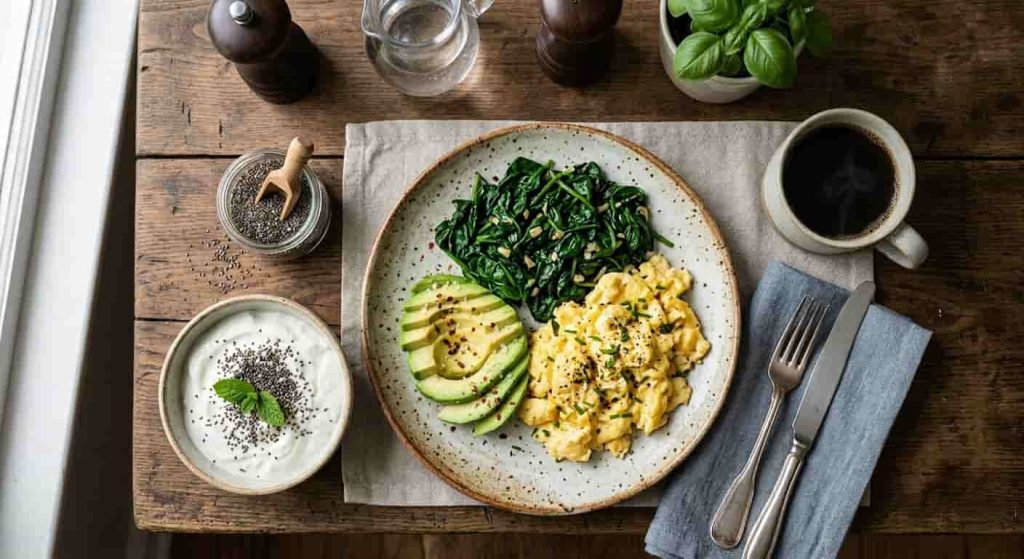
Scrambled Eggs with Spinach and Avocado
Classic for a reason.
Protein plus fat equals sustained energy and fewer crashes.
Add whole grain toast if you want carbs. Just don’t eat the toast alone.
Cottage Cheese Breakfast Plate
Ingredients:
- Cottage cheese
- Cucumbers
- Tomatoes
- Olive oil
- Seeds
- Boiled eggs
Very underrated.
Also excellent for people trying to increase protein without relying entirely on meat.
Smoothie Without the Sugar Bomb
A balanced smoothie should include:
- Protein
- Fiber
- Fat
Try:
- Unsweetened protein powder
- Chia seeds
- Spinach
- Frozen berries
- Nut butter
- Unsweetened almond milk
Avoid turning smoothies into milkshakes wearing yoga pants.
Why Smart Carbs Beat “No Carbs”
A lot of people swing too far after learning about glucose spikes.
They panic and decide carbohydrates are the enemy.
That usually backfires.
Carbs are not evil. Your brain literally runs on glucose.
The real issue is speed and context.
Fast-digesting refined carbs eaten alone tend to create the biggest spikes. Smart carbs paired with protein, fiber, and fat behave very differently.
This is why sustainable nutrition always beats restriction extremes.
You want stability. Not fear.
You want meals that support energy, hormones, focus, and long-term metabolic health without making you miserable.
And honestly? That’s achievable for most people with surprisingly small adjustments.
Quick Summary Table: 7 Science-Backed Hacks to Lower Glucose Spikes After Breakfast
| Hack | Why It Works | Easy Example |
|---|---|---|
| Eat food in the right order | Fiber and protein slow glucose absorption | Eggs before toast |
| Choose savory breakfasts | Less sugar, more stable energy | Eggs with avocado |
| Use apple cider vinegar | Acetic acid slows starch digestion | 1 tbsp diluted before meals |
| Walk after eating | Muscles absorb glucose quickly | 10-minute walk |
| Prioritize 30g protein | Improves fullness and glucose stability | Greek yogurt + eggs |
| Avoid naked carbs | Protein/fiber soften glucose spikes | Apple with peanut butter |
| Add cinnamon and micronutrients | Supports insulin sensitivity | Cinnamon in oats |
Long story short?
You do not need a perfect diet.
You do not need to obsess over every gram of carbohydrate.
And you definitely don’t need to become afraid of breakfast.
Learning how to lower glucose spikes after breakfast is really about creating steadier energy, fewer cravings, better focus, and improved long-term health.
One small tweak can genuinely change how your entire morning feels.
Maybe tomorrow you:
- Eat protein first
- Take a short walk
- Add chia seeds
- Skip the sugary cereal
- Pair carbs with healthy fats
That’s enough to start.
Tiny habits compound.
And if you’re curious about the Glucose Goddess method for beginners, remember this: the biggest wins usually come from simple, repeatable behaviors rather than perfection.
Your body likes consistency more than intensity.
So try one hack tomorrow morning.
Not seven. Just one.
Your future 11:00 AM self may thank you for it.
For more practical wellness strategies, easy nutrition science, and realistic healthy eating tips, visit Nutrihacks and join the newsletter for weekly insights that actually fit real life.
Read More Article: The Ultimate Mediterranean Diet Food List That Actually Makes You Feel Alive
Please wait to go to the next post: 30 seconds
Please follow the proper sequence from the first post to get the code!
Go to Next Post