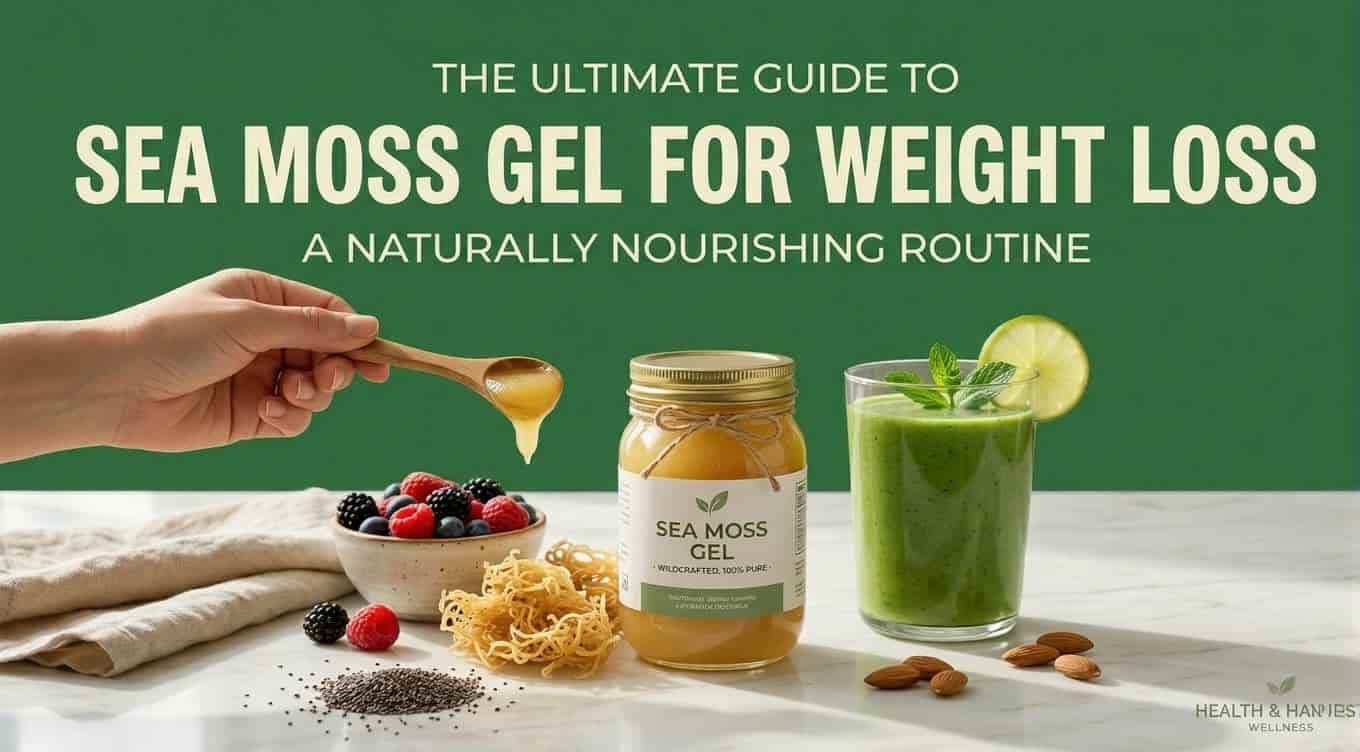
A few years ago, I thought sea moss was just another internet wellness fad. You know the type. A celebrity drinks something green on TikTok, suddenly everyone’s blending mysterious algae into smoothies and claiming their jeans fit better by Friday.
But sea moss surprised me.
Not because it “melts fat” overnight. It doesn’t. Nothing does. What caught my attention was how many people reported the same quiet changes after using it consistently: fewer cravings, steadier energy, better digestion, and less mindless snacking at night.
That matters.
Because most weight-loss struggles aren’t just about calories. They’re tied to energy dips, poor sleep, stress eating, sluggish digestion, and nutrient deficiencies that leave your body constantly asking for more food.
Here’s where sea moss gel enters the conversation.
Known scientifically as Chondrus crispus, and often called Irish sea moss, this mineral-rich seaweed contains a wide range of nutrients that support metabolic function. Many wellness experts mention that it contains 92 of the 102 minerals the human body uses regularly. While that number gets debated, there’s no question that the nutrients in Irish sea moss are impressive.
We’re talking about:
- Iodine
- Magnesium
- Potassium
- Calcium
- Zinc
- Iron
- Prebiotic fiber
And unlike trendy detox teas that leave you hungry and jittery, sea moss works in a slower, more supportive way.
Think of it less like a “fat burner” and more like nutritional backup for a stressed-out metabolism.
The interesting part? Some of the compounds inside sea moss may help support thyroid health, appetite control, gut balance, and blood sugar regulation — all of which influence body weight far more than most people realize.
So if you’ve been wondering how to use sea moss gel for weight loss without falling into wellness nonsense, you’re in the right place.
We’re going deep into the science, the practical tips, the right dosage, and the mistakes people make when using it.
And yes, I’ll also tell you why taking too much can backfire.
Disclaimer: This article is for educational purposes only and is not medical advice. Speak with a qualified healthcare professional before making major dietary changes.
Why Sea Moss Supports Weight Loss Naturally
Weight loss conversations usually focus on one thing: eating less.
But the human body is more complicated than that.
When your hormones are stressed, your digestion is sluggish, or your energy systems aren’t functioning properly, fat loss becomes harder — even when you’re trying to “be good.”
That’s one reason sea moss has become popular among nutrition-focused wellness communities.
It supports several systems connected to metabolism at the same time.
Metabolic Support Starts With the Thyroid
Your thyroid gland is tiny. Seriously tiny.
Yet it controls a huge portion of your metabolic activity.
It produces hormones called T3 and T4, which help regulate:
- Calorie burning
- Body temperature
- Energy levels
- Digestion
- Heart rate
- Fat metabolism
And guess what the thyroid desperately needs to make those hormones?
Iodine.
This is where thyroid health and iodine in sea moss become important.
Sea moss is naturally rich in iodine, making it one of the best plant-based sources available. If your iodine intake is too low, your metabolism can slow down. You may feel tired, cold, bloated, and constantly hungry.
Not exactly ideal conditions for weight management.
Now, sea moss won’t magically “fix” thyroid disorders. That would be irresponsible to claim. But supporting iodine intake through whole foods may help the thyroid function more efficiently in some people.
I noticed something similar when I first added sea moss gel to my morning routine. My energy felt steadier. Not hyper. Just… less crash-and-burn.
That subtle difference often helps people make better food choices throughout the day.
Does Sea Moss Curb Appetite?
Short answer?
It can help.
One reason is its fiber content.
Sea moss contains compounds called alginate and carrageenan, both of which form a gel-like texture when mixed with liquid. Inside the stomach, this may slow digestion slightly and increase feelings of fullness.
That means you may stay satisfied longer after meals.
And honestly, that’s huge.
A lot of overeating isn’t true hunger. It’s “I ate two hours ago and already want snacks again” hunger.
Sea moss may help calm that cycle.
Why Satiety Matters More Than Willpower
Most people blame themselves for cravings.
But cravings are often biological.
When meals lack fiber, minerals, protein, or volume, your body keeps searching for satisfaction. Sea moss adds a thick, satisfying texture to foods while contributing minerals and prebiotic fiber.
That combination can help reduce:
- Random sugar cravings
- Late-night snacking
- Constant grazing
- Emotional eating triggered by energy crashes
Some people even describe sea moss gel as making their stomach feel “settled.”
Not stuffed. Just balanced.
The Gut Connection Nobody Talks About Enough
Your gut microbiome influences far more than digestion.
Researchers are increasingly linking gut health to:
- Weight regulation
- Appetite hormones
- Blood sugar control
- Inflammation
- Mood and stress eating
Sea moss contains prebiotic compounds that help feed beneficial gut bacteria.
That matters because a healthier gut environment may improve how your body processes food and regulates hunger signals.
Actually, one of the sneakiest reasons people struggle to lose weight is chronic inflammation and poor digestion. When your digestive system is irritated, bloating increases, energy drops, and cravings often spike.
Sea moss won’t replace vegetables, sleep, hydration, or movement. But it can support the bigger picture.
And sometimes small support systems create the biggest long-term changes.
Fucoxanthin and Fat Metabolism
Now let’s talk about the buzzier science.
Seaweeds contain compounds called fucoxanthins, which researchers have studied for their potential role in fat metabolism.
Animal studies suggest fucoxanthin may help stimulate the burning of white adipose tissue — the type of fat stored around the body.
That sounds exciting. And it is interesting.
But here’s the honest take: human research is still limited.
So I wouldn’t market sea moss as a miracle fat-burning supplement.
What I would say is this:
When you combine:
- Better mineral intake
- Improved satiety
- More stable energy
- Healthier digestion
- Support for thyroid function
…weight management tends to become easier and more sustainable.
That’s probably the real reason so many people swear by sea moss gel for weight loss.
Not magic.
Support.
How to Use Sea Moss Gel for Weight Loss Effectively
This is where most people get confused.
They buy a jar of sea moss gel, take a giant spoonful randomly once a week, and expect dramatic results.
That’s not how it works.
Consistency matters more than quantity.
How Much Sea Moss to Take Daily
The standard recommendation is usually:
- 1 to 2 tablespoons per day
That’s enough for most adults.
You do not need half a jar.
Actually, taking too much sea moss can overload your iodine intake, especially if you already consume iodine-rich foods or supplements.
Moderation wins here.
If you’re new to it, start smaller:
Beginner approach
- Start with 1 teaspoon daily
- Increase gradually over 1–2 weeks
- Monitor digestion and energy
Your body usually tells you pretty quickly whether something agrees with you.
Best Time of Day to Take Sea Moss for Metabolism
There’s debate around this, but many people prefer taking sea moss in the morning.
Why?
Because it may help support:
- Energy production
- Digestion
- Appetite control throughout the day
Taking it on an empty stomach may also improve absorption for some people.
Personally, I like adding it to a smoothie before breakfast because it keeps me full longer. Otherwise, I’m hunting for snacks by 11 a.m.
That said, there’s no universal “perfect” timing.
The best time of day to take sea moss for metabolism is ultimately the time you’ll use it consistently.
Morning routines simply make that easier for most people.
Easy Ways to Add Sea Moss Gel to Your Diet
One reason sea moss became so popular is its versatility.
Good-quality sea moss gel has a fairly neutral taste, so it blends into foods without much drama.
Popular ways to use it
- Stir into smoothies
- Mix into coffee
- Add to herbal tea
- Blend into soups
- Use in overnight oats
- Mix into yogurt
- Add to homemade salad dressings
And yes, it also works surprisingly well in desserts because of its thick texture.
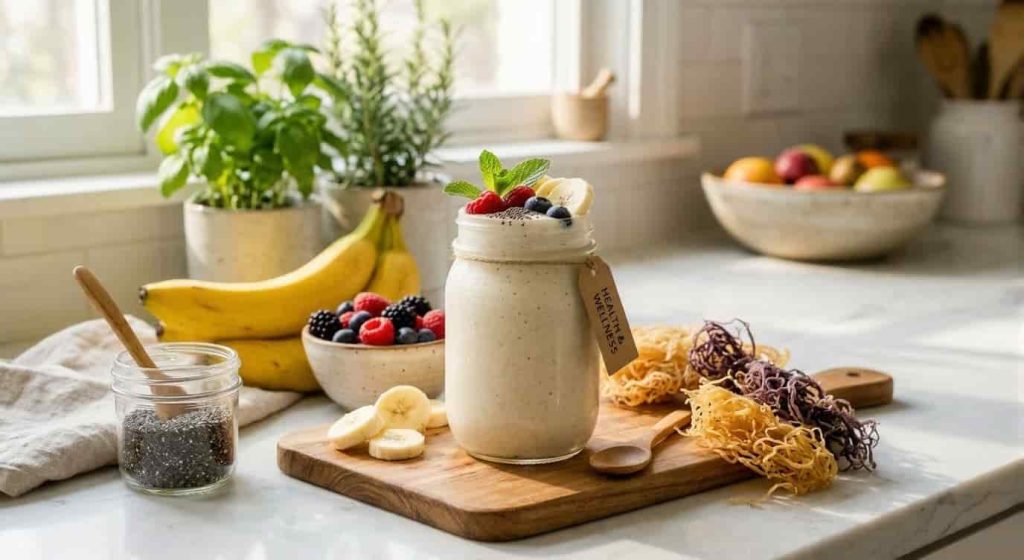
Sea Moss Gel Recipe for Smoothies
This is one of the easiest beginner options.
Simple metabolism-support smoothie
Ingredients:
- 1 tablespoon sea moss gel
- 1 frozen banana
- 1 cup unsweetened almond milk
- Handful of spinach
- ½ cup berries
- 1 tablespoon chia seeds
- Cinnamon
- Ice
Blend until smooth.
That combination gives you fiber, antioxidants, healthy fats, and minerals in one filling breakfast.
And unlike sugary “diet shakes,” it actually tastes good.
Coffee and Sea Moss? Surprisingly Good
I know. It sounds weird.
But adding a small spoonful of sea moss gel to coffee creates a slightly creamier texture without changing the flavor too much.
Some people use it instead of artificial creamers.
Tiny habit. Big difference over time.
Especially if it helps reduce sugar-heavy coffee drinks.
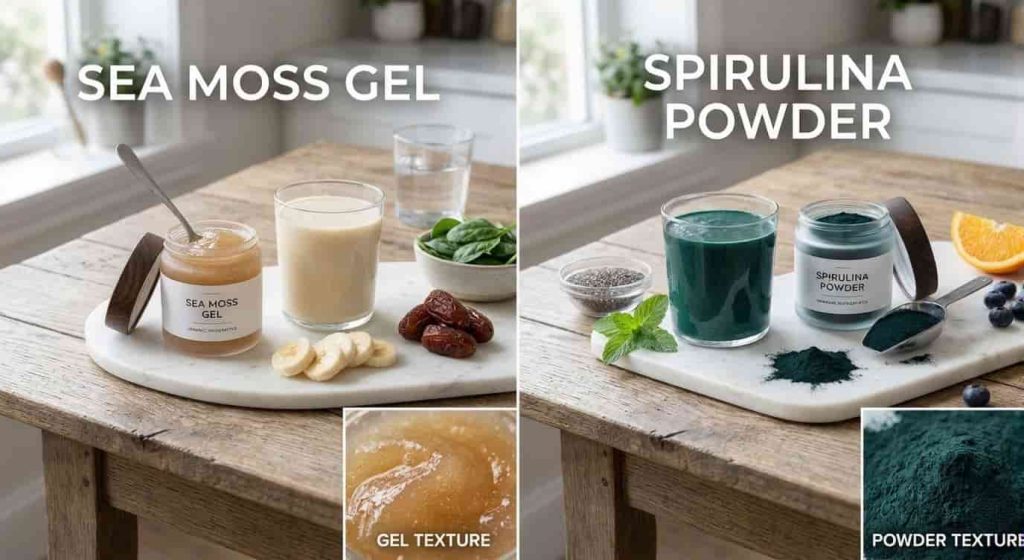
Sea Moss vs. Spirulina for Weight Management
People compare these two constantly.
Both are nutrient-dense superfoods, but they work differently.
Sea moss
Best known for:
- Iodine content
- Gut-supporting fiber
- Gel texture that promotes fullness
- Mineral diversity
Spirulina
Best known for:
- High protein content
- Antioxidants
- Chlorophyll
- Intense nutrient density
If your main focus is appetite control and digestion, sea moss often feels more satisfying.
If you want extra protein and workout recovery support, spirulina may have the edge.
Honestly, some wellness enthusiasts use both together.
But sea moss tends to be easier for beginners because the flavor is milder.
Making vs. Buying Sea Moss Gel
Here’s the truth nobody mentions enough: not all sea moss products are equal.
Some are excellent.
Some are basically salty sludge in a fancy jar with an influencer label slapped on top.
And if your goal is using sea moss gel for weight loss, quality matters more than branding.
The mineral profile, texture, and even safety can change dramatically depending on how the sea moss was harvested and processed.
Wildcrafted vs. Pool-Grown Sea Moss
This is the first thing I check before buying.
Wildcrafted sea moss
Wildcrafted sea moss grows naturally in the ocean. It absorbs minerals from seawater and tends to have:
- Better mineral diversity
- Natural color variation
- A stronger ocean scent
- A firmer texture
It’s usually considered the better option.
Pool-grown sea moss
Pool-grown sea moss is cultivated in artificial saltwater pools. Some producers use fertilizers or chemicals to speed growth.
That’s where quality concerns begin.
A lot of low-grade sea moss products online are unnaturally bright gold or overly processed. Real sea moss usually looks more rustic and imperfect.
Honestly, if it looks too polished, I get suspicious.
Signs You’re Buying High-Quality Sea Moss Gel
A good product shouldn’t feel mysterious.
Look for:
- Wildcrafted labeling
- Third-party testing
- Heavy metal screening
- No artificial preservatives
- Refrigeration instructions
- Natural sea smell
- Transparent sourcing information
And please — avoid products loaded with added sugars if weight management is your goal.
Some flavored sea moss gels contain enough sweetener to turn a health food into dessert.
Why Heavy Metal Testing Matters
Seaweed naturally absorbs minerals from ocean water.
That’s good.
But it can also absorb contaminants from polluted environments.
That’s why reputable companies test for:
- Mercury
- Lead
- Arsenic
- Cadmium
Cheap sea moss from unknown sellers isn’t worth the risk.
Especially if you’re taking it daily.
How to Make Sea Moss Gel at Home
Making your own sea moss gel sounds intimidating until you actually do it once.
After that, it feels ridiculously simple.
The first time I prepared it, I expected some complicated wellness-lab situation. Turns out, it’s basically rinse, soak, blend, refrigerate.
That’s it.
Basic Homemade Sea Moss Gel Recipe
Step 1: Rinse thoroughly
Take dried sea moss and rinse it under cool water.
You want to remove:
- Sand
- Salt
- Ocean debris
Massage it gently with your hands while rinsing.
Step 2: Soak the sea moss
Place the cleaned sea moss into a bowl and cover it with filtered water.
Then leave it soaking for:
- 12 to 24 hours
During this time, it expands and softens dramatically.
Actually, the first time you see it double in size, it’s a little shocking.
Step 3: Blend into gel
Drain the soaking water.
Add the softened sea moss to a blender with fresh filtered water.
Blend until smooth.
The texture should look slightly thick and creamy.
Step 4: Refrigerate
Pour the blended mixture into a glass jar and refrigerate.
Within a few hours, it thickens into gel naturally.
Most homemade sea moss gel lasts:
- Around 2 to 3 weeks refrigerated
No strange chemicals needed.

Common Mistakes People Make With Homemade Sea Moss
This part matters.
Because bad preparation creates bad experiences.
Mistake #1: Using too much water
Too much water creates runny gel that feels unpleasant in recipes.
Start with less water. You can always thin it later.
Mistake #2: Skipping the rinse
Sea moss comes from the ocean.
If you skip rinsing, your gel may taste aggressively salty or gritty.
Not fun.
Mistake #3: Taking huge amounts immediately
People hear “superfood” and suddenly start eating four giant spoonfuls daily.
Slow down.
Your digestive system may need time to adjust to the fiber and iodine content.
Potential Side Effects and Safety Concerns
This is the section many wellness influencers conveniently skip.
Sea moss is natural. That does not automatically mean unlimited or risk-free.
Actually, too much sea moss can create problems — especially for people with thyroid conditions or iodine sensitivity.
Iodine Sensitivity and Thyroid Concerns
Remember how earlier we talked about thyroid health and iodine in sea moss?
Well, balance matters.
Your thyroid needs iodine.
But excessive iodine intake can also disrupt thyroid function in some individuals.
That’s why moderation is essential.
People who should be extra cautious
- Anyone with hyperthyroidism
- Individuals taking thyroid medication
- People sensitive to iodine
- Those already supplementing iodine heavily
If that’s you, definitely speak with a healthcare professional before using sea moss regularly.
Digestive Side Effects
Sea moss contains fiber and prebiotic compounds.
That’s usually helpful.
But starting with too much may cause:
- Bloating
- Gas
- Loose stools
- Mild stomach discomfort
This is especially common if your diet was previously low in fiber.
Start small.
Seriously. Your stomach will thank you.
Allergic Reactions
Sea moss allergies are uncommon but possible.
Stop using it immediately if you notice:
- Itching
- Swelling
- Rash
- Difficulty breathing
Simple rule.
If your body strongly protests, listen to it.
Does Sea Moss Actually Help You Lose Weight?
This is the million-dollar question.
And the honest answer is: it can support weight loss, but it’s not a miracle cure.
That distinction matters.
A lot.
What Sea Moss Can Help With
Sea moss may support:
- Better satiety
- Reduced cravings
- Improved digestion
- More stable energy
- Mineral replenishment
- Healthier metabolism support
Those changes can make healthy eating easier to maintain.
And consistency is what actually drives fat loss.
What Sea Moss Cannot Do
Sea moss cannot:
- Cancel out chronic overeating
- Replace exercise
- Instantly burn fat
- Override poor sleep
- Fix high stress levels overnight
Long story short?
Sea moss is a tool.
Not magic.
And honestly, that’s still valuable.
Because sustainable weight loss usually comes from stacking small supportive habits together.
Not suffering through extreme detoxes for two miserable weeks.
Building a Simple Sea Moss Routine for Weight Management
People often overcomplicate wellness.
You don’t need a 17-step routine involving imported powders from six continents.
A simple routine works fine.
Beginner-Friendly Daily Routine
Morning
- 1 tablespoon sea moss gel
- Add to smoothie or coffee
- Drink water before caffeine
Midday
Focus on protein and fiber-rich meals.
This is where sea moss works best — as support, not replacement nutrition.
Evening
- Light movement
- Hydration
- Good sleep routine
That combination matters more than any single supplement ever will.
Pairing Sea Moss With Better Habits
The people who get the best results from sea moss usually combine it with:
- Walking regularly
- Higher protein intake
- Better hydration
- Reduced ultra-processed foods
- More sleep
Not perfection.
Just consistency.
Actually, one underrated benefit of sea moss is that it often makes people feel healthier overall. That mindset shift can create momentum.
And momentum changes behavior.
Sea Moss and Hydration: An Overlooked Factor
This deserves more attention.
Sea moss contains minerals that help support hydration balance, including potassium and magnesium.
That’s important because dehydration often disguises itself as hunger.
Ever eat a snack, then realize later you were just thirsty?
Happens constantly.
Using sea moss while staying properly hydrated may help support:
- Energy levels
- Workout recovery
- Appetite regulation
- Digestion
But don’t rely on sea moss alone.
Drink actual water too.
I know that sounds obvious. Yet half the wellness world somehow forgets this part.
FAQs About Sea Moss Gel for Weight Loss
How long does sea moss gel take to work?
Most people notice digestion or appetite changes within a few weeks of consistent use.
Weight-loss changes depend heavily on overall lifestyle habits.
Can I take sea moss gel every day?
Yes, many people do.
But moderation matters. Stick to recommended serving sizes unless advised otherwise by a healthcare provider.
Can sea moss replace multivitamins?
Not entirely.
Sea moss contains many beneficial minerals, but it shouldn’t replace a balanced diet or necessary medical supplementation.
Is sea moss better in the morning or at night?
Morning use is more common because it may help with satiety and energy throughout the day.
Still, consistency matters more than timing.
Does sea moss curb appetite naturally?
For many people, yes.
Its fiber and gel-forming compounds may help promote fullness and reduce frequent snacking.
Can you mix sea moss with coffee?
Absolutely.
A small spoonful blends surprisingly well into coffee, smoothies, soups, and oatmeal.
What’s the difference between sea moss and spirulina for weight management?
When comparing sea moss vs. spirulina for weight management, sea moss is often preferred for fullness and digestive support, while spirulina is more protein-focused.
Final Thoughts on How to Use Sea Moss Gel for Weight Loss
If there’s one thing I’ve learned from years of watching wellness trends come and go, it’s this:
The boring basics usually work best.
Sleep matters.
Hydration matters.
Movement matters.
Minerals matter too.
That’s why sea moss has stayed relevant while countless trendy supplements disappeared after a few months of hype.
When used consistently and responsibly, sea moss gel may help support the systems connected to healthy weight management:
- Appetite regulation
- Gut health
- Mineral balance
- Energy production
- Thyroid support
And honestly, sometimes that gentle support is exactly what people need.
Not another crash diet.
Not another starvation cleanse.
Just better nourishment.
If you decide to try how to use sea moss gel for weight loss as part of your routine, keep expectations realistic. Give your body time. Focus on consistency. Pair it with real food, movement, hydration, and rest.
That combination tends to work far better than internet miracles ever do.
And if your smoothie suddenly keeps you full until lunch for the first time in months?
Well, that’s a pretty good start.

Read More Article: Revive Superfoods Review (2026): A Surprisingly Smart Way to Eat Better Without Trying Too Hard
Please wait to go to the next post: 30 seconds
Go to Next Post