Have you ever tasted something that felt oddly familiar and completely new at the same time?
That was my first experience with lucuma.
A friend handed me a smoothie and asked me to guess the sweetener. I expected honey. Maybe maple syrup. Instead, he smiled and said, “It’s lucuma.”
I had no idea what that was.
The flavor surprised me. It wasn’t intensely sweet. It wasn’t fruity in the way mangoes or bananas are fruity. Instead, it carried hints of caramel, sweet potato, maple, and something almost like vanilla cookies.
Years later, the lucuma fruit has become one of the most fascinating ingredients I’ve researched.
The funny thing is that most articles either treat lucuma as a miracle food or barely explain it at all. Neither approach tells the full story.
Here’s the deal.
Lucuma is genuinely interesting. Not because it’s magical. Not because it’s some secret weight-loss ingredient. And definitely not because it’s a sugar-free sweetener.
It’s interesting because it sits in a unique space between food, nutrition, and culinary science.
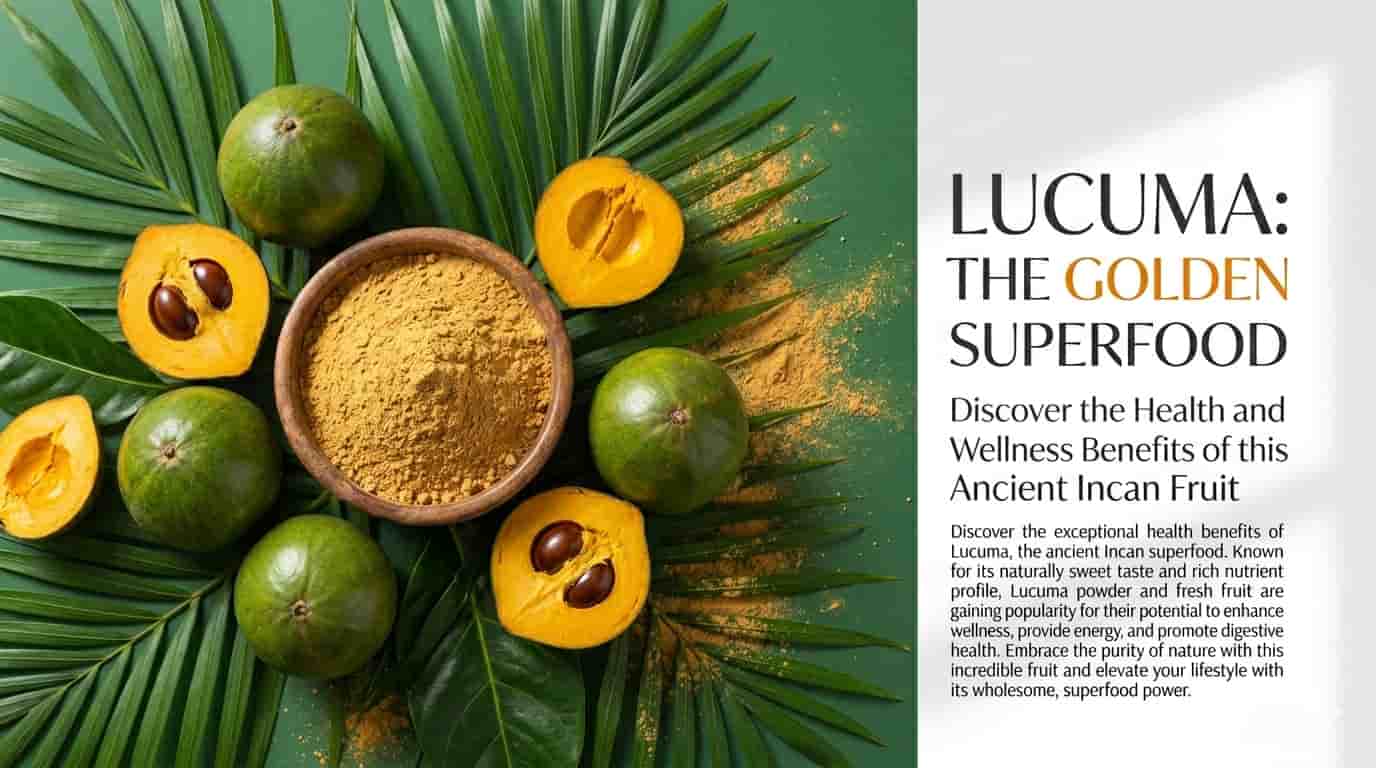
Native to the Andean valleys of Peru, Ecuador, and Chile, lucuma has been cultivated for centuries. Archaeological evidence suggests it was valued long before modern nutrition labels existed. In Peru, it’s often called “Inca Gold,” a nickname inspired by both its history and its beautiful golden-orange flesh.
Today, most people outside South America encounter it as lucuma powder. You’ll find it in smoothie blends, protein powders, health-food stores, and specialty baking ingredients.
But does it deserve all the attention?
The answer is a little more nuanced than many wellness influencers would have you believe.
Throughout this guide, we’re going to separate marketing from reality. We’ll explore the science, the nutrition, the practical uses, and even the common mistakes people make when using organic lucuma powder at home.
And trust me, there are quite a few.
What Is Lucuma and Why Is Everyone Talking About It?
Before discussing health benefits, let’s start with the fruit itself.
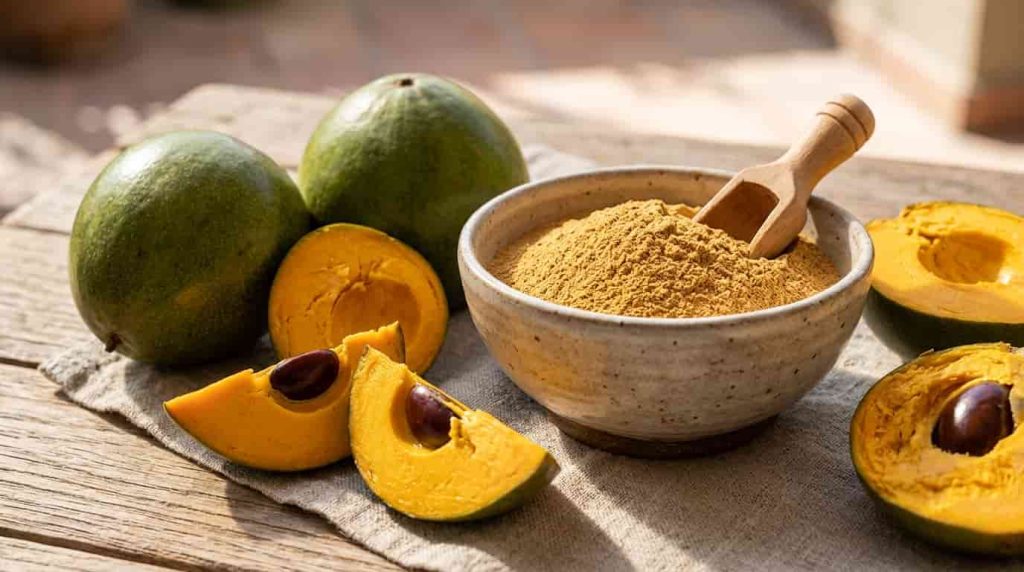
Lucuma comes from Pouteria lucuma, a subtropical tree native to the Andes.
The fresh fruit isn’t something you’ll commonly find in most supermarkets outside South America. That’s partly because ripe lucuma is surprisingly delicate and doesn’t travel particularly well.
Its appearance is modest.
Green skin.
Round shape.
Nothing flashy.
Cut it open, though, and things get interesting.
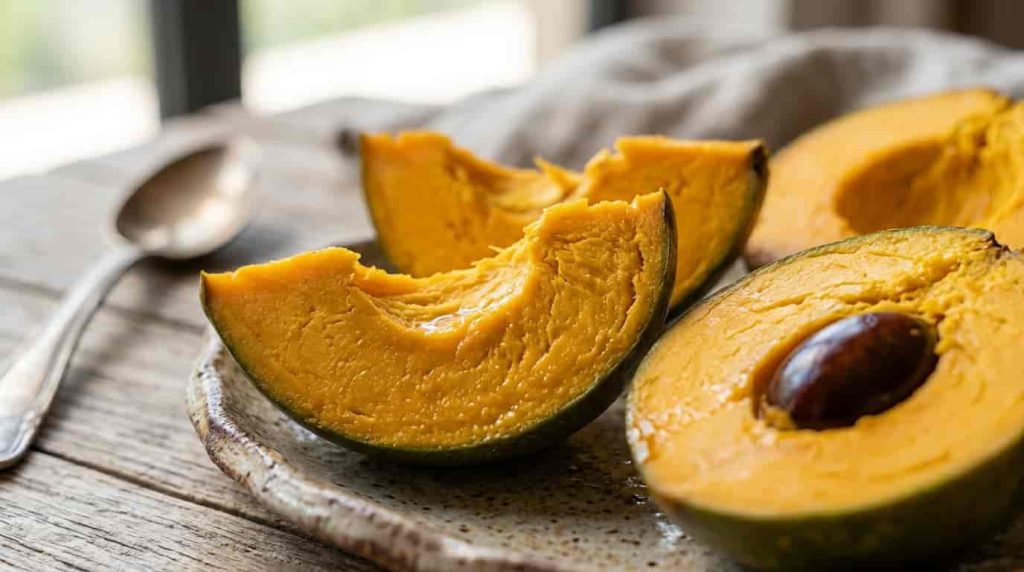
The flesh reveals a vibrant yellow-orange color that immediately hints at its carotenoid content. The texture is unlike most fruits people know. Instead of being juicy, it’s dry and starchy.
Some first-time tasters compare it to a cooked sweet potato crossed with maple syrup.
Others describe it as butterscotch.
Neither comparison is perfect.
Lucuma has its own personality.
Why Lucuma Powder Became More Popular Than Fresh Lucuma Fruit
The popularity of lucuma powder isn’t accidental.
Fresh lucuma fruit has a short shelf life and limited export potential. Dehydrating the flesh solves that problem.
Once dried and ground, the powder becomes:
- Shelf stable
- Easy to transport
- Convenient for recipes
- Simple to blend into foods
That’s why most people know the ingredient as lucuma powder organic products rather than fresh fruit.
The drying process also concentrates flavor, making the powder particularly useful in smoothies, desserts, and functional foods.
The Flavor Profile Most Articles Get Wrong
Let’s clear up a common misconception.
Many blogs claim lucuma tastes like brown sugar.
Not exactly.
Brown sugar is sweet.
Lucuma is aromatic.
That’s a huge difference.
Its appeal comes from complexity rather than sweetness.
When I use lucuma in recipes, I notice notes of:
- Maple
- Caramel
- Sweet potato
- Malt
- Vanilla
- Brown sugar
These flavors overlap and create something unique.
This distinction matters because many people buy lucuma expecting it to behave like table sugar.
It doesn’t.
And that’s where disappointment often begins.
The Peruvian Obsession With Lucuma
If you visit Peru, you’ll quickly notice something interesting.
Lucuma isn’t a niche health-food ingredient there.
It’s mainstream.
One of the country’s most beloved ice cream flavors is lucuma.
Not chocolate.
Not vanilla.
Lucuma.
There’s a reason for that.
Its natural starches help create a smooth, creamy texture that food scientists and pastry chefs appreciate. In frozen desserts, those starches help bind water and fat together, reducing iciness and improving mouthfeel.
The result feels luxurious without relying heavily on artificial stabilizers.
That practical advantage is one reason lucuma Peruvian desserts remain so iconic.
Lucuma Nutrition Facts: The Science Behind the Hype
Now let’s examine what actually happens nutritionally.
Because this is where things get interesting.
And where a lot of misinformation begins.
A Typical Serving of Lucuma Powder
One tablespoon of lucuma powder contains approximately:
- 30 calories
- 6 grams of carbohydrates
- 3 grams of natural sugars
- 1 gram of protein
- Around 2 grams of dietary fiber
At first glance, that may not seem extraordinary.
But context matters.
Compare it with refined sugar.
Sugar provides calories and sweetness.
That’s basically it.
Lucuma provides sweetness along with fiber and small amounts of nutrients.
That’s an important distinction.
The Fiber Advantage
One of the strongest nutritional arguments for lucuma involves its fiber content.
Unlike honey, agave, maple syrup, or table sugar, lucuma naturally contains dietary fiber.
Roughly one-third of its carbohydrate structure comes from fiber.
That combination changes how the ingredient behaves in the body.
Fiber slows digestion.
Fiber supports satiety.
Fiber helps nourish beneficial gut bacteria.
And that’s where lucuma begins separating itself from conventional sweeteners.
Why Your Gut Microbes May Love Lucuma
Ever wondered why nutrition experts talk so much about fiber?
The answer isn’t actually about the fiber itself.
It’s about what happens afterward.
Certain fibers act as prebiotics.
They become food for beneficial bacteria living inside the digestive tract.
When those microbes ferment fiber, they produce compounds called short-chain fatty acids.
Researchers have linked these compounds to improved gut barrier integrity and healthier digestive function.
Because organic lucuma powder contains both soluble and insoluble fibers, it may contribute to this process when consumed as part of a balanced diet.
Notice the wording there.
May contribute.
Not magically transform.
Nutrition is rarely that dramatic.
Vitamin B3: Lucuma’s Underrated Nutrient
Most conversations focus on fiber.
I think vitamin B3 deserves more attention.
Also known as niacin, vitamin B3 plays an important role in:
- Energy metabolism
- Nervous system function
- Cognitive health
- Cellular repair processes
Lucuma contains naturally occurring niacin alongside smaller amounts of:
- Potassium
- Iron
- Zinc
- Calcium
No, it’s not a multivitamin.
But it does offer more nutritional complexity than refined sweeteners.
The Golden Color Has a Scientific Explanation
That bright yellow-orange color isn’t just beautiful.
It’s biochemical.
Lucuma contains carotenoids, particularly a group known as xanthophylls.
These pigments are widely studied for their role in supporting eye health.
You’ll find similar compounds in foods like:
- Corn
- Egg yolks
- Yellow peppers
- Marigolds
The presence of these pigments helps explain why the flesh of the lucuma fruit looks so striking once sliced open.
And honestly, nature rarely creates colors like that without a reason.
Is Lucuma Really Low Glycemic?
This is where things become more nuanced.
Many articles simply state that lucuma has a low glycemic index of roughly 25 and move on.
But the more interesting story involves an enzyme called alpha-glucosidase.
Laboratory research has shown that compounds found in lucuma extracts may inhibit this enzyme.
Why does that matter?
Alpha-glucosidase helps break complex carbohydrates into simple sugars.
Slowing that process may help reduce the speed at which glucose enters the bloodstream after meals.
It’s the same biological pathway targeted by certain diabetes medications.
That’s promising.
However, it’s important to stay realistic.
These findings are primarily from laboratory studies, not large-scale human clinical trials.
So while the science is intriguing, lucuma should be viewed as a nutritious food rather than a medical treatment.
The Evidence-Based Health Benefits of Lucuma
Let’s talk about what lucuma can realistically do.
Not what marketing claims.
Not what social media promises.
Just what current evidence suggests.
Blood Sugar Support: More Interesting Than a Low Glycemic Index
Many people hear that lucuma has a relatively low glycemic index and stop there.
The real story is more interesting.
Researchers studying compounds found in lucuma discovered potential alpha-glucosidase inhibitory activity. That’s a complicated phrase for a simple concept.
The enzyme alpha-glucosidase helps break carbohydrates into sugars that enter your bloodstream.
When that process slows down, blood sugar rises more gradually after meals.
This mechanism is remarkably similar to the way certain oral diabetes medications work.
Now, before anyone gets too excited, there is an important caveat.
Most of this evidence comes from laboratory studies rather than large human clinical trials.
So no, lucuma isn’t a treatment for diabetes.
But it may be a smarter ingredient choice than refined sugar in certain recipes.
A Friendlier Sweetener for Gut Health
Most sweeteners contribute sweetness.
Lucuma contributes sweetness and fiber.
That’s a meaningful difference.
The fiber found in lucuma helps feed beneficial gut microbes. Those microbes ferment certain fibers and produce short-chain fatty acids such as butyrate and acetate.
Scientists continue studying these compounds because they appear to play important roles in:
- Gut barrier function
- Digestive comfort
- Immune system support
- Inflammation regulation
Long story short, your gut bacteria generally prefer fiber-rich foods over refined sugar.
Lucuma happens to provide some.
Natural Antioxidant Compounds
The rich golden color of the lucuma fruit isn’t just for looks.
That vibrant shade comes from carotenoids and other plant compounds that function as antioxidants.
Antioxidants help neutralize unstable molecules known as free radicals.
Think of them as tiny protective compounds that help maintain cellular balance.
Is lucuma the richest antioxidant source on Earth?
Not even close.
But every colorful plant food contributes something valuable.
Lucuma Nut Oil and Skin Recovery
Here’s a lesser-known fact.
The large seed inside the fruit contains oils rich in polyunsaturated fatty acids.
Research has explored the topical application of lucuma seed oil and found encouraging results related to tissue repair and wound recovery.
Some studies suggest these fatty acids may help support:
- Skin regeneration
- Minor wound healing
- Reduction of inflammatory responses
This benefit comes from the oil extracted from the seed rather than the powder added to smoothies.
That distinction matters.
Common Lucuma Myths That Refuse to Die
The wellness industry loves exaggeration.
Lucuma is no exception.
Let’s separate facts from fiction.
Myth #1: Lucuma Is Sugar-Free
This one appears everywhere.
And it’s wrong.
Lucuma contains natural sugars.
In fact, 100 grams of lucuma powder can contain roughly 44 grams of naturally occurring sugar.
The difference is that lucuma arrives packaged with fiber, nutrients, and plant compounds.
It’s a whole-food ingredient.
Not a sugar-free sweetener.
If you’re monitoring carbohydrate intake, lucuma still counts.
Myth #2: Lucuma Is a Zero-Calorie Sweetener
Nope.
Lucuma contains calories.
Approximately 330 calories per 100 grams.
Again, this doesn’t make it unhealthy.
It simply means it’s food.
Real food contains energy.
Myth #3: More Lucuma Means Better Results
This mindset causes problems with many health foods.
Lucuma works best as part of an overall balanced diet.
Adding five tablespoons to everything won’t suddenly transform your health.
Actually, you’ll probably just make your recipes taste odd.
Moderation wins.
Every time.
The Culinary Secrets Most Beginners Learn the Hard Way
Now we’re entering my favorite section.
The kitchen.
Because lucuma behaves differently than most people expect.
Why Lucuma Can Taste Chalky
Ever mixed lucuma powder into cold coffee and wondered why it settled at the bottom?
You’re not alone.
Lucuma contains significant amounts of starch and insoluble fiber.
That means it behaves more like flour than sugar.
Simply stirring it into thin liquids rarely works well.
The result often becomes gritty.
Or chalky.
Or both.
The Fix Professional Recipe Developers Use
Treat lucuma as a texture ingredient.
Not just a sweetener.
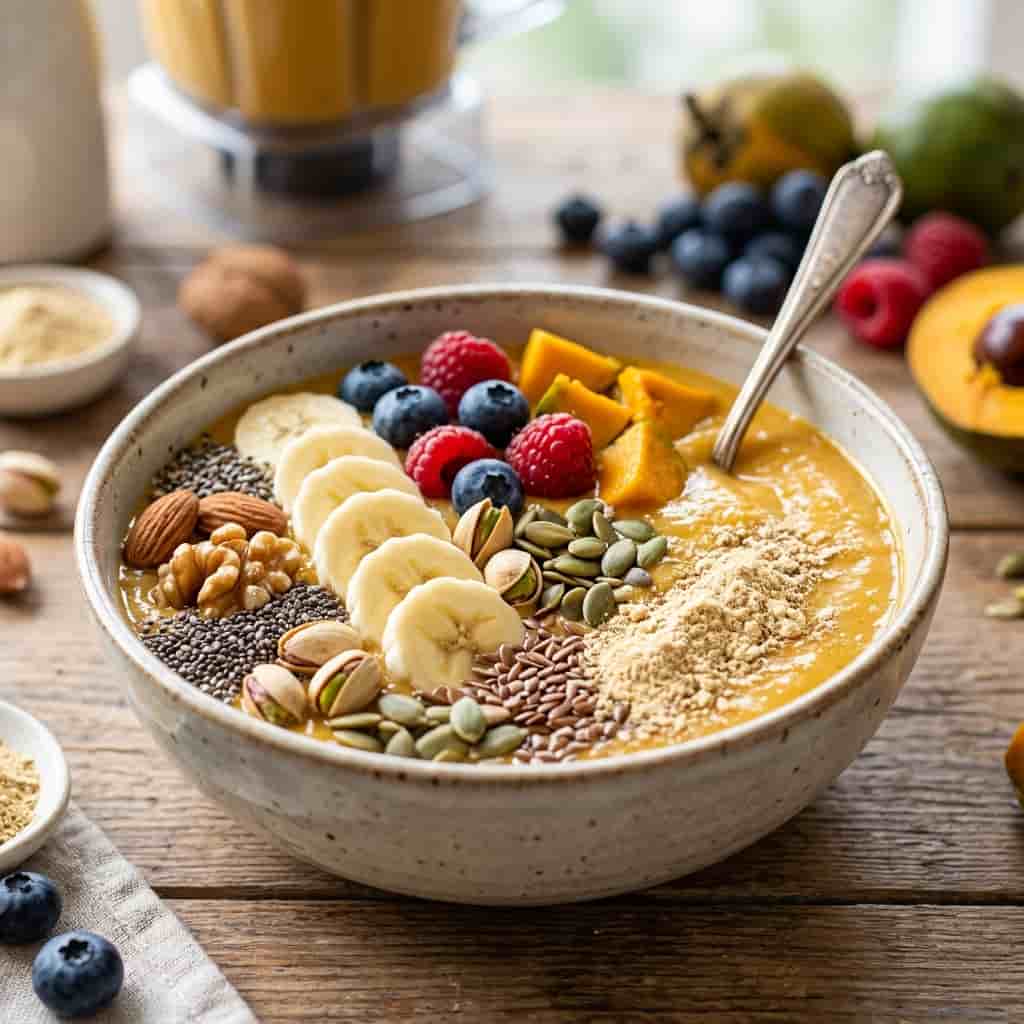
It performs beautifully when blended into:
- Nut butters
- Coconut milk
- Greek yogurt
- Avocado
- Smoothie bowls
- Protein shakes
These thicker, richer ingredients help suspend the particles and create a smooth mouthfeel.
Flavor Pairings That Make Lucuma Shine
Lucuma becomes far more interesting when paired strategically.
My favorite combinations include:
- Vanilla bean
- Dark chocolate
- Cinnamon
- Espresso
- Sea salt
- Almond butter
- Coconut cream
These ingredients amplify its natural caramel and maple-like notes.
Used correctly, lucuma can make a recipe feel richer without dramatically increasing sweetness.
The Biggest Baking Mistake People Make
This deserves its own section.
Because it ruins recipes.
A lot of recipes.
Never Replace Sugar 1:1
Many people assume they can swap one cup of sugar for one cup of lucuma powder.
Bad idea.
Very bad idea.
Lucuma absorbs moisture aggressively.
Sugar and lucuma behave completely differently inside batter.
When substituted one-for-one, cakes often become:
- Dry
- Dense
- Crumbly
- Heavy
Sometimes nearly inedible.
A Better Approach
Think of lucuma as a supporting ingredient.
Not a complete replacement.
Many experienced bakers use it alongside reduced amounts of traditional sweeteners.
This preserves moisture while adding flavor complexity.
The result is usually far better.
Why Product Developers Love Lucuma
Food formulators discovered something interesting years ago.
Lucuma can improve texture.
Its starches help create smoothness and body in products ranging from protein powders to frozen desserts.
That’s one reason premium brands continue experimenting with lucuma powder organic formulations.
The ingredient provides functionality beyond sweetness.
Real-World Case Studies
Theory is useful.
Real-world examples are better.
Case Study #1: Peru’s Favorite Ice Cream Flavor
Walk into many artisanal gelato shops in Lima.
You’ll notice something surprising.
Lucuma often outsells vanilla.
Sometimes chocolate too.
Why?
Food scientists point to its natural starch content.
Those starches help stabilize frozen desserts.
Water and fat remain better integrated.
Fewer ice crystals form.
The texture becomes incredibly creamy.
Consumers simply experience a richer product.
No complicated explanation required.
Case Study #2: The Functional Beverage Industry
Plant-based protein powders face a major challenge.
Many taste earthy.
Some taste bitter.
Others leave an unpleasant aftertaste.
Manufacturers traditionally solve this problem with artificial sweeteners.
But consumers increasingly prefer shorter ingredient lists.
That’s where organic lucuma powder enters the picture.
Its naturally malt-like flavor helps soften harsh notes from:
- Pea protein
- Hemp protein
- Rice protein
At the same time, it improves texture.
The result is a cleaner label and a more enjoyable product.
That’s a rare win-win.
Case Study #3: Smoothie Formulation Success
Several nutrition-focused cafés now use lucuma as a flavor-building ingredient rather than a primary sweetener.
The strategy works because lucuma contributes:
- Mild sweetness
- Creamy texture
- Caramel notes
- Nutritional value
Customers often perceive the smoothie as sweeter than it actually is.
That’s the power of flavor complexity.
How to Use Lucuma Every Day
If you’re curious about trying lucuma, start simple.
A little goes a long way.
Try adding it to:
- Smoothies
- Overnight oats
- Yogurt bowls
- Homemade protein shakes
- Chia pudding
- Energy bites
- Pancake batter
- Frozen desserts
Most recipes work well with one to two tablespoons.
Start there.
Adjust gradually.
Frequently Asked Questions
What does lucuma taste like?
Most people describe lucuma as a blend of maple syrup, caramel, sweet potato, vanilla, and brown sugar.
Is lucuma healthier than regular sugar?
Lucuma contains fiber and nutrients that refined sugar lacks. However, it still contains carbohydrates and calories.
Can diabetics eat lucuma?
Some research suggests lucuma may support healthy blood sugar management, but it remains a carbohydrate-containing food. Anyone with diabetes should consult a healthcare professional regarding dietary choices.
Is lucuma fruit available fresh?
Outside South America, fresh lucuma fruit can be difficult to find. Most consumers purchase it as powder.
Does lucuma help with weight loss?
There is no strong evidence that lucuma directly causes weight loss. It can fit into a balanced eating plan but should not be viewed as a weight-loss product.
What is the difference between lucuma powder and organic lucuma powder?
The nutritional profile is generally similar. Organic products are produced according to certified organic agricultural standards.
Final Thoughts on Lucuma
After years of watching health trends come and go, I’ve learned something simple.
The most useful foods rarely need exaggerated claims.
Lucuma is a perfect example.
It isn’t a miracle.
It isn’t magic.
And it certainly isn’t a substitute for healthy eating habits.
What it is, however, is a genuinely fascinating ingredient.
The lucuma fruit offers a unique flavor profile that few foods can replicate. Its combination of fiber, carotenoids, naturally occurring nutrients, and culinary versatility makes it stand out from ordinary sweeteners.
I especially appreciate that it succeeds in two areas at once.
Nutrition and taste.
That’s rarer than many people realize.
Whether you’re blending a smoothie, creating a healthier dessert, experimenting with clean-label recipes, or simply looking for an alternative ingredient with real history behind it, lucuma deserves consideration.
The ancient Peruvians valued it for a reason.
Modern chefs continue using it for a reason.
And after understanding both the science and the culinary reality, it’s easy to see why this golden Andean fruit continues to earn attention around the world.
Read More Article: The Powerful Truth About Acai Frozen Puree: Why This Deep Purple Superfruit Deserves a Spot in Your Freezer
Disclaimer: This article is for educational purposes only and is not medical advice.
Please wait to go to the next post: 30 seconds
Go to Next Post