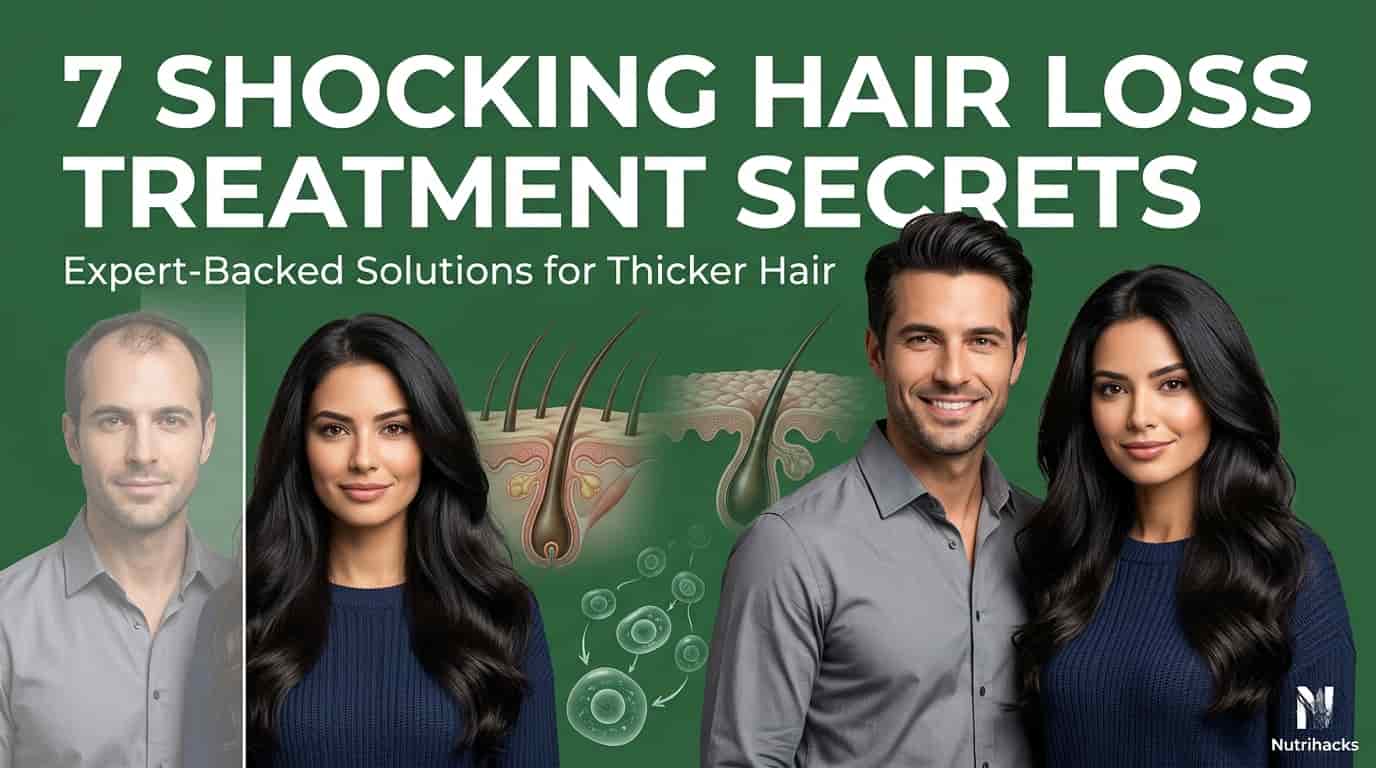
Hair loss can feel deeply personal.
One day you’re styling your hair without a second thought. A few months later, you’re noticing extra strands in the shower drain, more scalp showing under bright lights, or a hairline that seems to be quietly moving backward.
I’ve seen countless people panic at the first signs of shedding. Honestly, that’s understandable. Hair is tied to confidence, identity, and self-image.
The good news? Modern hair loss treatment options are far better than they were even a few years ago. Scientists now understand much more about why hair follicles stop producing healthy strands and, more importantly, how to help them recover before permanent damage occurs.
Here’s the deal: the earlier you act, the better your chances of keeping the hair you already have.
Many people spend years chasing miracle shampoos and internet hacks. Meanwhile, the follicles continue shrinking. By the time they seek real help, restoration becomes much harder.
This guide cuts through the noise.
You’ll learn what actually works, what doesn’t, and which treatments are supported by clinical evidence rather than marketing claims.

Why Hair Loss Happens in the First Place
Before discussing any hair treatment for hair loss, it’s important to understand what’s happening beneath the scalp.
Hair doesn’t grow continuously.
Each strand cycles through three main stages:
- Growth phase (Anagen)
- Transition phase (Catagen)
- Resting phase (Telogen)
Under normal circumstances, thousands of follicles are moving through these stages independently.
Problems begin when that cycle gets disrupted.
Genetic Hair Loss Is the Most Common Cause
The leading cause of hair thinning worldwide is androgenetic alopecia.
You may know it as:
- Male pattern baldness
- Female pattern hair loss
This condition is heavily influenced by genetics and a hormone called DHT (dihydrotestosterone).
DHT gradually shrinks susceptible follicles.
At first, the change is subtle.
A thick hair becomes slightly thinner.
Then thinner again.
Eventually, the follicle produces tiny, almost invisible hairs called vellus hairs.
If nothing interrupts the process, the follicle may stop producing visible hair altogether.
Other Causes of Hair Loss
Not every case is genetic.
A dermatologist for hair loss may investigate:
- Nutritional deficiencies
- Thyroid disorders
- Autoimmune diseases
- Severe stress
- Certain medications
- Hormonal changes
- Scalp infections
That’s why getting the correct diagnosis matters so much.
Treating autoimmune hair loss with a DHT blocker won’t help.
Likewise, taking vitamins won’t reverse genetic balding if DHT remains unchecked.
Why Early Action Matters
Think of a hair follicle like a plant.
A struggling plant can often recover.
A dead plant cannot.
The same principle applies to follicles.
Once significant scarring and fibrosis develop, recovery becomes extremely difficult.
Starting a hairline loss treatment early often means preserving thousands of follicles that might otherwise disappear permanently.
The Modern Hair Loss Treatment Approach
A major shift has happened in hair restoration.
Doctors no longer rely on a single solution.
Instead, they often combine therapies.
Why?
Because hair loss usually involves multiple biological pathways.
Using one treatment alone is like trying to stop a leaking roof by fixing only one hole.
The Era of Combination Therapy
Many specialists now use customized protocols that may include:
- Minoxidil
- Finasteride
- Microneedling
- PRP therapy
- Lifestyle adjustments
- Hair transplantation when necessary
This multi-target strategy often delivers stronger and more consistent outcomes than any single intervention.
Understanding the Famous “Dread Shed”
Let’s address something that scares nearly everyone.
You start treatment.
Then your shedding gets worse.
Panic sets in.
Wasn’t the treatment supposed to stop hair loss?
Actually, this early shedding phase is often a positive sign.
Experts call it the “dread shed.”
When medications such as minoxidil for hair loss begin working, weaker hairs are pushed out sooner than expected.
Those old hairs make room for healthier growth cycles.
This typically occurs within the first several weeks.
Although it can be alarming, it doesn’t necessarily mean treatment is failing.
Setting Realistic Expectations
One of the biggest mistakes people make is expecting overnight results.
Hair growth is slow.
Very slow.
Most clinically proven treatments require:
- 3 to 4 months before noticeable changes
- 6 months for meaningful improvement
- 12 months for maximum evaluation
Patience matters.
Consistency matters even more.
Minoxidil: Still One of the Most Effective Tools Available
Few treatments have survived decades of scientific scrutiny like minoxidil.
Despite countless new products entering the market, minoxidil remains a cornerstone of effective balding treatment plans.
How Minoxidil Works
Minoxidil helps extend the anagen phase.
In simple terms, it encourages hair follicles to spend more time growing and less time resting.
This can improve:
- Hair density
- Hair thickness
- Hair coverage
Many patients also experience increased hair shaft diameter, making existing hair appear fuller.
Topical Minoxidil
Traditional topical formulations remain widely used.
Common options include:
- 2% solution
- 5% solution
- 5% foam
For many people, topical application works extremely well.
However, there’s a hidden detail most consumers never hear about.
The Sulfotransferase Secret
Here’s a fascinating fact.
Topical minoxidil is actually a prodrug.
That means it needs activation before it becomes effective.
The scalp relies on an enzyme called sulfotransferase to convert minoxidil into its active form.
Some individuals naturally have low enzyme activity.
As a result, they may see limited benefits despite perfect compliance.
This is one reason some people swear minoxidil changed their lives while others claim it did nothing.
The Rise of Low-Dose Oral Minoxidil
Recently, many specialists have embraced low-dose oral minoxidil.
Interest has grown rapidly because it bypasses the scalp activation issue.
Research and clinical experience suggest that certain patients achieve equal or better outcomes compared to topical formulas.
For individuals frustrated by daily applications, scalp irritation, or inconsistent results, oral therapy has become an increasingly discussed option.
However, it should only be used under medical supervision because systemic side effects can occur.
Minoxidil for Thinning Hair: Who Benefits Most?
The best candidates often include:
- Early-stage androgenetic alopecia
- Diffuse thinning
- Female pattern hair loss
- Patients seeking non-surgical treatment
Many women experiencing gradual density loss have seen encouraging results with carefully supervised protocols involving minoxidil for thinning hair.
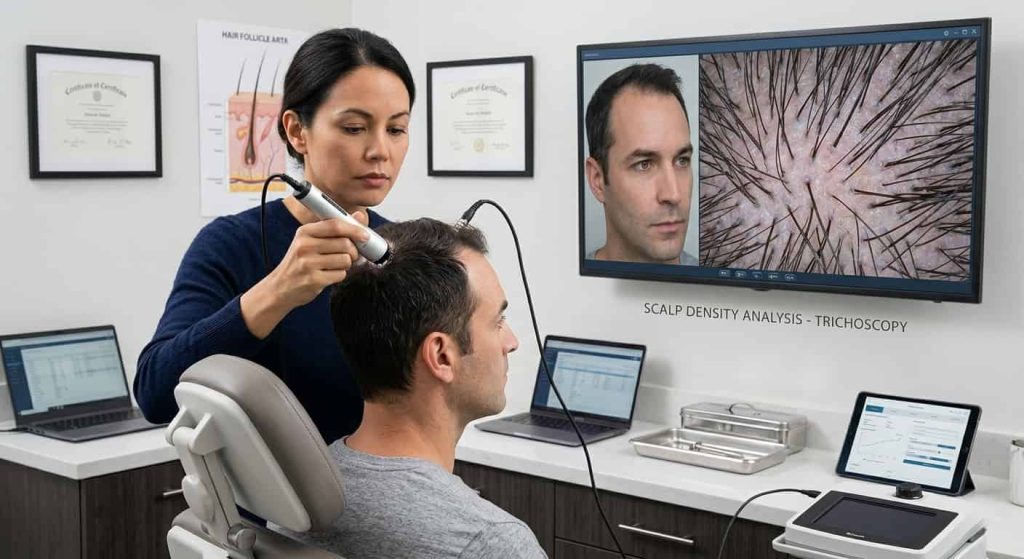
For Men: Minoxidil Alone or Combined?
When discussing for men minoxidil strategies, combination therapy frequently produces stronger results than minoxidil alone.
Many specialists pair minoxidil with DHT-targeting treatments to address both follicle stimulation and hormonal miniaturization simultaneously.
This dual approach often becomes the foundation of long-term preservation plans.
Finasteride: Targeting the Root Cause
If minoxidil helps stimulate growth, finasteride addresses the underlying trigger in many men.
Instead of acting directly on the hair shaft, finasteride reduces DHT production.
That distinction is important.
Because DHT drives follicle miniaturization, lowering DHT can slow or even halt ongoing damage.
Many dermatologists consider finasteride one of the most powerful non-surgical tools available for genetic hair loss.
The next section will cover:
- Topical vs oral finasteride
- Microneedling and growth stimulation
- PRP therapy
- Hair transplant realities
- Hair fall treatment for women
- JAK inhibitors for alopecia areata
- Common myths that still fool millions
- Real clinical success stories
- Expert-backed action plans
Topical Finasteride vs Oral Finasteride: What Changes, What Doesn’t
Finasteride is often the next step after minoxidil because it targets DHT (dihydrotestosterone), the hormone that drives follicle miniaturization in most men with androgenetic alopecia.
Oral finasteride (1 mg daily) has the strongest long-term evidence for slowing hair loss and preserving density.
Topical finasteride (often around 0.25% compounded) is increasingly used for people who want localized scalp treatment with lower systemic exposure. Early studies suggest meaningful scalp DHT suppression with less finasteride reaching the bloodstream, but the evidence base is still smaller than for the oral form.
A practical clinic pattern
- Start with oral finasteride + minoxidil if the patient is comfortable with the systemic risk discussion and wants the best-established medical preservation strategy.
- Consider topical finasteride + minoxidil when the patient is highly concerned about systemic exposure or previously did not tolerate the oral form.
- Reassess at 6–12 months using standardized photos. Hair treatments often look unchanged day-to-day, but side-by-side photography can reveal substantial stabilization.
Important caveat
If you’re female, pregnant, trying to conceive, or could become pregnant, finasteride requires special precautions and medical guidance. It is not a casual over-the-counter experiment.
Microneedling: The Most Misunderstood Adjunct
Microneedling has moved from internet trend to legitimate adjunctive therapy, but technique matters.
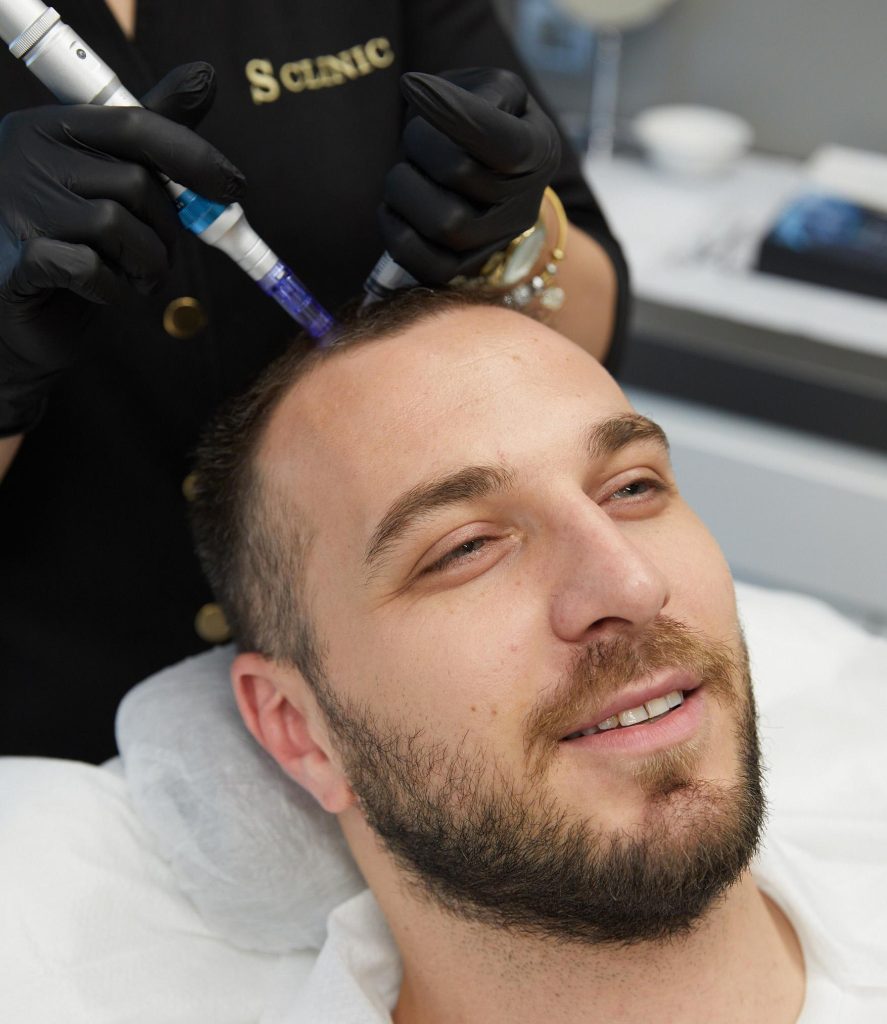
| What microneedling may do | What it won’t do |
|---|---|
| Increase penetration of topical treatments | Replace proven medical therapy by itself |
| Stimulate wound-healing growth factors | Reverse completely dead/scarred follicles |
| Potentially improve response in minoxidil non-responders | Produce instant cosmetic results |
The depth rule most people miss
Clinical practitioners commonly stay around 1.0–1.5 mm for scalp treatments, often at weekly or biweekly intervals depending on the device and protocol.
Going deeper is not automatically better. Excessive depth can increase the risk of micro-scarring and potential follicle damage.
If you’re combining microneedling with topical minoxidil, follow the specific timing instructions from your clinician; some protocols delay topical application for a period after needling to reduce irritation and unpredictable absorption.
PRP Therapy: Where It Fits in 2026
Platelet-Rich Plasma (PRP) uses a patient’s own concentrated platelets to deliver growth factors into the scalp.
The evidence is mixed but increasingly supportive as an adjunct, especially for androgenetic alopecia and selected diffuse thinning patterns.
PRP tends to work best when the follicles are still alive but struggling. It is not a miracle replacement for lost donor hair.
Who may benefit most
- Early to moderate thinning
- Patients already using minoxidil and/or finasteride who want additional density support
- Post-transplant patients aiming to support graft maturation
What PRP is not
- A permanent cure
- A substitute for DHT control in genetic balding
- A guaranteed responder therapy—outcomes vary substantially
Hair Transplants: Excellent Tool, Not a Time Machine
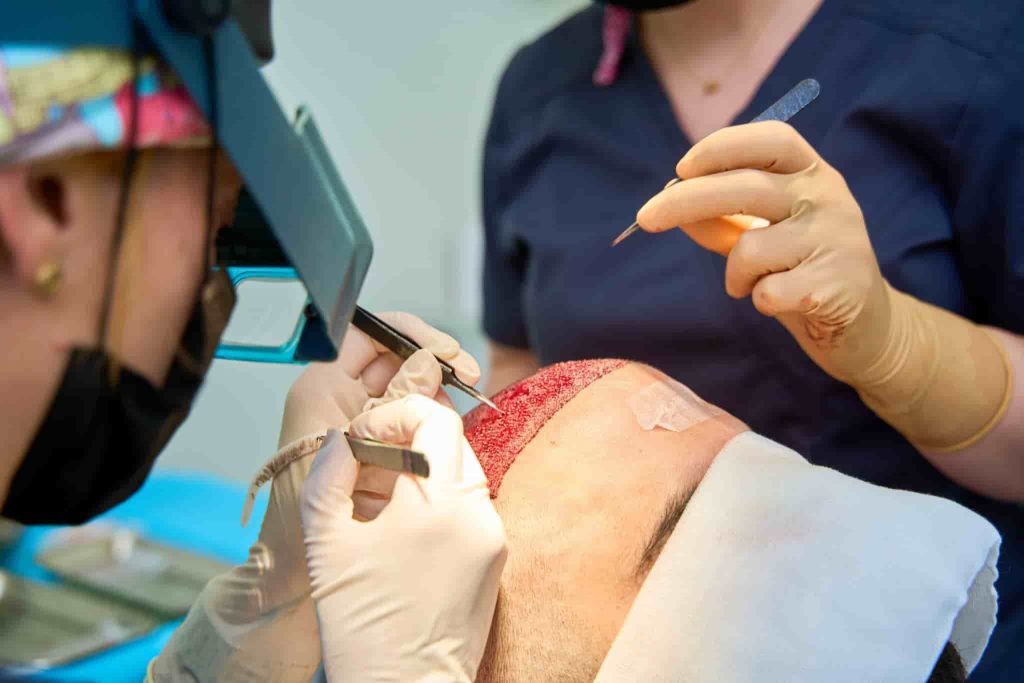
Modern FUE (Follicular Unit Extraction) transplantation can create remarkably natural results. The key misconception is that surgery ends the need for medical management.
What transplanted hair actually does
Donor hairs from the back/sides of the scalp are relatively resistant to DHT. Those grafts generally persist long-term.
What keeps progressing
The native, non-transplanted hair around them can continue miniaturizing if DHT-driven loss remains untreated. That’s how people end up with islands of transplanted hair surrounded by ongoing thinning years later.
A smarter sequencing strategy
- Stabilize loss medically first (often 6–12 months).
- Document the true pattern and rate of progression.
- Design a transplant plan that matches likely future hair loss, not just today’s hairline.
Hair Fall Treatment for Women: Not Just ‘Female Minoxidil’
Women deserve a separate discussion because the causes and treatment decisions differ.
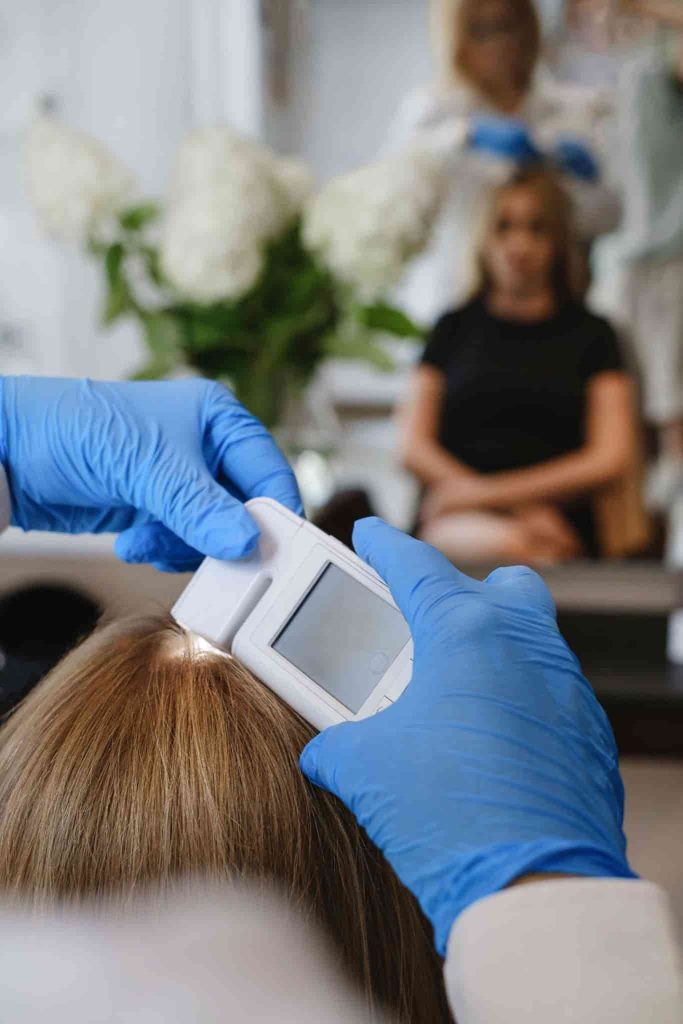
Common triggers include:
- Female pattern hair loss
- Iron deficiency
- Thyroid disease
- Postpartum hormonal shifts
- Perimenopause/menopause
- Medications and significant stress
A typical evidence-based workup may include
- Ferritin/iron studies
- TSH (thyroid testing)
- Vitamin D when clinically indicated
- Hormonal evaluation in selected cases
Common treatment components
- Topical minoxidil remains a mainstay.
- Low-dose oral minoxidil is increasingly used under supervision.
- Anti-androgen therapies (such as spironolactone in appropriate candidates) may be considered when androgen sensitivity is suspected.
- Correcting deficiencies is essential when present.
Important nuance
A woman with low ferritin and diffuse shedding may improve dramatically after correcting iron deficiency, while a woman with female pattern hair loss often needs ongoing follicle-targeted therapy. The treatment mechanism must match the diagnosis.
The JAK Inhibitor Breakthrough for Alopecia Areata
This is one area where the field has genuinely transformed.
Alopecia areata is an autoimmune condition in which immune cells attack the hair follicle.
Traditional DHT-focused therapies are largely irrelevant here.
Newer JAK inhibitors (such as baricitinib/Olumiant and other approved agents in this class) directly target the immune signaling pathways driving the attack.
What recent clinical experience has shown
- Many severe patients achieve substantial regrowth with continuous therapy.
- Regrowth can occur even after extensive patch loss.
- Ongoing monitoring is essential because these are systemic immune-modulating medications.
If your hair loss is sudden, patchy, or rapidly diffuse, don’t self-diagnose. That pattern deserves professional evaluation promptly.
Myths That Refuse to Die
| Myth | Reality |
|---|---|
| “Hats cause baldness.” | Hair follicles are nourished by blood supply, not air exposure. Normal hat use does not cause genetic balding. |
| “Switching shampoo can stop male pattern baldness.” | Shampoo contact time is brief. Anti-inflammatory shampoos may help scalp conditions, but they do not replace DHT-targeting therapy. |
| “A hair transplant cures baldness.” | Transplanted grafts may persist, but surrounding native hair can continue miniaturizing without medical management. |
| “Washing hair causes permanent loss.” | Washing usually reveals hairs that already detached during the telogen phase. |
| “Biotin fixes all hair loss.” | Biotin helps when there is a true deficiency. Most hair loss is not caused by biotin deficiency. |
Two Real-World Clinical Patterns
Case A: Rapid temple and crown thinning (Androgenetic Alopecia)
A man in his mid-20s developed recession at the temples and thinning at the crown. Rather than rushing into a transplant, his dermatologist started:
- Finasteride 1 mg daily
- Topical 5% minoxidil foam
- Microneedling approximately every two weeks
He experienced an early “dread shed” around week 3. By month 6, shedding stabilized. By month 12, standardized photographs showed visibly improved crown coverage and thicker hair shafts, delaying the need for surgery.
Case B: Sudden patchy autoimmune loss (Alopecia Areata)
A woman in her mid-30s lost more than 40% of scalp coverage over a short period. DHT blockers were not the answer because the problem was autoimmune. Her team used:
- A targeted oral JAK inhibitor
- Adjunctive PRP sessions
Within weeks, the immune attack quieted. By month 4, new sprouts appeared across patch zones. By month 12, she regained the majority of scalp coverage and density.
The lesson from both cases is simple: the correct treatment depends on the correct diagnosis.
What I’d Do If I Noticed Early Thinning Today
- Get a professional diagnosis rather than guessing.
- Take standardized photos (same lighting, angle, and distance monthly).
- If diagnosed with androgenetic alopecia, discuss minoxidil + DHT control rather than shampoo experiments.
- Consider microneedling only with a clear protocol and safe depth guidance.
- Evaluate oral minoxidil, topical finasteride, or other advanced options with a dermatologist if topical therapy is inadequate or poorly tolerated.
- Be patient for 6–12 months before judging effectiveness.
- If loss is sudden, patchy, painful, or associated with other symptoms, seek evaluation promptly to rule out autoimmune, endocrine, nutritional, or inflammatory causes.
The bottom line
Effective hair loss treatment is less about finding a miracle product and more about matching the mechanism to the diagnosis.
For genetic hair loss, the strongest evidence still points to a combination of follicle stimulation (often minoxidil), DHT suppression (finasteride or an appropriate alternative), and adjuncts such as microneedling or PRP in selected patients. For autoimmune alopecia areata, JAK inhibitors have changed the landscape entirely.
The biggest mistake I see isn’t choosing the “wrong shampoo.” It’s waiting years while follicles quietly miniaturize past the point where preservation would have been easiest.
Frequently Asked Questions
How long does a hair loss treatment take to work?
Most evidence-based treatments require at least 3–4 months for early signs of response and 6–12 months for meaningful assessment. Hair grows slowly.
Is shedding after starting minoxidil normal?
An early increase in shedding can occur during the first several weeks. This “dread shed” often reflects follicles transitioning into a new growth cycle rather than treatment failure.
Can women use minoxidil?
Yes. Topical minoxidil is commonly used for female pattern hair loss, and low-dose oral minoxidil is increasingly prescribed under medical supervision when appropriate.
Do hair transplants stop future hair loss?
No. Transplanted grafts are typically DHT-resistant, but surrounding native hair may continue thinning without ongoing medical management.
When should I see a dermatologist for hair loss?
Seek evaluation if you have sudden shedding, patchy loss, scalp pain, rapid progression, or loss associated with fatigue, weight changes, menstrual changes, or other systemic symptoms.
Read More Article: 11 Powerful Home Remedies for Cold That Actually Help You Feel Better Fast
Final note: If you’re trying to decide between topical vs oral finasteride, oral vs topical minoxidil, PRP, or transplant timing, the most valuable next step is often not another product—it’s a diagnostic scalp evaluation with standardized photography and a clinician who treats hair disorders regularly.
Disclaimer: This article is for educational purposes only and is not medical advice. Always consult a qualified healthcare professional for diagnosis and treatment recommendations.
Please wait to go to the next post: 30 seconds
Go to Next Post