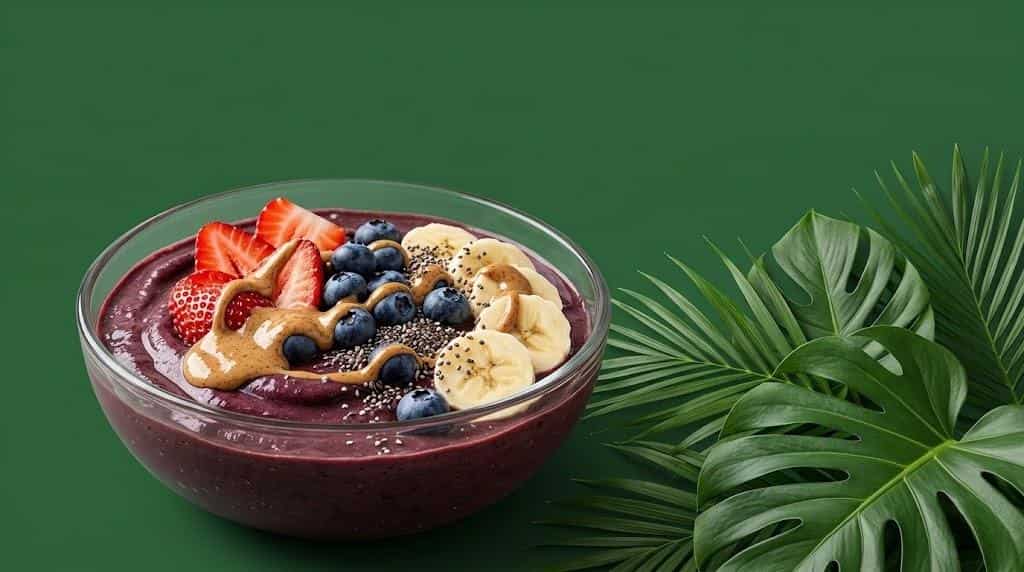
There’s a funny thing about health foods. The moment something becomes trendy, the internet usually grabs it, throws glitter on it, and suddenly it’s being sold as a miracle from another planet.
Açaí got that treatment.
One minute it was a traditional food eaten in the Amazon region. Next thing you know, people were claiming it could melt belly fat, reverse aging, and probably solve your Monday mood before coffee even had a chance.
I remember walking into a smoothie shop years ago and seeing an açaí bowl the size of a flower pot. Beautiful? Absolutely. Healthy? Well… that depended on what was actually inside it.
That’s where things get interesting.
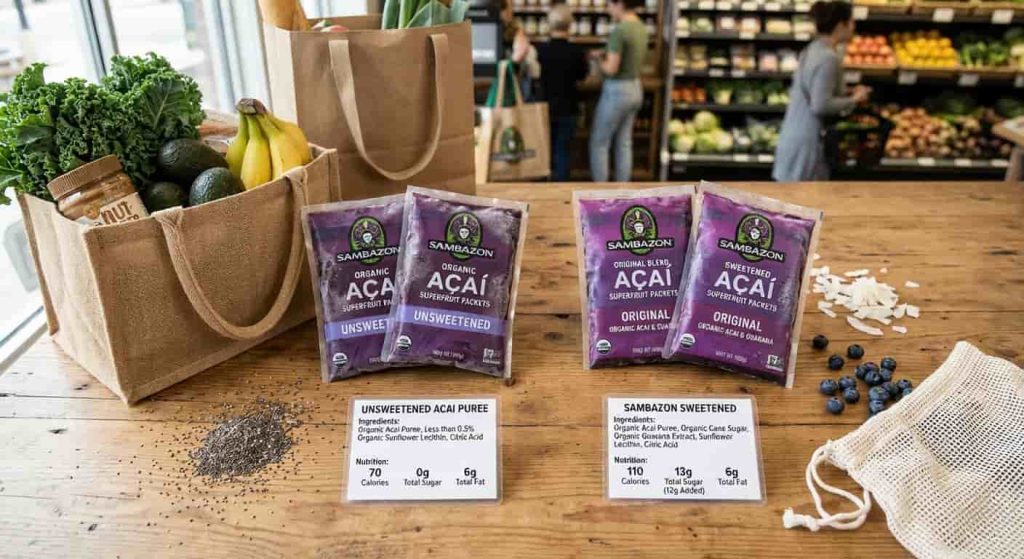
Because acai frozen puree isn’t automatically healthy. Some versions are packed with added sugars while others are surprisingly nutrient-dense and closer to what people in Brazil have been eating for decades.
The difference matters.
If you’ve ever stared at frozen acai packets in the freezer aisle wondering:
“Wait… are these all the same?”
You’re not alone.
Actually, most people have no idea that pure açaí isn’t naturally very sweet at all. That surprises almost everyone. The deep purple color tricks your brain into expecting a burst of berry sweetness.
Instead?
It’s earthy. Rich. Slightly chocolate-like. Almost like unsweetened dark berries mixed with a tiny hint of cocoa.
Oddly satisfying.
Today we’re getting into the real story behind acai frozen puree — the nutrition, the science, the myths, and the things experienced health nerds quietly look for before tossing a packet into their cart.
Quick disclaimer: This article is for educational purposes and isn’t medical advice.
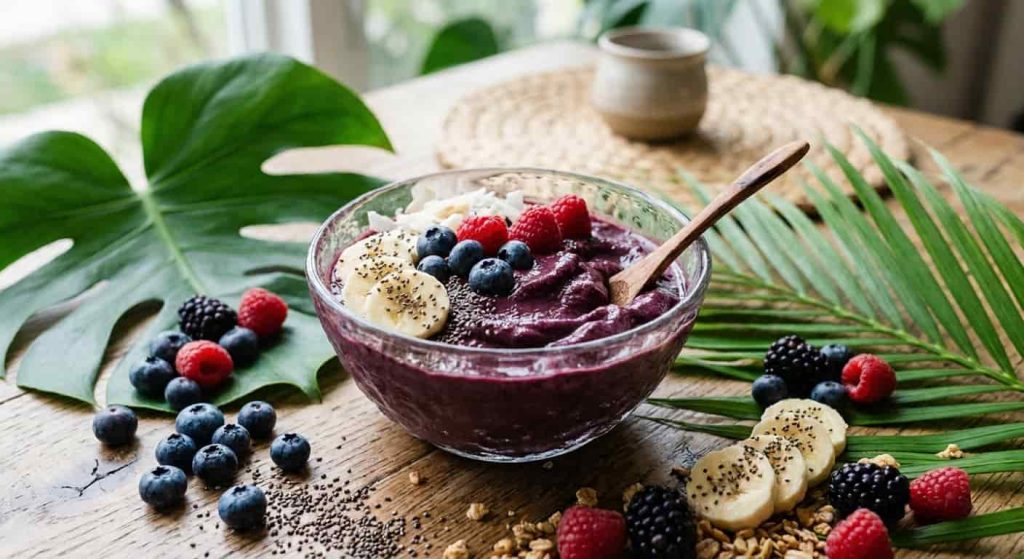
What Exactly Is Acai Frozen Puree?
Let’s clear something up first.
Açaí (pronounced ah-sigh-EE) isn’t technically a berry in the way strawberries or blueberries are.
It’s actually a drupe.
Think peaches. Think olives.
Strange comparison, right?
The fruit grows on açaí palm trees in the Amazon rainforest, and roughly 80% of it is seed. Only a relatively small amount becomes edible pulp.
That pulp is where all the action happens.
After harvesting, producers remove the edible portion, blend it into a thick mixture, and freeze it quickly to preserve nutrients and texture. What you see in stores as acai pulp frozen packs is essentially that concentrated edible portion.
Simple process.
But not all products stop there.
Some manufacturers add:
- Cane sugar
- Guaraná syrup
- Apple juice concentrate
- Artificial flavors
- Extra sweeteners
Suddenly your health food starts behaving more like dessert.
That’s why labels matter.
What I look for personally
When I check frozen acai puree packets, I immediately look at the ingredient list.
I want:
- Açaí listed first
- Minimal ingredients
- No added syrups
- No large sugar additions
Short ingredient lists usually tell a good story.
Long ingredient lists sometimes start writing fiction.
Why frozen versions are so common
Ever wondered why you rarely see fresh açaí sitting beside apples and oranges?
Because fresh açaí has an extremely short lifespan.
Really short.
The fruit deteriorates rapidly after harvesting. Freezing preserves the pulp while helping maintain nutrients and flavor.
That’s why frozen pure acai became the global standard.
Without freezing, most of us outside the Amazon region would never taste it.
Why Acai Frozen Puree Looks Different From Other Fruits
Most fruits live in carbohydrate territory.
Bananas? High carbs.
Mangoes? More carbs.
Grapes? Sugar city.
Açaí plays by different rules.
That’s one reason nutrition researchers became curious about it.
The nutrition profile surprises people
A typical 100-gram serving of pure unsweetened acai puree usually contains approximately:
- 70–75 calories
- 5–6 grams healthy fats
- 5 grams carbohydrates
- 3–4 grams fiber
- Very little sugar
- Trace minerals including magnesium, calcium, potassium, iron, and zinc
Read that again.
Very little sugar.
For a fruit, that’s unusual.
Instead of being sugar-heavy, acai berry frozen puree contains beneficial fats, particularly omega-6 and omega-9 fatty acids.
That combination changes how the food behaves in your body.
Why fats and fiber matter
Ever eat a sugary breakfast and then feel hungry thirty minutes later?
You know the feeling.
Energy shoots up.
Then suddenly crashes.
Fiber and healthy fats slow digestion. They help create steadier energy release and may help support fullness.
That doesn’t magically transform acai frozen puree into a weight-loss shortcut.
But it can make meals feel more satisfying.
Big difference.
The deep purple color isn’t just for Instagram
Now let’s talk about that dramatic color.
Because nature doesn’t accidentally make fruit look like spilled paint.
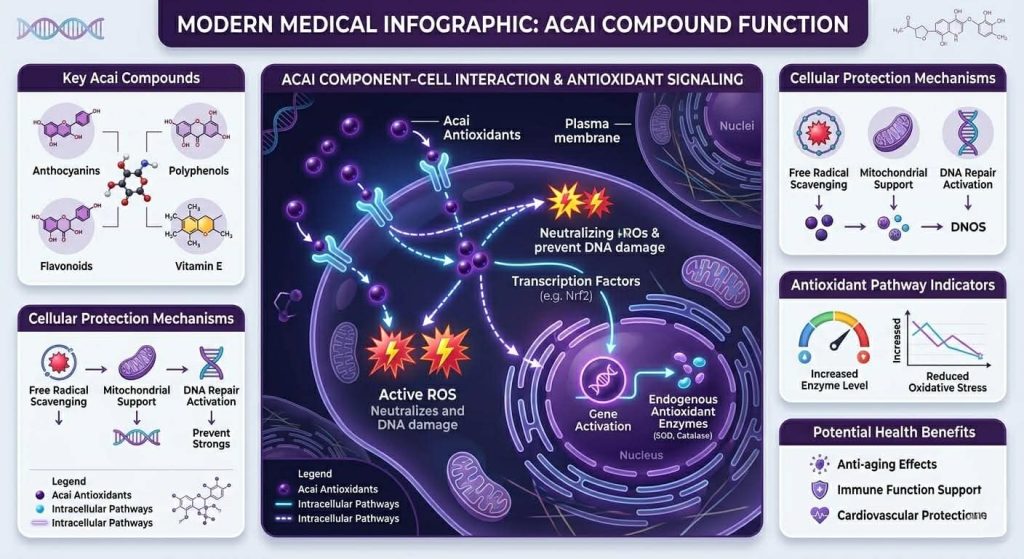
The purple-black shade comes from compounds called anthocyanins.
These plant compounds have antioxidant properties and researchers are especially interested in two forms:
- Cyanidin-3-rutinoside
- Cyanidin-3-glucoside
Those names sound like tiny robot villains.
But their job is pretty fascinating.
Instead of simply floating around and destroying free radicals, scientists believe these compounds may work more like messengers.
Think of them as little biological text messages.
They signal cells to activate defense systems already built into your body.
One pathway attracting attention is called the Nrf2 pathway.
Don’t worry about memorizing the name.
Here’s the simple explanation:
Imagine your cells have an internal security team sleeping in a break room.
Anthocyanins knock on the door and say:
“Hey, time to wake up.”
Then the body begins producing protective enzymes that help deal with oxidative stress.
Pretty cool for a frozen purple fruit.
A small reality check
Here’s where I like to pump the brakes.
The science around açaí is promising.
But promising doesn’t mean magical.
Some wellness marketing makes it sound like one bowl of acai frozen puree turns you into a superhero with flawless skin and endless energy.
Real life doesn’t work like that.
Your overall eating pattern still matters.
Sleep matters.
Movement matters.
Stress matters.
The frozen packet in your blender isn’t secretly running the whole show.
Still, as food choices go?
A properly chosen frozen pure acai product can be a pretty impressive addition to breakfast.
Especially when you know what you’re actually buying.
Why Smart Shoppers Read Acai Labels Like Detectives
Here’s a little spoiler for the next part.
The freezer aisle has traps.
Pretty purple traps.
And some “healthy” açaí bowls can quietly contain more sugar than a dessert.
We’ll get into that next, along with the science-backed benefits, surprising myths, insider buying tricks, and the mistake that turns healthy acai frozen puree into a sugar bomb.
The Science-Backed Benefits of Acai Frozen Puree (Without the Internet Fairy Tales)
Health trends love exaggeration.
You’ve probably seen headlines that sound something like:
“Eat this purple superfruit and watch your body transform overnight.”
I always laugh a little at those.
Because if that worked, we’d all be walking around with six-packs made of blueberries and kale smoothies.
Still, acai frozen puree has attracted serious scientific attention for a reason.
Not because it’s magic.
Because its nutritional makeup is genuinely unusual.
Let’s talk about what research actually suggests.
Acai Frozen Puree and Oxidative Stress
Your body naturally creates unstable molecules called free radicals.
That sounds scary, but it isn’t automatically bad.
They’re part of normal metabolism.
The problem starts when too many build up over time.
Poor sleep.
Smoking.
Highly processed diets.
Chronic stress.
Environmental pollutants.
These can all push the body toward oxidative stress.
Think of oxidative stress like tiny scratches accumulating on a car over many years. One scratch isn’t noticeable. Thousands eventually become obvious.
Research suggests that compounds inside acai berry frozen puree may help reduce some markers associated with oxidative stress and inflammation.
Scientists are particularly interested in those anthocyanins we talked about earlier.
Instead of acting like simple cleanup workers, they may encourage the body to produce its own antioxidant defenses.
Kind of like teaching someone to fish instead of handing them a fish every day.
Pretty smart system.
What this may mean in everyday life
Nobody feels oxidative stress directly.
You don’t wake up and say:
“Wow, my oxidative stress levels feel weird today.”
But over time, reducing chronic inflammation may support:
- Cellular health
- Healthy aging
- Recovery processes
- General wellness
The keyword is may.
Research continues evolving.
Heart Health Support Is Getting Attention
This part surprised me when I first read about it.
People often assume fruits support health because of vitamins or fiber.
Açaí has another interesting feature.
Plant sterols.
What are plant sterols?
Plant sterols are natural compounds found in plants that structurally resemble cholesterol.
They’re sneaky little things.
Inside your digestive tract they compete with cholesterol for absorption.
Imagine two people trying to squeeze through a narrow doorway at the same time.
Less room means less movement through.
Researchers think plant sterols may help reduce cholesterol absorption.
Blood vessel flexibility also matters
Some small studies found interesting effects involving blood vessel function after consuming açaí-containing smoothies.
Researchers observed improvements in vascular endothelial function.
That phrase sounds painfully technical.
Simple version?
Blood vessels need flexibility.
Healthy arteries expand and contract efficiently.
Researchers sometimes describe this as flow-mediated dilation.
Think garden hose versus old stiff pipe.
The flexible hose handles changing pressure better.
Scientists are still studying long-term effects, but the early findings created interest around frozen pure acai products.
Blood Sugar: Why Pure Acai Behaves Differently
Let’s talk breakfast disasters.
Because almost everyone has experienced one.
You eat a giant muffin or a sugary cereal.
Energy feels amazing.
Twenty minutes later?
You’re searching cabinets like a raccoon.
Pure unsweetened acai puree behaves differently.
Remember:
- Low sugar
- Contains fats
- Contains fiber
That combination tends to produce a smaller blood sugar impact than many sweet fruit products.
But here’s where people accidentally sabotage things
The problem usually isn’t the açaí itself.
It’s what gets added around it.
I’ve seen bowls loaded with:
- Honey
- Sweetened granola
- Chocolate syrup
- Apple juice
- Sweetened yogurt
- Extra sweetened puree blends
At that point you’re not eating acai frozen puree anymore.
You’re eating dessert wearing workout clothes.
Big difference.
The Brain Health Research Is Fascinating
Now we’re entering early-stage science territory.
Researchers have been studying whether compounds in açaí influence brain health.
Animal studies suggest certain polyphenols may cross the blood-brain barrier.
That grabbed attention.
Why?
Because the brain has its own maintenance system.
Think of it as housekeeping
Your brain constantly clears damaged materials and cellular waste.
Scientists call one process autophagy.
Don’t let the word scare you.
Imagine tiny cleaning crews working overnight.
Dust gets removed.
Broken parts get recycled.
Old junk gets cleared out.
Some early research suggests açaí compounds might support these cleanup processes.
Human evidence is still developing.
Nobody should read that and think:
“Perfect. Acai bowls cure everything.”
Not even close.
But it’s an intriguing area researchers continue exploring.
The Biggest Myths About Acai Frozen Puree That Refuse to Die
The internet sometimes treats nutrition facts like a game of telephone.
One person says something.
Someone repeats it.
Then suddenly millions believe it.
Let’s clear up a few things.
Myth #1: Acai causes weight loss
This one simply refuses to retire.
Back in the supplement craze years ago, marketers pushed açaí as a fat-burning miracle.
Evidence doesn’t support that claim.
Research hasn’t shown direct, meaningful weight-loss effects.
Can acai pulp frozen products support healthy eating?
Absolutely.
Mostly because fiber and fats may help fullness.
But fullness isn’t the same thing as fat melting.
If only.
Myth #2: All frozen acai packets are healthy
This catches people constantly.
Two packages can sit beside each other in a freezer.
Same purple color.
Same branding style.
Very different nutrition profiles.
One might contain:
- Pure açaí pulp
- Minimal ingredients
Another might contain:
- Added sugar
- Juice concentrates
- Syrups
- Flavor additives
They aren’t nutritionally identical.
Not even close.
Myth #3: Acai prevents cancer
This topic needs careful wording.
Laboratory research has shown that açaí extracts affected certain cancer cells in test environments and animal studies.
That sounds exciting.
But laboratory findings aren’t automatically human outcomes.
People are not test tubes.
Human clinical evidence simply isn’t there.
So claiming acai frozen puree prevents cancer goes far beyond what research supports.
The Shopping Trick Most People Never Learn
If you really want to buy better products, watch for concentration grading.
Brazilian açaí pulp often uses categories based on solid content.
You’ll sometimes see labels related to:
Thick or Special grade
Higher concentration of pulp solids.
Usually richer texture.
Often better for bowls.
Medium grade
Moderate consistency.
Thin grade
Lower concentration.
More diluted.
I usually tell people one simple rule:
Read the first ingredient.
If açaí isn’t first, pause.
Your freezer deserves better.
Insider Tricks That Make Acai Frozen Puree Taste Better (And Work Better Too)
By now we’ve covered the science, nutrition, and myths.
Now comes the practical part.
Because even the healthiest ingredient on earth becomes disappointing if it turns into a watery purple soup inside your blender.
I learned this the hard way.
Years ago I tossed an entire frozen packet into a blender, added too much liquid, pressed the button confidently… and immediately heard the blender produce a sound that felt like a cry for help.
Not my finest kitchen moment.
Acai frozen puree behaves differently from many frozen fruits because of its texture and fat content.
A little technique changes everything.
The “Thaw and Whack” Method
Professional smoothie shops rarely throw rock-hard blocks directly into blenders.
There’s a reason.
Frozen açaí can become incredibly solid.
Try this instead:
Step 1
Run the unopened frozen acai puree packets under warm water for about 15 seconds.
Not hot water.
Just warm.
Step 2
Gently press or break the softened packet into chunks.
Step 3
Cut open the package and add the pieces to your blender.
That’s it.
Simple.
This creates a smoother consistency without needing excessive liquid.
And too much liquid is often the reason homemade bowls become thin and disappointing.
The Acid Pairing Trick Most People Never Hear About
This one feels almost like kitchen trivia.
But there’s interesting science behind it.
Anthocyanins—the compounds responsible for açaí’s deep purple color—respond to acidity.
A slightly acidic environment may help stabilize these compounds during digestion.
Translation?
Certain pairings may help your body make better use of some of the antioxidants.
Try combining acai frozen puree with:
- Fresh lime juice
- Strawberries
- Acerola
- Kiwi
- Citrus fruits
Even a small squeeze of lime changes flavor dramatically.
The bowl becomes brighter.
Less flat.
More balanced.
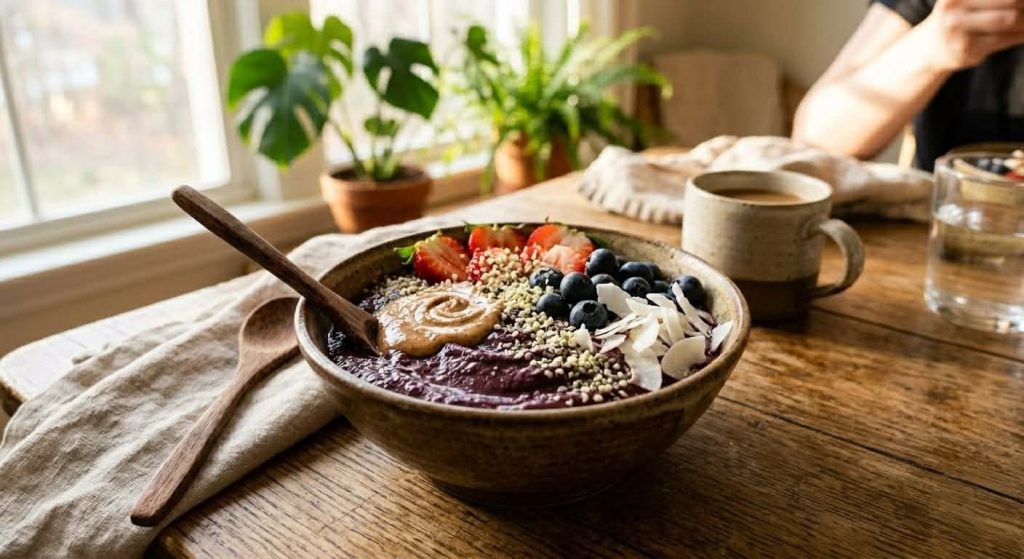
Building an Acai Bowl That Doesn’t Become a Sugar Bomb
Here’s where many beautiful bowls quietly go off the rails.
Social media loves giant toppings.
Huge honey drizzles.
Massive granola piles.
Chocolate syrup waterfalls.
Looks fantastic.
Feels less fantastic an hour later.
Let’s build something more balanced.
Better base ingredients
Start with:
- Unsweetened acai puree
- Unsweetened almond milk
- Half a banana
- Small handful of berries
- Ice if needed
Add protein or healthy fats
Consider:
- Almond butter
- Peanut butter
- Hemp seeds
- Chia seeds
- Greek yogurt
Smarter toppings
Try:
- Sliced strawberries
- Pumpkin seeds
- Coconut flakes
- Walnuts
- Blueberries
Things worth limiting
Not banning.
Just watching.
- Honey overload
- Sweetened granola mountains
- Chocolate syrups
- Sugary juices
Remember, the goal isn’t perfection.
The goal is avoiding accidental dessert disguised as breakfast.
A Real-Life Example Nutritionists See Often
This scenario happens constantly.
Someone decides:
“I’m eating healthier starting Monday.”
Great decision.
So breakfast changes from:
- Bagel and cream cheese
to:
- Store-bought açaí bowl
Two weeks later they feel confused.
Energy crashes.
Hunger returns quickly.
Mood feels off.
What happened?
A closer look usually reveals:
The bowl used:
- Sweetened acai berry frozen puree
- Apple juice
- Honey
- Sweetened granola
- Sugary toppings
The “healthy” breakfast quietly reached 60–80 grams of rapidly digested sugars.
That’s where ingredient quality matters.
A rebuilt version often looks like this:
Before
- Sweetened puree
- Juice base
- Honey
- Heavy granola
After
- Pure frozen pure acai
- Unsweetened almond milk
- Almond butter
- Hemp seeds
- Fresh berries
Same idea.
Very different nutritional experience.
The Brazilian Jiu-Jitsu Story Behind Acai’s Global Fame
Here’s a part many people never hear.
The worldwide açaí obsession didn’t start with influencers.
It has roots in Brazilian martial arts culture.
The Gracie Family helped popularize açaí among athletes.
Their nutrition approach emphasized foods that provided sustained energy.
Blended açaí with bananas became a common choice among practitioners.
Eventually the trend moved into Southern California.
Then smoothie shops joined the party.
Then social media happened.
Then suddenly everyone had seen a purple bowl.
Pretty wild journey for fruit pulp from the Amazon.
Frequently Asked Questions
Is acai frozen puree healthy?
Pure acai frozen puree can be nutrient-dense because it contains fiber, healthy fats, and antioxidant compounds. Added sugars and syrups change the nutritional picture considerably.
Is frozen acai better than powdered acai?
Frozen products usually undergo less processing and often retain a texture closer to traditional pulp. Powders can still be useful but vary widely between brands.
Can I eat acai every day?
For most people, moderate amounts can fit into a balanced eating pattern. Portion size and added ingredients still matter.
Does acai taste sweet?
Not naturally.
Many people expect candy-like berry sweetness.
Pure açaí tastes earthier and richer, with mild chocolate-like notes.
What should I look for when buying frozen acai packets?
Check:
- Açaí listed first
- Minimal ingredients
- Little or no added sugar
- Thick or premium pulp if available
Final Thoughts
Long story short, acai frozen puree earned some of its reputation—but not all of it.
It’s not a miracle fruit.
It won’t melt body fat.
It won’t instantly transform health.
What it can do is offer a unique combination of healthy fats, fiber, and plant compounds that differs from many other fruits.
And honestly?
I like foods that don’t pretend to be superheroes.
I prefer foods that quietly do their job.
A good unsweetened acai puree product does exactly that.
Choose quality ingredients.
Keep toppings balanced.
Read labels carefully.
Your blender—and probably your energy levels—may thank you later.
Read More Article:How to Use Sea Moss Gel for Weight Loss: A Complete Guide to Transforming Your Metabolism
Please wait to go to the next post: 30 seconds
Go to Next Post