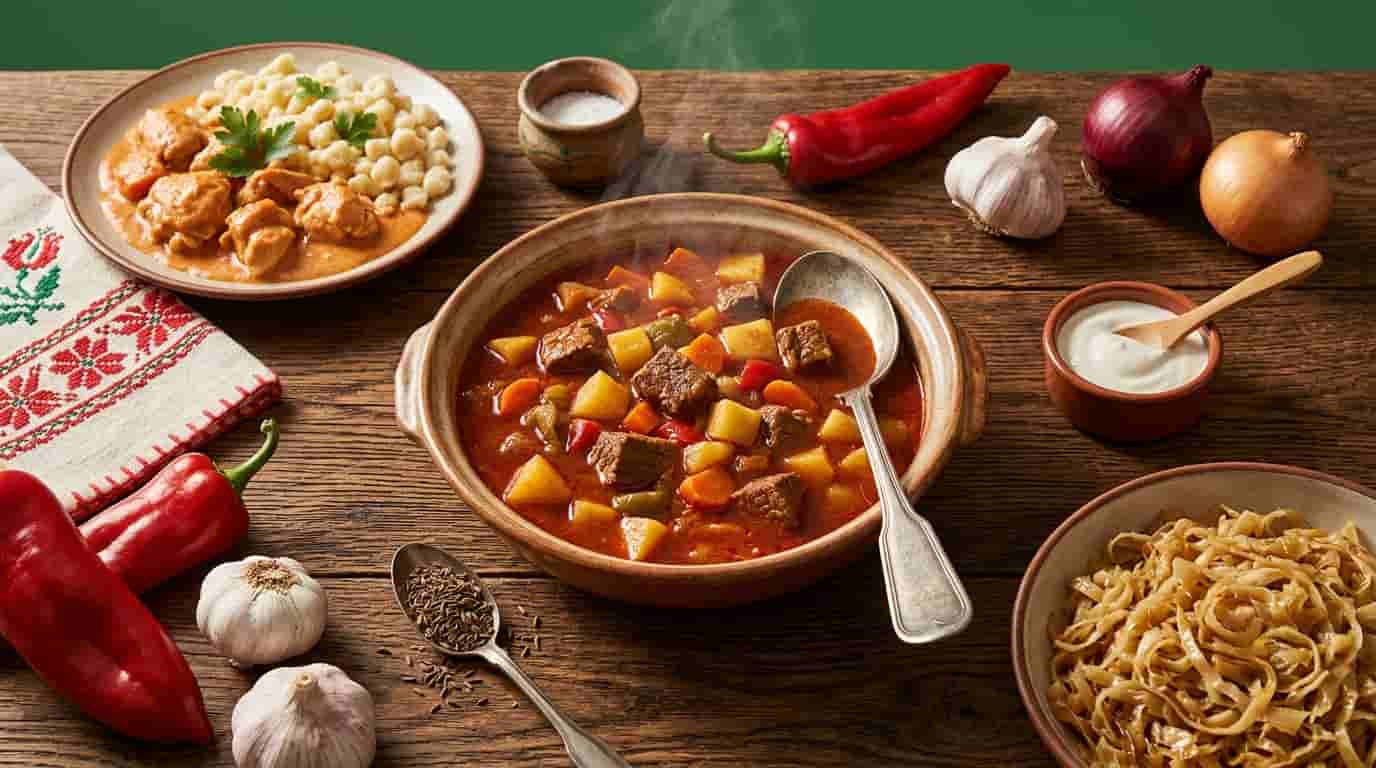
Have you ever sprinkled paprika over chicken and wondered why the dish still tasted flat? I’ve been there. The problem usually isn’t the recipe. It’s the timing, the type of paprika, or one small technique nobody explained.
This guide to easy Hungarian recipes at home is meant to fix that. I’ll show you how to build the cozy flavor Hungarian food is known for without spending all day at the stove or hunting down impossible ingredients. You’ll learn the core flavor rules, beginner-friendly dishes, and simple tricks that keep paprika fragrant, meat tender, and sour cream sauces silky.
Hungarian cooking looks bold, but it’s surprisingly practical. A few pantry staples do most of the work. Once you understand how onions, sweet paprika, caraway, garlic, fat, and sour cream behave, a whole family of dishes starts to make sense.
Why Hungarian Home Cooking Is Easier Than It Looks
Authentic Hungarian food may sound like a long list of slow-cooked stews. That’s only part of the story. Pepper stew, cabbage noodles, cucumber salad, and quick chicken paprikash can all fit into a weeknight schedule.
Most easy Hungarian recipes at home begin with the same flavor base:
- Fat warmed in a heavy pot
- Onions cooked until soft
- Garlic or caraway added for depth
- Sweet Hungarian paprika stirred in off the heat
- Meat, vegetables, broth, or sour cream added afterward
Learn that pattern once, and you’re no longer memorizing ten separate recipes. You’re learning one cooking language.
The Four Pillars of Authentic Hungarian Flavor
Sweet Hungarian Paprika: The Ingredient That Changes Everything
Not all paprika is the same. The dusty supermarket jar that has been open for three years won’t give you the color, sweetness, or perfume you want. For Authentic Hungarian Goulash, Chicken Paprikash, or Hungarian Pork Stew, look for fresh Hungarian sweet paprika labeled “édesnemes” or “sweet noble.”
Sweet paprika is mild, fruity, and earthy rather than hot. Hot Hungarian paprika adds heat. Smoked paprika has a campfire-like flavor and isn’t the traditional main spice in these dishes.
Buy a small tin or sealed bag, keep it away from light and heat, and replace it when the aroma fades. Paprika should smell alive. If it smells like red dust, let it go.

The Golden Trio: Lard, Onions, and Garlic
Traditional Hungarian home cooking often starts with pork lard. It gives stews and sauces a rounded, savory flavor that vegetable oil can’t fully copy.
Still, don’t let one ingredient stop you. Unsalted butter, neutral oil, or a blend of the two can produce excellent easy Hungarian recipes at home. The flavor may be slightly lighter, but dinner will still be delicious.
Onions matter just as much. They often become part of the sauce, so cook them slowly until soft and lightly golden. Rushing this step leaves the final dish sharp and thin.
Garlic usually enters later so it doesn’t burn. One or two cloves are enough for most family-sized dishes.
Caraway Seeds and Aromatics
Caraway seeds bring a warm, slightly citrusy note. They’re common in cabbage dishes, pork stews, soups, and sauerkraut-based meals. I lightly crush them before adding them because that small step releases more aroma.
Use caraway carefully. A pinch can make broth taste traditionally Hungarian. A tablespoon can make dinner taste like a rye bread factory.
Other common aromatics include bay leaf, black pepper, marjoram, parsley, and fresh peppers. Still, Sweet Hungarian Paprika remains the center of the flavor profile.
Hungarian Sour Cream and the Tempering Trick
Hungarian Sour Cream, or tejföl, is often richer and slightly tangier than standard American sour cream. Full-fat sour cream is the best substitute because it handles heat well and creates the velvety texture expected in Chicken Paprikash.
Cold sour cream can curdle when it hits a boiling pot. To temper it:
- Put the sour cream in a bowl.
- Whisk in flour if the recipe uses it.
- Add two or three spoonfuls of hot cooking liquid, one at a time.
- Whisk until smooth and warm.
- Stir it back into the pot over low heat.
- Don’t let the sauce boil hard afterward.
Simple. No grainy sauce. No panic.
This technique is useful far beyond paprikash. You can use it whenever sour cream needs to join a hot soup, stew, or sauce without separating.
The Golden Rule: Never Burn Paprika
Paprika can turn bitter in seconds when it hits very hot fat. This mistake ruins more Hungarian dishes than most beginners realize.
Soften your onions first, then move the pot off the burner. Wait a few seconds. Stir in the paprika, then add broth, tomatoes, meat, or another moist ingredient before returning the pot to heat.
This off-the-heat method protects the spice while helping its color and aroma bloom in the fat. It’s the most useful technique for making easy Hungarian recipes at home taste genuinely rich.
Don’t walk away during this step. Paprika is lovely, but it has the patience of a toddler near an open cookie jar.
Easy Authentic Hungarian Main Dishes for Weeknights
Authentic Hungarian Goulash
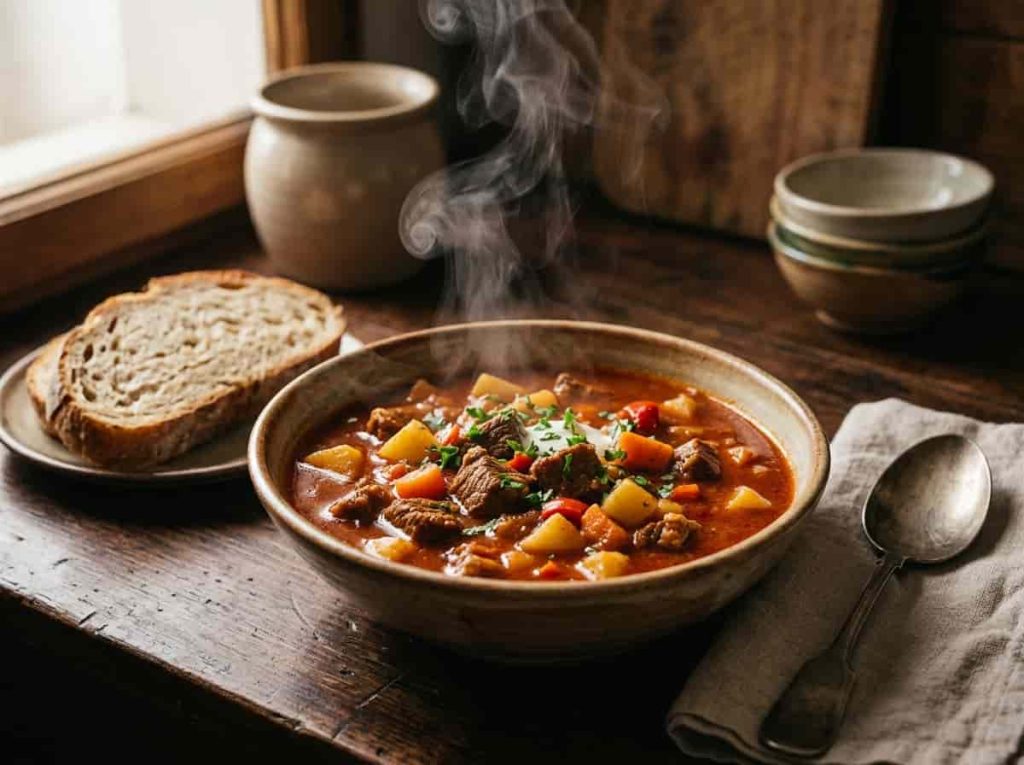
Hungarian goulash, or gulyás, is traditionally closer to a hearty soup than the thick noodle casserole many Americans grew up calling goulash. It usually includes beef, onions, sweet paprika, potatoes, carrots, and broth. Some cooks add fresh peppers, tomatoes, or caraway.
Prep time: 15 minutes | Cook time: About 1 hour 15 minutes
Use beef chuck for the best texture. It starts firm but becomes tender as its connective tissue softens during slow cooking. Cut the beef into even cubes and simmer gently rather than boiling aggressively.
The broth should be deep red, fragrant, and spoonable. It shouldn’t resemble a thick gravy. Serve it with crusty bread for dipping.
That’s real comfort food—no complicated plating and no tiny parsley sculpture trying to prove a point.
Easy Hungarian Chicken Paprikash
Chicken Paprikash, or csirkepaprikás, is one of the best starting points for anyone learning easy Hungarian recipes at home. It tastes luxurious, but the method is straightforward: chicken, onions, paprika, broth, and sour cream.
Prep time: 10 minutes | Cook time: About 35 minutes
Boneless chicken thighs are my favorite weeknight shortcut. They cook faster than bone-in pieces and stay juicy even when you’re distracted by a phone call or missing measuring spoons.
Cook the onions until soft, add paprika off the heat, then stir in the chicken and enough broth to create a sauce. Once the chicken is fully cooked, lower the heat and add tempered sour cream.
Serve it over Homemade Nokedli Dumplings, buttered egg noodles, or mashed potatoes. Nokedli is the classic pairing because those soft little dumplings catch every drop of paprika sauce.
The sauce should coat a spoon without feeling heavy. If it’s too thin, simmer it briefly before adding the sour cream. If it’s too thick, loosen it with a splash of broth.
This is what I love about easy Hungarian recipes at home: ordinary ingredients can taste deeply comforting when you treat them properly. No culinary degree required.
Hungarian Pepper Stew: A 30-Minute Vegetarian Classic
Lecsó is the dish I make when the refrigerator contains peppers, tomatoes, and not much else. It’s simple, colorful, and far more satisfying than its short ingredient list suggests.
Traditional Hungarian pepper stew combines onions, fresh tomatoes, yellow wax peppers, and Sweet Hungarian Paprika. Everything cooks down into a soft, juicy mixture that sits somewhere between a stew and a vegetable ragout.
Prep time: 10 minutes | Cook time: 20 minutes
Start by softening sliced onions in pork lard or oil. Remove the pan from direct heat, add paprika, then stir in sliced peppers and chopped tomatoes. Season with salt and cook until the vegetables are tender but not completely shapeless.
Hungarian wax peppers can be difficult to find in American supermarkets. Banana peppers are the closest convenient substitute, while yellow bell peppers create a sweeter and milder result.
Want to make it more filling? Try adding:
- Sliced Debrecener-style sausage
- Smoked kielbasa
- Beaten eggs
- Cooked rice
- Crusty bread on the side
Lecsó proves that easy Hungarian recipes at home don’t always require meat or hours of simmering.
Hungarian Cabbage Noodles in Under 25 Minutes
Káposztás tészta, sometimes loosely called haluska, is humble food in the best possible way. You caramelize shredded cabbage, toss it with egg noodles, and finish it with butter, salt, and plenty of black pepper.
That’s basically it.
Prep time: 10 minutes | Cook time: 15 minutes
The secret is patience. Salt the cabbage lightly, let it sit for a few minutes, then squeeze out some moisture. Cook it in butter or lard until the pale shreds become soft, golden, and slightly sweet.
Mix the cabbage with broad egg noodles and cracked black pepper. Some Hungarian families add a pinch of sugar. Others consider that a personal attack. Taste the cabbage first and decide which camp you’re joining.
This four-ingredient meal is affordable, comforting, and ideal when you need easy Hungarian recipes at home that don’t create a mountain of dishes.

Pork Paprikash with Sauerkraut
Székelykáposzta is a hearty Hungarian Pork Stew made with tender pork, paprika, sauerkraut, caraway seeds, and sour cream. Despite the name often used online, it isn’t traditionally made with pork chops layered neatly in a casserole. Cubed pork shoulder is usually the better choice because it becomes tender during simmering.
Begin with onions and lard, then use the off-the-heat paprika method. Add cubed pork, garlic, crushed caraway, sauerkraut, and enough broth to keep everything moist.
Simmer gently until the pork is fork-tender. Temper the sour cream before stirring it into the stew, or spoon sour cream over each serving.
The sauerkraut provides acidity, so this dish tastes rich without becoming dull. Serve it with bread, potatoes, or Homemade Nokedli Dumplings.
Two More Hungarian Classics Worth Trying
Hungarian Stuffed Cabbage
Hungarian Stuffed Cabbage, or töltött káposzta, usually consists of cabbage leaves wrapped around a mixture of ground pork, rice, onion, and seasoning. The rolls simmer slowly with sauerkraut, paprika, and sometimes smoked meat.
It isn’t the fastest recipe here, but most of the cooking time is hands-off. Make a large batch on the weekend because the flavor often improves overnight.
Hungarian Fried Flatbread
Lángos is a golden Fried Flatbread traditionally made from a soft yeast dough. It’s fried until crisp outside and fluffy inside, then rubbed with garlic and topped with sour cream and shredded cheese.
Is it light? Not remotely.
Is it wonderful? Absolutely.
For easier home preparation, allow the dough to rise once, divide it into small portions, stretch each piece with your hands, and fry it in shallow oil. Keep the toppings simple so the warm bread remains the star.
The Ultimate Hungarian Side Dishes and Dumplings
Homemade Nokedli Dumplings in 15 Minutes
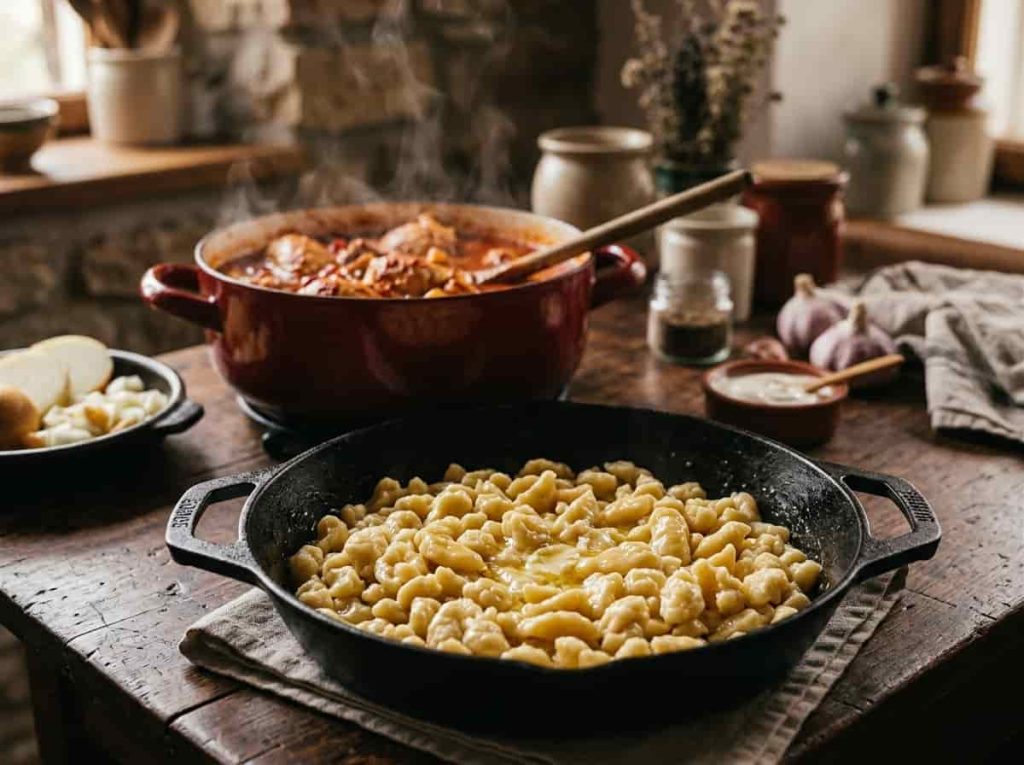
Nokedli are soft Hungarian egg dumplings similar to German spaetzle. They’re one of the best partners for paprikash because their uneven surfaces hold creamy sauce beautifully.
You’ll need:
- 2 cups all-purpose flour
- 2 large eggs
- About ¾ cup water
- ½ teaspoon salt
- Butter for serving
Whisk the eggs, water, and salt. Add the flour and mix just until a sticky, loose batter forms. Don’t beat it until perfectly smooth; overmixing can make the dumplings tough.
Bring a large pot of salted water to a steady boil. Press small portions of batter through a spaetzle maker, potato ricer, or large-holed slotted spoon.
When the dumplings float, cook them for another minute. Drain, rinse briefly if they seem overly sticky, then toss them with melted butter.
Refreshing Cucumber Salad with Sour Cream
Tejfölös uborkasaláta is the cool, tangy counterpoint heavy paprika dishes need. Thinly sliced cucumbers are mixed with salt, garlic, vinegar, and Hungarian Sour Cream.
Slice the cucumbers as thinly as possible. Salt them, wait about 15 minutes, then squeeze out excess liquid. Mix with sour cream, a small splash of vinegar, minced garlic, and a pinch of sugar if needed.
Finish with black pepper or paprika dusting.
Cucumber Salad with Sour Cream isn’t merely decoration. Its acidity and cool temperature refresh your palate between bites of rich meat, dumplings, or sauce.
Troubleshooting Hungarian Recipes
Why Is My Paprikash Sauce Too Thin?
Remove the cooked meat and simmer the sauce uncovered for several minutes. Reduction preserves the original flavor and should be your first option.
For faster thickening, whisk one teaspoon of flour or cornstarch with cold water. Add it gradually and simmer briefly before stirring in the tempered sour cream.
Don’t dump dry flour directly into the pot. You’ll get lumps, followed by frustration.
Why Does My Paprika Sauce Taste Bitter?
The paprika probably burned. Unfortunately, bitterness is difficult to remove once it develops.
You can sometimes soften mild bitterness with additional broth, onions, sour cream, or a tiny pinch of sugar. A badly scorched paprika base is better restarted.
Next time, remove the pan from the heat before adding the spice. That one habit improves nearly every list of easy Hungarian recipes at home.
Why Did My Sour Cream Curdle?
It was likely too cold, too lean, or added while the sauce was boiling. Use full-fat sour cream and temper it with hot liquid first.
Once the sour cream enters the pot, keep the heat low. Gentle steam is fine. A violent boil is not.
Ingredient Substitutions for American Kitchens
Authenticity matters, but practicality matters too. Here are sensible swaps that preserve the spirit of the dish:
- Replace Hungarian wax peppers with banana peppers or yellow bell peppers.
- Replace pork lard with butter, neutral oil, or half butter and half oil.
- Replace Hungarian sour cream with full-fat American sour cream or crème fraîche.
- Replace Debrecener sausage with lightly smoked kielbasa.
- Replace a spaetzle maker with a colander or slotted spoon.
- Replace fresh tomatoes with good-quality canned tomatoes when necessary.
Avoid replacing Sweet Hungarian Paprika entirely with smoked paprika. A small amount can add depth, but too much changes the identity of the dish.
Good easy Hungarian recipes at home should bend a little without breaking.
Quick Hungarian Dessert: Aranygaluska-Inspired Bites
Traditional aranygaluska is a pull-apart yeast pastry coated with butter, sugar, and ground walnuts, then served with warm vanilla custard. A fully homemade version takes time, but a weeknight interpretation can be ready much faster.
Use refrigerated biscuit dough or prepared pizza dough. Cut it into bite-sized pieces, coat them in melted butter, then toss them with ground walnuts, cinnamon, and sugar.
Bake at 350°F until puffed and golden, usually 15 to 20 minutes depending on the dough. Serve warm with vanilla custard or a light vanilla sauce.
It isn’t a strict grandmother-approved reconstruction. It is, however, warm walnut pastry covered in custard. I’ve heard worse compromises.

Read More Recipes: 15 Easy Finnish Recipes at Home (30-Min Comfort Food)
Frequently Asked Questions
What is the easiest Hungarian dish to make?
Hungarian cabbage noodles and lecsó are among the easiest choices. Both use affordable ingredients, require minimal equipment, and can be prepared in about 30 minutes.
What is Hungary’s most famous traditional food?
Goulash is Hungary’s best-known dish internationally. Authentic Hungarian Goulash is usually a paprika-seasoned beef soup with vegetables rather than a thick ground-beef pasta dish.
Can I make Hungarian food without lard?
Yes. Vegetable oil, butter, or a mixture of both works in most easy Hungarian recipes at home. Lard adds traditional richness, but it isn’t essential for successful home cooking.
What should I serve with chicken paprikash?
Homemade Nokedli Dumplings are the classic choice. Egg noodles, boiled potatoes, mashed potatoes, crusty bread, and cucumber salad also work well.
Is Hungarian food always spicy?
No. Hungarian cooking is often richly seasoned but not necessarily hot. Sweet paprika provides color and aroma without significant heat. Hot paprika or fresh hot peppers are added according to preference.
Bring Hungarian Comfort Food Into Your Kitchen
The real secret behind easy Hungarian recipes at home isn’t an expensive pot or a pantry full of imported products. It’s understanding a few small techniques: soften the onions properly, protect the paprika from high heat, simmer meat gently, and temper the sour cream.
Start with chicken paprikash, cabbage noodles, or lecsó. Once those feel comfortable, move on to goulash, Hungarian Stuffed Cabbage, or sauerkraut-rich pork stew.
Your first attempt doesn’t need to taste exactly like someone else’s family recipe. It needs to be warm, balanced, and satisfying.
Keep the paprika fresh. Watch the heat. And make extra nokedli—someone always finishes the first bowl.
Please wait to go to the next post: 30 seconds
Go to Next Post