
A frozen loaf of Ezekiel bread can cost enough to make you guard the last two slices like family heirlooms. I’ve been there. The good news? A homemade ezekiel bread recipe gives you a fresher loaf, control over every ingredient, and the nutty flavor that packaged bread sometimes loses in the freezer aisle.
This isn’t fluffy supermarket sandwich bread. It’s hearty, moist, pleasantly chewy, and built from grains and legumes rather than white flour and wishful thinking. By the end of this guide, you’ll know how to choose the mix, sprout it safely, and bake a loaf that doesn’t double as a doorstop.

Why Ezekiel Bread Is Different
The name comes from the grain-and-legume mixture described in Ezekiel 4:9. The familiar commercial version contains sprouted wheat, barley, millet, lentils, soybeans, and spelt, plus wheat gluten, yeast, salt, and water. A homemade ezekiel bread recipe can follow the same idea, though it won’t duplicate a manufacturer’s formula.
What makes that combination interesting isn’t mystical. It’s food chemistry. Cereal proteins tend to be lower in lysine, while legumes generally contribute more lysine but less of certain sulfur-containing amino acids. Combining them can create a better-balanced amino-acid pattern.
Still, complete protein bread isn’t an automatic label. Protein quality depends on the ratio, digestibility, serving size, and the rest of your diet.
Is It Really Lower Glycemic?
Sometimes—but don’t tattoo that promise onto the loaf pan.
A small human study found a lower post-meal glucose response after sprouted-grain bread than after several comparison breads. That’s encouraging, not a guarantee. Slice size, flour fineness, fermentation, toppings, and individual glucose tolerance all matter.
Treat this as a fiber-rich, whole-food loaf that may behave more gently than refined bread, not permission to eat half the pan.
Sprouting activates enzymes, including phytase, that can reduce phytate and improve mineral accessibility. The effect varies by grain, legume, temperature, moisture, and germination time, so “sprouted” doesn’t make every nutrient dramatically easier to absorb.
The Anatomy of an Ezekiel Bread Flour Mix
Wheat Berries, Spelt, and Barley
Wheat Does the Heavy Lifting
Hard wheat berries provide most of the bread-forming gluten in this ezekiel bread recipe. Once hydrated and mixed, wheat proteins form an elastic network that traps yeast-produced gas. That structure gives the loaf height and keeps the crumb from collapsing.
Spelt adds mild sweetness and a soft, nutty flavor. It contains gluten, so it is not safe for people with celiac disease.
Barley brings earthy flavor and soluble fiber, but heavy amounts can weaken the wheat gluten network. Research on wheat-barley dough shows that increasing barley flour can disrupt gluten structure and dough stability.
In plain English: barley is invited, but wheat still runs the kitchen.
Millet Adds Texture, Not Strength
Millet contributes a warm aroma and tender crumb, but it doesn’t create an elastic bread structure. Too much can make the loaf crumble or rise poorly.
For a dependable ezekiel bread recipe, let wheat and spelt make up most of the grain portion. Barley and millet can then add flavor and variety without overwhelming the dough’s ability to hold air.
Legumes and Lentils for Baking
Why Beans Belong in Bread
Lentils and beans sound odd until you taste the loaf. Used carefully, they add roasted, savory depth rather than making breakfast toast taste like soup.
They also complement the grains’ amino-acid profile. Lentils mill more easily than large beans, which makes them my first choice for a homemade Ezekiel 4:9 bread flour mix.
Skip raw kidney-bean flour. The FDA warns that raw or undercooked kidney beans contain high levels of phytohaemagglutinin, a lectin that can cause severe nausea, vomiting, and diarrhea.
For later recipe variations, use lentils, sprouted soybeans, or a commercially heat-treated bean flour intended for baking instead.
Don’t Overload the Bean Flour
More isn’t better. A heavy dose of legume flour dilutes gluten, absorbs water unpredictably, and can leave a gummy center. For a reliable first loaf, keep legumes near 15% to 20% of the total dry blend.
That’s a practical starting point, not a sacred rule. Your grinder, grain moisture, pan size, and preferred crumb may shift the ratio.
Sprouting Grains at Home—or Milling Them Dry
Method A: Traditional Sprouting
Step 1: Sort, Rinse, and Soak
Use food-grade grains and legumes intended for sprouting. Remove damaged pieces, rinse well, and soak the ingredients in separate sanitized containers because they soften at different speeds.
Most wheat, spelt, barley, millet, and lentils can soak for roughly 8 to 12 hours. Larger legumes may need longer. Keep everything covered by several inches of clean water.
Step 2: Drain and Germinate
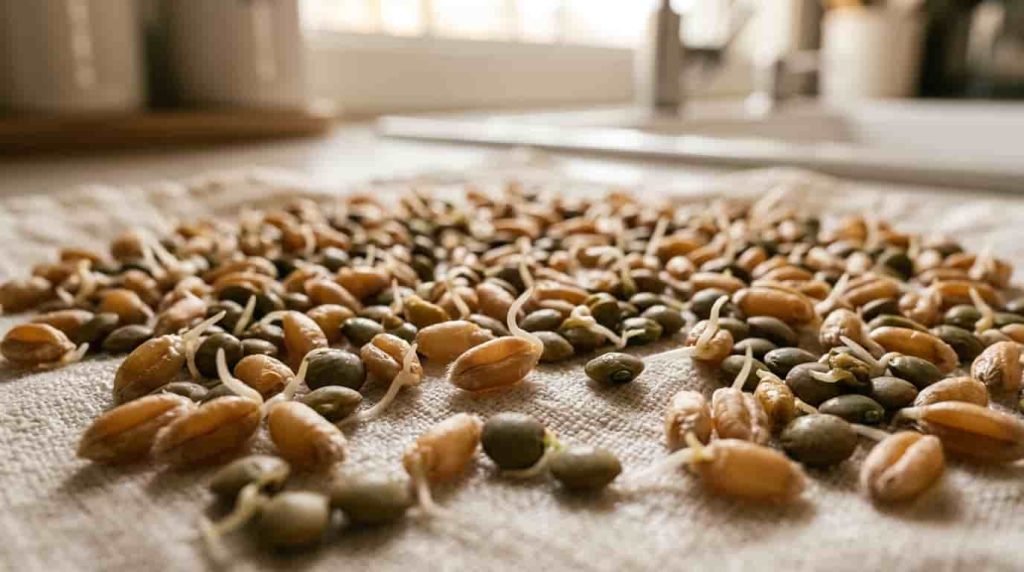
Drain extremely well. Transfer the soaked ingredients to sprouting trays or jars fitted with mesh lids, keeping jars tilted so water cannot pool.
Rinse and drain about twice daily. Stop when tiny white root tips appear—often after roughly 24 to 48 hours, depending on the ingredient and room temperature.
You want short sprouts, not a countertop lawn.
A Necessary Food-Safety Pause
Warm, moist sprouting conditions also favor bacterial growth. The FDA warns that contaminated seed can support Salmonella, Listeria, and disease-causing E. coli, even in a clean-looking kitchen. Home sprouting does not eliminate that risk.
Because this ezekiel bread recipe bakes the sprouts rather than serving them raw, thorough cooking helps reduce risk. Discard any batch that smells sour, feels slimy, or shows mold.
Pregnant people, older adults, young children, and immunocompromised people should be especially cautious around raw or lightly cooked sprouts.
Step 3: Dry Before Milling
Wet sprouts and flour mills are enemies.
Dehydrate the sprouts at low heat until they’re completely crisp, then cool them before grinding. Remaining moisture can create paste inside the mill and produce clumpy flour.
Don’t judge dryness by appearance alone. Break a few grains between your fingers. They should snap or crunch rather than bend or squash.
Method B: Direct Dry Milling
Direct milling skips the two-day sprouting project. Grind clean, fully dry wheat berries, spelt, barley, millet, and lentils, then combine them with a heat-treated legume flour for your ezekiel bread recipe.
A dedicated flour mill or grain grinder produces the most even texture. It’s also better equipped to handle hard grains without overheating.
A powerful blender can work in small, pulsed batches. Sift the flour and regrind coarse pieces instead of running the motor continuously until it smells like an electrical emergency.
Aim for a fine meal rather than baby-powder flour. A little texture suits this rustic ezekiel bread recipe and helps create the hearty crumb people expect from sprouted grain bread.
Master Ezekiel Bread Recipe
Equipment and Master Ratios
This formula makes one 9-by-5-inch loaf, or about 14 slices. A digital scale is strongly recommended because freshly milled flour packs unevenly into measuring cups.
| Ingredient | Metric | Approximate volume |
|---|---|---|
| Hard wheat flour | 260 g | 2 cups plus 2 tablespoons |
| Spelt flour | 80 g | ⅔ cup |
| Barley flour | 50 g | ½ cup |
| Millet flour | 40 g | ⅓ cup |
| Green or brown lentil flour | 55 g | ½ cup |
| Heat-treated soy flour | 45 g | ½ cup |
| Vital wheat gluten, optional | 30 g | ¼ cup |
| Warm water | 400–420 g | 1⅔–1¾ cups |
| Olive oil | 21 g | 1½ tablespoons |
| Honey or molasses | 15 g | 2 teaspoons |
| Fine salt | 9 g | 1½ teaspoons |
| Instant yeast | 7 g | 2¼ teaspoons |
Use sprouted, fully dried flour or dry-milled flour in the same weights. Start with 400 grams of water and add more only when needed.
Step 1: Grind and Blend the Flour
Mill each ingredient separately, then let warm flour cool. Whisk the six flours, salt, and optional vital wheat gluten until evenly combined.
A flour mill or grain grinder gives the most consistent texture. With a high-speed blender, pulse small batches, sift, and regrind coarse pieces.
Step 2: Activate the Yeast
Instant yeast can go into the dry mixture. For active dry yeast, stir it into ¼ cup of the measured warm water with the honey and wait 5 to 10 minutes for foam.
No foam? Start again. Tired yeast makes nutritious bricks.
Commercial-Yeast-Free Sourdough Option
Sourdough isn’t biologically yeast-free; wild yeast lives in the starter. It simply skips packaged baker’s yeast.
Use 150 grams of active 100%-hydration starter, 455 grams of the flour blend, and 345 grams of water. Bulk fermentation may take 4 to 8 hours, depending on starter strength and room temperature.
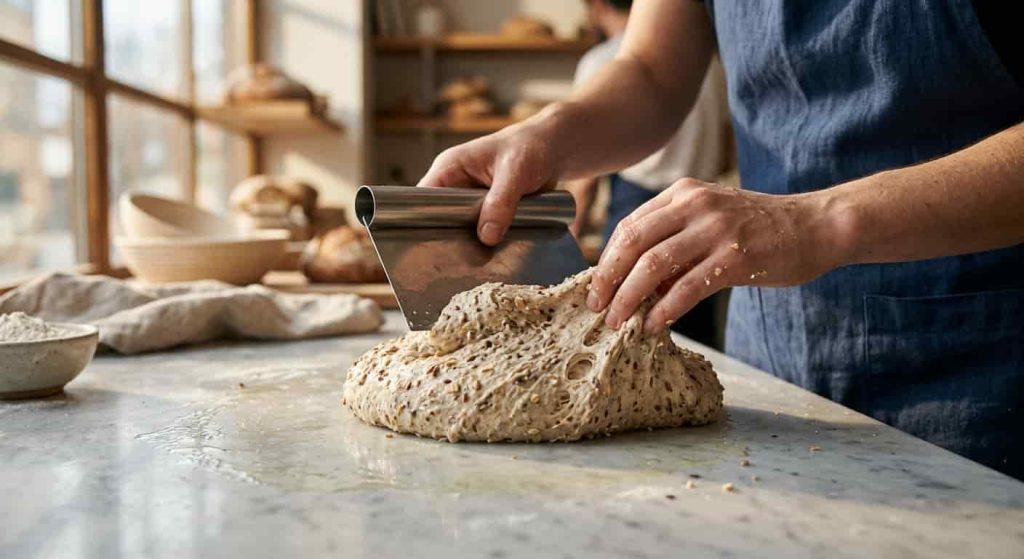
Step 3: Mix the Sticky Dough
Combine the dry mixture, 400 grams of water, oil, and sweetener. Mix on low for 4 minutes, rest for 15 minutes, then mix for another 4 to 6 minutes. Add the remaining water gradually if dry flour remains.
The dough should be a thick, sticky paste that slowly gathers around the paddle. Don’t add flour until it resembles ordinary white-bread dough. Whole-grain flour usually needs extra hydration, while bran and non-wheat ingredients can interfere with the dough’s gluten structure.
Step 4: Rise, Pan, and Proof
Cover the bowl and let the dough rise until puffy and about 50% to 75% larger, usually 60 to 90 minutes. Scrape it into a greased 9-by-5-inch pan and smooth the top with wet fingers.
Proof until the center reaches the pan’s rim or rises slightly above it, generally 35 to 60 minutes. Watch the dough rather than worshipping the timer. Overproofed sprouted-grain dough may collapse.
Step 5: Bake and Cool
Bake at 375°F for 40 to 50 minutes, tenting the loaf loosely with foil if the crust darkens too quickly.
Aim for an internal temperature of about 195°F to 200°F. Dense whole-grain loaves generally finish at a higher internal temperature than light white bread.
Remove the loaf from its pan after 5 minutes and cool it on a rack for at least 2 hours. Slicing it early lets steam escape and can leave a gummy center.
Alternative Methods and Flavor Variations
Bread Machine Ezekiel Bread
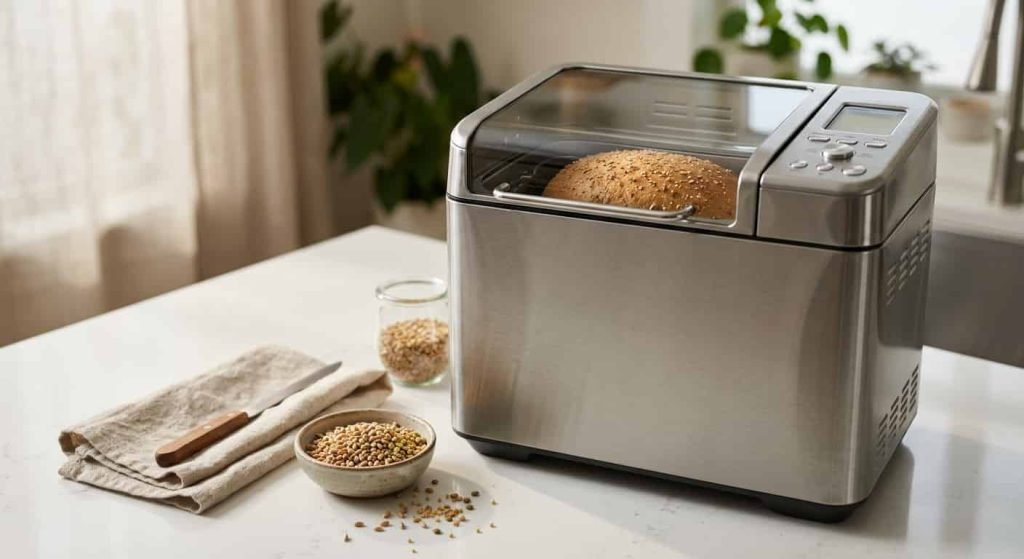
Choose the whole-wheat or multigrain cycle with a medium crust. Many 2-pound machines accept both 1.5- and 2-pound recipes, but follow your model’s capacity instructions.
| Machine size | Flour blend | Water | Oil | Sweetener | Salt | Yeast |
|---|---|---|---|---|---|---|
| 1.5 lb | 400 g | 300–315 g | 16 g | 11 g | 7 g | 5 g |
| 2 lb | Full master recipe | 400–420 g | 21 g | 15 g | 9 g | 7 g |
Add ingredients in the order recommended by the manufacturer. Check the mixture after 8 to 10 minutes of kneading.
Bread machine Ezekiel bread should form a soft, sticky mound—not soup and not a dry ball. Adjust its consistency with water or flour, one teaspoon at a time.
Cinnamon-Raisin Ezekiel Bread
Add 2 teaspoons of ground cinnamon to the flour mixture. Add ¾ cup of raisins once the dough has started developing.
Very dry raisins can steal moisture from your loaf. Soak them for 10 minutes, drain them, and blot them thoroughly before adding them.
Seed-Crusted Ezekiel Bread
Brush the proofed loaf gently with water, then scatter about 2 tablespoons of seeds over the surface.
Good options include:
- Sesame seeds
- Sunflower kernels
- Pumpkin seeds
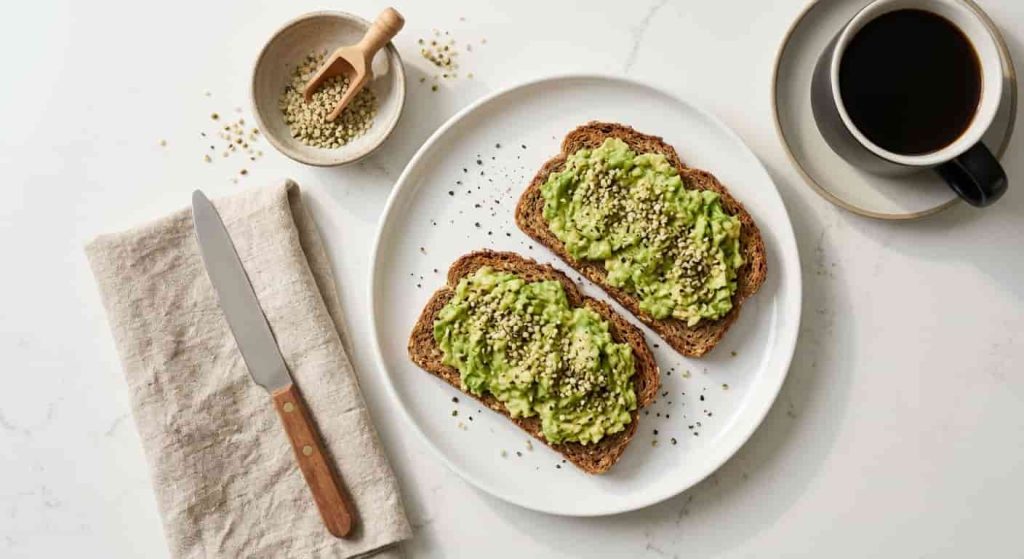
- Hemp hearts
- Poppy seeds
Press them in lightly unless you enjoy leaving a breadcrumb trail around the house.
Troubleshooting Your Ezekiel Bread Recipe
How to Fix a Dense Loaf
A dense loaf commonly comes from weak yeast, coarse flour, too little water, excess legume flour, or inadequate proofing.
Start with fresh yeast and finely milled flour before changing the grain ratio. Whole-grain dough also needs enough liquid to soften its bran and develop properly.
For extra lift, add the optional 30 grams of vital wheat gluten. Stronger gluten can help a heavy whole-grain dough trap more gas and rise higher.
You can also add one large egg for a softer, slightly lighter crumb. Reduce the water by about 40 grams to compensate.
How to Fix a Gummy Center
A gummy center often means the loaf was underbaked, sliced while warm, or made with sprouts that weren’t completely dry.
Use a digital thermometer instead of judging the crust alone. Then give the loaf its full cooling time, even while it sits there smelling unfairly good.
Why the Top Collapsed
A sunken top usually points to too much water, too much yeast, or excessive proofing.
The dough should rise visibly, but it doesn’t need to double dramatically. Make one adjustment per batch so you can identify what actually solved the problem.
Storage, Slicing, and Freezing
Cool the loaf completely before wrapping it. Trapped warmth creates condensation, which encourages faster spoilage.
Keep the bread at room temperature for about two days. In a hot or humid kitchen, refrigerate it for up to five days, knowing refrigeration may make the crumb firmer.
For longer storage, pre-slice the loaf and freeze it in an airtight bag. Place parchment between portions so you can remove one or two slices without wrestling with a frozen bread boulder. Pre-slicing and airtight freezing are both recommended for convenient long-term bread storage.
Toast slices directly from frozen. If mold appears, discard the bread rather than cutting around the visible patch because mold can spread beneath the surface of porous foods.
Read:15 Easy Finnish Recipes at Home (30-Min Comfort Food)
Frequently Asked Questions
What are the 6 grains and legumes in Ezekiel bread?
The familiar six are wheat, barley, millet, lentils, soybeans, and spelt. Homemade substitutions change the loaf’s flavor, structure, and nutrition.
Is it necessary to sprout the grains before making Ezekiel bread?
No. You can dry-mill them for a faster loaf, although it won’t have the same sprouted-grain character. Sprouting may reduce some phytate, but warm, moist conditions can also support pathogen growth.
Why does homemade Ezekiel bread get so dense?
Non-wheat grains and legumes weaken the gluten network, and the dough is easy to underhydrate or underproof. Fine flour, fresh yeast, enough water, and optional vital wheat gluten usually improve the rise.
Can you make Ezekiel bread in a bread machine or blender?
Yes. Use a whole-wheat or multigrain machine cycle, and pulse a powerful blender in small batches for milling. A dedicated grain mill produces more even flour.
How do you properly store homemade sprouted grain bread so it doesn’t mold?
Cool it completely, wrap it tightly, and store it at room temperature for about two days or refrigerate it for up to five days. For longer storage, pre-slice and freeze it for up to three months.
How many calories and net carbs are in a slice of homemade Ezekiel bread?
For 14 slices, estimate about 150 to 180 calories and 22 to 27 grams of net carbohydrate per slice. Exact values depend on slice weight, flour choices, oil, sweetener, and add-ins.
Please wait to go to the next post: 30 seconds
Please follow the proper sequence from the first post to get the code!
Go to Next Post
1 thought on “Easy Ezekiel Bread Recipe (Soft, Healthy & Sprouted)”