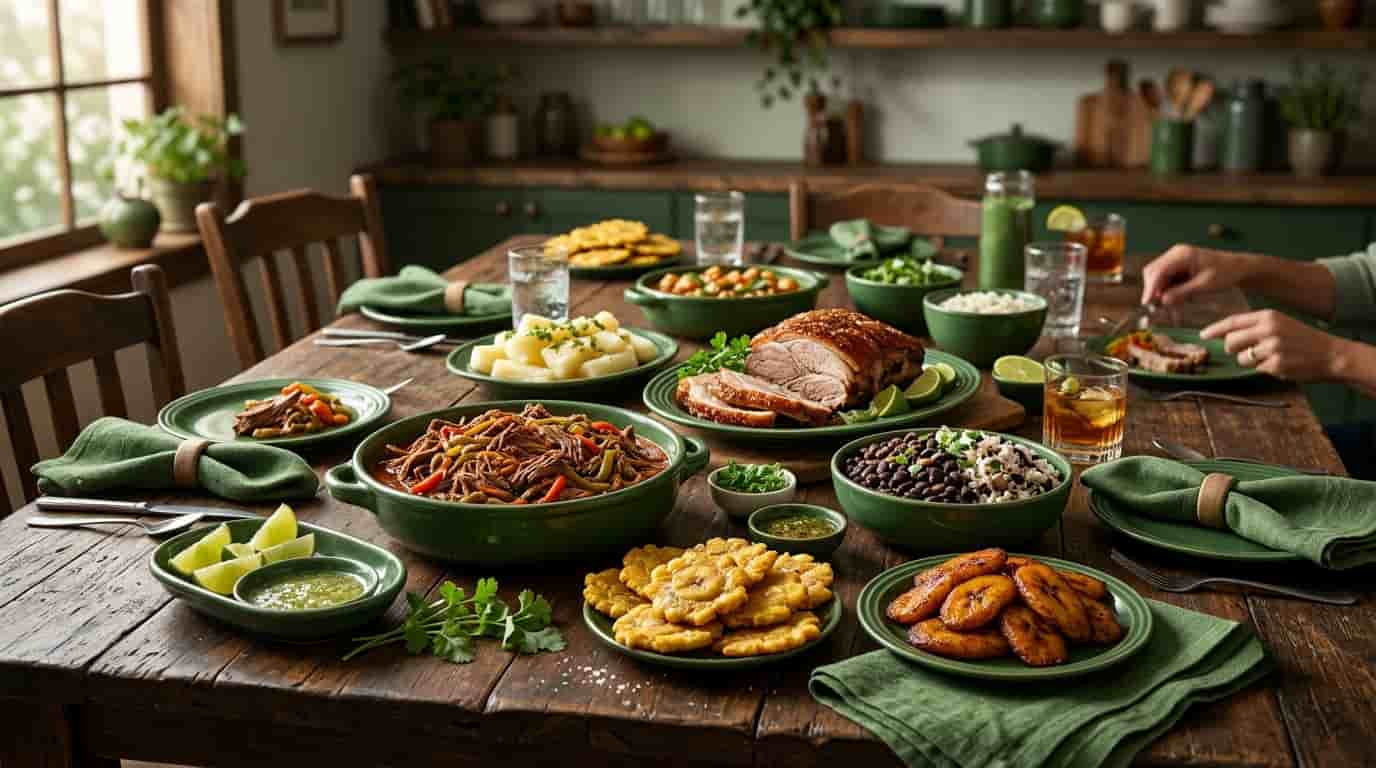
Ever stare at a package of chicken, beef, or pork at 5:30 p.m. and think, “I cannot eat another bland dinner”? Same. That’s why I keep coming back to easy Cuban recipes at home. With familiar aromatics, one sturdy pan, and a little patience, ordinary ingredients become food that tastes bright, savory, and deeply comforting.
By the end, you’ll know how to build sofrito, make tender ropa vieja, prepare weeknight picadillo, mix garlicky mojo, and complete the meal with beans, rice, plantains, Cubanos, café, and Flan de Leche.
Why Easy Cuban Recipes at Home Feel So Special
Cuban cooking grew through layers of Indigenous Caribbean, Spanish, African, and regional influence. Smithsonian resources describe Latino food traditions as shaped by Indigenous, European, and African influence; Taíno food heritage also includes cassava. (latino.si.edu)
That layered heritage helps explain why easy Cuban recipes at home can taste rich without demanding restaurant-level technique. Here’s the deal: Cuban food usually doesn’t depend on fussy restaurant technique. It depends on order.
Onion and pepper soften first. Garlic follows. Tomato gets time to deepen. Citrus cuts through rich meat. Salt is adjusted before serving.
Simple? Yes.
Flat-tasting? Not a chance.
That’s what makes easy Cuban recipes at home so useful for busy cooks. Prepare one or two foundations ahead, reuse them during the week, and dinner stops tasting like sad meal prep.
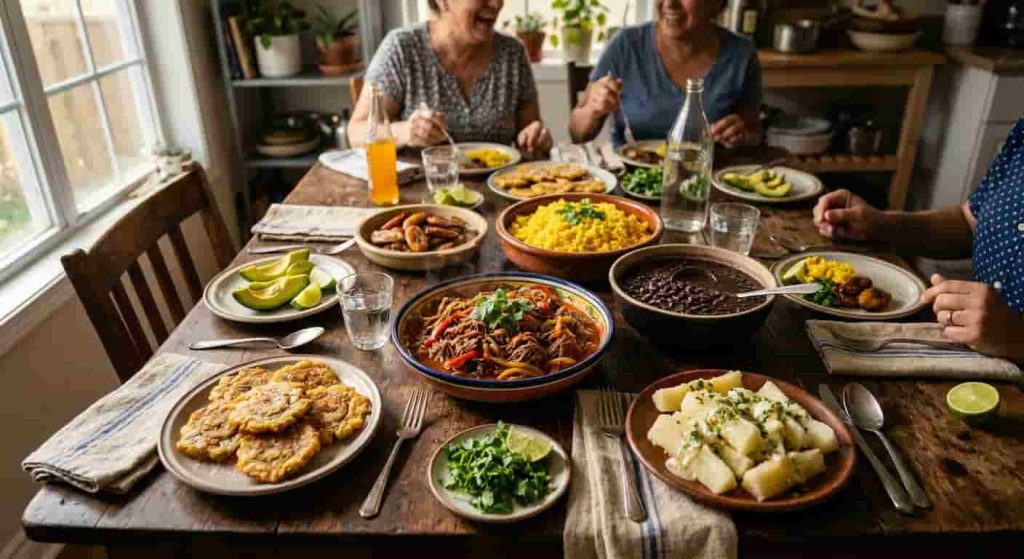
Master the Cuban Sofrito Base for Easy Cuban Recipes at Home
What Sofrito Actually Does
Think of sofrito as your flavor savings account. Put in fifteen minutes now, then cash it out all week.
A Cuban sofrito base begins with onion, green bell pepper, and garlic cooked gently in olive oil. Tomato, cumin, oregano, or bay leaf may join the pan. The recipe changes from family to family, which is how home cooking works.
Sofrito gives beans, rice, stews, and ground-meat dishes a rounded flavor that raw vegetables can’t create. You want the onion and pepper soft and glossy, not scorched.
Burned garlic is small, bitter revenge.
An Easy Everyday Sofrito Formula
Use:
- 2 tablespoons extra-virgin olive oil
- 1 large yellow onion, finely diced
- 1 large green bell pepper, finely diced
- 6 garlic cloves, minced
- 1 teaspoon ground cumin
- 1 teaspoon dried oregano
- 1 bay leaf
- ½ teaspoon kosher salt
Heat the oil over medium-low. Cook the onion and pepper for 8 to 10 minutes, stirring occasionally. Add the garlic, cumin, and oregano; cook for about one minute, just until fragrant.
Don’t rush the softening step. In many easy Cuban recipes at home, this is where sweetness and depth begin.
Batch It Once, Use It All Week
Cool the sofrito, spoon it into an ice-cube tray, and freeze until solid. Move the cubes to a labeled freezer bag.
Two or three cubes can jump-start beans, rice, picadillo, or soup. This freezer trick turns easy Cuban recipes at home into realistic weeknight food.
I freeze mine without the bay leaf because nobody wants a surprise leaf shard in Tuesday dinner. Add a fresh one to the pot instead.
Easy Authentic Ropa Vieja
Why This Shredded Beef Is Worth Learning
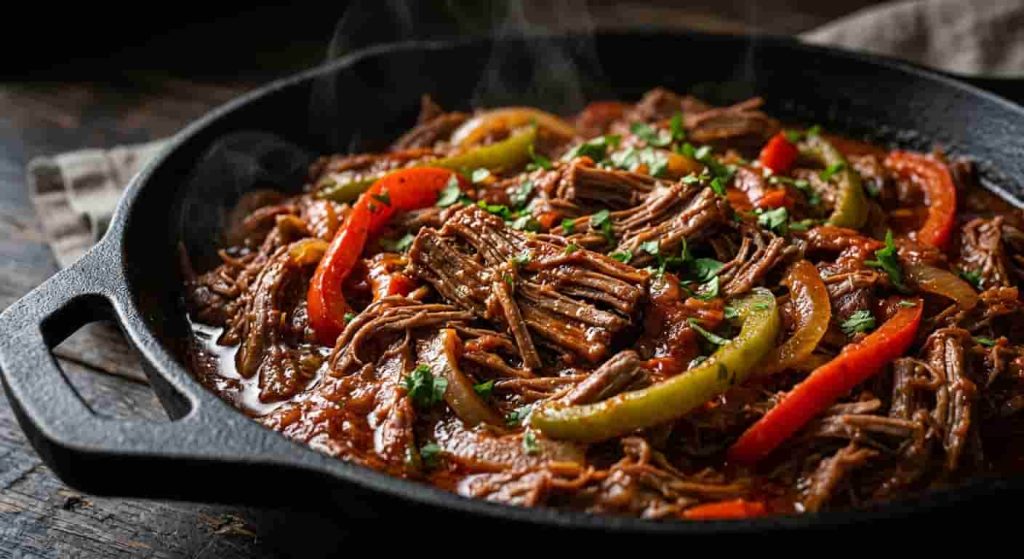
Among easy Cuban recipes at home, ropa vieja delivers the biggest comfort-food payoff. Authentic ropa vieja is beef cooked with tomatoes, onions, peppers, garlic, and spices until it falls into long, tender shreds. Its name translates to “old clothes,” a nod to the ragged strands of meat.
A stovetop version may simmer for several hours. A pressure cooker turns it into one of the best easy Cuban recipes at home because it reduces the wait without stripping away the slow-cooked character. A one-pot method also keeps more beef flavor in the finished sauce while cutting extra prep. (seriouseats.com)
Flank Steak or Chuck Roast?
Flank steak creates long shreds. Chuck roast is more forgiving because its fat and connective tissue help it stay juicy.
For four to six servings, combine about two pounds of beef with sofrito, crushed tomatoes, broth, bell pepper, cumin, oregano, bay leaf, salt, and pepper.
Stovetop Method
Brown the seasoned beef in a heavy pot. Add the remaining ingredients, cover, and simmer gently for roughly 2½ to 3 hours, or until the meat separates easily with two forks.
Shred it, return it to the sauce, and simmer uncovered for another 10 minutes. That final step lets the beef absorb the sauce instead of sitting beside it like an awkward coworker.
Pressure Cooker Method
Brown the beef using the sauté setting. Add the sauce ingredients, scrape the bottom thoroughly, and cook at high pressure for about 40 to 45 minutes. Let the pressure release naturally.
Check tenderness, not just time. If the meat fights back when you shred it, cook it for another 8 to 10 minutes.
Slow Cooker Cuban Picadillo
Sweet, Salty, and Savory
When you need easy Cuban recipes at home with minimal cleanup, picadillo earns its place. Slow Cooker Cuban Picadillo combines browned ground beef, sofrito, tomato, cumin, green olives, capers, and—depending on the family—raisins.
Olives bring briny sharpness; raisins add tiny pockets of sweetness.
A classic Cuban picadillo builds from sofrito and is often finished with olives, capers, and raisins, then served with white rice and black beans. (seriouseats.com)
Brown one pound of ground beef and transfer it to a slow cooker. Add one cup each of sofrito and tomato sauce, then stir in sliced olives, capers, raisins, cumin, oregano, and a bay leaf. Cook on low for 4 to 5 hours.
Ground beef should reach 160°F for food safety. (FoodSafety.gov)
Serve it over fluffy white rice. For huevo a caballo, place a fried egg on top. The yolk becomes a sauce, and yesterday’s leftovers suddenly look intentional.
A First Look at Mojo Pork Marinade
This is where easy Cuban recipes at home get especially bright.
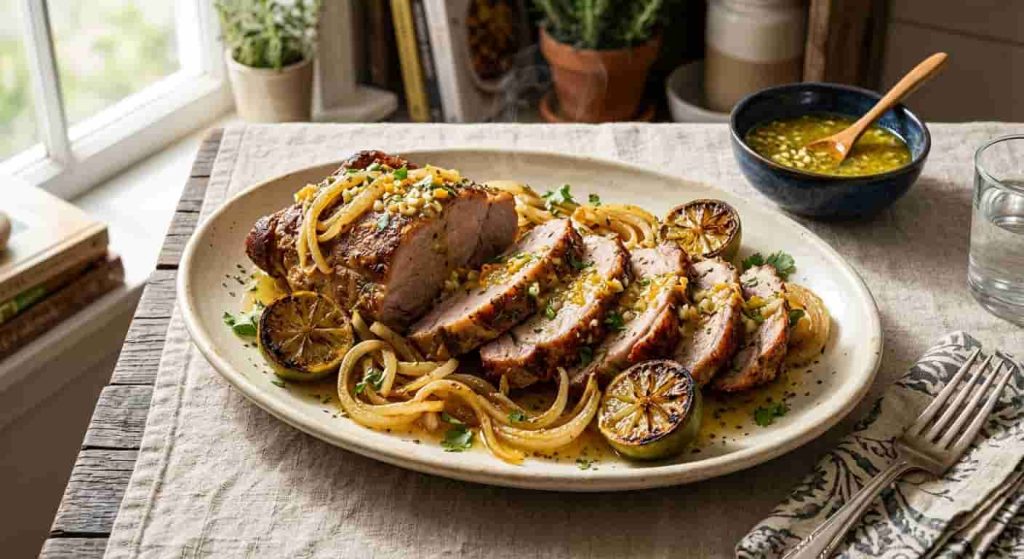
The next essential move is Mojo Pork Marinade made with naranja agria, garlic, cumin, oregano, salt, and oil. Sour orange gives pork a clean citrus edge.
Can’t find naranja agria in a US grocery store? Equal parts orange juice and fresh lime juice make a practical substitute. Pork tenderloin works for fast dinners; pork shoulder rewards a longer roast.
Quick Weeknight Mojo Pork Marinade (Naranja Agria)
Why mojo pork tastes bigger than the ingredient list
Here’s the deal: some of the best easy Cuban recipes at home are the ones that make people think you cooked all day when you absolutely did not. Mojo pork is one of them.
The heart of it is Mojo Pork Marinade (Naranja Agria). That marinade is bright, garlicky, a little earthy from cumin and oregano, and sharp enough to wake up richer cuts of pork. If you’ve never used sour orange before, think of it as citrus with attitude.
The basic mojo marinade
For about 2 pounds of pork, mix:
- ½ cup sour orange juice
- 6 to 8 garlic cloves, mashed or minced
- 1 teaspoon ground cumin
- 1 teaspoon dried oregano
- 1½ teaspoons kosher salt
- 2 tablespoons olive oil
- ½ teaspoon black pepper
No sour orange? No panic.
Use:
- ¼ cup orange juice
- ¼ cup lime juice
That simple swap keeps easy Cuban recipes at home practical for US kitchens.
Pork shoulder vs. pork tenderloin
If you want classic flavor
Use pork shoulder. It gets juicy, tender, and a little dramatic in the best way. Roast it low and slow, then shred or slice.
If you want dinner faster
Use pork tenderloin. It marinates quickly, roasts fast, and still carries the mojo flavor beautifully. This is my weeknight move when I want Cuban food without turning dinner into a weekend project.
Two easy ways to cook it
Oven-roasted pork shoulder
Marinate overnight if possible. Roast covered at 325°F until tender, then uncover near the end so the top gets browned and flavorful. Spoon pan juices over the meat before serving.
Air fryer pork bites
Cube pork tenderloin, marinate for at least 30 minutes, then air fry at 400°F until cooked through and lightly browned. These are fantastic in rice bowls, wraps, or just stolen straight from the tray while “checking for doneness.”
Satisfying Chicken Staples
Simple Arroz con Pollo
If you ask me which dish proves that easy Cuban recipes at home can still feel celebratory, I’d say arroz con pollo. It’s cozy, colorful, and almost annoyingly good for a one-pot meal.
What makes it Cuban-style
The rice is usually yellow from bijol or saffron-style coloring, the chicken is seasoned well, and the whole pot picks up flavor from sofrito. Some cooks add a splash of beer. Some add peas near the end. Some will passionately argue about both.
That’s normal. That’s family cooking.
A practical weeknight version
Use:
- bone-in or boneless chicken thighs
- sofrito
- long-grain rice
- chicken broth
- bijol, annatto, or a pinch of turmeric
- cumin
- oregano
- a little beer, optional
Brown the chicken first. Remove it. Sauté sofrito, stir in rice so it gets lightly coated, add broth and seasonings, then nestle the chicken back in.
Cover and cook until the rice is tender and the chicken is done. Let it rest 10 minutes before fluffing. Don’t skip the rest. Rice needs that quiet moment.
Easy swaps if your pantry is not “Cuban grocery haul” ready
- No bijol? Use annatto or a small pinch of turmeric.
- No thighs? Use drumsticks or even breasts, though thighs stay juicier.
- No beer? Just use more broth.
That flexibility is exactly why easy Cuban recipes at home work so well for regular people with regular refrigerators.
Quick Pollo a la Plancha
This one is for nights when you want something fast, savory, and not remotely boring.
What it is
Pollo a la Plancha is thin chicken breast marinated with garlic and citrus, then seared until lightly golden. It’s usually served with sautéed onions and a side of rice, beans, or salad.
How to keep it juicy
Pound the chicken to an even thickness first. This matters. Uneven chicken is the reason half the pan is dry and the other half still negotiating with the laws of heat.
Marinate in:
- garlic
- lime juice
- a bit of orange juice
- salt
- pepper
- oregano
- olive oil
Sear in a hot skillet until just cooked through. Top with onions cooked until sweet and lightly caramelized.
Short cooking time. Big payoff.
Essential Side Dishes: Beans, Rice, and Plantains
Moros y Cristianos vs. White Rice and Frijoles
Let’s clear this up because people mix them up all the time.
Moros y Cristianos
This is black beans and rice cooked together or combined so the rice soaks up the bean flavor. The result is deeper, darker, and more unified.
White rice and frijoles
This is exactly what it sounds like: white rice served with black beans on the side or spooned over the top.
Both belong in the world of easy Cuban recipes at home. One is integrated. One is separate. Neither is wrong.
Instant Pot Cuban Black Beans
I love this recipe because it feels old-school in flavor and modern in effort. Instant Pot Cuban Black Beans are one of the smartest shortcuts in a Cuban-inspired kitchen.
A no-soak method that actually works
Add to the pot:
- 1 pound dried black beans
- 1 onion, chopped
- 1 green bell pepper, chopped
- 4 garlic cloves
- 1 teaspoon cumin
- 1 teaspoon oregano
- 1 bay leaf
- 6 cups water or broth
- 2 tablespoons olive oil
- salt, added toward the end
Cook on high pressure for about 35 to 40 minutes, then allow a natural release.
After cooking, mash a small amount of the beans into the liquid to thicken the pot. It creates that velvety texture people love without adding anything weird.
Actually, this is one of my favorite meal-prep tricks. Beans on Sunday. Better dinners all week.
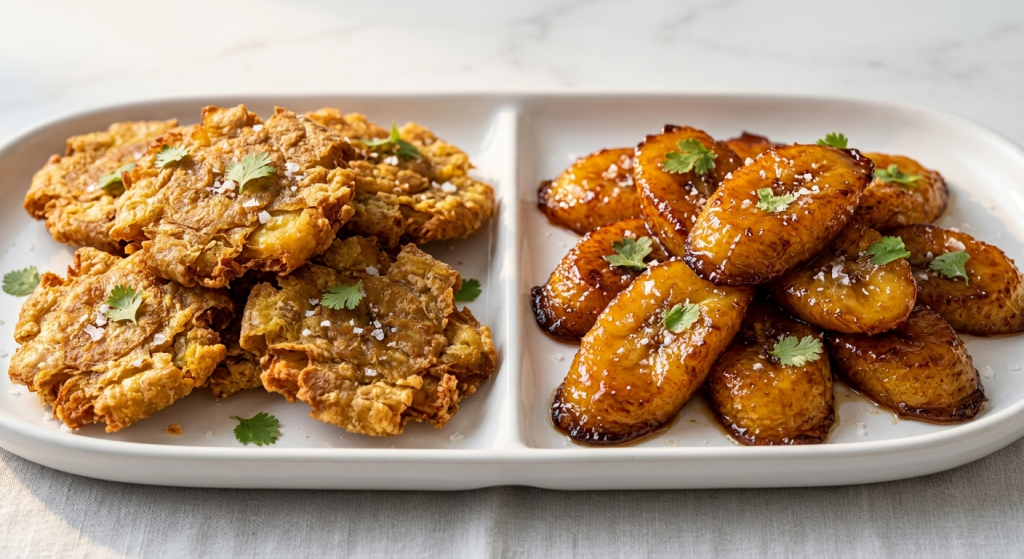
Tostones vs. Maduros: the plantain question
This is the food equivalent of asking whether you’re in a crunchy-salty mood or a soft-sweet mood.
Tostones
Crispy Tostones are made from green plantains. They’re cut, fried once, smashed, then fried again until crisp. Add salt and serve hot.
They’re savory, starchy, and wildly snackable.
Maduros
Maduros use ripe yellow-to-black plantains. They fry into sweet, soft slices with caramelized edges. No double-frying here. Just patient pan-frying until golden and tender.
How to choose the right one
Pick tostones when:
- you want crunch
- you’re serving dips or mojo
- your main dish is rich and savory
Pick maduros when:
- you want sweetness on the plate
- you’re balancing salty pork or beef
- your plantains are already very ripe and staring at you with a deadline
Yuca con Mojo
If potatoes and cassava had a very delicious cousin situation, this would be it.
What it is
Yuca, also called cassava, is boiled until tender, then topped with hot garlic-citrus oil. That finishing sauce is the mojo. It’s simple, bold, and perfect beside pork, chicken, or beans.
How to serve it well
Boil peeled yuca until fork-tender. Remove the tough inner core if needed. Heat olive oil with sliced garlic just until fragrant, then add citrus juice and pour it over the yuca.
That’s it.
No fancy garnish required, though a little chopped parsley never hurts.
Among easy Cuban recipes at home, yuca con mojo is the sleeper hit. People try it once and then start requesting it like it’s a family heirloom.
Street Food and Handheld Cuban Classics
The Classic Cuban Sandwich (Cubano)
A proper Cuban Sandwich (Cubano) is proof that a short ingredient list can still create a ridiculous amount of flavor.
At first glance, it looks simple: bread, pork, ham, cheese, pickles, and mustard. But the balance matters. You need salty meat, tangy pickles, melted cheese, sharp mustard, and bread pressed until the outside turns crisp while the center stays warm and tender.
It’s one of the most satisfying easy Cuban recipes at home, especially when leftover mojo pork is already waiting in the refrigerator.
The correct Cubano layering order
For one large sandwich, use:
- 1 Cuban bread loaf or soft-crusted substitute
- Yellow mustard
- 4 to 5 ounces sliced roast mojo pork
- 3 to 4 ounces thinly sliced ham
- 2 to 3 slices Swiss cheese
- Dill pickle slices
- Softened butter for pressing
Slice the bread lengthwise without separating it completely. Spread mustard over the cut sides.
Layer the ham, pork, Swiss cheese, and pickles evenly. Close the sandwich and press it gently before cooking.
Does the order matter? A little. Keeping the cheese near the bread helps everything melt together, while spreading the pickles across the sandwich prevents one aggressively sour bite.
How to press a Cubano without a panini machine
No specialized press? Good. Your kitchen survives another single-use appliance.
Heat a large skillet over medium-low heat. Butter the outside of the sandwich and place it in the pan.
Set a second heavy skillet, cast-iron pan, or foil-wrapped brick on top. Press until the bottom is crisp, then flip and repeat.
Cook slowly enough for the cheese to melt before the bread burns. The finished sandwich should be flattened, golden, and crisp along the edges.
Don’t overstuff it
This is not a skyscraper sandwich.
Too much filling makes the layers slide out and prevents the bread from pressing properly. Use enough meat to make the sandwich satisfying, but let the bread, mustard, and pickles remain part of the conversation.
Cut it diagonally and serve immediately.
A cold Cubano is fine. A hot Cubano with molten Swiss cheese is the reason you made it.

Media Noche Sandwich
The Media Noche is the Cubano’s slightly sweeter cousin.
Its name means “midnight,” and the sandwich became associated with late-night eating. The fillings are similar to a Cubano, but the bread is softer, sweeter, and usually made with egg.
Think brioche energy, but not dessert-level sweet.
What goes inside
Use:
- roast pork
- sliced ham
- Swiss cheese
- dill pickles
- yellow mustard
- soft egg bread
Press it the same way you’d press a Cubano. Because the bread contains more sugar, it browns quickly, so lower the heat slightly.
This is one of those easy Cuban recipes at home that works especially well for brunch, casual parties, or late-night meals when toast simply won’t do.
Sweets and Brews: Finishing the Cuban Meal
Traditional Cuban Desserts: Flan de Leche
After pork, rice, beans, and plantains, you might assume dessert should be light.
Cuban flan disagrees.
Traditional Cuban Desserts (Flan de Leche) bring a smooth, creamy finish to the meal. Flan de Leche is a baked custard made with milk, eggs, sugar, vanilla, and a glossy caramel layer.
It looks elegant. It also requires only a handful of familiar ingredients.
An easy five-ingredient Flan de Leche
You’ll need:
- 1 cup granulated sugar
- 1 can sweetened condensed milk
- 1 can evaporated milk
- 4 large eggs
- 2 teaspoons vanilla extract
You may also add a tiny pinch of salt. It doesn’t make the flan salty; it simply keeps the sweetness from tasting flat.
Make the amber caramel
Add the sugar to a dry saucepan over medium-low heat. Let it melt gradually, swirling the pan when needed.
Avoid stirring aggressively because the sugar can crystallize. Once it reaches a deep amber color, pour it immediately into a round baking dish or loaf pan.
Tilt the dish carefully so the caramel coats the bottom.
Hot caramel is basically edible lava. Respect it.
Mix the custard gently
Whisk the condensed milk, evaporated milk, eggs, and vanilla until combined.
For an extra-smooth flan, strain the mixture through a fine-mesh sieve before pouring it over the hardened caramel.
Try not to create too many bubbles. Flan should be creamy rather than foamy.
Bake it in a water bath
Place the flan dish inside a larger roasting pan. Add hot water to the outer pan until it comes about halfway up the sides of the flan dish.
Bake at 325°F for roughly 50 to 65 minutes.
The edges should look set, while the center still has a gentle wobble. It shouldn’t slosh like liquid, but it also shouldn’t be firm like cheesecake.
Cool it at room temperature, then refrigerate for at least four hours. Overnight is even better.
How to unmold flan without panic
Run a thin knife around the edge. Place a rimmed serving plate over the baking dish, hold both securely, and flip in one confident movement.
Lift the dish slowly.
The caramel should flow over the custard and pool around the base. That moment never gets old.
Among easy Cuban recipes at home, Flan de Leche may be the best make-ahead option because it actually improves after chilling.
Café Cubano and Colada Essentials
Why Cuban coffee has that signature foam
Café Cubano is small, dark, sweet, and surprisingly powerful.
The pale caramel-colored foam on top is called espumita. It isn’t steamed milk or coffee-machine crema. It’s made by vigorously whipping sugar with the first few drops of freshly brewed espresso.
How to make espumita
Add 2 to 4 tablespoons of sugar to a sturdy cup.
Brew strong espresso in a moka pot. As soon as the first concentrated drops appear, spoon about one tablespoon over the sugar.
Whip rapidly until the mixture becomes thick, pale, and glossy. When the rest of the coffee finishes brewing, pour it over the whipped sugar and stir gently.
A foamy layer should rise to the top.
Cafecito vs. colada
A cafecito is a small individual serving.
A colada is a larger portion intended for sharing, usually poured into several tiny cups. Sharing is key unless vibrating through the afternoon was already on your schedule.
Serve Café Cubano beside flan, pastries, or after a heavy meal.
Essential Cuban Pantry Checklist
You don’t need an enormous specialty pantry to prepare easy Cuban recipes at home. A few flexible ingredients cover most of the dishes in this guide.
Aromatics
Keep these available:
- Yellow onions
- Green bell peppers
- Fresh garlic
- Fresh limes
- Oranges
- Bay leaves
These form the backbone of sofrito, mojo, beans, rice, and meat dishes.
Spices and seasonings
Useful basics include:
- Ground cumin
- Dried oregano
- Kosher salt
- Black pepper
- Bijol or annatto
- Olive oil
- White vinegar
Cuban food is usually aromatic rather than aggressively spicy. Cumin, oregano, garlic, citrus, and slow-cooked vegetables do most of the work.
Canned and jarred staples
Stock:
- Tomato sauce
- Crushed tomatoes
- Black beans
- Green olives
- Capers
- Sweetened condensed milk
- Evaporated milk
- Dill pickles
- Yellow mustard
With those ingredients nearby, easy Cuban recipes at home become much easier to improvise.
Smart Ingredient Substitutions
Naranja agria substitute
When sour orange juice isn’t available, combine equal parts fresh orange juice and lime juice.
For a sharper result, add a small splash of grapefruit juice or white vinegar.
Bijol powder substitute
Bijol adds warm yellow color and mild annatto flavor.
Replace it with:
- annatto powder
- achiote seasoning
- a small pinch of turmeric
Turmeric works visually, but use it lightly. Too much will push the dish in a different flavor direction.
Cuban bread substitute
True Cuban bread has a light interior and thin crust that presses beautifully.
Practical substitutes include:
- a soft French loaf
- Italian bread
- a supermarket bakery loaf
- soft baguette-style bread
Avoid extremely crusty artisan bread. It may become hard enough to challenge your dental insurance once pressed.
Plantain substitution
There’s no perfect substitute for plantains, but the dish can still work without them.
Serve roasted sweet potatoes for a sweet side or crispy potato wedges for a savory one. The meal won’t be identical, but dinner will survive.
Read More Recipes: 15 Easy Finnish Recipes at Home (30-Min Comfort Food)
Frequently Asked Questions
What is the most famous Cuban dish to make at home?
Ropa vieja is often considered one of Cuba’s most recognizable dishes.
It combines shredded beef with tomatoes, peppers, onions, garlic, and warm spices. It’s a strong starting point for cooks exploring easy Cuban recipes at home because it pairs naturally with rice, black beans, and plantains.
A pressure cooker makes it especially manageable on busy days.
What are the core spices used in traditional Cuban food?
Common seasonings include:
- cumin
- oregano
- bay leaf
- black pepper
- salt
- garlic
Citrus, onion, bell pepper, olive oil, and tomato are equally important. Cuban food often builds flavor through aromatics and marination rather than intense chile heat.
What is the difference between tostones and maduros?
Tostones come from firm green plantains. They’re fried, smashed, and fried again, producing a salty, crispy side.
Maduros come from very ripe plantains. They’re sliced and fried once until soft, sweet, and caramelized.
One plantain. Two completely different moods.
How do you make authentic Cuban mojo sauce from scratch?
Combine:
- ½ cup sour orange juice
- 6 minced garlic cloves
- ½ teaspoon cumin
- 1 teaspoon oregano
- ½ teaspoon salt
- ¼ cup olive oil
Warm the olive oil gently with the garlic, but don’t let the garlic brown. Remove it from the heat and carefully stir in the citrus juice and seasonings.
Use mojo as a pork marinade, spoon it over boiled yuca, or serve it beside tostones.
Can Cuban recipes be made ahead?
Absolutely.
Several of the best easy Cuban recipes at home improve after resting:
- Sofrito can be frozen in small portions.
- Ropa vieja tastes richer the next day.
- Picadillo reheats well.
- Black beans thicken after chilling.
- Mojo pork can marinate overnight.
- Flan should be refrigerated several hours before serving.
Prepare one or two components in advance, and the final meal becomes far less demanding.
Is Cuban food spicy?
Traditional Cuban food is usually highly seasoned but not especially hot.
Garlic, cumin, oregano, citrus, pepper, and sofrito create depth without relying on hot peppers. Anyone who prefers more heat can add hot sauce at the table without changing the whole pot.
Bring the Cuban Table Home
You don’t need restaurant equipment, rare ingredients, or an entire free afternoon to make satisfying Cuban food.
Start with sofrito. Add one main dish. Choose rice, beans, or plantains. Then finish with Flan de Leche or a tiny cup of Café Cubano.
That’s the real advantage of easy Cuban recipes at home: the same handful of ingredients can become slow-cooked beef, citrusy pork, golden rice, velvety beans, crisp sandwiches, or caramel-covered custard.
Cook one recipe first. Learn its rhythm.
Soon enough, the smell of garlic, onion, citrus, and cumin will tell everyone dinner is ready before you do.
Please wait to go to the next post: 30 seconds
Please follow the proper sequence from the first post to get the code!
Go to Next Post