The groin strain that has you doing things like flying a kite in an amphitheater Communicating the intensity of pain and your clinical state as well as any other gracious excruciating thing on this earth, making every move feel like competing for gold.
So getting out of bed is again a delicate dance. Stairs require planning. A sneeze causes you to brace up your whole body inside.
You probably know the feeling: if you have ever experienced a sudden tug in your inner thigh region during a sprint, kick, lunge, jump or change of direction. Often the injury occurs in One Great Big Bang. On other occasions, the pain creeps on slowly with 2 or 3 days of progressive training or a big increase in activity.
Either way, the first question is usually the same: What are the best groin muscle pull remedies, and how quickly can I get back to normal?
The answer isn’t always “ice it and stretch it.”
An adductor/or groin strain occurs where there is damage to the muscles, tendons and in some cases: hip, pelvis or lower abdominal structures. And because lots of tissues are packed in together, persistent groin pain is not always simply muscle strain.
The recovery plan also matters. It is important to protect the injury early but long periods of complete rest can leave that muscle weak and ill prepared for activities of daily living or the sport itself. This has resulted in a more progressive model for rehabilitation that starts with protection then progresses to gradual loading, resistance exercise and functional activation.
Description of what a groin strain is, how to self-assess the severity of injury, likely causes, home-care options that may assist recovery, the role of PEACE & LOVE and adductor strength in rehabilitation and when ongoing pain should be seen by a professional.
And the task isn’t to cease this pain.
It is about going back to a place of strength and control, so that your body knows how to move safely again.
Disclaimer: This article is for general education and isn’t medical advice. Severe, persistent, or unusual groin pain should be evaluated by a qualified healthcare professional.

What Is a Groin Strain?
Groin strain is the injury of muscle or tendon tissue around inner thigh, hip, pelvis (below the abdomen). In common parlance, individuals simply swap out “pulled groin,” “groin strain” and sometimes make use of “strained groin” in identical kinds to describe generally the exact same concern.
The exact tissue that it affects can vary.
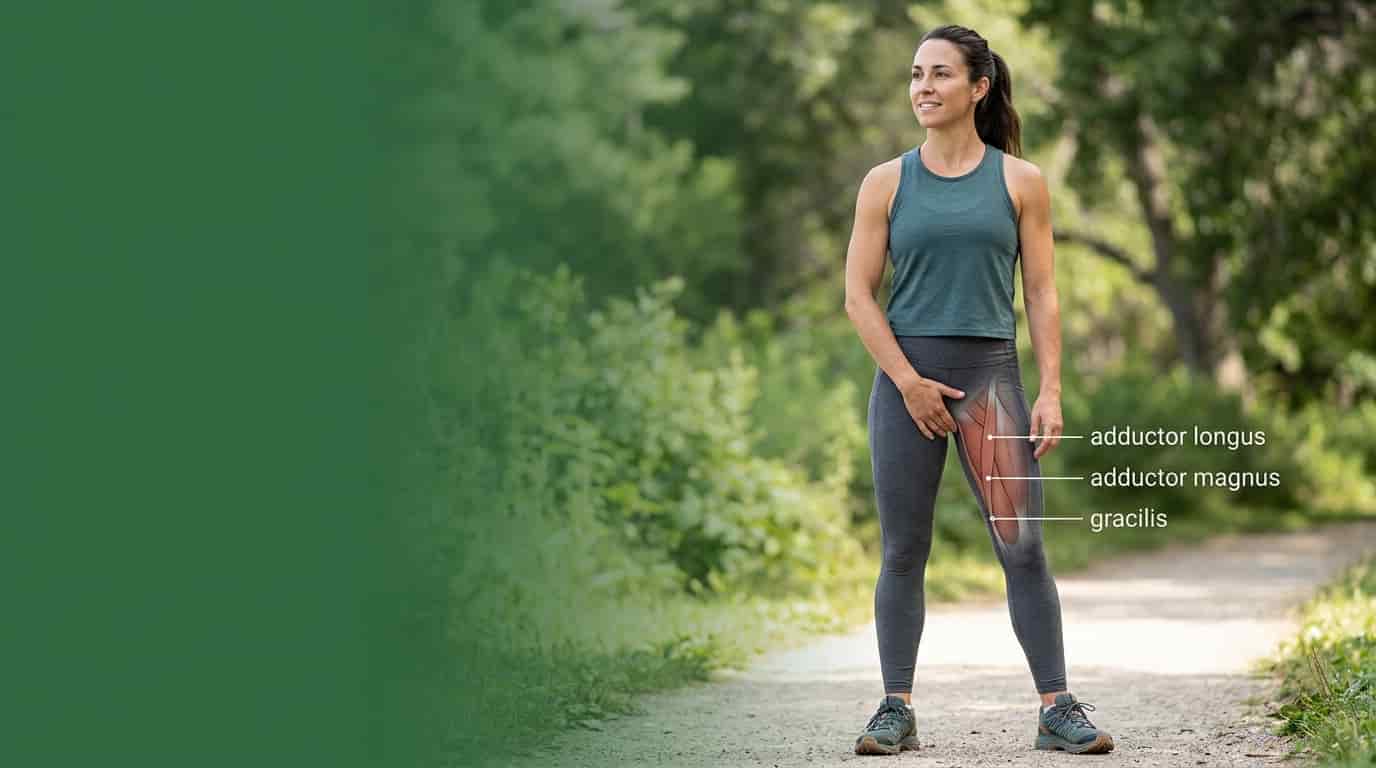
Adductor muscles are often missed contributors to groin pain On the inner thigh they help bring a leg in toward the centerline of the body and stabilize your hip and pelvic area.
But the groin is not one muscle.
It also encompasses the lower abdominal muscles, hip flexors, tendons, pubic area – as well as pelvic floor structures and, of course, the hip joint itself! Thus, pain in the groin area doesn’t mean that you’ve injured an adductor muscle.
A strain is when a tissue is placed under greater forces than it can handle at that moment in time. It could be a small microscopic injury or it could affect much of the muscle or tendon. In such cases the rupture may be complete and / or extensive amount of tendon injury.
The strain can be caused suddenly by, for example, a sprain or change in direction; or it may develop slowly through repetitive stress. Whereas for some, they remember precisely how the injury happened. Some people just realize that one of their inner thighs hurts more and more for days.
Why Groin Strains Happen So Easily
Not only does the adductor muscles bring your leg in. They also play a role in controlling the leg and stabilizing the pelvis when moving.
After that, if you go to maintain a sprint with sudden side-step/kick/change of direction the adductors may be forced to lengthen under tension. That creates significant tension on the tissue.
In the case of fatiguing muscles, weakness, poor conditioning or sudden workload exceeding current capability (i.e. excessive eccentric exercise), there is increased risk of injury.
Common activities associated with groin strains include:
- Sprinting
- Kicking
- Jumping
- Lunging
- Rapid acceleration
- Sudden stopping
- Twisting
- Cutting and changing direction
Soccer, hockey, football, basketball, tennis, and other high-speed sports can place substantial stress on the groin.
You don’t have to be an athlete, though.
A sudden return to exercise after months of inactivity, an awkward fall, a direct blow to the inner thigh, or an abrupt increase in workout intensity can also cause a groin injury.
The Muscles and Structures Involved
One reason that diagnosis can be difficult is anatomically the groin is also a busy area.
Adductor – The group of muscles that run up the inner thigh and assist with movement over the legs as well as hip stability. These lower abdominal muscles help stabilize the trunk and pelvis. The iliopsoas and other hip flexors aid in lifting the thigh.
Pain can also arise from the hip joint, pubic region, pelvic floor [3], these tendons and surrounding connective tissues.
This distinction matters. You may have a simple adductor strain. Another possibly has a sore hip joint. Another athlete might have athletic pubalgia, also known as a sports hernia, or pain tied to the pubic bone.
Where the pain is located is helpful, but that isn’t a diagnosis on it’s own.
What Does a Pulled Groin Feel Like?
Symptoms vary depending on the tissue involved and the severity of the injury.
A sudden strain may cause a sharp or tearing sensation during a specific movement. Overuse-related pain may begin as a dull ache after exercise and gradually become more noticeable during activity or even daily movement.
Common symptoms include:
- Sharp or aching groin pain
- Inner-thigh tenderness
- Pain near the pubic region
- Weakness
- Pain when bringing the legs together
- Difficulty moving the hip
- Pain while walking or running
- Muscle spasms
- Swelling
- Bruising or discoloration
A sudden injury often comes with a clear story: “I planted my foot and changed direction,” “I kicked the ball,” or “I felt something pull during a sprint.”
Gradual pain is different. It may start as a mild annoyance and become more persistent as the tissue continues to receive more stress than it can tolerate.
That progression is worth noticing. Your body often gives you warning signs before the pain becomes impossible to ignore.
The Three Grades of a Groin Strain
Healthcare professionals commonly classify muscle strains according to severity. The exact grading system can vary, but the basic idea is simple: greater tissue damage and loss of function generally indicate a more serious injury.
Grade 1: Mild Strain
A Grade 1 strain usually involves minor damage or overstretching.
Possible symptoms include:
- Mild pain
- Slight tenderness
- Minimal weakness
- Little or no swelling
- Relatively normal walking
You may be able to continue normal daily activities, but sprinting, kicking, running, or sudden changes of direction may still hurt.
“Mild” doesn’t mean “ignore it.” Repeatedly aggravating a small injury can turn a manageable problem into a much longer recovery.
Grade 2: Moderate Strain
A Grade 2 strain involves more significant muscle fiber damage.
Symptoms may include:
- Moderate pain
- Noticeable weakness
- Pain when walking
- Pain when squeezing the legs together
- Swelling
- Bruising
- Difficulty running
- Difficulty changing direction
This is the stage where many people return to activity too early. The pain improves, they assume the muscle has healed, and they resume their normal sport or workouts.
Then the pain returns.
Pain often improves before strength and tissue capacity have fully recovered. Feeling better is encouraging, but it doesn’t always mean the muscle is ready for maximum effort.
Grade 3: Severe Strain
A Grade 3 strain involves severe damage and may include a complete muscle or tendon rupture.
Possible signs include:
- Significant weakness
- Major bruising
- Severe swelling
- Difficulty bearing weight
- Major loss of movement
- A popping sensation
- Visible changes in the muscle in some cases
A severe injury should be assessed by a healthcare professional.
One important point: pain intensity alone doesn’t always tell you how serious the structural injury is. Strength loss, bruising, swelling, and loss of function can also provide important clues.
What Causes a Groin Muscle Pull?
Groin strain has also been defined as when the muscles or tendons of the inner thigh and hip are subjected to greater forces than can be accommodated.
Chronic conditions will arise from this too, such as OA/arthritis at some point in the future.Sudden explosive movements are common triggers, especially with running / sprinting / jumping / kicking/lunging/acelerating/stopping/changing direction.
To produce force, the muscles may need to lengthen simultaneously. And that can lead to a lot of stress.
Another frequent reason is repeatedly overuse. Groin pain may develop after:
- Increasing running mileage too quickly
- Adding extra training days
- Starting sprinting after a long break
- Repeated kicking
- Increasing workout intensity
- Training without adequate recovery
A sudden return to intense exercise after a long period of inactivity is another common scenario. Your motivation may be ready for a hard workout before your muscles are.
Gradual progression gives the body time to adapt.
Direct trauma can also cause a groin injury. A blow to the inner thigh or pelvis during contact sports, a fall, or an accident can damage muscle tissue.
Who Is at Higher Risk?
Anyone can develop a groin strain, but several factors may increase the likelihood.
These include:
- Previous groin injury
- Weak adductor muscles
- Poor hip stability
- Weak hip stabilizers
- Reduced pelvic control
- Muscle fatigue
- Sudden training increases
- Repeated sprinting
- High-speed sports
- Inadequate conditioning
- Returning to activity too soon
A previous groin injury is especially important. If the muscle has not regained adequate strength and capacity, returning to high-speed activity may increase the risk of another injury.
That is why prevention requires more than stretching.
Flexibility can be useful, but strength, coordination, endurance, and gradual exposure to physical demands are also important.
The PEACE & LOVE Approach to Recovery
The traditional approach to many soft-tissue injuries was RICE: Rest, Ice, Compression, and Elevation.
Modern rehabilitation has increasingly moved toward a more active framework known as PEACE & LOVE. The basic principle is to protect the injury early, then gradually restore movement, strength, and function.
Protect the Injured Area
During the early stage, reduce activities that clearly aggravate the injury.
That may mean avoiding:
- Sprinting
- Jumping
- Kicking
- Sudden cutting
- Painful stretching
- Repeatedly testing the injury
Protection doesn’t necessarily mean complete bed rest. It means reducing unnecessary stress while allowing comfortable movement when appropriate.
If walking causes sharp pain, reduce the amount of walking and seek professional guidance if the symptoms are severe.
Elevate When Practical
Elevation may help manage swelling by encouraging fluid movement away from an injured area.
Groin elevation isn’t always easy to arrange, so don’t force yourself into an uncomfortable position. Supporting the leg comfortably while resting may be reasonable.
If a position increases your pain, change it.
Avoid Automatically Chasing Inflammation
But it is one of the more subtle parts of the modernisation process.
Inflammation is uncomfortable, but it is a natural response of the body to damage to the tissue. Not all reductions in inflammation automatically mean an improvement in long term healing.
Not that ice or medication can never be helpful.
Can help temporarily relieve pain for some people with cold therapy only. There may also be situations in which anti-inflammatory medications are appropriate. But when you make medication decisions, they should take into account your health background, other medications you are on and your unique risks.
NSAIDs may not be suitable for people with kidney disease, stomach ulcers, heart disease or those taking blood thinners and anyone in doubt is advised to speak to a healthcare professional before using NSAIDs.
Compression
Compression shorts or an appropriate elastic wrap may provide support and help manage swelling.
Compression should feel supportive, not painfully tight.
Loosen or remove it if you develop numbness, tingling, worsening pain, or changes in skin color.
Educate Yourself
Understanding the injury can help you avoid two common mistakes: doing too much too soon or doing nothing for too long.
A good recovery plan should help you recognize the difference between manageable rehabilitation discomfort and pain that suggests you’re pushing beyond your current capacity.
When Are Crutches or a Walker Necessary?
The majority of mild groin strain specialists do not need the use of mobility aids.
But you have temporary where need when walking painful, unsteady, or difficult. Using crutches decreases the load on the affected leg, whereas a walker may suit someone who cannot walk safely independently otherwise.
If you can’t walk normally, don’t force yourself to do so.
When not to start — If you cannot weight bear, if walking is unsafe, or such basic movement causes severe pain, see a healthcare professional.
This is a PROPER use of crutches, and for short periods of time, it isn’t failure. They are just useful for a little bit while the injury calms down.
Gradually Load the Muscle
As the most severe symptoms start to ease, you should be starting to become more active and recovering.
And this is where most fail. Pain resolves, rehabilitation ceases and activities return to full participation.
The muscle may feel at ease, but comfort and capacity are not synonymous.
A few gentle isometric exercises may be included in early rehabilitation. The muscle contract without moving the joint excessively is known as an isometric contraction.
As an example, a soft ball or cushion can be squeezed lightly between the knees.
Start easy.
It is controlled muscle activation, not maximum force that is the goal. Resistance, ROM and exercise difficulty are demonstrated through gradual increase as symptoms improve.
If an exercise can be doing if an exercise improves patterns but then creates sharp pain or substantially exacerbates your symptoms afterward, keep it a lower challenge.
Movement, Confidence, and Recovery
Pain is influenced by more than tissue damage alone. The nervous system, stress, fear, expectations, and previous injury experiences can all affect how pain is experienced.
That doesn’t mean the pain is imaginary.
It means the brain and body communicate constantly.
A realistic mindset can help. You don’t need to convince yourself that you’re perfectly fine. A more useful approach is to recognize the injury while maintaining confidence that gradual rehabilitation can improve your capacity.
As symptoms improve, some people may also be able to maintain cardiovascular fitness through activities that don’t aggravate the groin, such as gentle walking or stationary cycling.
The key is symptom response.
Don’t use “improving circulation” as a reason to push through sharp pain.
Progressive Rehabilitation Should Match Your Goals
A complete rehabilitation plan may eventually restore:
- Adductor strength
- Hip strength
- Core control
- Pelvic stability
- Balance
- Muscle endurance
- Running mechanics
- Sport-specific power
A muscle that can produce force slowly may still struggle with fast force.
That is why the final stage of recovery should prepare you for the movements you actually need.
A soccer player may need to return to sprinting, kicking, cutting, acceleration, and deceleration.
A runner may need to gradually rebuild distance and speed.
A recreational exerciser may need to prepare for squats, lunges, jumping, or other movements used during workouts.
Your rehabilitation should match your life.

The Copenhagen Adductor Exercise
Who knew the Copenhagen adductor exercise actually sang out to be explored more thoroughly as it trains the inner-thigh muscles directly and can easily be progressed once strength becomes established.
F2: This exercise supports the body on one side, with the upper leg resting on a bench or elevated surface. Adductors are also used to lift and control the body.
This may be difficult so start with a more comfortable variation for beginners.
Anyway, here are some ways to make it less difficult:
- Using a shorter lever position
- Choosing a lower platform
- Keeping more of the body supported
- Performing shorter holds
- Using fewer repetitions
The goal isn’t to begin with the hardest version you see online.
Adductor-strengthening programs have been studied in athletic populations and have been associated with reduced groin problems in sports settings. The broader lesson is straightforward: muscles that are progressively strengthened are generally better prepared to tolerate demanding movement.
The Gentle Adductor Squeeze Test
A simple squeeze test can provide feedback about how the adductor area is responding.
Place a soft ball, folded pillow, or your fist between your knees and gently squeeze.
Pay attention to:
- Whether the movement causes pain
- Whether the pain is sharp
- Whether symptoms are improving over time
- Whether one side feels weaker
- Whether the groin feels worse afterward
Clinicians use different forms of adductor squeeze testing during rehabilitation.
A gentle version at home may help you monitor symptoms, but it cannot diagnose the cause of your pain.
Keep it gentle. Your groin doesn’t need to win a strength contest against a pillow.
Don’t Ignore the Hips, Glutes, and Core
The groin is ONE piece of a larger moving system.
Now, the adductors are working together with the glutes and everything you have around your hips, including hip stabilizers and all of your abdominal muscles and pelvic structures. Where one section fails to deliver, another may have to pick up the slack.
A lack of hip stability, for example, may mean you are less capable of controlling the pelvis and leg during single-leg movement. The adductors may be more challenged as a result.
Not every groin strain is due to a weak glute, though.
And this meant that rehabilitation doesn’t always have to zero in on the sore spot.
Depending on the injury and stage of recovery, a rehabilitation program may eventually include exercises such as:
- Side-lying hip abduction
- Lateral band walks
- Controlled step-downs
- Single-leg balance
- Single-leg bridges
- Planks
- Dead bugs
- Anti-rotation exercises
Quality matters more than quantity.
Ten controlled repetitions are often more useful than fifty rushed ones.
Why Does My Groin Strain Keep Coming Back?
The pattern is familiar.
You rest.
The pain improves.
You return to activity.
The pain comes back.
Recurring symptoms may occur when the muscle hasn’t regained enough strength, the original cause hasn’t been addressed, training demands increase too quickly, or the original diagnosis was incomplete.
Possible contributors include:
- Incomplete rehabilitation
- Weak adductors
- Poor hip stability
- Weak glutes
- Poor trunk control
- Sudden training increases
- Returning to sport too soon
- Inadequate conditioning
- An overlooked underlying condition
Someone may have enough strength to walk but not enough to sprint. They may tolerate a slow jog but struggle with repeated cutting or sudden deceleration.
Pain can disappear before full physical capacity returns.
That is why rehabilitation shouldn’t stop the moment symptoms improve.
How Long Does a Groin Strain Take to Heal?
However, there isn’t a single recovery timeline for all groin strains.
An injury may take weeks to recover from a few days. It can take up to 14 days for a moderate strain. Most likely, this may take several months for a severe tear or a tendon injury.
While it may take even longer to treat recurring or chronic groin pain if the specific cause has not been identified.
Recovery depends on:
- Injury severity
- Location
- Tissue involved
- Previous injuries
- General health
- Rehabilitation
- Activity demands
A recreational walker and a competitive soccer player don’t need the same level of recovery.
Instead of relying only on the calendar, consider whether you can:
- Walk normally
- Move the hip comfortably
- Squeeze the legs together without significant pain
- Jog
- Accelerate
- Decelerate
- Change direction
- Perform the movements required by your sport or activity
Feeling better is progress.
It doesn’t always mean you’re ready for maximum effort.
Can You Work or Go to School With a Groin Strain?
Many people can continue working or attending school if their daily activities don’t place significant stress on the injured area.
A desk-based job may be easier to manage than work involving:
- Heavy lifting
- Repeated squatting
- Climbing
- Running
- Frequent walking
- Carrying heavy objects
Temporary adjustments, additional breaks, or reduced physical duties may help.
The same applies to school. You may be able to attend classes while temporarily avoiding sports, running, or other demanding physical activities.
The goal isn’t complete inactivity.
It’s safe activity that doesn’t repeatedly aggravate the injury.
When Groin Pain May Be Something Else
Persistent groin pain deserves attention, especially when it doesn’t behave like a typical muscle strain.
Possible causes include:
- Athletic pubalgia
- Osteitis pubis
- Hip joint problems
- Hip flexor injuries
- Stress injuries
- Nerve irritation
- Referred pain from the lower back
- Pelvic floor dysfunction
Deep pain that radiates toward the lower abdomen may indicate something else entirely. Pain that is initiated in the context of coughing, sneezing or vibration may also need to be assessed further.
And this is why “just stretch it out more” isn’t a one-size-fits-all treatment.
Rule my daySometimes the sore muscle is not a source of problem
Groin Strain vs. Athletic Pubalgia
These conditions may feel closely related, but they are not the same.
It almost always begins with muscle or tendon tissue and generally starts with a sudden movement, so it falls within the average strains for sports.
Athletic pubalgia is a condition that encompasses related structures around the lower abdominal wall and pelvis resulting in debilitating, persistent or recurrent athletic groin pain. Although used interchangeably, athletic pubalgia isn’t necessarily synonymous with a true abdominal hernia and the designation “sports hernia” is sometimes employed.
Possible symptoms include:
- Deep groin pain
- Lower abdominal discomfort
- Pain during sprinting
- Pain during twisting
- Pain during forceful abdominal activity
- Recurring symptoms despite treatment
If a suspected groin strain doesn’t improve despite appropriate rehabilitation, the diagnosis may need to be reconsidered.
How Is a Groin Strain Diagnosed?
A healthcare professional will usually begin with a physical examination.
They may ask:
- What were you doing when the pain began?
- Did you feel a pop?
- Did the pain appear suddenly or gradually?
- Where exactly does it hurt?
- Can you walk normally?
- Does squeezing your legs together reproduce the pain?
- Have you injured the area before?
You may have strength testing, hip movement, adductor test (for groin injury), walking tests or note tapping on these body parts to test if you feel tenderness: hip, lower abdomen and pelvis action and the lower back.
For a straightforward, low-grade strain, imaging is not always required.
It may be considered when:
- A severe tear is suspected
- Symptoms persist
- The diagnosis is unclear
- A fracture is possible
- A tendon injury is suspected
- You are ordered to exclude another disease
Ultrasound Findings in Specific Injuries. X-rays are useful to assess bone and fracture. An MRI is useful because it provides a detailed image of muscles, tendons, bones, and other lip tissue.
Groin pain does not mean you need an MRI, immediately.
The choice of the right test is based on the clinical question.
When Is a Groin Strain an Emergency?
Most groin strains aren’t emergencies.
Get emergency medical help after a large trauma or if you have:
- Severe pain
- Significant bleeding
- Loss of movement in leg or hip
- Inability to bear weight
- Rapidly worsening swelling
- Major bruising
- Numbness
- Tingling
- A leg which feels abnormally cold
- Significant color changes
- Severe weakness
- A visible deformity
Those symptoms could suggest a more severe injury or something that does not present simply as a muscle strain.
Do not sit waiting for a home remedy to do that which needs urgent evaluation.
Do Groin Strains Ever Need Surgery?
Surgery is usually not needed for most groin strains.
Most improve with activity modification and graded rehabilitation.
Surgery is only occasionally indicated in major structural injuries, including complete ruptures of the muscle, large tendon tears or tendon avulsions (where the tendon has pulled away from where it attaches to bone), and some severe injuries that do not improve sufficiently with suitable non-surgical treatment.
Grade 3 injury doesn’t guarantee surgery.
The decision will depend on the specific structure implicated, the site and severity of the injury, the degree of functional deficit, and a person’s goals.
A professional evaluation is necessary.
Nutrition and Sleep During Recovery
There is no smoothie that can overnight turn a ripped muscle back in place. I’d bet every physical therapist would have one in the clinic too.
Nutrition still matters, though.
You need sufficient energy and nutrients for normal repair and recovery processes. Set Your Diet And Lifestyle To Have A Balanced Meals, Which Comes With:
- Adequate protein
- Carbohydrates for activity
- Healthy fats
- Vitamins and minerals
- Enough total calories
- Sufficient fluids
Examples of significant sources of protein: eggs, fish, poultry, Greek yogurt, milk functions and beans or lentils tofu.
Not every meal has to turn into that big thing like a bodybuilding competition. Consistency matters more than perfection.
Sleep matters too. A specific sleep pattern and adequate recovery time helps your body’s entire recovery process.
How to Prevent Another Groin Muscle Pull
Prevention requires more than stretching.
A well-rounded approach may include:
- Gradual increases in training
- Adductor strengthening
- Hip and glute strengthening
- Core control
- Pelvic stability
- A proper warm-up
- Sport-specific preparation
- Adequate recovery between hard sessions
- A gradual return after injury
Avoid jumping from months of inactivity into maximum-intensity exercise.
Prepare your body for the demands you expect it to handle.
Sooner or later, a soccer player has to prepare to sprinting, kick, accelerate, decelerate and change direction. Gradual build up of distance and speed for a runner. If you are a recreational exerciser, you need to slowly reintroduce the movements used in your workouts.
Flexibility is helpful, but does not prevent injury.
But strength, coordination, endurance and capacity of the tissue count as well.
Read More Remedies: Cyclospora cayetanensis: The Essential Guide to Protecting Your Gut and Recovering Faster
Three Myths About Pulled Groin Muscles
Myth 1: “Wear it to the max until it opens up”
Although it may feel like a stiff muscle that needs to be pulled harder, an acute muscle strain is not
In sum, aggressive stretching could irritate injured tissue early on. You may do gentle mobility later, depending on the type of injury and how much pain there is, but painful stretching is not automatically therapeutic.
Myth 2: “A Complete Tear Must Hurt the Most”
Pain intensity doesn’t perfectly reflect structural severity.
Strength loss, bruising, swelling, and loss of function can provide important information. Never judge the seriousness of an injury by pain alone.
Myth 3: “Complete Bed Rest Is the Fastest Way to Heal”
Rest has a role.
Permanent inactivity doesn’t.
Too much inactivity can contribute to weakness and deconditioning. A modern recovery plan generally protects the injury early, then gradually rebuilds movement and strength.
The body needs protection.
It also needs an appropriate reason to rebuild.
Frequently Asked Questions About Groin Muscle Pull Remedies
Is a pulled groin the same as a groin strain?
Usually, yes. These terms are commonly used to describe an injury involving overstretched or damaged muscle or tendon tissue around the groin. The severity can vary significantly.
Can I walk with a groin strain?
Many people with a mild strain can walk. However, severe pain, significant limping, inability to bear weight, or worsening symptoms shouldn’t be ignored.
Walking comfortably doesn’t automatically mean you’re ready to run.
How do I know if my groin strain is serious?
Major bruising, severe weakness, inability to walk normally, a popping sensation, significant swelling, or inability to move the hip may indicate a more serious injury.
If you’re unsure, seek professional evaluation.
Do I need an MRI for a pulled groin?
Not necessarily.
Many mild strains can be evaluated through a physical examination. MRI may be considered when the injury is severe, symptoms persist, the diagnosis is uncertain, or another condition needs investigation.
Can a groin strain become chronic?
Yes.
Recurring symptoms may develop when strength hasn’t fully returned, rehabilitation stops too soon, training demands increase too quickly, or another underlying problem has been missed.
What can I take for groin strain pain?
Some people use over-the-counter pain relievers or anti-inflammatory medications. These aren’t appropriate for everyone and may interact with certain medical conditions or medications.
Follow the product label and speak with a healthcare professional if you’re unsure what is safe for you.
What should I ask my doctor or physical therapist?
Useful questions include:
- What structure is causing my pain?
- How severe is the injury?
- Do I need imaging?
- Which exercises are safe right now?
- Which movements should I avoid?
- When can I start running?
- When can I return to sport?
- How can I reduce my risk of reinjury?
Final Thoughts: Heal the Muscle, Then Rebuild the Movement
There’s nothing more annoying than a groin muscle pull that gets better, then painful again the second you resume normal activity.
The best cures for groin muscle pulls typically follow a series of steps, not one miracle cure.
Protect the injury early.
Do not aggressively stretch an acute strain.
We advocate relative rest instead of total inactivity.
Progressively load the muscle and rebuild strength when symptoms settle.
Do not only focus on the actual pain. Since the adductors work alongside the hips, glutes, core and pelvis, a full movement system may need addressing.
Such exercises as the Copenhagen adductor can play an important role in a progressive strengthening program if applied at a suitable level.
And if the pain continues to return, radiates into your low belly, or does not respond appropriately to rehabilitation measures — have it evaluated.
Mistakes are inevitable, and sometimes the worst mistake is treating an injury incorrectly.
Recovery is not over just because the pain is gone. Inquire whether your body is prepared for the demands you want to impose upon it.
A fine groin while walking may need time to toughen up for plymetrics and to withstand sprinting. An injury that responds to treatment in two weeks does not mean the muscle is ready for maximal effort.
Healing isn’t always perfectly linear.
Some days are better than others.
That’s normal.
It’s not about going back to the activity that caused your injury, To come back stronger, more under control and with more self-confidence, ultimately allowing you to execute your next movement better than before.
Please wait to go to the next post: 30 seconds
Go to Next Post