
That burning sensation. The constant urge to pee. The feeling that your bladder has suddenly declared war on you.
If you’ve ever had a bladder infection, you probably remember every miserable minute of it.
I certainly don’t blame anyone for immediately searching for the fastest bladder infection treatment the moment those symptoms appear. I’ve watched friends try everything from gallons of cranberry juice to internet “miracle cures.” Some helped a little. Others did absolutely nothing except empty their wallets.
Here’s the good news.
Doctors know far more about urinary tract infections than they did even a few years ago. Medical guidelines have changed. New antibiotics have arrived. And perhaps most importantly, experts now understand that not every infection should be treated exactly the same way.
That shift matters.
Instead of thinking about every UTI as one giant category, specialists now separate them into Localized UTIs and Systemic UTIs. It sounds like medical jargon, but it actually makes treatment much simpler.
A localized infection stays in the bladder or urethra. It usually causes:
- Burning during urination
- Frequent urination
- Urgency
- Lower abdominal discomfort
- Cloudy or foul-smelling urine
A systemic infection is different. The bacteria have likely reached the kidneys or even entered the bloodstream. That’s when symptoms become much more serious.
Watch for:
- Fever
- Chills
- Flank or severe back pain
- Vomiting
- Confusion (especially in older adults)
If those symptoms appear, don’t wait. Seek medical care immediately.
That’s one reason why choosing the right UTI tract infection treatment isn’t about guessing. It’s about identifying which type of infection you’re dealing with.
Another surprise?
Doctors are trying to use fewer antibiotics, not more.
That may sound backwards, but antibiotic resistance has become one of the biggest problems in modern medicine. Every unnecessary prescription makes bacteria a little smarter.
So today’s goal isn’t simply killing bacteria.
It’s choosing the right medicine, for the right patient, at the right time.
Disclaimer: This article is for educational purposes only and isn’t a substitute for professional medical advice, diagnosis, or treatment.

The Best Bladder Infection Treatment Starts With the Right Diagnosis
Here’s something that surprised me when I first started reading modern urology guidelines.
Having bacteria in your urine doesn’t automatically mean you have a bladder infection.
Seriously.
Doctors now require three important pieces before confidently diagnosing an active localized UTI.
You need symptoms
Symptoms usually appear suddenly.
Common ones include:
- Burning while urinating
- Frequent bathroom trips
- Feeling like you need to pee immediately
- Pelvic pressure
- Pain above the pubic bone
There should be inflammation
Modern guidelines emphasize something called pyuria.
That simply means white blood cells are present in the urine, showing that the immune system is actively fighting inflammation.
Without that inflammation, bacteria alone don’t necessarily mean infection.
The urine culture should support the diagnosis
The laboratory should identify bacteria that match the patient’s symptoms.
All three pieces together create a much stronger diagnosis than relying on one urine test alone.
This helps prevent unnecessary antibiotics.
And honestly, that’s a very good thing.
Antibiotics for Bladder Infection: What Doctors Actually Prescribe Today
Let’s clear something up.
The best antibiotics for bladder infection aren’t always the strongest ones.
In fact, specialists often prefer medications that stay mostly inside the urinary tract instead of spreading throughout the body.
That protects healthy gut bacteria while still treating the infection effectively.
Nitrofurantoin
This remains one of the most trusted treatments for localized bladder infections.
Why doctors like it:
- Excellent success rate
- Low resistance
- Minimal disruption of gut bacteria
- Usually prescribed for five days
It concentrates inside the bladder, exactly where it’s needed.
Fosfomycin
Some patients love this option.
Instead of taking pills for several days, Fosfomycin often comes as a single high-dose powder packet mixed with water.
For busy people who struggle remembering medication schedules, that’s a major advantage.
Trimethoprim-Sulfamethoxazole (TMP-SMX)
This medicine still works very well—but there’s an important catch.
Doctors only recommend it when local bacterial resistance remains below about 20%.
If resistance rates are higher in your area, another antibiotic may be a better choice.
That’s why your physician may ask about local patterns before prescribing treatment.
A Brand-New Option: Gepotidacin
For the first time in decades, medicine has welcomed a completely new oral antibiotic class.
Gepotidacin works differently from older antibiotics, making it especially valuable as bacteria become resistant to traditional drugs.
Clinical trials showed it performs as well as established therapies for many localized bladder infections.
Experts view it as an exciting addition rather than a replacement for existing first-line medications.
Having more treatment options gives physicians greater flexibility—especially for patients with resistant infections or medication allergies.
What About Fluoroquinolones?
This surprises many people.
Years ago, medications like Ciprofloxacin were prescribed frequently.
Not anymore.
For routine localized bladder infections, fluoroquinolones are now largely avoided because they carry risks including:
- Tendon rupture
- Serious nerve problems
- Possible aortic complications
- Increasing bacterial resistance
Today they’re generally reserved for more serious systemic infections where the benefits clearly outweigh the risks.
Can Some UTIs Improve Without Antibiotics?
Sometimes.
If symptoms are mild and there are no warning signs, some clinicians use what’s called a delayed prescription.
The patient increases fluids, manages discomfort with appropriate pain relief, and waits about 48 hours.
If symptoms improve, antibiotics may never be needed.
If they worsen or persist, the prescription is already available.
It’s a balanced approach that helps reduce unnecessary antibiotic use without compromising patient safety.
One important reminder: never start or stop antibiotics and UTI treatment on your own. Taking leftover medication or ending a course early can make future infections harder to treat.
Prevention Is Better Than Another Round of Antibiotics
If you’ve experienced one bladder infection, you probably never want another.
I get it.
The good news is that preventing recurrent infections has become much more evidence-based. Doctors aren’t simply saying, “Drink more water,” anymore. They now focus on stopping bacteria before they can settle inside the bladder.
The 36 mg Cranberry Rule Most People Don’t Know
Let’s start with one of the biggest surprises.
Cranberries do have a place in bladder health—but not in the way social media often claims.
Most grocery-store cranberry juice contains:
- Large amounts of added sugar
- Very little active ingredient
- Nowhere near the concentration used in clinical studies
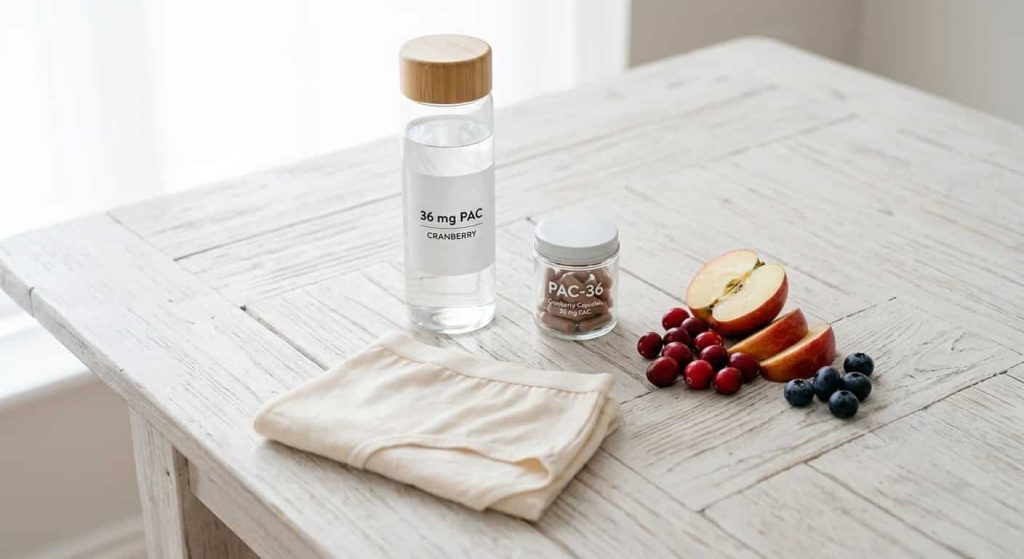
What researchers actually study are standardized cranberry extracts containing at least 36 mg of soluble A-type proanthocyanidins (PACs) per day.
These PACs don’t kill bacteria.
Instead, they make it difficult for E. coli to stick to the bladder wall. Without a good grip, many bacteria are flushed away during urination before they can cause trouble.
That’s a clever strategy.
Instead of attacking bacteria directly, it simply prevents them from settling in.
So if you’re looking for natural support, check the supplement label carefully. If it doesn’t clearly state 36 mg of soluble PACs, it probably isn’t the product used in clinical research.
Vaginal Estrogen: A Game-Changer for Postmenopausal Women
This is one of the most overlooked forms of bladder infection treatment for older women.
After menopause, estrogen levels decline.
That hormonal shift changes much more than reproductive health.
The vaginal tissue becomes thinner.
The natural acidity changes.
Healthy Lactobacillus bacteria begin disappearing.
Unfortunately, that creates an environment where E. coli can thrive.
Instead of prescribing repeated courses of oral antibiotics, many specialists now recommend topical vaginal estrogen for appropriate postmenopausal patients with recurrent infections.
The goal isn’t simply treating bacteria.
It’s restoring the body’s natural defenses.
Many women experience dramatically fewer infections after several weeks because the underlying problem—not just the infection—has been addressed.
Simple Habits That Still Matter
Fancy treatments often get the headlines.
Simple habits still deserve attention.
I usually tell friends not to underestimate the basics.
Helpful everyday habits include:
- Drinking enough water throughout the day
- Emptying your bladder when you feel the urge
- Urinating after sexual activity
- Wiping from front to back
- Avoiding unnecessary scented feminine hygiene products
- Wearing breathable cotton underwear when possible
None of these guarantees you’ll avoid another infection.
Together, though, they help reduce risk.
Two Real Patients, Two Very Different Solutions
One thing I appreciate about good medicine is that it isn’t one-size-fits-all.
Let’s look at two realistic scenarios.
Case Study A: The Infection That Always Followed Sex
Sarah, age 28, had experienced four localized bladder infections within eight months.
There was an obvious pattern.
Symptoms appeared about 24 to 48 hours after intercourse.
Instead of placing her on continuous daily antibiotics—which can affect gut bacteria and increase resistance—her urologist chose postcoital prophylaxis.
She took one low-dose antibiotic immediately after intercourse.
Not every day.
Only when needed.
That small adjustment dramatically reduced her infections.
The lesson?
Sometimes timing matters more than dosage.
For women whose infections consistently follow intercourse, strategically timed antibiotics for bladder infection may be far more appropriate than taking medication every single day.
Case Study B: The Missing Piece Wasn’t Another Antibiotic
Margaret was 64.
She’d already completed several courses of oral antibiotics.
The urine cultures kept coming back positive.
The burning always returned.
Eventually, her physician looked beyond the infection itself.
Menopause had changed her vaginal environment.
Healthy bacteria had nearly disappeared.
Instead of prescribing yet another antibiotic, the doctor recommended topical vaginal estrogen.
Within weeks, her symptoms improved.
Over the following months, the repeated infections stopped.
The takeaway?
Sometimes the root cause isn’t poor hygiene.
Sometimes it’s biology.
Myth vs. Reality
Let’s clear up some internet myths that refuse to disappear.
Myth: D-Mannose Cures Active Bladder Infections
Reality?
D-mannose remains popular, but current clinical guidelines don’t consider the evidence strong enough to recommend it alone for treating or preventing recurrent UTIs.
It appears to interfere mainly with one bacterial attachment pathway.
Standardized cranberry PACs affect multiple attachment mechanisms, making them better supported by current evidence.
That doesn’t mean D-mannose never helps.
It simply means it shouldn’t replace proven medical treatment.
Myth: Cranberry Juice Fixes Everything
If only.
Most supermarket cranberry juice cocktails contain significant added sugar while offering very little of the active PAC compounds used in research.
They’re beverages.
They’re not medicine.
Myth: Bacteria in the Urine Always Need Antibiotics
Actually, no.
This condition is called asymptomatic bacteriuria.
Many older adults naturally have bacteria living peacefully inside their urinary tract without causing symptoms.
Studies estimate this may occur in up to half of elderly individuals.
If someone feels perfectly well, giving antibiotics usually provides no benefit.
Instead, it increases the risk of resistant bacteria developing later.
That’s why doctors now avoid treating urine test results alone.
They treat patients—not laboratory numbers.
One Recovery Tip Most People Never Hear
Here’s a little-known fact.
Once you’ve completed your prescribed antibiotics and all symptoms have disappeared, you usually do not need another urine test.
Doctors call this avoiding a “test of cure.”
Why?
Because unnecessary testing often discovers harmless bacteria that don’t require treatment.
That leads to unnecessary antibiotics.
And that feeds antibiotic resistance.
If you’re symptom-free, most healthy adults simply move on with life.
That’s reassuring, isn’t it?
When You Should Never Wait
Most localized bladder infections aren’t emergencies.
Some symptoms, however, deserve immediate medical attention.
Contact a healthcare professional promptly if you experience:
- Fever above 38°C (100.4°F)
- Chills
- Severe back or flank pain
- Persistent vomiting
- Confusion
- Pregnancy with UTI symptoms
- Symptoms lasting more than 48 hours despite treatment
- Blood in the urine accompanied by severe pain
- Symptoms returning shortly after finishing antibiotics
These signs may suggest the infection has spread beyond the bladder and requires more aggressive UTI tract infection treatment.
Frequently Asked Questions
How long does bladder infection treatment usually take?
Most localized infections begin improving within 24 to 48 hours after starting the correct antibiotic. Always finish the entire prescribed course, even if you feel better sooner.
Can men get bladder infections?
Yes.
Although less common, men can develop bladder infections. Because they may signal an underlying problem such as prostate enlargement or urinary obstruction, UTI antibiotics for men often require additional medical evaluation.
Is it safe to stop antibiotics once I feel better?
No.
Stopping early may leave surviving bacteria behind, increasing the chance of recurrence and antibiotic resistance.
Can I drink coffee during a bladder infection?
Many people notice that caffeine irritates an already inflamed bladder.
Temporarily reducing coffee, energy drinks, and alcohol may help decrease discomfort while healing.
Do I always need antibiotics?
Not always.
Some mild localized infections improve with close monitoring and delayed prescriptions, but only a healthcare provider can determine whether antibiotics are appropriate for your situation.
Read – 11 Powerful Home Remedies for Cold That Actually Help You Feel Better Fast
Final Thoughts
A few years ago, bladder infections seemed simple.
Today, we know better.
Modern bladder infection treatment isn’t just about prescribing antibiotics as quickly as possible. It’s about making smarter decisions based on symptoms, inflammation, laboratory findings, and each person’s individual risk factors.
For some people, Nitrofurantoin remains the ideal answer.
Others benefit from Fosfomycin.
Some may qualify for newer medications like Gepotidacin.
And for many women struggling with repeated infections, prevention—not repeated prescriptions—is where the biggest victories happen.
Whether that’s standardized cranberry PAC supplements, topical vaginal estrogen, or carefully timed preventive antibiotics, today’s medical approach focuses on treating the right problem instead of repeating the same solution.
Long story short?
Don’t ignore symptoms.
Don’t self-medicate with leftover pills.
And don’t assume every internet remedy has solid science behind it.
Work with your healthcare provider, follow evidence-based advice, and remember that bladder health has come a long way. Thankfully, so have the treatment options

Please wait to go to the next post: 30 seconds
Please follow the proper sequence from the first post to get the code!
Go to Next Post