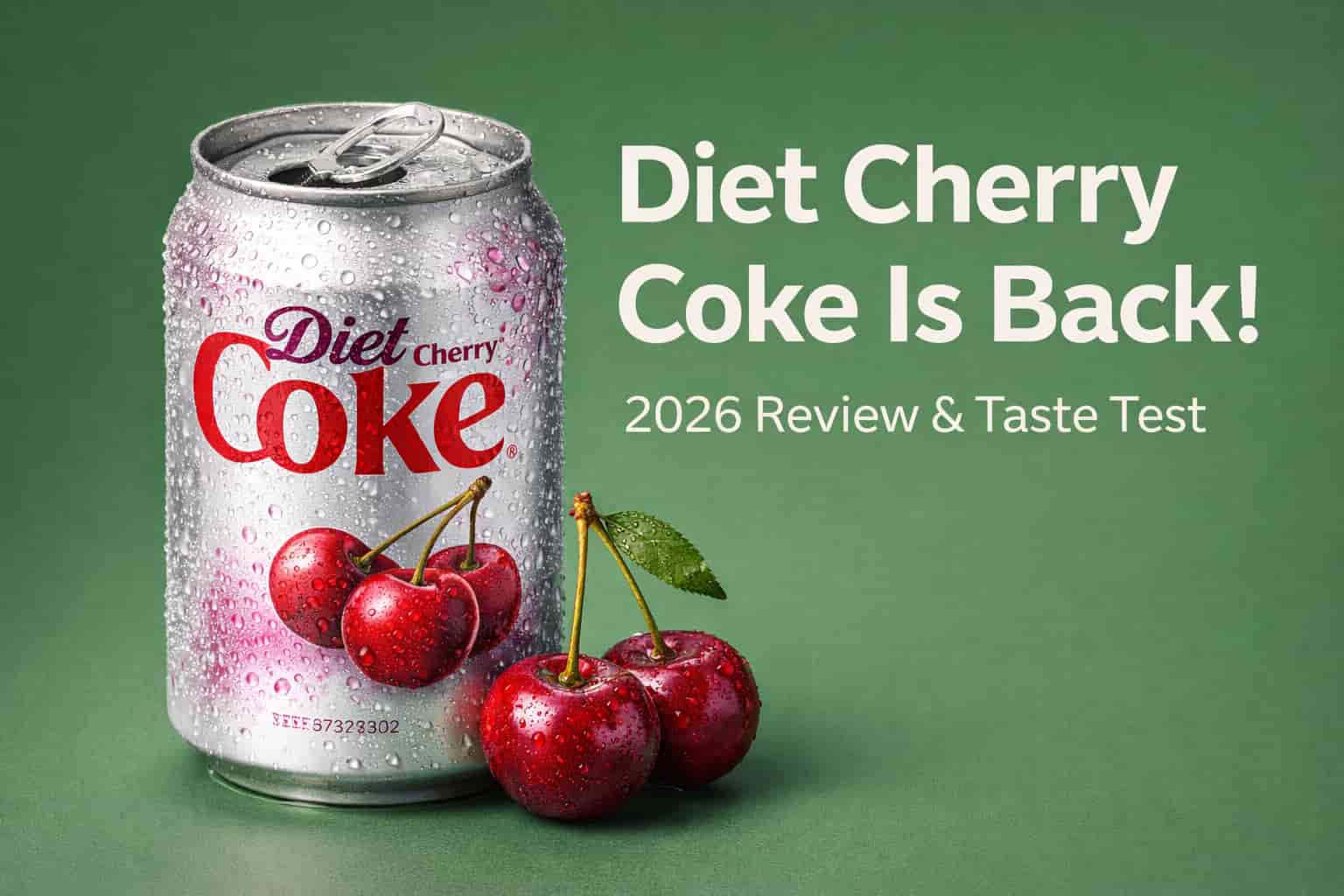
The Day a Can of Diet Cherry Coke Surprised Me Again
I didn’t expect diet cherry coke to hit me with nostalgia.
It was just another grocery run. I wasn’t even looking for it. But there it was—tucked between regular Diet Coke and a wall of energy drinks. A familiar silver can, that subtle hint of red, almost like it was waiting for someone who remembered.
I grabbed it without thinking.
The first sip? Crisp. Light. That cherry note wasn’t loud or syrupy—it was subtle, almost playful. And for a second, I was back in high school, sitting on a warm afternoon, sharing jokes with friends and pretending life wasn’t complicated.
That’s the thing about cherry diet coke—it’s not just a drink. It’s a feeling.
And apparently, I’m not alone. The 2026 comeback of diet coke with cherry isn’t random. It’s calculated. Smart. Nostalgic. People wanted it back, and Coca-Cola listened.
But here’s what surprised me most…
This isn’t just a “retro” relaunch. It actually tastes better. Cleaner. More balanced. Less artificial than I remembered.
So naturally, I went down the rabbit hole.
What’s in it?
Is it actually safe?
Why do some people swear by it over diet coke feisty cherry or even Cherry Coke Zero?
And maybe the bigger question—should you be drinking it daily?
Let’s break it all down.
The Deep Science Behind Diet Cherry Coke
What Exactly Is Diet Cherry Coke?
At its core, diet cherry coke is a zero-calorie, sugar-free soda built on the classic Diet Coke formula—but infused with cherry flavor.
But don’t confuse it with Cherry Coke Zero.
They’re not the same.
- Diet Cherry Coke → Light, crisp, slightly dry finish
- Cherry Coke Zero → Sweeter, heavier, closer to regular Coke
That difference comes from the base formula. Diet Coke has always had a unique flavor profile—less syrupy, more refreshing.
And honestly? That’s why fans are loyal.
Ingredient Breakdown (What You’re Actually Drinking)
Let’s simplify the label:
- Carbonated Water – The base. Nothing fancy.
- Caramel Color – For that classic cola look.
- Phosphoric Acid – Adds tanginess and bite.
- Aspartame – The main zero-calorie sweetener.
- Acesulfame Potassium (Ace-K) – Boosts sweetness and stability.
- Natural Flavors – Where the cherry magic happens.
- Caffeine – Usually 34–46mg per 12 oz.
So… is aspartame safe?
This is where things get interesting.
The FDA still considers aspartame safe within daily limits. That means if you’re not drinking 10+ cans a day, you’re well within a safe range.
But here’s the real-world take:
- Occasional use → Totally fine
- Daily moderate use → Still considered safe
- Excessive consumption → Not recommended
The “Crispy” Factor Everyone Talks About
If you’ve seen TikTok or Reddit threads, you’ve probably heard this:
“Diet Coke is crisp.”
Sounds weird, right?
But it’s real.
That “crispness” comes from:
- Higher carbonation perception
- Less syrupy sweetness
- Faster flavor finish
Now add cherry to that mix, and something interesting happens.
Diet cherry vanilla coke and cherry variants tend to feel slightly smoother—but still keep that sharp edge.
That balance is what makes people choose it over heavier alternatives.
Caffeine & Nutrition: Quick Reality Check
Here’s the honest breakdown per 12 oz can:
- Calories: 0
- Sugar: 0g
- Caffeine: ~34–46mg
- Fat: 0g
Compared to coffee?
- Coffee (8 oz): ~80–100mg caffeine
- Diet Cherry Coke: Less than half
So yes—it gives you a mild boost, but it won’t hit like espresso.
Why the 2026 Comeback Matters
This isn’t just a product returning.
It’s a strategy.
After disappearing in 2020, diet cherry coke built a kind of underground demand. When it came back briefly in 2025, it sold out fast—proving something important:
People didn’t just like it. They missed it.
Now in 2026, it’s officially a permanent product again.
And that taps into a bigger trend—nostalgia marketing.
People are tired of constant “new.” Sometimes, they just want what worked.
The 30-Day Experience Log (Real-Life Testing)
I decided to test diet cherry coke for 30 days.
Not as a replacement for water. Not as a “health hack.”
Just as a realistic, daily-life beverage.
Here’s what actually happened.
Week 1: The Honeymoon Phase
The first few days? Honestly, great.
- The taste felt refreshing, not overwhelming
- The cherry flavor didn’t get annoying
- It replaced my random sugary drink cravings
I also noticed something small but interesting.
That afternoon slump around 3 PM?
A cold can of kroger diet cherry coke (yes, I tracked different sources) gave just enough caffeine to stay focused—without jitters.
No side effects yet.
Week 2: The Routine Sets In
Now it became a habit.
Usually 1 can per day.
Sometimes 2.
Here’s what changed:
- I craved fewer sugary snacks
- I started associating it with “break time”
- The crispness still felt satisfying
But here’s a tiny downside.
There was a slight aftertaste on some days. Not strong, but noticeable if I paid attention.
That’s likely the aspartame + Ace-K combo.
Not a dealbreaker—but worth mentioning.
Week 3: The Reality Check
This is where things got more honest.
A few observations:
- Drinking it on an empty stomach? Not great
- Slight bloating after back-to-back cans
- Hydration didn’t improve (obviously—it’s not water)
Also, I started comparing it again.
I tried switching back to regular Diet Coke for a day.
It felt… flat.
That cherry layer actually adds something important. Without it, the drink feels incomplete.
Week 4: The Balanced Approach
By the final week, I adjusted naturally.
- 1 can per day max
- Mostly in the afternoon
- Water intake stayed separate
And that’s when it clicked.
Diet cherry coke works best as a treat—not a replacement.
It’s not meant to hydrate you.
It’s not meant to be your main drink.
But as a daily “reset moment”? It’s surprisingly effective.
Overall 30-Day Verdict
Pros:
- Light and refreshing
- lessens the need for sugar
- A consistent taste experience
Cons:
- little aftertaste of artificiality
- may result in bloating if ingested in excess.
- Too easy to rely on
The Ultimate Comparison: Diet Cherry Coke vs The Alternatives
Let’s get practical.
If you’re standing in a store, deciding between options, here’s what actually matters.
Diet Cherry Coke vs Cherry Coke Zero
Diet Cherry Coke:
- Lighter taste
- Crisp finish
- Less sweet
Cherry Coke Zero:
- Bolder flavor
- Sweeter profile
- Closer to regular Coke
👉 If you want refreshing → go Diet
👉 If you want indulgent → go Zero
Diet Cherry Coke vs Regular Soda
This one’s simple.
- Regular soda = sugar + calories
- diet cherry coke = none
But here’s the nuance.
Regular soda gives immediate satisfaction—but also crashes and long-term health concerns.
Diet versions remove calories, but introduce artificial sweeteners.
So it’s a trade-off.
Diet Cherry Coke vs Flavored Sparkling Water
Sparkling water is “cleaner.”
No sweeteners. No additives.
But also?
No satisfaction for soda lovers.
That’s why many people come back to diet coke with cherry—it hits that middle ground.
Where It Stands in 2026
With cherry flavors driving over 50% of cola growth recently, this category is exploding.
And diet cherry vanilla coke variations are only adding fuel to that trend.
So yes—this isn’t just hype.
It’s a real shift in what people want.
Common Mistakes & Side Effects of Diet Cherry Coke
Even though diet cherry coke is a fan favorite, there are some common pitfalls that people don’t talk about.
Mistake 1: Drinking It as a Replacement for Water
This is the biggest one.
I’ve seen it too often—people swapping water entirely for a can (or two) of diet coke feisty cherry.
Reality check:
- It’s zero-calorie, yes.
- But it won’t hydrate you the way water does.
- Over time, relying solely on soda can contribute to mild dehydration or mineral imbalance.
Mistake 2: Overconsuming for Caffeine
Each 12 oz can has 34–46mg of caffeine. Not much compared to coffee, but it adds up.
Drinking 4–5 cans a day? That’s nearly 200mg caffeine. For some, that can mean:
- Jitters
- Trouble sleeping
- Slight heart palpitations
Moderation is key.
Mistake 3: Ignoring Sweeteners
Aspartame and Ace-K are safe in moderation, but here’s the nuance:
Some people are more sensitive and may notice:
- Mild headaches
- Slight digestive upset
- Lingering aftertaste
If you fall into that category, one can a day is plenty.
Mistake 4: Choosing the Wrong Variant
There’s a big difference between diet cherry coke and diet cherry vanilla coke or Cherry Coke Zero Sugar.
- Want light, crisp, nostalgic taste → choose Diet Cherry Coke
- Want sweeter, closer-to-classic flavor → Cherry Coke Zero
- Want a vanilla twist → Diet Cherry Vanilla Coke
Knowing the difference saves disappointment.
Mistake 5: Expecting It to Solve Health Goals
No soda is a magic weight-loss or energy drink.
- Zero calories help if it replaces sugary drinks.
- But it won’t boost metabolism or suppress appetite like some online myths claim.
Treat it as a treat—not a health hack.
Expert FAQ About Diet Cherry Coke
Here are seven questions people search for most, answered clearly.
1. Is Diet Cherry Coke discontinued?
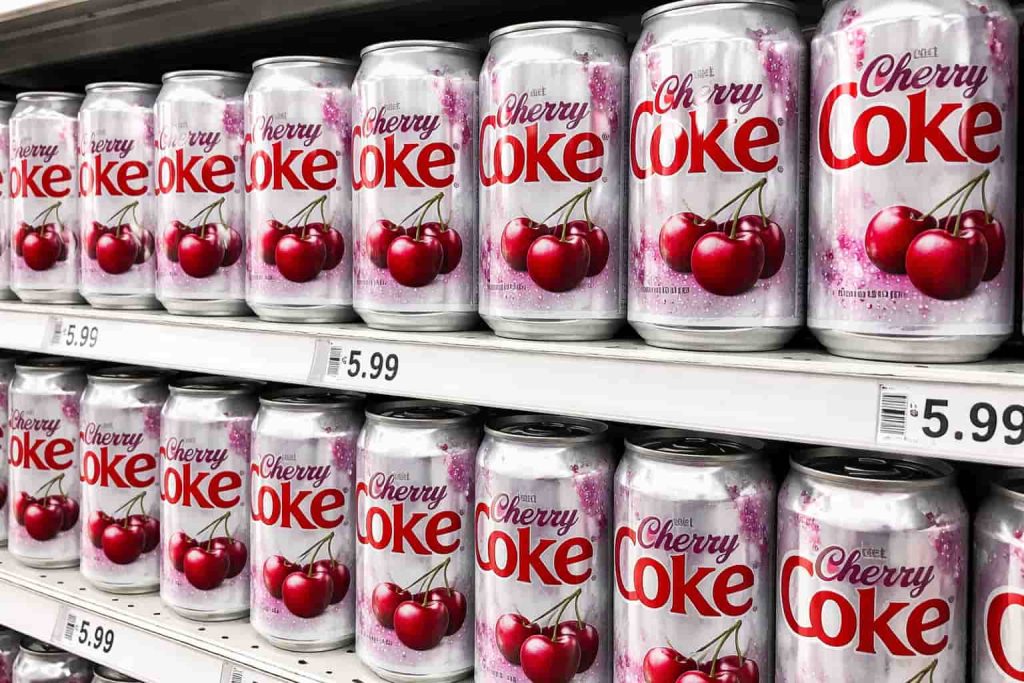
Nope. In 2026, it returned permanently. Major retailers across North America and Europe now stock it regularly.
2. What’s the difference between Diet Cherry Coke and Cherry Coke Zero?
Diet Cherry Coke has a crisp, airy sensation since it employs the lighter Diet Coke base. Cherry Coke Zero tastes similar to regular Cherry Coke but is sweeter.
- Diet Cherry Coke → Crisp, light, and slightly tart
- Cherry Coke Zero → Sweet, syrupy, and bold
3. Does Diet Cherry Coke have caffeine?
Yes. Usually between 34–46mg per 12 oz can. Less than coffee, but enough to feel mildly energized.
4. What sweeteners are used in Diet Cherry Coke?
Mainly Aspartame, sometimes blended with Ace-K for stability. Together, they provide sweetness without calories.
5. Is Diet Cherry Coke bad for you?
Not if consumed in moderation.
- Zero calories → safe for most
- Artificial sweeteners → safe within FDA limits
- Phosphoric acid → can affect tooth enamel if overconsumed
Moderation and regular dental hygiene are recommended.
6. Where can I buy Diet Cherry Coke in 2026?
Currently available in:
- Major supermarket chains (Kroger, Walmart, Target)
- Online retailers
- 12-pack cans, 20 oz bottles
- 2-liter versions are temporarily unavailable
7. Can you mix Diet Cherry Coke with alcohol?
Yes, it’s a popular mixer. Many cocktails benefit from the crisp cherry flavor. But remember: caffeine + alcohol can mask intoxication, so drink responsibly.
Read More Article : Green Tree Remedy: The Natural Reset Your Body Didn’t Know It Needed
My Final Thoughts
After 30 days of testing, tracking flavor, and measuring effects, here’s the verdict.
Why I recommend it:
- It’s pleasant, crisp, and nostalgic.
- It offers a calorie-free substitute for sugar-filled beverages.
- The cherry flavor gives a lighthearted, revitalizing touch.
- Accessible and adaptable
Potential drawbacks:
- For those with sensitive palates, a mild aftertaste
- Not a substitute for staying hydrated
- Consuming too much can have mild negative effects.
Who Should Try It
- Diet Coke enthusiasts looking for diversity
- People are cutting back on sugar but still craving soda.
- Those seeking nostalgia and a taste of the past
Who Should Avoid It
- People who are susceptible to artificial sweeteners
- Individuals with stomach problems brought on by carbonation
- Anyone whose primary source of hydration is soda
Overall Rating
Taste: 9/10; balanced, crisp, and cherry-forward
Accessibility: 8/10; commonly available but lacking 2L bottles
Health Impact: 7/10; check caffeine, sugars, and calories
Fun Factor: 10/10; nostalgic, lighthearted, fulfilling
Bottom Line:
Diet cherry coke is a great option if you’re searching for a beverage that is both nostalgic and contemporary. It’s not flawless, but that’s not usually the goal. It’s about having fun, indulging a little, and having a little nostalgia in a can.
So the next time you’re in the beverage section, pick one up, take a slow drink, and recall why you initially enjoyed it.
Disclaimer: This content is for informational purposes only and is not intended as medical advice.