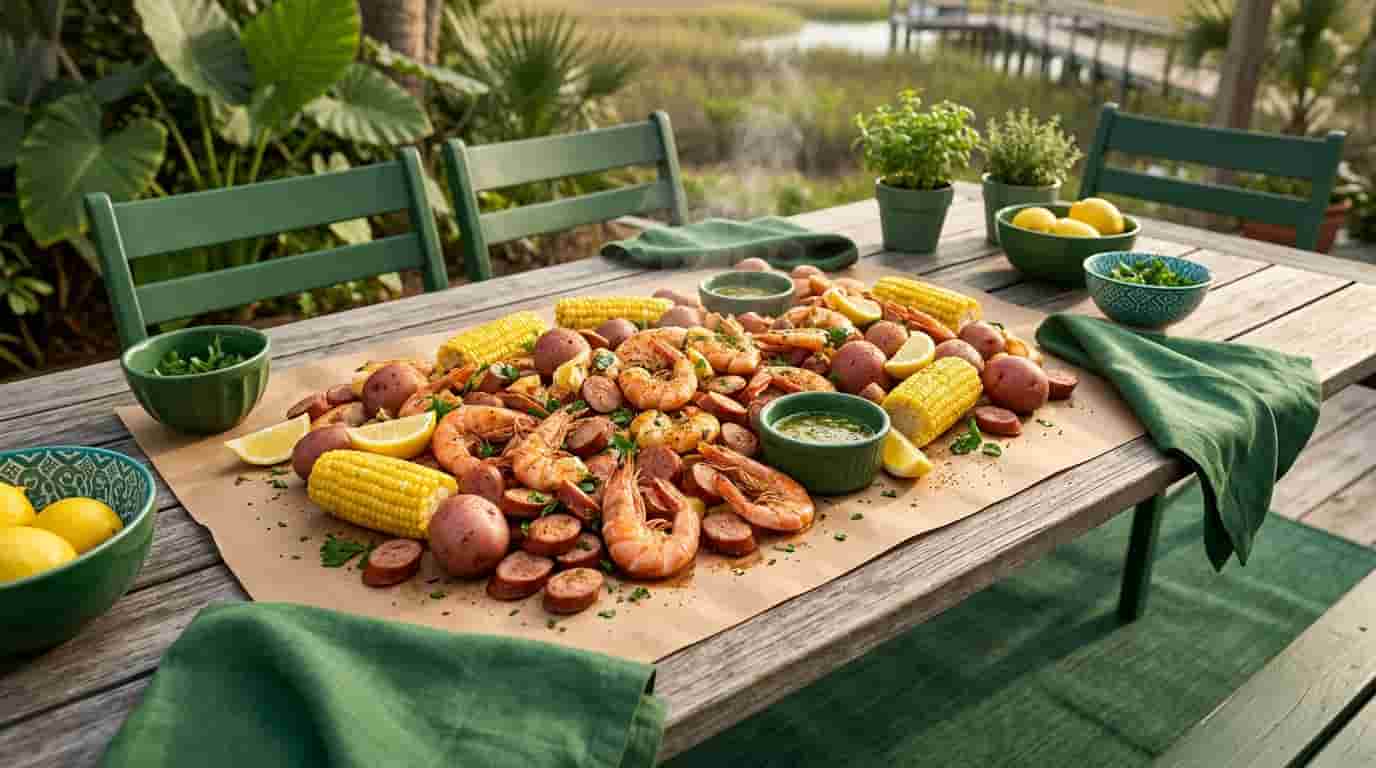
The first time I watched someone ruin a seafood boil, the shrimp went in with the potatoes. Twenty minutes later, those poor little things had the bounce and charm of pencil erasers. Here’s the good news: a memorable low country boil recipe isn’t difficult. You just need the right ingredients, a boldly seasoned broth, and one simple skill—adding everything in the correct order.
By the end of this guide, you’ll know exactly how long to cook the potatoes, corn, sausage, and shrimp, whether you’re feeding six relatives or half the neighborhood. This low country boil recipe gives you tender potatoes, sweet corn, juicy sausage, and properly cooked shrimp instead of an overdone seafood disaster.
What Is a Low Country Boil?
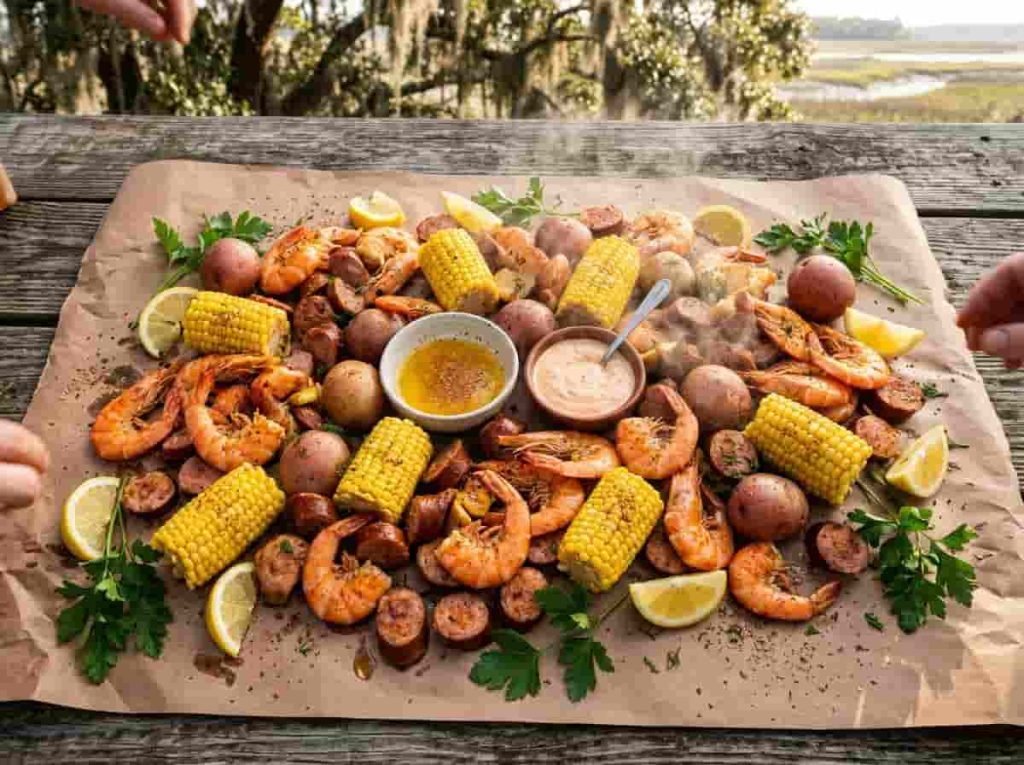
A Low Country boil is a one-pot Southern feast built around shrimp, smoked sausage, corn, and potatoes cooked in seasoned liquid. Once drained, the whole glorious pile is usually served on a platter or scattered across a paper-lined table.
No bowls required. Barely any forks, either.
The dish is social by design. Everyone gathers, peels shrimp, reaches for corn, and debates who took the last piece of sausage. That casual style makes a low country boil recipe perfect for cookouts, reunions, tailgates, graduation parties, and beach-house dinners.
From Frogmore Stew to Beaufort Boil
You may hear this dish called Frogmore stew, Beaufort stew, Beaufort boil, shrimp boil, or simply Lowcountry boil. Frogmore isn’t an ingredient, and no frogs are involved—thank goodness.
Frogmore is a community on St. Helena Island near Beaufort, South Carolina, where the dish is closely tied to local coastal cooking. South Carolina’s official tourism site also identifies Frogmore stew as another name for Lowcountry boil or Beaufort stew.
The precise origin story is a little fuzzy. Some accounts connect the meal to local shrimping families, while others point to broader Gullah Geechee and coastal culinary traditions. What’s clear is that shrimp, sausage, corn, and potatoes became a practical way to feed a crowd using one large pot.
That simplicity still matters. A traditional low country boil recipe doesn’t require fancy knife skills, expensive cookware, or six burners running at once.
Low Country Boil vs. Cajun Seafood Boil
They’re cousins, not twins.
A Carolina-style low country boil recipe usually keeps the ingredient list focused and the heat moderate. Old Bay seasoning brings celery-salt savoriness, paprika, herbs, and gentle peppery warmth. McCormick describes its classic blend as a combination of celery salt, herbs and spices, and paprika.
A Louisiana or Cajun seafood boil may lean harder into cayenne, hot sauce, crawfish, and a more aggressively spicy broth. It may also be finished with a heavily seasoned butter sauce.
There’s plenty of overlap, of course. Southern cooks aren’t filling out paperwork before seasoning dinner.
Essential Ingredients for the Perfect Low Country Boil
The ingredient list is short, but each part has a job. Potatoes bring comfort. Corn brings sweetness. Sausage adds smoke and richness. Shrimp makes the meal feel like a celebration.
For this low country boil recipe, quality matters more than a long shopping list.
The Flavorful Cooking Liquid and Aromatics
Plain water works, but I like giving the broth a head start. Use water as the main cooking liquid, then add a bottle of light lager or a few cups of chicken stock.
Build the broth with:
- Old Bay seasoning or another seafood boil seasoning
- Smashed garlic cloves
- Halved lemons, squeezed into the pot
- Sweet onion wedges
- Bay leaves
- A splash of light beer or stock
Taste the broth before adding the food. It should seem slightly over-seasoned because the potatoes, corn, sausage, and shrimp absorb only part of that flavor.
Don’t sip half a cup unless you enjoy drinking salty lemon soup. A small spoonful will tell you enough.
How Much Old Bay Should You Use?
For about 4 quarts of cooking liquid, start with ⅓ to ½ cup of Old Bay seasoning, depending on your salt preference. You can always sprinkle more over the drained boil or place the seasoning on the table.
Using a concentrated seafood boil mix? Read the package instructions. Some blends contain much more salt or chile than others.
For a milder low country boil recipe, begin conservatively and serve extra seasoning on the side. It’s much easier to add spice than to convince your guests that burning lips are part of the experience.
Choosing the Best Shrimp and Sausage
Buy jumbo raw shrimp—roughly 16/20 or 21/25 count per pound—with the shells still attached. The shells help protect the delicate meat during cooking and contribute flavor to the seasoned liquid.
Deveined, shell-on shrimp save preparation time while preserving the classic peel-and-eat experience.
Fresh coastal shrimp are lovely when available, but properly thawed frozen shrimp work well too. Keep them refrigerated until the final minutes because shrimp cook faster than nearly everything else in the pot.
For smoked sausage, choose:
- Andouille: smoky, garlicky, and pleasantly spicy
- Kielbasa: mild, juicy, and family-friendly
- Smoked chicken or beef sausage: useful for guests avoiding pork
Cut the sausage into thick 1- to 1½-inch pieces. Thin slices can dry out, split apart, or disappear underneath a potato avalanche.
Red Potatoes and Fresh Corn on the Cob
Small red potatoes are my first choice because their waxy flesh holds together better than floury baking potatoes. Leave tiny potatoes whole. Halve larger ones so everything cooks at roughly the same speed.
Try to select potatoes of similar size. One giant potato hiding among a pile of small ones can remain hard in the center long after the others are tender.
Fresh corn on the cob delivers the best sweetness and crunch. Shuck each ear and cut it into two or three manageable pieces.
Frozen corn can also work in this low country boil recipe, but it needs less cooking time. Add it shortly before the shrimp rather than boiling it alongside the potatoes.
Low Country Boil Staggered Cooking Timeline
This is the part that saves dinner.
The rule is simple: firm ingredients first, delicate seafood last. Food Network recipes and South Carolina cooking guidance consistently place potatoes ahead of corn and shrimp, with shrimp commonly cooking for only about 1½ to 4 minutes depending on their size and the temperature of the pot.
The Correct Boiling Order
| Elapsed Time | Add to the Pot | Approximate Cooking Time |
|---|---|---|
| 0 minutes | Small red potatoes and onion | 12–15 minutes |
| 8–10 minutes | Smoked sausage | 5–7 minutes |
| 10 minutes | Fresh corn pieces | 5–7 minutes |
| 15 minutes | Raw jumbo shrimp | 2–3 minutes |
This low country boil recipe uses elapsed time as a guide, but ingredient size matters. Large potatoes take longer than tiny ones. Frozen corn cooks faster than fresh corn. A crowded pot also takes longer to return to a simmer.
Use the clock, but watch the food.
How Long Do You Boil Shrimp, Corn, and Potatoes?
For a typical low country boil recipe, boil small red potatoes for about 12 to 15 minutes total, fresh corn for 5 to 7 minutes, and jumbo shrimp for only 2 to 3 minutes.
Start checking the potatoes with a thin knife at the 12-minute mark. The blade should slide into the center without much resistance, but the potato shouldn’t split or collapse.
Shrimp are done when they look opaque, pink, and gently curled. Don’t wait for them to form tight little circles. That usually means they’ve cooked too long.
Federal food-safety guidance lists 145°F as the safe minimum internal temperature for fish and shellfish. Consumer seafood guidance also advises cooking shrimp until the flesh becomes pearly or opaque.
Here’s my practical move: turn off the burner as soon as the shrimp look nearly done, let them sit in the hot broth for about one minute, and then drain everything immediately.
Fast hands beat rubbery shrimp. Every time.
Step-by-Step Low Country Boil Recipe
This low country boil recipe serves about 6 people generously. Eight can eat if you add side dishes—or if Uncle Mike doesn’t treat the shrimp pile like his personal property.
Equipment You’ll Need
Use a 12- to 16-quart large stockpot for an indoor batch. For a bigger outdoor gathering, a 30-quart pot with a removable basket and an outdoor turkey fryer burner makes draining much easier.
You’ll also need long-handled tongs, a wire skimmer, a colander, and heat-resistant gloves.
Ingredients
- 4 quarts water
- 12 ounces light lager or 2 cups chicken stock
- ⅓ to ½ cup Old Bay seasoning
- 1 large sweet onion, cut into wedges
- 1 lemon, halved
- 6 garlic cloves, smashed
- 2 bay leaves
- 1½ pounds small red potatoes
- 1 pound Andouille or Kielbasa, thickly sliced
- 4 fresh corn cobs, halved
- 2 pounds raw shell-on jumbo shrimp
- Chopped parsley and lemon wedges for serving
Preparing the Seasoned Broth
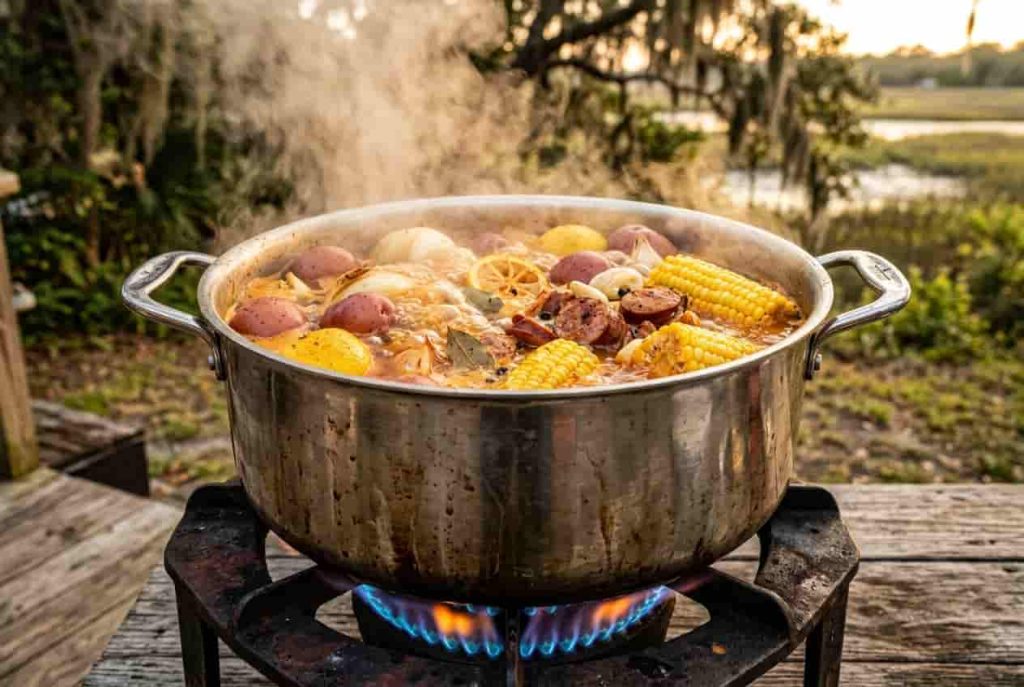
Pour the water and beer or stock into the pot. Add the Old Bay, onion, lemon, garlic, and bay leaves, then bring everything to a strong boil.
Let the broth bubble for about five minutes before adding the potatoes. That quick simmer wakes up the aromatics and gives the seafood boil seasoning time to spread through the liquid.
Staggering the Ingredients
Add the potatoes and cook for 8 to 10 minutes. Drop in the sausage and corn, then continue cooking for another 5 to 7 minutes.
Finally, add the shrimp. Stir gently and cook for 2 to 3 minutes, just until the flesh turns opaque and the shrimp curl loosely.
Turn off the heat immediately.
Straining and Serving
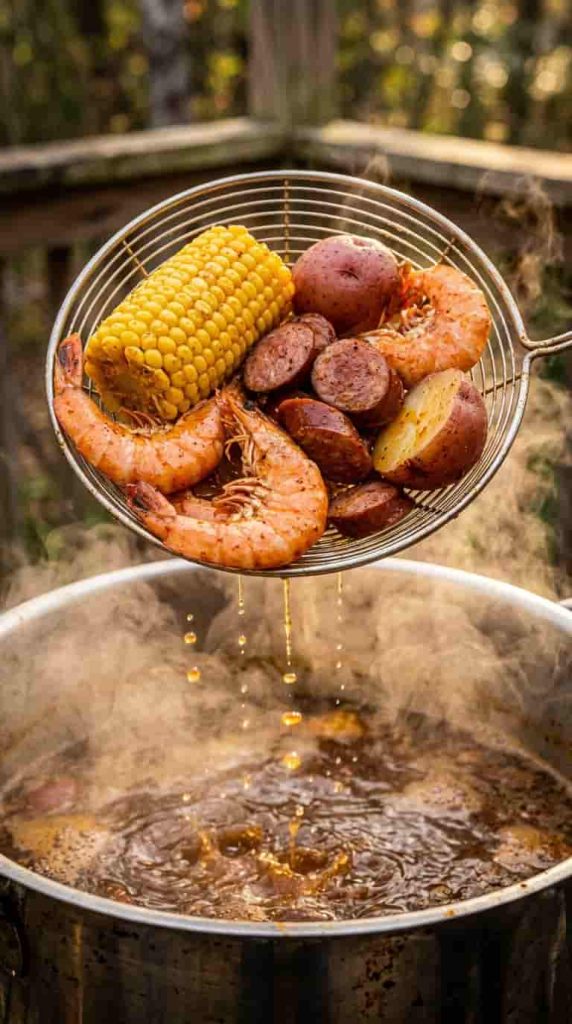
Lift out the basket or carefully drain the pot through a large colander. Shake off excess liquid, but don’t let dinner sit in the hot broth while you arrange the napkins.
Spread the boil over food-safe butcher paper or transfer it to oversized platters. Finish with parsley, lemon juice, and an extra dusting of Old Bay.
The Ultimate Cajun Garlic Butter Dipping Sauce
Homemade Garlic Butter Drizzle
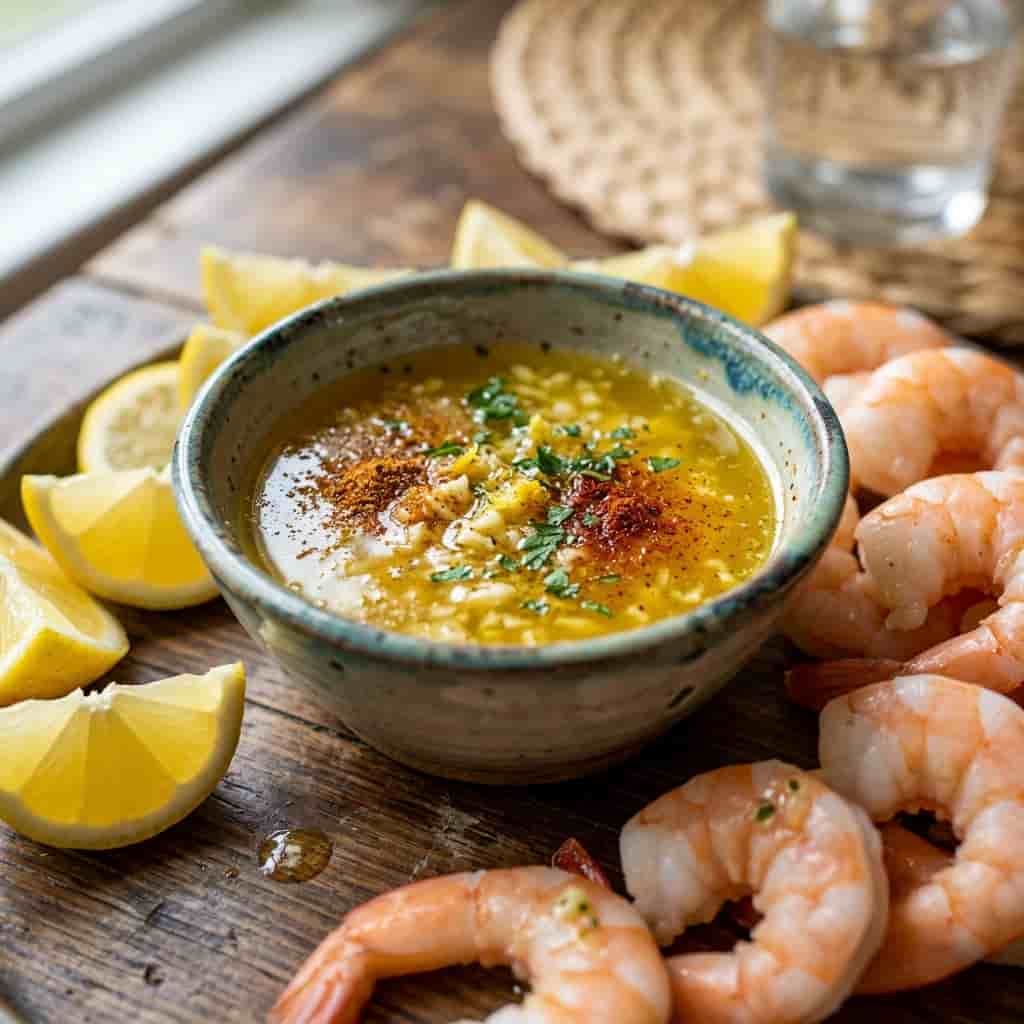
Melt 1 cup of unsalted butter over low heat. Add four minced garlic cloves and cook for about one minute without browning them.
Stir in:
- 1 teaspoon Old Bay seasoning
- ½ teaspoon Cajun seasoning
- 1 tablespoon fresh lemon juice
- 1 tablespoon chopped parsley
- A few drops of hot sauce, if desired
Serve the garlic butter dipping sauce warm beside the shrimp, corn, and potatoes. You can also drizzle a little over the drained boil, but don’t drown everything. The ingredients should still taste like themselves.
Two Easy Sauce Alternatives
For cocktail sauce, mix ketchup, prepared horseradish, lemon juice, and Worcestershire sauce.
For spicy mayo, combine mayonnaise, hot sauce, lemon juice, and a pinch of seafood seasoning. Done. No culinary gymnastics required.
Crowd Calculator and Portion Guide
Plan on roughly ⅓ pound of shell-on shrimp per adult when sausage, potatoes, corn, and sides are included. Increase that to ½ pound for seafood-loving guests.
| Guests | Shrimp | Sausage | Potatoes | Corn |
|---|---|---|---|---|
| 4–6 | 2 pounds | 1 pound | 1½ pounds | 4 cobs |
| 10–12 | 4 pounds | 2½ pounds | 3 pounds | 8 cobs |
| 20–24 | 8 pounds | 5 pounds | 6 pounds | 16 cobs |
Scaling for 20 or More Guests
Use a 40- to 60-quart outdoor pot, depending on the amount of cooking liquid and seafood. Don’t pack it to the rim.
Two controlled batches are better than one dangerously overloaded pot. Keep the first batch warm in covered foil pans while the second cooks, but avoid leaving the shrimp sitting over direct heat.
How to Host and Serve a Low Country Boil Party
Setting Up the Table
Cover the table with food-safe butcher paper rather than printed newspaper touching the food. Place empty bowls around the table for shrimp shells, plus plenty of napkins, seafood picks, and wet towels.
Serve the sauces in small bowls so guests aren’t passing one buttery container over everybody’s sleeves.
Best Southern Side Dishes
You don’t need ten side dishes. Choose two or three:
- Crispy hush puppies
- Creamy coleslaw
- Sweet cornbread
- Sliced watermelon
- Pickles
- Ice-cold sweet tea
Leftovers, Storage, and Reheating
Move leftovers into shallow, covered containers and refrigerate them promptly. USDA guidance says perishable food shouldn’t remain out for more than two hours—or one hour when the outdoor temperature is above 90°F—and cooked leftovers should generally be eaten within three to four days.
Reheating Without Rubbery Shrimp
Separate the shrimp from the potatoes and sausage when possible. Reheat the firmer ingredients first, then add the shrimp near the end.
For the oven method, place everything in a foil packet with a spoonful of butter or broth. Heat at 350°F until thoroughly hot. A covered skillet over medium-low heat also works well.
USDA recommends reheating leftovers to 165°F throughout.
The microwave is convenient, but shrimp can turn rubbery quickly. Use short intervals at reduced power if it’s your only option.
Read:15 Easy Finnish Recipes at Home (30-Min Comfort Food)
Frequently Asked Questions
Can I use frozen shrimp or frozen corn?
Yes. Thaw frozen shrimp overnight in the refrigerator, drain them well, and add them during the final 2 to 3 minutes. Frozen corn can go into the pot about 3 to 4 minutes before the shrimp.
Can I make a Low Country Boil in the oven or slow cooker?
You can make an oven version in tightly covered roasting pans, although it won’t have quite the same boiled texture. A slow cooker works for potatoes, corn, and sausage, but add separately cooked shrimp at the end so they don’t become rubbery.
Can I add crab legs, clams, or crawfish to this recipe?
Yes. Add precooked crab legs during the final 5 to 7 minutes, cleaned clams about 5 minutes before serving, and live crawfish before the shrimp. Discard any clams that remain closed after cooking.
This low country boil recipe is messy, generous, and almost impossible to eat politely. That’s exactly the point. Get the boiling order right, keep the shrimp cooking time short, and let the table take care of the rest.
Please wait to go to the next post: 30 seconds
Go to Next Post