
The Bacon Diet sounds simple: eat bacon, reduce carbohydrates, and lose weight.
The idea has garnered attention because bacon is a highly suitable food for ketogenic and low carbohydrate diets. Flavourful, easy to make/buy, satiating and low in carbohydrates.
But bacon does not burn fat.
Bacon has been a processed meat packed with sodium, saturated fat, and full of calories. You can include a little in a balanced low-carb meal plan, but base your meals around bacon and you’ve got some nutritional problems.
Bacon finds its true calling paired with sources of protein, vegetables (dear god yes), fiber and healthy fats.
Low-carb diets are an effective option for some people to eliminate refined carbohydrates and feel less hungry. And a diet for weight loss that is heavy in bacon may do just the opposite by increasing processed meat consumption, decreasing fiber and making caloric control more difficult.
This guide explains what the Bacon Diet is, how it works? What are the benefits, and risks of the diet itself and tips on how to get any bacon benefit from better keto eating without making keto eating a process food meal.
Quick Answer
The Bacon Diet is an informal way of describing a high-fat, very-low-carbohydrate diet that features bacon often.
Bacon could be a good fit for a ketogenic diet because plain bacon is very low in carbohydrate. But bacon itself, does not induce ketosis or directly burn body fat.
Otherwise, no matter how much weight you lift and the plan or methods you adopt; your results will come to this vital truth — which is weight loss relies on one thing: Calories in Vs calories out.
A healthier bacon-based approach includes:
- Moderate bacon portions
- Adequate protein
- Non-starchy vegetables
- Fiber-rich foods
- Unsaturated fats such as olive oil and avocado
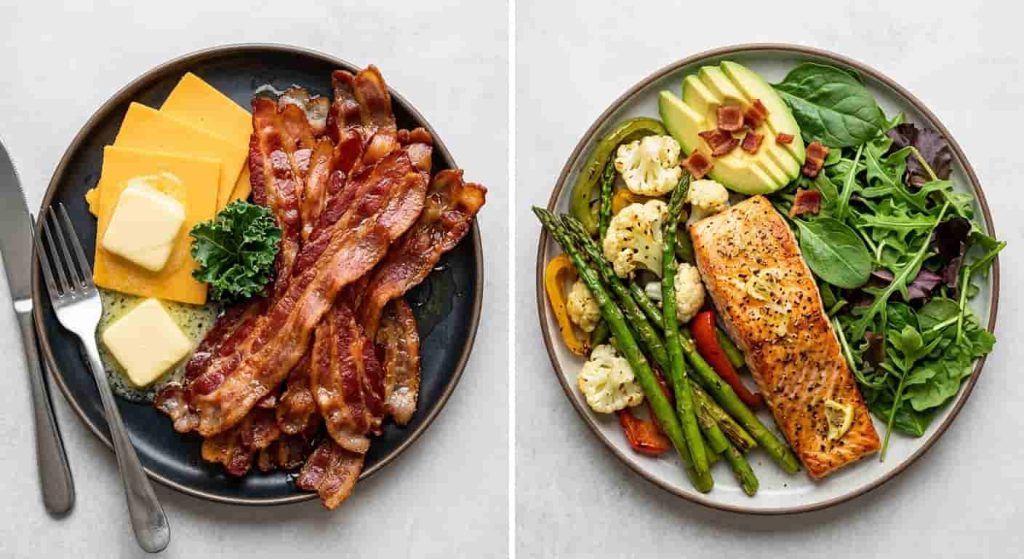
A diet based mainly on bacon, butter, cheese, and cream may produce ketosis but can still be nutritionally poor.
What Is the Bacon Diet?
There is no medically recognized program called the Bacon Diet.
The term usually describes a bacon-focused version of:
- Ketogenic diets
- Low-carbohydrate diets
- Carnivore-style eating
- Paleo-inspired diets
- High-fat eating plans
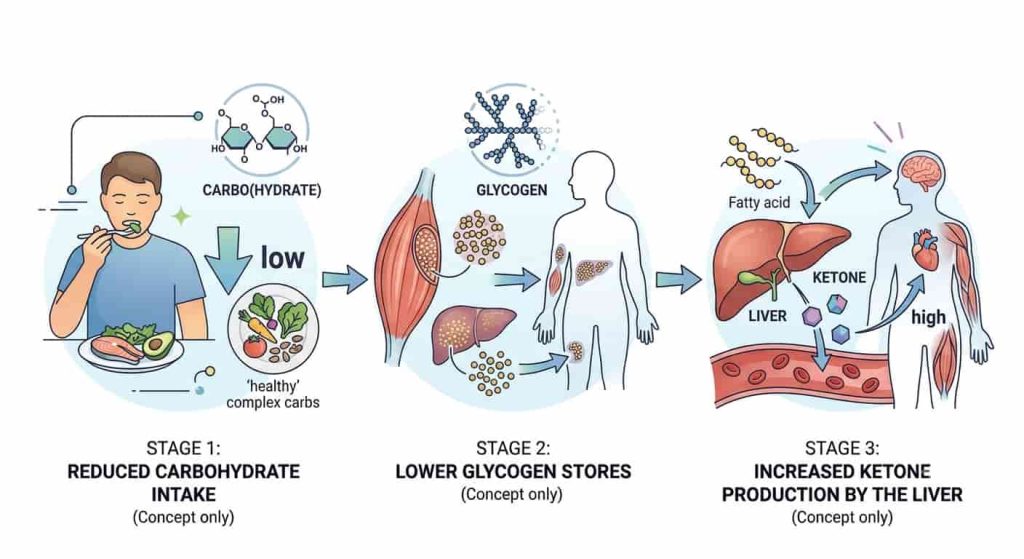
Typical ketogenic diets limit carbohydrates intake to 20-50 grams/day. As we reduce carbohydrates, the body will exhaust glycogen reserves and increase fat breakdown. The liver subsequently generates ketone bodies, which act as an energy source.
be done using sugar called nutritional ketosis.
As bacon is very low in carbohydrate, it can be included into this pattern. Bacon is not a cause of ketosis.
Reducing carbohydrate intake does.
Someone can also eat bacon for breakfast, lunch and dinner every day without getting into ketosis as long as the amount of carbohydrates from:
- Bread
- Sweetened drinks
- Desserts
- Sauces
- Processed snacks
The name “Bacon Diet” can therefore be misleading. The metabolic effect comes from carbohydrate restriction, not from bacon itself.
Is Bacon a High-Protein Food?
Bacon has protein, but it is not a very effective source of protein.
Whether bacon is high in fat or protein is not accurate. A regular slice with cheese contains about 4 to 7 grams of protein, depending on thickness and preparation.
It takes a lot of bacon to get just 25–30 grams of protein, which also comes with:
- Sodium intake
- Saturated fat intake
- Total calories
More protein-efficient choices include:
| Food | Why it may be better |
|---|---|
| Chicken breast | High protein, low fat |
| Fish | Protein plus omega-3 fats |
| Shrimp | High protein, low calorie |
| Greek yogurt | Protein and calcium |
| Cottage cheese | Slow-digesting protein |
| Eggs | Complete protein source |
| Tofu | Plant-based protein |
| Tempeh | Protein plus fiber |
Adult protein intake recommendations generally suggest 0.8 grams per kilogram of body weight each day. This is a bare minimum, not the ideal level for athletes, older adults or people who are cutting bodyfat.
Protein needs depend on:
- Age
- Body size
- Activity level
- Health status
- Fitness goals
Bacon as a Supporting Ingredient
For example:
For example:
✔️ eggs + spinach + avocado + 2 strips of bacon
is a more balanced meal than:
❌ 6 strips of baconP— Our protein source instead
How the Bacon Diet Creates Ketosis
1. Lower Carbohydrate Intake
The body relies on stored glycogen for energy when carbohydrates are depleted.
Glycogen is stored with water. Your body releases a bit of stored water as glycogen levels drop.
That’s why many see fast weight loss within the first week of keto.
The majority of early change, however, is water loss rather than fat loss.
2. Lower Insulin Levels
Decreased carb consumption usually results in lowered insulin levels.
Stored fatty acids are freed from fat cells under lower insulin. Some of these fatty acids are also converted by the liver into ketones, including beta-hydroxybutyrate.
These ketones can fuel:
- The brain
- Muscles
- Other tissues
In fact, while bacon adds fats to this process, it is not special fat-burning properties.
Nutritional Ketosis vs Diabetic Ketoacidosis
These are two entirely different conditions.
Nutritional Ketosis
This is a kind of controlled metabolic state that comes from moderate carbohydrate restriction.
Blood pH is normal and ketone production is at physiological levels
Diabetic Ketoacidosis (DKA)
DKA is an acute medical condition due to the production of high levels of ketone bodies, dehydration and inadequate insulin.
I would say worst affected group would be people with Diabetes.
Warning signs include:
- Vomiting
- Confusion
- Rapid breathing
- Severe weakness
- Dehydration
- Very high ketone levels
These symptoms require immediate medical assistance in persons with diabetes.
Does Bacon Burn Body Fat?
No.
Bacon does not directly burn stored body fat.
The body burns fat depending on overall energy balance.
If someone eats large amounts of:
- Bacon
- Butter
- Cream
- Cheese
- Oils
the body may mainly burn the dietary fat they recently consumed rather than stored body fat.
Ketosis does not automatically equal fat loss.
A person can be in ketosis while:
- Losing weight
- Maintaining weight
- Gaining weight
For fat loss, total calorie intake still matters.
Why the Bacon Diet May Reduce Hunger
Bacon combines:
- Fat
- Protein
- Salt
- Strong flavor
And this combination can make a meal quite filling.
Eating more protein and fat—compared to meals that are high in refined carbohydrates—might keep some people feeling fuller for longer.
Most who do such plans experience a reduced food consumption because the cravings simply lessen.
Some can continue to eat the same amounts and lose weight, No change
Portion control remains important.
A practical strategy:
- Cook a planned serving
- Put it on your plate
- Avoid eating directly from the pan
Where Bacon Can Help
Makes Low-Carb Meals More Enjoyable
Diet adherence matters.
A diet that is difficult to follow rarely works long term.
A small amount of bacon can improve meals such as:
- Eggs with vegetables
- Salads
- Soups
- Roasted vegetables
It can help replace foods like:
- Sweet pastries
- Sugary cereals
- Refined snacks
The benefit comes from improving the meal, not from unlimited bacon.
Makes Carbohydrate Tracking Easier
Plain bacon usually contains very little carbohydrate.
This makes it easier for people following keto to track their intake compared with foods like:
- Granola
- Flavored yogurt
- Oatmeal
- Bakery products
However, sweetened bacon varieties may contain added sugars.
Always check the label.
Helps Vegetables Taste Better
One of bacon’s most useful roles is improving the taste of vegetables.
Small amounts can add flavor to:
- Spinach
- Broccoli
- Brussels sprouts
- Cabbage
- Mushrooms
- Zucchini
- Cauliflower
The goal is to use bacon to increase vegetable intake, not use vegetables to justify excessive bacon.
How Bacon Fits Into Keto, Paleo, and High-Protein Diets
Bacon on a Ketogenic Diet
Bacon can fit into a ketogenic diet because plain bacon is usually very low in carbohydrates.
However, a healthy keto diet is not built around bacon. It should include a variety of nutrient-rich foods such as:
- Fish
- Poultry
- Eggs
- Non-starchy vegetables
- Olive oil
- Avocado
- Nuts and seeds
Examples of balanced keto meals:
- Eggs with spinach, mushrooms, and two bacon strips
- Chicken salad topped with small bacon pieces
- Salmon with roasted Brussels sprouts
- Lettuce wraps with turkey, avocado, and bacon
- Cauliflower soup with bacon garnish
A weaker version of keto often relies heavily on:
- Bacon
- Butter
- Heavy cream
- Cheese
- Processed keto snacks
Both approaches may produce ketosis, but they are not equally nutritious.
Bacon on a Paleo Diet
Paleo-style diets focus on foods believed to resemble traditional eating patterns:
- Meat
- Fish
- Eggs
- Vegetables
- Fruits
- Nuts
- Seeds
Bacon creates debate among paleo followers because it comes from pork but is usually processed through:
- Curing
- Salting
- Smoking
- Preserving methods
Some people choose bacon with:
- Minimal ingredients
- No added sugar
- Fewer additives
Others avoid it because processed meats do not fit their interpretation of paleo eating.
Calling bacon “ancestral” does not remove the fact that it is still processed meat.
Bacon in High-Protein Diets
A high-protein diet does not require very low carbohydrate intake.
People increase protein for reasons such as:
- Muscle maintenance
- Exercise recovery
- Fat loss
- Healthy aging
- Better appetite control
Bacon can improve flavor, but it should not be the primary protein source.
Compare these two breakfasts:
Bacon-heavy breakfast
- Six bacon strips
- Coffee with cream
Balanced breakfast
- Two eggs
- Egg whites
- Two bacon strips
- Vegetables
- Avocado
The second option provides:
- More protein
- More nutrients
- More food volume
- Better overall balance
Watch for Hidden Sugar in Bacon
Not all bacon is carbohydrate-free.
Some products contain added sweeteners such as:
- Maple syrup
- Brown sugar
- Honey
- Molasses
- Dextrose
- Cane sugar
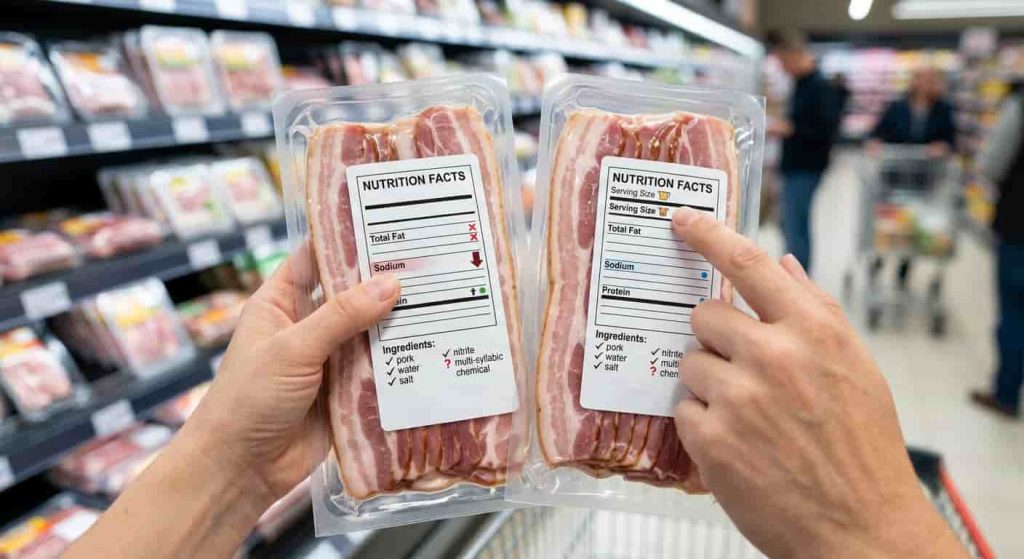
A package may display zero grams of sugar because nutrition labels allow very small amounts to be rounded down.
This does not mean a small amount of sugar will automatically stop ketosis.
It means serving size matters.
Always check:
- Ingredient list
- Serving size
- Total carbohydrates
A person eating six slices consumes much more than someone eating one slice.
The Main Health Risks of the Bacon Diet
1. Bacon Is Processed Meat
Bacon is classified as processed meat because it is preserved through methods such as:
- Curing
- Smoking
- Salting
International Agency for Research on Cancer (IARC) identifies processed meat as a carcinogen linked with colorectal cancer.
Studies suggest that if you eat 50 grams of processed meat a day the risk of having colorectal cancer is higher compared to non-consumers.
Of course, this does not mean that bacon (or eating meat) occasionally is what causes cancer.
Risk depends on:
- Amount consumed
- Frequency
- Overall diet
- Lifestyle factors
A few slices occasionally are very different from eating large amounts every day for years.
How Much Is 50 Grams of Bacon?
The amount varies depending on:
- Brand
- Thickness
- Cooking method
For some products, 50 grams may equal around four cooked slices.
The most accurate method is checking the package weight.
Do not judge portions only by appearance.
2. Saturated Fat Can Add Up Quickly
Bacon contains several types of fat, including:
- Saturated fat
- Monounsaturated fat
- Polyunsaturated fat
Some people argue that bacon contains oleic acid, the same type of fat found in olive oil.
However, bacon and olive oil are not nutritionally equivalent.
Olive oil contains:
- No processed meat compounds
- Very little sodium
- Mostly unsaturated fat
Bacon also contains:
- Sodium
- Saturated fat
- Processing-related compounds
The American Heart Association recommends limiting saturated fat intake, especially for people trying to lower LDL cholesterol.
Foods like bacon, butter, cheese, and fatty meats can quickly increase saturated fat intake.
3. LDL Cholesterol and ApoB May Increase
Some people following ketogenic diets experience:
- Lower triglycerides
- Higher HDL cholesterol
In some cases, however, this may come at the expense of a rise in LDL cholesterol and ApoB.
By no means should an increase in LDL-C or ApoB go unnoticed.
A lower triglyceride or a lower total VLDL value would not preclude other risk factors for cardiovascular disease.
The high-fat diet should be monitored according to the blood markers, not an assumption that it heals.
4. Sodium Intake Can Become High
Bacon is very high in sodium.
When you first start out on a ketogenic diet, sodium loss is increased as insulin levels decline and the kidneys excrete more.
Bacon, however, is not the way to plan among electrolytes.
The recommended sodium intake is currently less than 2,300 mg per day by the FDA.
People with:
- High blood pressure
- Kidney disease
- Heart failure
- Fluid retention problems
should be especially careful with high-sodium foods.
5. Fiber Intake May Become Too Low
Bacon contains no fiber.
This bacon-centric eating often takes the place of fibre-filled foods, including:
- Vegetables
- Fruits
- Legumes
- Whole grains
Possible causes of low fiber are:
- Constipation
- Reduced gut microbiome diversity
- Poor digestive health
Low-carb fiber sources include:
- Leafy greens
- Broccoli
- Cauliflower
- Avocado
- Chia seeds
- Flaxseed
- Almonds
- Mushrooms
- Zucchini
Slowly increase your fiber to help decrease an upset stomach.
6.Nutrient Gaps Can Develop
Eating only bacon could lack in:
- Vitamin C
- Potassium
- Magnesium
- Folate
- Fiber
- Plant compounds
A low-carb diet does not mean a healthy diet.
There is no denying that a healthy ketogenic diet still needs food diversity.
How to Choose Better Bacon
Check the Nutrition Label
Look at:
- Serving size
- Calories
- Protein
- Total fat
- Saturated fat
- Sodium
- Added sugar
Do not compare products using different serving sizes.
A bacon package may appear healthier simply because the serving size is smaller.
Read the Ingredient List
Common bacon ingredients include:
- Pork
- Water
- Salt
- Sugar
- Smoke flavor
- Sodium nitrite
- Sodium erythorbate
Shorter ingredient lists are easier to read, but they still don’t make bacon nutritious.
Portion size and frequency still count.
Is Uncured Bacon Healthier?
Not necessarily.
Many “uncured” bacon products use celery powder or celery juice, which naturally contain nitrates.
During processing, nitrates can convert into nitrites.
The difference is the source of the nitrate, not necessarily the final chemistry.
“Uncured” does not automatically mean:
- Nitrate-free
- Low sodium
- Healthier
Do Organic and Natural Labels Matter?
These labels describe certain production methods, not overall nutritional quality.
Organic bacon may still contain:
- High sodium
- Saturated fat
- Processed meat
“Natural” does not automatically mean:
- Low calorie
- Heart healthy
- Better for weight loss
Marketing terms should not replace nutrition facts.
Is Turkey Bacon Better?
Sometimes, but not always.
Turkey bacon may contain less fat than some pork bacon products.
However, it can still be:
- Highly processed
- High in sodium
- Low in fiber
Compare products by:
- Protein
- Calories
- Sodium
- Saturated fat
- Added sugar
The word “turkey” does not automatically make a product healthy.
Does the Bacon Diet Work for Weight Loss?
Yes, if that makes calories lower.
For others, a bacon-centric low carb diet may work because of:
- Reduce hunger
- Reduce refined carbohydrates
- Improve meal satisfaction
- Reduce snacking
But weight loss can halt when portions grow larger.
There are several common reasons you may experience a plateau in your keto weight loss, such as:
- Larger bacon portions
- Too much cheese
- Excess cream in coffee
- Frequent keto desserts
- Eating nuts without measuring portions
- Adding excessive oils
Everyone can remember high-fat meals containing so many calories, even though they are low-carb.
Does Excess Protein Convert to Sugar?
One other thing the body can do is convert amino acids to glucose via a process known as gluconeogenesis.
This is just a biological process that happens.
Consuming sufficient protein does not void ketosis or cause a meal to become high-sugar.
Protein supports:
- Muscle maintenance
- Recovery
- Immune function
- Satiety
Avoid reducing protein simply to chase higher ketone readings.
A Smarter Bacon Diet Formula
Build meals around four steps.
1. Choose a Main Protein
Examples:
- Fish
- Chicken
- Turkey
- Eggs
- Greek yogurt
- Cottage cheese
- Tofu
- Tempeh
2. Add Non-Starchy Vegetables
Examples:
- Spinach
- Broccoli
- Cauliflower
- Mushrooms
- Zucchini
- Cabbage
- Peppers
3. Add Healthy Fats
Choose:
- Olive oil
- Avocado
- Nuts
- Seeds
- Fatty fish
4. Use Bacon for Flavor
A small amount of bacon can improve taste without dominating the meal.
A Balanced 7-Day Bacon Diet Example
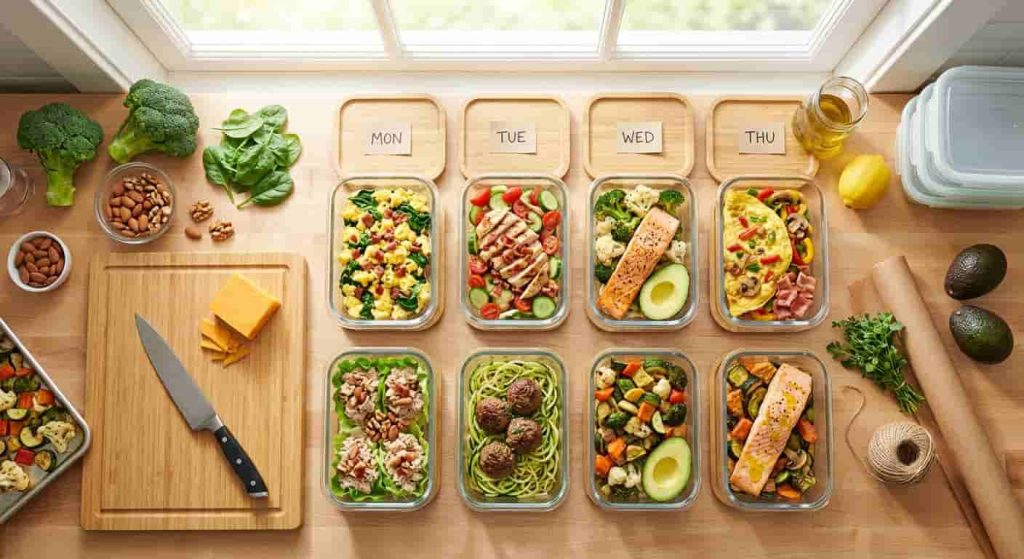
Day 1
Breakfast: Eggs, spinach, avocado, two bacon strips
Lunch: Chicken salad with olive oil dressing
Dinner: Salmon with broccoli and cauliflower mash
Day 2
Breakfast: Greek yogurt with walnuts and chia seeds
Lunch: Turkey lettuce wraps with avocado and bacon
Dinner: Pork loin with cabbage and mushrooms
Day 3
Breakfast: Vegetable omelet with bacon pieces
Lunch: Tuna avocado salad
Dinner: Chicken with roasted zucchini
Day 4
Breakfast: Eggs with mushrooms and tomatoes
Lunch: Salmon salad
Dinner: Beef and broccoli stir-fry
Day 5
Breakfast: Cottage cheese with berries and nuts
Lunch: Egg salad lettuce cups with bacon
Dinner: Shrimp with cauliflower rice
Day 6
Breakfast: Scrambled eggs, avocado, two bacon strips
Lunch: Chicken vegetable soup
Dinner: Baked fish with asparagus
Day 7
Breakfast: Chia pudding with unsweetened yogurt
Lunch: Cobb salad with chicken and modest bacon
Dinner: Turkey meatballs with zucchini noodles
Bacon appears occasionally, not at every meal.
Who Should Be Careful With a Bacon Diet?
Speak with a healthcare professional before starting strict keto eating if you:
- Use insulin
- Take diabetes medications
- Have kidney disease
- Have liver disease
- Have pancreatitis
- Have high cholesterol
- Are pregnant or breastfeeding
- Have a history of eating disorders
Carbohydrate restriction can affect medication needs and blood glucose levels.
Common Bacon Diet Myths
“Bacon Has No Carbs, So I Can Eat Unlimited Amounts”
False.
Calories, sodium, saturated fat, and processed meat exposure still matter.
“Bacon Is Like Olive Oil”
False.
Sharing one type of fatty acid does not make two foods nutritionally identical.
“Uncured Bacon Has No Nitrates”
Usually false.
Many uncured products use nitrate-containing celery extracts.
“Being in Ketosis Means I Am Losing Weight”
False.
Ketosis and fat loss are related but not identical.
Calories still matter.
Frequently Asked Questions
Can I Eat Bacon Every Day on Keto?
You may remain in ketosis while eating bacon daily.
However, daily large portions are not ideal.
Rotate bacon with fish, poultry, eggs, dairy, tofu, and other protein sources.
How Much Bacon Should I Eat?
There is no universal amount.
For many people, one or two strips as part of a balanced meal is more reasonable than making bacon the main food.
Will Bacon Break Ketosis?
Plain bacon usually will not because it contains little carbohydrate.
Sweetened bacon products may contain more.
Total daily carbohydrate intake matters most.
Is Bacon Good for Weight Loss?
It may help some people control hunger.
It can also slow weight loss if portions become excessive.
Bacon is a food choice, not a weight-loss strategy.
Final Verdict
The Bacon Diet is a low-carb diet but does not constitute the mainstay of the diet.
Bacon could help you feel the keto meal and eliminate refines carbohydrates while boosting your appetite.
But bacon does not suddenly burn fat.
The healthiest approach includes:
- Moderate bacon portions
- Adequate protein
- Plenty of vegetables
- Fiber-rich foods
- Healthy fats
- Realistic calorie control
Bacon Diet — the strongest version uses bacon as an adjunct.
The weakest variant is a plate of bacon, butter, and cheese presumes that ketosis in and of itself equals health.
Bacon helps make healthy food better!
It should not usurp healthy food.
Read More Article:7 Best Anti Inflammatory Diet Tips: Easy 2026 Guide
Disclaimer: This article provides general nutrition information and is not a substitute for personalized medical advice.
Please wait to go to the next post: 30 seconds
Go to Next Post