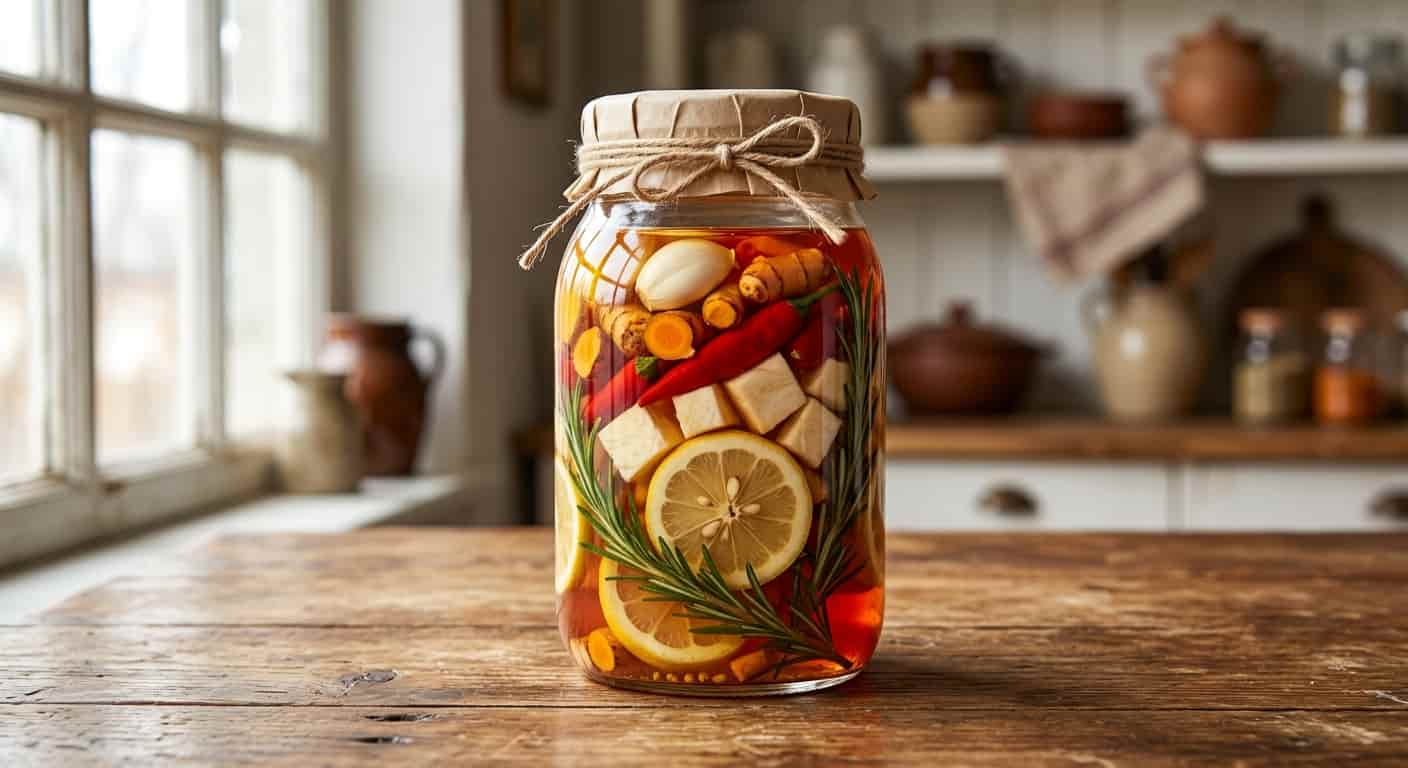
Fire cider is one of those recipes that sounds a little intimidating before you make it.
Garlic in vinegar? Horseradish? Raw onion? Hot peppers?
It sounds more like something a medieval herbalist might prescribe in the aftermath of a dragon attack than any wellness tonic.
Then you take a sip.
First comes the vinegar. Then the ginger. Then the garlic. Then the heat. A few seconds later, the horseradish comes up to remind you this is indeed fire cider.
I understand the hesitation.
But there’s a reason this fiery herbal tonic has been around for decades.
An old recipe for fire cider is made by mixing up some strong smelling roots, vegetables, herbs, hot peppers and Vinegar. Honey is generally added afterwards when the mixture (most times the bottle) has been strained in order to curb the sharpness. The outcome – a tart, warming, fragrant tonic – is appealing in the cold season or as a single product in a larger health / wellness plan.
It isn’t a magic potion.
Fire cider cannot cure the flu, take the place of medical treatment, or guarantee that you won’t pick up every germ at your local grocery store. Yet many of the individual ingredients in an old-fashioned-style fire cider recipe have been investigated, aiding at least partially why this rustic preparation is still of interest.
What Is Fire Cider?
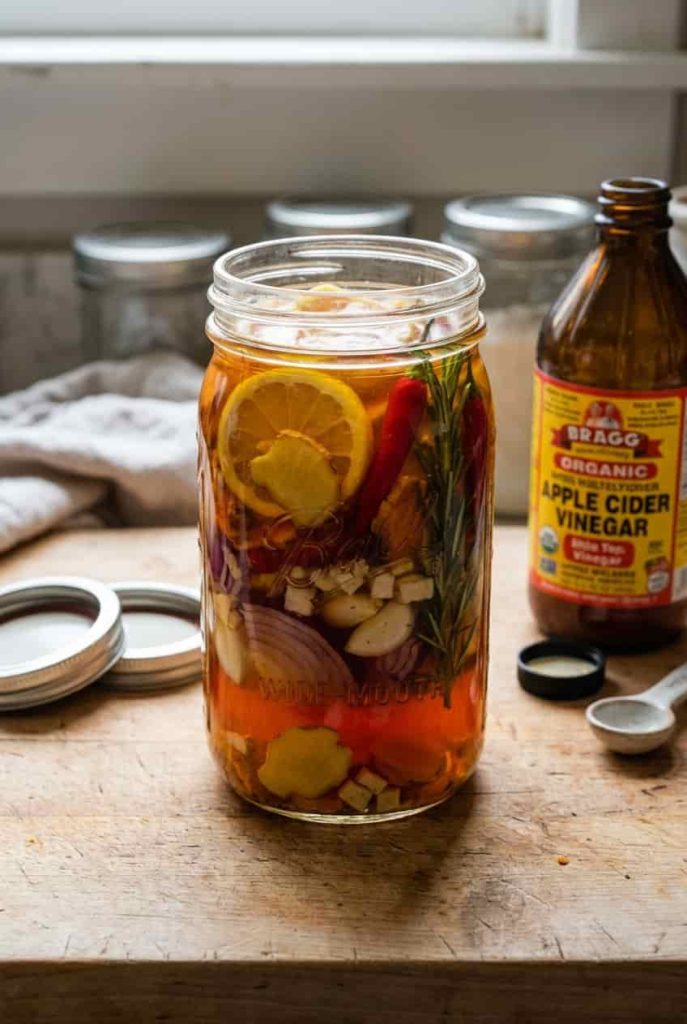
Fire cider is an age-old herbal remedy that is made by infusing fresh roots, vegetables, herbs, citrus and spices in vinegar.
The classic base is raw apple cider vinegar.
These ingredients are presaged to steep for a month or more. The solids are then filtered and squeezed, and honey can be added to soften it further.
The resultant tonic is sour, peppery, earthy and fragrant.
The traditional fire cider is considered a type of oxymel — an ancient herbal preparation made from vinegar and honey (and the name itself is an exemption). The vinegar is the acidic extraction medium, and the honey adds sweetness and helps to make the final drinkable product more palatable.
Would you like to know more of my love affair with this truly great remedy but need the recipe first?Modern fire cider tradition is largely spearheaded by herbalist Rosemary Gladstar in the late 1970s.
Today, recipes vary considerably.
While others come filled with horseradish and hot peppers. Others are mild, sweet, and big on citrus. Common additions include ginger, garlic, onion, turmeric, cinnamon, rosemary and thyme plus black pepper.
As there is no a one official formula.
The game makes that flexibility appealing. You can adjust the heat, sweetness, herbs and vinegar to your preference.
Fire Cider Is an Infusion, Not a Proven Medicine
This distinction is important.
There are no scientific trials that demonstrate a certain batch made in your kitchen protects you from or cures illness. Individual ingredients: Garlic, ginger, chili peppers, turmeric vinegar and other individual ingredient research cannot simply seem to be valid for the finished tonic.
More accurately, what we have is a traditional herbal preparation (fire cider) composed of foods with long histories of nutritional, culinary and research usage on their own merits.
That’s useful context.
And that does not constitute any proof of the various disease treating qualities one would want from a completed mix.
Why the Ingredients Matter
The ingredients in a fire cider recipe aren’t random.
Each contributes flavor, aroma, heat, or pungency. Several also contain compounds that have been studied for biological effects.
Garlic has sulfur compounds, including allicin (produced when garlic is chopping or crushed) Ginger (Zingiber officinale) contains gingerols and related compounds linked to its trademark heat, making it of interest as having digestive {and anti-inflammatory} effects.
Horseradish also contains pungent compounds that are associated with glucosinolates and their breakdown products [28]. Chilies are a source of capsaicin, the agent that creates their burning heat. Apple cider vinegar provides acetic acid which has in vitro antimicrobial activity and appears to modulate several biological systems with potential applications following consumption of a meal as supported by some human clinical studies.
The whole tonic, however, is not a pharmaceutical dose of any one compound.
That is why I prefer to describe fire cider as a flavorful traditional preparation rather than a clinically proven treatment.

My Favorite Balanced Fire Cider Recipe
A good fire cider recipe needs balance.
Too much horseradish can overwhelm everything else. Too many hot peppers can make the finished tonic difficult to use. Too much vinegar can leave you with a mixture that is technically fiery but not particularly enjoyable.
For one batch yielding approximately 1½ quarts, use:
- 3 cups raw apple cider vinegar, or enough to cover the ingredients
- 7 ounces fresh horseradish, chopped or grated
- 7 ounces fresh ginger, sliced or chopped
- 2 ounces fresh turmeric, scrubbed and sliced
- 1 medium onion, chopped
- 10 garlic cloves, roughly chopped
- 1 lemon, sliced
- 1 orange, sliced
- 2–3 jalapeño peppers, sliced
- 3 cinnamon sticks
- Fresh rosemary and thyme, to taste
- Whole black peppercorns, optional
- About ½ cup raw honey, added after straining, or to taste
You don’t have to follow these quantities with laboratory precision. If you love ginger, add more. If horseradish is too intense, use less. For a milder fire cider recipe, reduce the peppers.
The important rule is simple: keep all the ingredients covered with vinegar.
Equipment You’ll Need
Gather:
- A clean 1½- to 2-quart glass jar
- A fine-mesh strainer
- Cheesecloth
- A clean glass bottle or storage jar
- A funnel, optional
- Parchment paper if using a metal lid
Wash the jar, lid, utensils, and strainer thoroughly with hot, soapy water. Rinse well and let everything dry completely before starting.
You don’t need to turn your kitchen into a laboratory. Clean equipment and careful handling are the priorities.
Step 1: Prepare the Ingredients
Wash the produce thoroughly.
Scrub the ginger and turmeric. Some people prefer to preserve the skins at all times as long as they are clean and can be eaten along with the produce. The garlic was peeled, the citrus washed, and the herbs prepared.
Slice ginger, horseradish, onion and turmeric into small pieces. Slice the peppers and citrus.
Wear gloves when working with a huge amount of hot peppers, and do not touch your eyes!
Step 2: Fill the Jar
Place the prepared ingredients in the glass jar.
Add the cinnamon sticks, herbs, and optional peppercorns. Pour in enough apple cider vinegar to completely cover everything.
If any ingredients float above the liquid, press them down.
If you’re using a metal lid, place parchment paper between the vinegar and the metal. Acidic vinegar can corrode some metals over time. A plastic lid is another simple option.
Seal the jar and shake it gently.
Step 3: Infuse the Fire Cider
Keep the jar in a cool, dark spot for- or so four weeks. Gently shake once per day as convenient.
First of all, this is an infusion in vinegar, not controlled as in fermentation like kombucha or sauerkraut. Those plant ingredients are soaking in an acidic solution; don’t take any bubbling or fungal growth as a standard part of that recipe.
The vinegar will slowly acquire the color, scent, and flavor of the materials.
Step 4: Strain and Press
After the infusion period, pour the mixture through a fine-mesh strainer.
Then place the solids in cheesecloth and squeeze firmly to recover as much liquid as possible.
The strained liquid is your fire cider.
Don’t throw away the pulp. It still contains plenty of flavor. You can dehydrate it and grind it into a spicy seasoning, add a small amount to soups or stews, blend it into chutney, or use it in marinades.
Step 5: Add Honey
Taste the strained fire cider before sweetening it.
Add raw honey gradually and stir well. Continue until the acidity and heat are balanced to your liking.
You don’t need to make it taste like juice. The goal is to soften the sharpness while keeping the character of the tonic.
How to Store Homemade Fire Cider
Strain the completed fire cider into a clean glass bottle or jar with a secure lid.
Storage Refrigeration is always a more conservative option especially once you’ve added the honey! You may store some time-honored preparations find it hard, and its pantry filling oxygen low, but shelf life relies on storage conditions, acidity, cleanliness and also the nature of the components.
Most home-prepared preparations are made and used within a few months. Your batch of fire cider may very well be different, but for properly prepared, vinegar-based fire cider a time-frame of up to six months is commonly recommended.
Inspect the tonic before use.
If you see any mold or find it to be rotten, rancid, or otherwise off-smelling — toss it out. When in doubt, throw it away.
A food-safety risk is not worth it for no homemade tonic.
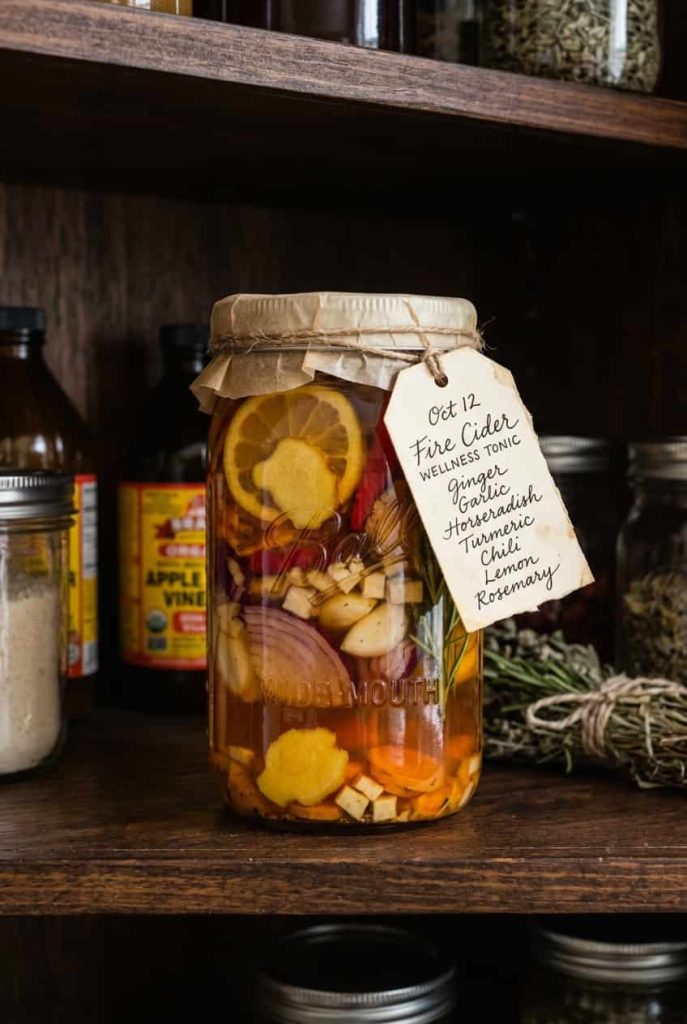
How Much Fire Cider Should You Take?
Because there are currently no standardized clinical doses for finished fire cider preparations, all dosing will be done in form of home-making.
Most preparations for this are used in small quantities of anywhere from 1/2 tablespoon to 2 tablespoons. If you are not used to spicy vinegar tonics, use a smaller amount. It can be diluted in water, mixed with food or modified according to each person’s sensitivity.
You do not have to take fire cider on an empty stomach.
Others enjoy it first thing in the morning, but there’s no clear evidence that an empty stomach increases the effectiveness of fire cider. If vinegar, garlic, chili or horseradish irritate your stomach you may be better suited taking it with food.
Those who have reflux, a sensitive digestion or allergies, are taking medication or suffering from health disorders should be careful. Paprika, vinegar, and garlic are common irritants for some people or can interact negatively with certain medicines.
Natural doesn’t automatically mean risk-free.
Ways to Use Fire Cider Beyond Drinking It
You don’t have to take fire cider straight from a spoon.
In fact, using it in food is often the easiest way to enjoy its flavor.
Try it in:
- Salad dressings and vinaigrettes
- Marinades for meat, fish, tofu, or vegetables
- Soups and broths
- Chili
- Sauces and gravies
- Homemade barbecue sauce
- Roasted vegetables
- Sautéed greens
- Grain bowls
- Fried rice
- Bean dishes
- Baked or roasted potatoes
A simple vinaigrette is especially easy. Combine fire cider with olive oil, a little Dijon mustard, and honey if needed.
The leftover pulp can also be used in marinades or savory recipes after straining.
What Does Fire Cider Taste Like?
Fire cider is not subtle.
The flavor usually starts with acidity, followed by ginger, garlic, herbs, and heat. Horseradish can add an especially sharp finish.
Depending on the recipe, the final tonic may taste:
- Sour
- Spicy
- Earthy
- Herbal
- Pungent
- Slightly sweet
If it is too strong, dilute it or use it in food.
There is no prize for drinking the hottest possible version.
The Science Behind the Ingredients
Garlic and Allicin
When garlic is chopped or crushed, chemical reactions produce sulfur-containing compounds, including allicin.
Allicin contributes to garlic’s characteristic aroma and has demonstrated antimicrobial activity in laboratory research. Garlic has also been studied in relation to cardiovascular health and immune responses.
However, fresh chopped garlic in vinegar is not the same as a standardized garlic supplement. Preparation changes the chemistry.
Ginger and Gingerols
Fresh ginger provides warmth without the direct burn of a chili pepper.
Its characteristic compounds include gingerols and related substances. Ginger has been studied for digestive symptoms, nausea, inflammation, and gastrointestinal motility.
It also gives fire cider a rounded flavor that helps balance the vinegar.
Horseradish and Pungent Compounds
Horseradish is responsible for much of fire cider’s signature sharpness.
Its pungent compounds are associated with glucosinolates and their breakdown products. The strong aroma can make the eyes water and create a temporary sensation of nasal clearing.
That sensation should not be confused with treating the underlying cause of congestion.
Chili Peppers and Capsaicin
Chili peppers get their heat from a pungent chemical known as capsaicin.
It binds to heat-sensitive receptors, which generates the familiar burning experience. When it comes to research in metabolism, inflammation, pain signalling and cardiovascular physiology, capsaicin is a well-explored molecule.
A few tablespoons of a homemade fire cider is not a concentrated capsaicin extract to expect much of an metabolic change.
These peppers are there mostly for flavor and heat.
Apple Cider Vinegar and Acetic Acid
Apple cider vinegar provides the acidic base.
Its main acid, acetic acid, has demonstrated antimicrobial activity in laboratory settings. Vinegar has also been studied for its potential effects on post-meal blood glucose responses.
The “mother” found in some unfiltered vinegar is not a magical ingredient that makes every health claim true. Raw, unfiltered vinegar can simply be a flavorful choice for a traditional preparation.
Turmeric and Curcumin
Turmeric adds earthy flavor and a golden color.
Its best-known compound, curcumin, has been widely studied for its biological activity, including anti-inflammatory effects.
However, curcumin absorption is complex. Adding black pepper may influence absorption, but that does not turn a homemade fire cider recipe into a proven anti-inflammatory treatment.
Fresh Versus Dried Ingredients
Going for fresh roots will typically deliver the brightest flavor and most vibrant texture, but if you cant get your hands on any, they are not easy to find.
Dried herbs can work well.
You can simply swap out the dried chilies with fresh peppers.
Dried turmeric powder can be used in place of fresh turmeric, but it may result in a more cloudy infusion with additional sediment.
Dried ginger can also be used except the taste will not be same as using fresh ginger.
If you can not find fresh horseradish you can omit it altogether or use a suitable prepared one, although commercial products may contain other ingredients.
The recipe is flexible.
A batch can still be successful even without one ingredient.
Fire Cider Variations
A Fruit-Forward Version
For a brighter, slightly sweeter profile, emphasize lemon, orange, ginger, and cinnamon. Use less chili and add honey after straining.
This version is a good choice if a traditional fire cider recipe tastes too aggressive.
A Hotter Version
Add more jalapeños or another chili variety.
Wear gloves when handling large quantities of hot peppers. More heat does not automatically mean greater benefit, and capsaicin can irritate the skin, eyes, mouth, and digestive system.
An Herb-Forward Version
Increase the rosemary and thyme, or experiment with sage and oregano.
This style works especially well as a culinary vinegar for dressings, marinades, and sauces.
A Fire Cider Recipe Without Honey
Honey is optional.
You can leave the tonic unsweetened or adjust the flavor with other ingredients that suit your dietary preferences.
If you choose a sweetener, remember that different sweeteners have different flavors and properties.
The “Tradition, Not Trademark” Fire Cider Battle
Fire cider has an unusual piece of modern herbal history.
In 2012, a commercial company trademarked the term “Fire Cider” and sent cease-and-desist letters to some small herbalists selling their own versions of the tonic.
The herbal community challenged the trademark.
The argument was that “fire cider” was a generic folk term associated with a traditional preparation rather than a name that one company should exclusively control.
Three herbalists, often called the “Fire Cider Three,” challenged the trademark in federal court.
In 2019, the court ruled in favor of the herbalists and determined that “fire cider” was generic.
The dispute became known as the “Tradition, Not Trademark” battle.
The story matters because fire cider represents more than a recipe to many herbalists. It reflects a tradition of sharing preparations, adapting ingredients, and passing knowledge from one person to another.
Common Fire Cider Myths
Myth: Fire Cider Cures the Flu
It doesn’t.
Fire cider may be warming and pungent, and some people find its ingredients comforting during cold weather. But the finished tonic has not been proven to cure influenza or other viral infections.
It should not replace medical care or prescribed treatment.
Myth: Apple Cider Vinegar Is the Only Vinegar You Can Use
Apple cider vinegar is traditional, but other flavorful vinegars can work.
Pomegranate, persimmon, white wine, red wine, and some rice vinegars can create different flavor profiles.
For a first batch, apple cider vinegar is a reliable choice because it pairs well with the other ingredients.
Myth: Fire Cider Must Be Heated
Traditional fire cider is made as a cold infusion.
Boiling isn’t necessary and may change the flavor and character of raw ingredients.
Time does the work.
Myth: Stronger Means Better
Not necessarily.
More vinegar, chili, garlic, or horseradish can increase irritation without making the tonic more useful.
The best fire cider recipe is one you can tolerate and actually enjoy using.
Frequently Asked Questions
How long does homemade fire cider take to make?
Active preparation usually takes less than an hour. The infusion takes about four weeks, although some traditional recipes steep for longer.
Can I drink fire cider straight?
Some people do, but you don’t have to.
Dilute it in water or use it in food if the acidity and heat are too strong.
Is fire cider safe to take every day?
Whether regular use is appropriate depends on the ingredients, amount, and your individual health situation. If you have reflux, allergies, worries about medications or a chronic health condition, beware and always consult a professional when necessary.
Can children have fire cider?
The mixture can be highly acidic and spicy.
Honey should never be given to infants under 12 months because of the risk of infant botulism. For older children, ask a pediatric healthcare professional if you’re unsure whether the ingredients are appropriate.
Can I make an Amish fire cider recipe?
Yes.
The term generally refers to a rustic, traditional-style preparation rather than one standardized formula. A simple version can include vinegar, garlic, onion, ginger, horseradish, and warming spices.
The name itself doesn’t give the recipe special medical properties.
Can I use white vinegar?
You can, but distilled white vinegar has a very sharp flavor that may overpower the other ingredients.
A flavorful vinegar usually produces a more enjoyable tonic.
How do I know if fire cider has spoiled?
Discard it if you see mold or notice a rotten, putrid, or otherwise abnormal odor.
When in doubt, throw it away.
The Bottom Line
And fire cider doesn’t need to be a miracle cure to be worth making.
Its appeal is more practical.
Provided is a strong, raw mix of garlic, ginger, horseradish, chili/chilli pepper powder and turmeric along with lemon/liberal herbs/espresso and vinegar/honey (optional). Each ingredient has its own flavor and is steeped in botanical history.
You can adjust the heat.
Change the herbs.
Try a different vinegar.
Apply the completed tonic to dressings, marinades, soups, sauces and other vegetables.
You can even dry out the leftover pulp into a spice.
The greatest fire cider recipe, is one that you take your time to prepare, know the truth of and enjoy using.
Start with fresh ingredients. Keep everything covered with vinegar. Have a metal cover with non metallic barrier underneath. Let the mixture infuse patiently. Strain it as needed, from your left over sweeten to taste and store well.
And if one sip chokes you up, you blink away the tears and wonder what on earth were you thinking?
Congratulations, you might have done fire cider right.
Read More Recipe: 11 Irresistible Recipes Ground Beef and Potatoes That Turn Simple Ingredients Into Comfort Food Gold
Disclaimer: This article is for general educational purposes and is not medical advice. Fire cider has not been proven to cure infections or disease and should not replace professional medical care, prescribed treatment, or medication.
The Ultimate Fire Cider Recipe: A Powerful Homemade Herbal Tonic

A powerful, traditional homemade herbal tonic made with apple cider vinegar, ginger, garlic, and spices to boost immunity and everyday wellness.
Type: AIP, Vegan, Gluten-Free
Cuisine: American / Traditional
Keywords: Fire Cider Recipe, Herbal Tonic, Homemade Fire Cider, Immunity Booster
Recipe Yield: 1 jar
Calories: 15 kcal
Preparation Time: PT20M
Cooking Time: PT0M
Total Time: PT20M
Recipe Ingredients:
Recipe Instructions: Step 1: Chop the ingredients, Step 2: Pour ACV
Please wait to go to the next post: 30 seconds
Go to Next Post