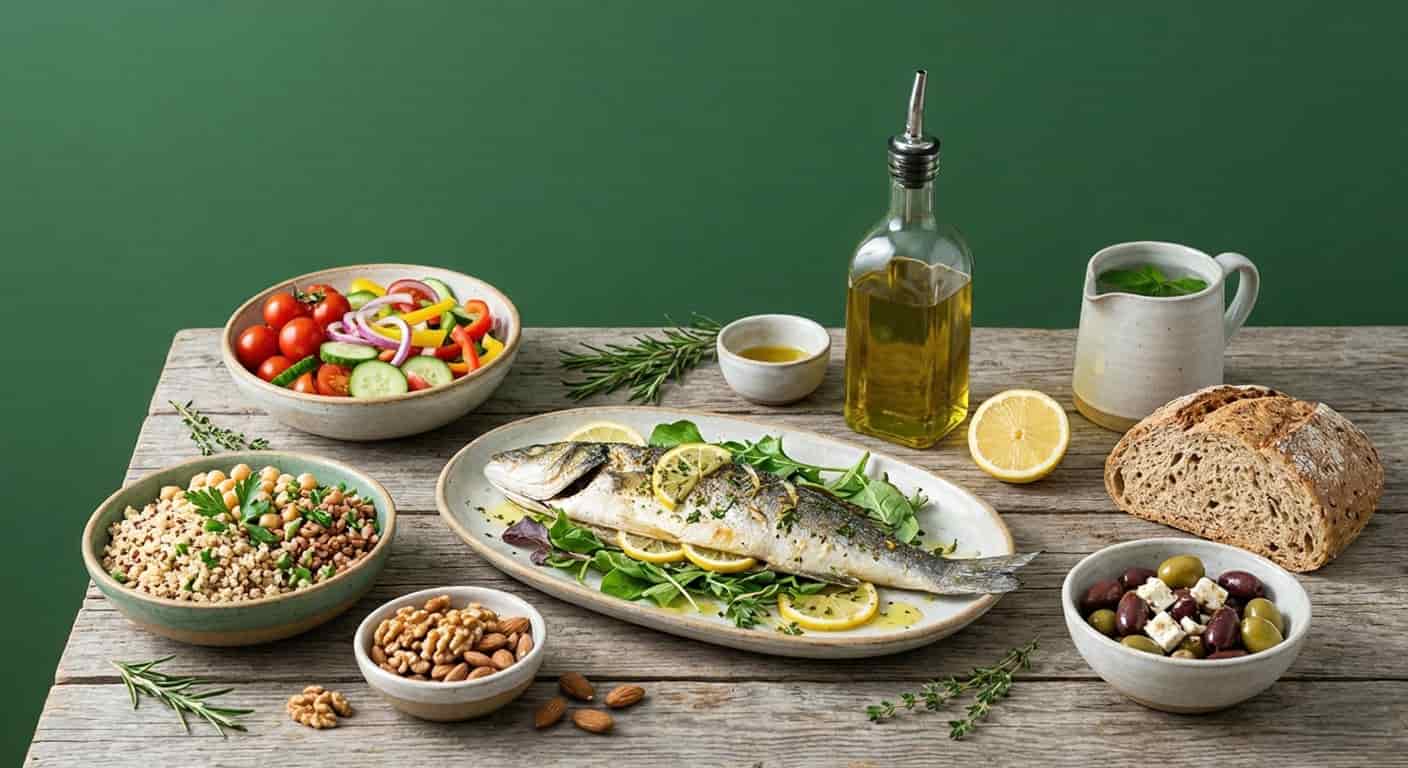
Why This “Mediterranean Diet Food List” Feels Different (In a Good Way)
I’ll be honest with you.
I didn’t expect a “diet” to feel… this easy.
No spreadsheets. No calorie panic. No sad meals that leave you staring at the fridge 30 minutes later. Just real food. Olive oil that smells like sunshine. Bread that’s actually allowed. And meals that somehow make you feel lighter without trying too hard.
That’s the magic of a proper mediterranean diet food list for beginners. It doesn’t scream restriction. It whispers balance.
And here’s the surprising part—science is finally catching up to what grandmothers in coastal villages have known forever.
We’re talking about:
- Slower aging at the cellular level
- Better gut health (your microbiome literally throws a party)
- Lower risk of heart disease by up to 30%
- And yes… sustainable weight loss without obsession
Sounds exaggerated? I thought so too.
But once I started paying attention—not just to what I ate, but how—things shifted. Energy stabilized. Cravings softened. Even my mood felt… steadier.
So if you’re here looking for a mediterranean diet food list, not the Pinterest version, but the real, lived-in version—you’re in the right place.
Let’s start where it matters most.
Mediterranean Diet Food List for Beginners (The Real-Life Version)
What You Actually Eat Daily (No, It’s Not Just Salad)
If you strip away all the noise, the Mediterranean way of eating is built on a simple foundation.
Not fancy. Not complicated.
Just consistent.
Here’s what shows up on the plate almost every single day:
The Daily Staples (Your Non-Negotiables)
- Extra Virgin Olive Oil (yes, daily… and generously)
- Leafy greens (spinach, arugula, kale)
- Vegetables (tomatoes, zucchini, eggplant, peppers)
- Whole grains (barley, farro, brown rice)
- Legumes (lentils, chickpeas, beans)
- Nuts & seeds (walnuts, almonds, sesame)
That’s your base.
Not protein powder. Not protein bars.
Real food.
And here’s something most lists won’t tell you:
The order matters less than the habit.
You don’t need to hit everything perfectly each day. But if most of your meals lean this way? You’re already doing it right.
The “3-Tablespoon Rule” Nobody Talks About
Let me ask you something.
Do you still measure oil like it’s dangerous?
Because I used to.
Then I learned this—clinical benefits of this diet often peak around 2 to 4 tablespoons of extra virgin olive oil per day.
That’s not a drizzle.
That’s commitment.
Why it works:
- Rich in polyphenols (anti-inflammatory compounds)
- Supports heart health
- Helps you feel full (this matters more than you think)
But here’s the trick most people miss:
Don’t cook all of it. Finish with it.
Drizzle it over cooked veggies. Add it to salads. Spoon it over beans.
Heat can damage some of the delicate compounds. Raw keeps it powerful.
Fruits: The Sweet Spot (Without the Sugar Drama)
Fruit isn’t the enemy here.
But it’s not unlimited either.
Think of fruit as a sidekick—not the main character.
Best choices:
- Berries (fresh or frozen—yes, frozen counts)
- Apples
- Oranges
- Grapes (in small portions)
And here’s a tiny expert trick:
Pair fruit with fat.
A handful of walnuts with berries. Apple with a few almonds.
This slows sugar absorption and keeps your blood sugar steady. Small move. Big difference.
The Protein Shift (This Changes Everything)
Most people approach protein like this:
“Where’s the meat?”
Mediterranean eating flips that question:
“What else can give me protein?”
So instead of red meat every day, you get:
Weekly Protein Rotation
- Fatty fish (salmon, sardines, mackerel) – 2–3x per week
- Legumes – almost daily
- Eggs – a few times a week
- Poultry – moderate
- Red meat – occasionally (like, actually occasionally)
And something interesting happens when you do this.
You stop feeling heavy after meals.
Your digestion gets smoother. Energy becomes… predictable.
It’s subtle at first. Then it’s obvious.
Dairy (Yes, You Can Keep It)
Good news.
You don’t have to break up with cheese.
But quality matters.
Focus on:
- Greek yogurt (plain, full-fat ideally)
- Feta cheese
- Small portions of aged cheeses
These are often fermented, which supports gut health.
And remember the gut-brain connection?
This is where things get interesting.
Your gut produces compounds called short-chain fatty acids (SCFAs)—these help reduce inflammation in the brain.
So yes… your yogurt might actually be helping your mood.
Weight Loss Mediterranean Diet Food List (Without Feeling Restricted)
Why This Approach Works Without “Trying”
Let’s address the real question.
Can you lose weight with this?
Short answer: yes.
But not in the dramatic, crash-diet way.
This is quieter.
More sustainable.
Here’s what’s happening behind the scenes:
- Fiber keeps you full longer
- Healthy fats reduce cravings
- Blood sugar stays stable
- You naturally eat less without forcing it
I’ve seen people drop weight simply because they stopped fighting their hunger.
That’s powerful.
The “Sofrito Effect” (Tiny Habit, Big Impact)
Ever heard of sofrito?
It’s a simple mix:
- Tomatoes
- Onion
- Garlic
- Olive oil
Cooked slowly.
Sounds basic, right?
But this process increases the absorption of lycopene, a powerful antioxidant linked to heart health and reduced cancer risk.
So instead of raw tomato slices, you get something far more potent.
This is what I love about this diet.
It’s not just what you eat.
It’s how you prepare it.
Acid: The Secret Weapon for Blood Sugar Control
This one surprised me.
Adding a splash of acid—like lemon juice or vinegar—can actually lower the glycemic impact of your meal.
Meaning:
- Slower blood sugar spikes
- Less energy crashes
- Fewer cravings later
Simple ways to use it:
- Lemon over grilled vegetables
- Vinegar in salads
- A squeeze of citrus on fish
It’s such a small habit.
But it stacks up over time.
Frozen Foods Are Not “Cheating”
Let’s clear this up.
You do not need farm-fresh everything.
In fact:
- Frozen berries often have more nutrients than “fresh” ones
- Frozen spinach is just as effective (sometimes better)
So if convenience is your barrier—remove it.
This diet works because it’s flexible.
Not perfect.
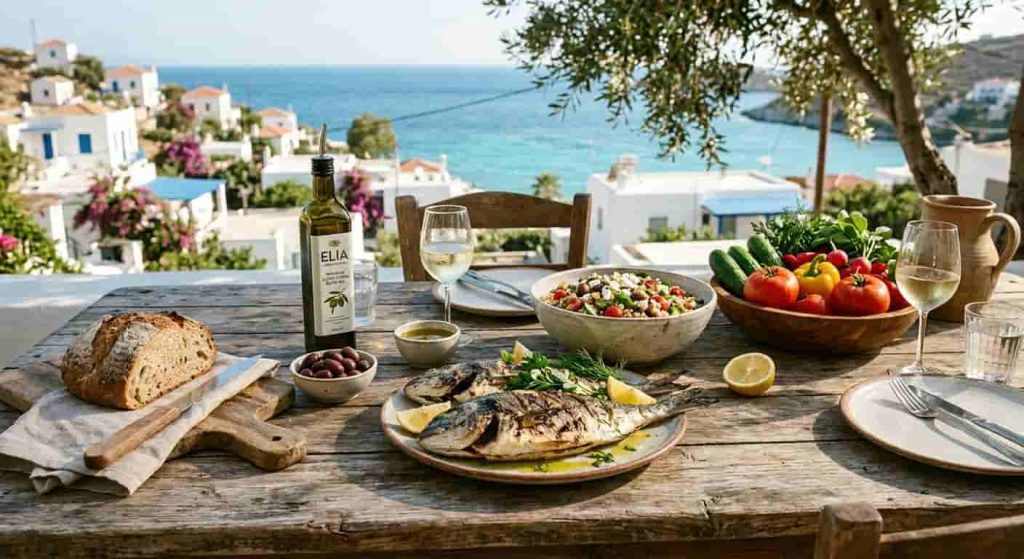
What a Real Day Might Look Like
No strict plan. Just an example.
Breakfast
Greek yogurt + berries + walnuts + drizzle of honey
Lunch
Lentil salad with olive oil, lemon, cucumber, herbs
Snack
Apple + almonds
Dinner
Grilled fish + sautéed vegetables + small portion of whole grains
Optional
Glass of red wine with dinner (not mandatory, just traditional)
Nothing extreme.
But deeply satisfying.
Quick Reality Check (Because It Matters)
You don’t need to:
- Count every calorie
- Eliminate entire food groups
- Buy expensive imported products
You do need to:
- Be consistent
- Focus on whole foods
- Cook more often (even simple meals count)
That’s it.
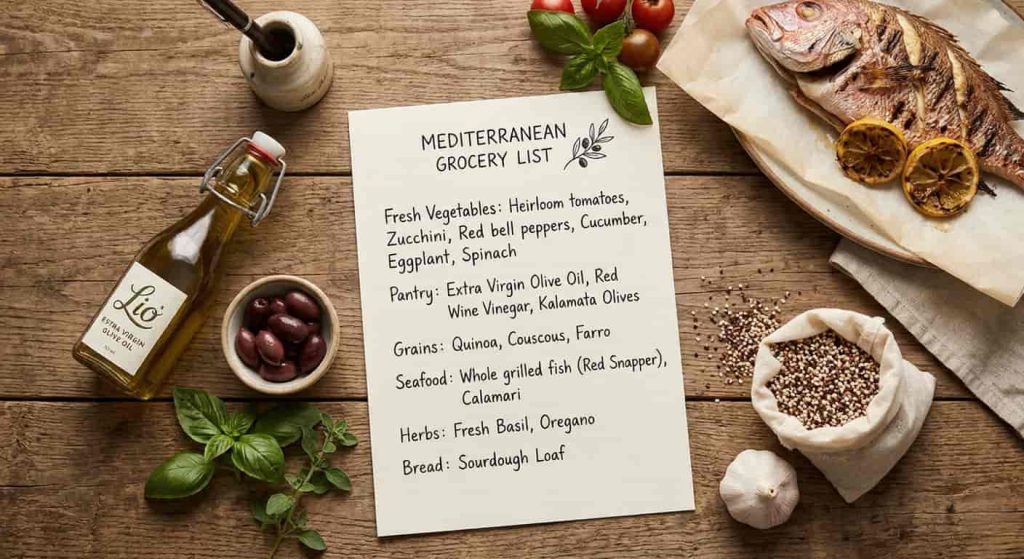
Printable Mediterranean Diet Food List (Your Fridge-Friendly Blueprint)
Let’s make this practical.
Because reading about healthy eating is one thing… standing in your kitchen at 8 PM with no idea what to cook? That’s where most plans fall apart.
So here’s a clean, printable mediterranean diet food list you can actually use. Screenshot it. Save it. Stick it on your fridge if you have to.
Your Core Grocery List (Simple, Affordable, Repeatable)
Vegetables (Build Your Plate Around These)
- Spinach
- Kale
- Arugula
- Tomatoes
- Cucumbers
- Zucchini
- Eggplant
- Bell peppers
- Broccoli
- Cauliflower
- Onions
- Garlic
Pro tip: Frozen versions count. Seriously.
Fruits (Daily, But Balanced)
- Berries (fresh or frozen)
- Apples
- Oranges
- Grapes
- Pomegranate
Keep it colorful. Keep it simple.
Whole Grains (Energy That Doesn’t Crash You)
- Brown rice
- Quinoa
- Barley
- Farro
- Whole wheat bread (real one, not sugar-loaded)
If it keeps you full for hours… you picked the right one.
Legumes (The Underrated Superstars)
- Lentils
- Chickpeas
- Black beans
- White beans
Cheap. Filling. Packed with fiber.
Honestly, if you master cooking lentils, you’ve already won half the game.
Healthy Fats (The Heart of the Mediterranean Diet)
- Extra Virgin Olive Oil (your main fat source)
- Walnuts
- Almonds
- Pistachios
- Seeds (chia, flax, sesame)
Remember the 3-tablespoon rule? Don’t be shy with olive oil.
Protein Sources (Flexible, Not Rigid)
- Fatty fish (salmon, sardines, mackerel)
- Eggs
- Chicken (moderate)
- Greek yogurt
- Feta cheese
And yes—plant protein counts. A lot.
Extras That Make Food Taste Alive
- Lemon
- Vinegar
- Fresh herbs (parsley, basil, oregano)
- Spices (cumin, paprika, turmeric)
These are not optional. These are the difference between “meh” and “wow.”
Mediterranean Diet Food List PDF (How to Actually Use It Daily)
Now here’s where people mess up.
They collect a mediterranean diet food list pdf, feel motivated for two days… then drift back to old habits.
Why?
Because they try to change everything at once.
Let’s not do that.
The 3-Step Transition Method (That Actually Sticks)
Step 1: Swap, Don’t Eliminate
Instead of:
- Butter → switch to olive oil
- White bread → whole grain
- Processed snacks → nuts or fruit
Small swaps. Big impact.
Step 2: Fix One Meal First
Don’t overhaul your entire day.
Start with one:
- Breakfast → upgrade to yogurt + fruit + nuts
- Or lunch → add a legume-based meal
Once that feels natural… move to the next.
Step 3: Repeat Until It’s Boring
This might sound strange.
But boredom is a good sign.
It means the habit is automatic.
That’s when results start showing up—without effort.
Mediterranean Diet Food List for Beginners (Mistakes I Made So You Don’t)
I’ll save you some frustration.
Because I made these mistakes early on.
Mistake 1: Treating It Like a “Low-Fat Diet”
I avoided olive oil at first.
Huge mistake.
This diet is not low-fat.
It’s high-fat—but the right kind of fat.
Once I increased healthy fats, my cravings dropped almost overnight.
Mistake 2: Overeating “Healthy” Foods
Yes, nuts are healthy.
But eating half a jar mindlessly? Not ideal.
Balance still matters.
Even good food can slow progress if portions go wild.
Mistake 3: Ignoring Meal Structure
I used to snack all day.
Randomly.
Constantly.
But Mediterranean eating leans toward structured meals:
- Eat properly
- Feel satisfied
- Move on
It’s weirdly freeing.
Mistake 4: Thinking It’s Expensive
This one needs to go.
You don’t need imported olive oil from Italy.
You need:
- Local vegetables
- Lentils
- Basic grains
That’s it.
This can be one of the cheapest ways to eat.
Weight Loss Mediterranean Diet Food List (The Subtle Fat-Loss Advantage)
Let’s go a bit deeper.
Because the weight loss side of this diet is… sneaky.
You Eat More Volume, But Fewer Calories
Vegetables + legumes = high volume, low calorie.
So your plate looks full.
Your stomach feels full.
But your calorie intake quietly drops.
Your Hunger Hormones Calm Down
Ever notice how some diets make you hungrier?
This one does the opposite.
Healthy fats + fiber = stable hunger signals.
No rollercoaster.
You Stop Obsessing Over Food
This might be the biggest win.
When your meals are satisfying, you stop thinking about snacks all day.
And that mental freedom?
It changes everything.

Common Myths About the Mediterranean Diet (Let’s Clear This Up)
“It’s Just Pasta and Bread”
Not even close.
Pasta is a side dish.
Vegetables are the main event.
“You Can Drink Unlimited Wine”
Nice idea. Not true.
Moderation matters:
- 1 glass for women
- 1–2 for men
- Always with meals
“It’s Too Complicated”
Actually, it’s one of the simplest ways to eat.
If anything, it removes complexity.
“You Need Fancy Recipes”
Nope.
Some of the healthiest meals are the simplest:
- Lentils + olive oil + lemon
- Grilled vegetables + herbs
- Fish + greens
Done.
Real-Life Transformation: Why This Actually Works
Let me tell you something interesting.
There was a case—a 52-year-old man dealing with:
- High blood pressure
- High LDL cholesterol
- Increasing waistline
Instead of going extreme, he followed a Mediterranean-style plan:
- Switched butter → olive oil
- Ate fish or legumes most days
- Added a handful of walnuts daily
One year later?
- HDL (“good” cholesterol) increased by 15%
- Lost 18 pounds
- Blood pressure normalized
No calorie obsession.
No extreme restriction.
Just consistency.
And honestly… that’s the part most people underestimate.
FAQs About the Mediterranean Diet Food List
Can I follow this diet in Bangladesh?
Absolutely.
Use local foods:
- Lentils (dal)
- Seasonal vegetables
- Fish (plenty of options locally)
- Mustard oil can complement olive oil if needed
It adapts beautifully.
Is this diet good for beginners?
It’s probably the best place to start.
No extremes. Just balance.
Do I need a printable mediterranean diet food list pdf?
It helps.
But consistency matters more than format.
Even a simple checklist works.
How fast will I see results?
Depends.
Some people feel better in days.
Physical changes usually show within weeks.
Read More Article: Power-Packed Healthy Snacks for Weight Loss That Actually Keep You Full (No More Cravings!)
Final Thoughts: Why This Mediterranean Diet Food List Actually Sticks
Here’s the deal.
Most diets fail because they demand too much… too fast.
This one doesn’t.
It meets you where you are.
And quietly improves your health in the background.
You don’t need perfection.
You need repetition.
So start small:
- Add olive oil
- Eat more plants
- Cook simple meals
That’s it.
And one day, you’ll realize something strange.
You’re not “on a diet” anymore.
You’re just… eating better.
Download the mediterranean_diet_food_list PDF
Please wait to go to the next post: 30 seconds
Go to Next Post